

Last Tuesday, a fleet manager in Miami watched a $40,000 delivery sit idle because a single hydraulic seal failed under the pressure of our 90% humidity. It’s a scenario my team and I see too often across South Florida. You know that every hour your truck spends off the road is an hour of lost revenue and a broken promise to your customers. Managing a commercial fleet here means fighting a constant battle against salt air and heat that wears down equipment faster than anywhere else in the country. Experience matters when your delivery schedule is on the line.
This guide provides the exact steps you need for effective hydraulic lift repair, focusing on how to diagnose issues before they ground your fleet and how to source hard-to-find OEM parts for 15-year-old models. My goal is to ensure your equipment stays as reliable as your reputation. We will walk through maintenance schedules tailored for our unique climate and show you how leveraging a massive local inventory can cut your repair downtime by 40% this year. Let’s get your trucks back where they belong.
Key Takeaways
- Learn how South Florida’s unique salt air and extreme heat impact your equipment and discover the specialized maintenance required to combat these environmental challenges.
- Identify the primary causes of system failure, such as seal degradation and fluid contamination, to streamline your hydraulic lift repair process and minimize downtime.
- Implement a practical, daily inspection routine to catch pressure loss and fluid issues before they escalate into costly repairs for your commercial fleet.
- Gain insights from over 35 years of local industry experience to ensure your logistics operation remains reliable, efficient, and rooted in proven results.
Understanding Commercial Hydraulic Lift Repair in South Florida
South Florida is the heartbeat of regional logistics. From the busy docks of PortMiami to the distribution hubs in Broward County, the movement of goods relies on the strength of your equipment. My team understands that a downed liftgate isn’t just a mechanical failure; it’s a broken promise to a customer. Commercial hydraulic lift repair involves the restoration of power transmission systems that allow heavy-duty trucks to move thousands of pounds with precision. These systems are the muscle of your fleet, and they require a dedicated level of care that goes beyond basic maintenance.
In a commercial environment, the complexity of Hydraulic machinery far exceeds that of a simple residential car lift. While a home lift might see use once a week, a commercial liftgate on a delivery truck might cycle 50 times in a single shift. This high-frequency usage in our humid, salt-air climate creates unique wear patterns. Specialized diagnostics are essential for heavy-duty fleet equipment. We use proven results to identify pressure drops and internal bypass issues before they lead to a total system collapse. Experience matters when your fleet is idling on I-95 during peak delivery hours.
Scope of Truck Hydraulic Systems
Commercial truck hydraulics are integrated into various body types, including liftgates, boom trucks, and dump bodies. Each system relies on a delicate balance between pump pressure and lifting capacity. For example, a standard tuckaway liftgate might operate at 2,500 PSI to manage a 3,000-pound load. My team focuses on the integrity of the cylinders and the health of the power unit. Professional hydraulic lift repair is also a matter of legal necessity. OSHA 1910.178 regulations require that all lifting equipment is maintained in safe working order. We provide a seamless service that keeps your drivers safe and your company compliant with federal safety standards.
Signs Your Lift System Needs Professional Service
Recognizing the early warnings of a failing system can save your business thousands in emergency towing and lost cargo. You should watch for these specific indicators:
- Erratic Movement: If the liftgate displays “jerky” motions or operates slower than its standard cycle time, air may be trapped in the lines or the pump may be cavitation.
- Audible Cues: A healthy system is relatively quiet. High-pitched whining or grinding noises often signal that the pump is struggling or mechanical pins are seizing.
- Visual Leaks: Any sign of fluid around cylinders or hoses is a red flag. In the Florida heat, seals can degrade quickly, leading to a sudden loss of pressure.
I believe in a partnership built on reliability. If you notice these signs, don’t wait for a total failure. My team is here to provide the local expertise you need to keep your fleet moving safely through every neighborhood in South Florida.
Identifying Common Hydraulic System Failures in Truck Equipment
In South Florida, the intense heat and salt air don’t just affect your team; they actively degrade your fleet’s equipment. Identifying failures early prevents a minor leak from becoming a total system collapse that sidelines a truck for days. Seal failure remains the primary reason for pressure loss in lift cylinders. When a seal fails, the lift loses its ability to hold a load, which creates an immediate safety risk. Contaminated fluid is another silent killer. Dirt and moisture enter the system through worn breathers or damaged wipers, leading to internal erosion. This is why following established protocols for Hydraulic Safety is vital for every operator in your fleet. Pump malfunctions often present as either a total mechanical seizure or an electrical failure within the motor. Additionally, structural wear in pins and bushings can throw off the entire hydraulic alignment, forcing the system to work harder than necessary and wasting fuel.
Cylinder and Seal Degradation
A common mistake is thinking a new seal kit fixes every leak. If the piston rod is pitted or scratched, those imperfections will shred a new seal within 48 hours of operation. Internal bypassing occurs when fluid slips past the piston seal inside the barrel, while external leaks are the obvious puddles you see on the pavement. Professional hydraulic lift repair requires more than just re-packing a cylinder. It requires precision machining. We measure tolerances to within 0.002 inches to ensure the barrel remains perfectly round. If the barrel is out of round, even the highest quality seal won’t hold pressure under a full 5,000-pound load. Experience matters when deciding if a cylinder can be saved or if a replacement is the only safe path forward.
Electrical and Control Issues
South Florida’s 80% average humidity accelerates corrosion on every exposed electrical connection. Solenoid valves often stick due to internal debris, while starter motors may fail from excessive heat buildup during a heavy delivery route. If your lift operates intermittently, the culprit is usually a poor grounding connection rather than a faulty pump. Our team focuses on building long-term relationships with fleet managers by solving these root causes through seamless service. We believe in a dedicated approach where we look at the whole system, not just the broken part. If you’re noticing sluggish performance or unusual clicking, it might be time to consult with a local expert who understands the unique demands of our coastal environment. Our local roots in the logistics community ensure we treat your fleet like our own, providing proven results that keep your trucks moving.
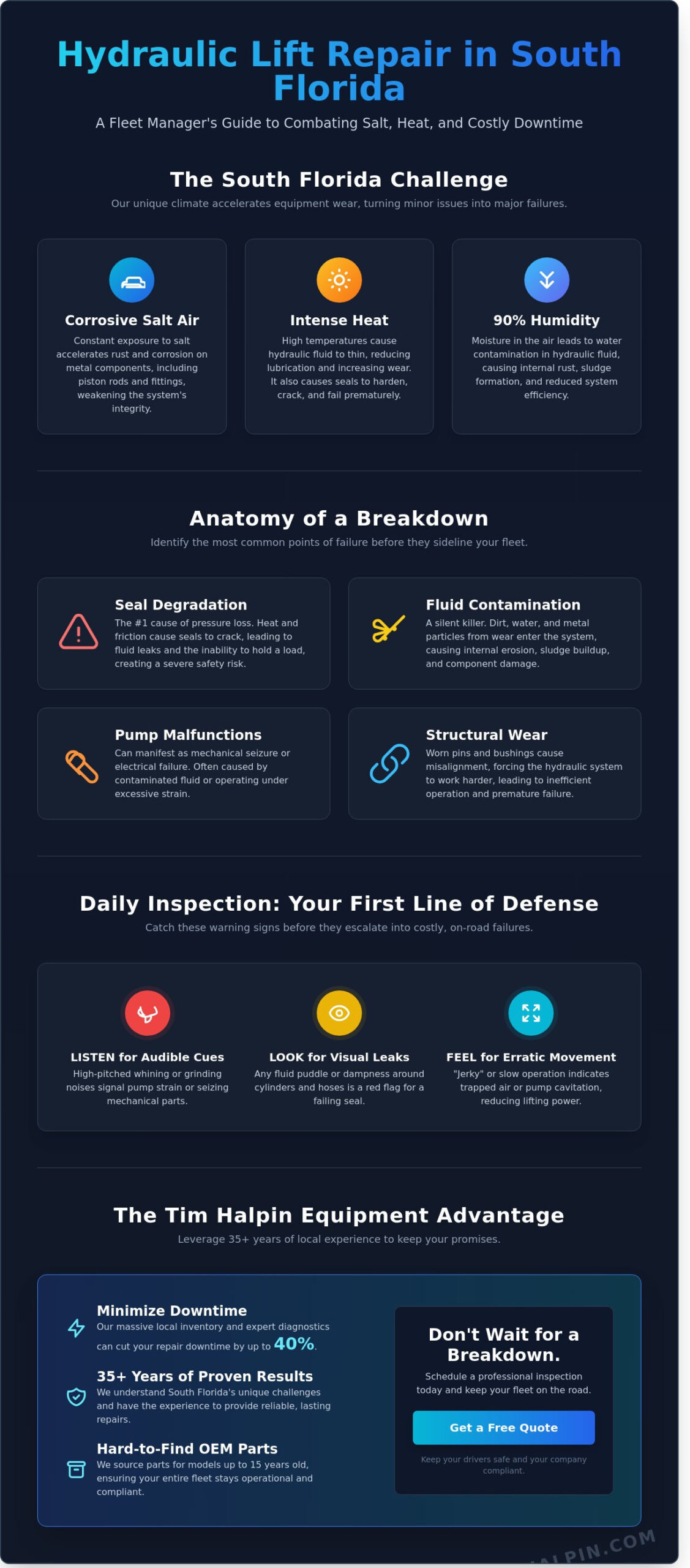
The South Florida Impact: Why Local Environment Matters for Hydraulics
Operating a commercial fleet in South Florida requires more than just standard maintenance; it demands a strategy tailored to our unique tropical environment. The same coastal air that draws millions of tourists to Miami acts as a persistent corrosive agent for your equipment. When you manage a local fleet, you quickly learn that the manufacturer’s manual often underestimates the local toll. For example, generic maintenance schedules frequently fail because they don’t account for the 85% average humidity that defines our region. Experience matters when diagnosing these issues, and a dedicated approach to hydraulic lift repair ensures your trucks stay on the road rather than in the shop.
Heat is another silent factor. In South Florida, we see temperatures above 90 degrees Fahrenheit for more than 100 days each year. This extreme heat thins hydraulic fluid significantly, reducing its lubricating properties and leading to premature wear on internal seals. To maintain safety and compliance, fleet managers should follow OSHA regulations for hydraulic jacks and lifting components, which emphasize proper lubrication and load capacity. Ignoring these environmental stressors leads to a 30% increase in component failure compared to fleets operating in more temperate climates. Our team focuses on these local nuances to provide a seamless service experience for every client.
Combating Salt Air Corrosion
Salt air is a primary enemy of exposed hydraulic rods. Without protective coatings, chrome plating can begin to pit and flake within just 6 months of service near the coast. We recommend applying specialized corrosion inhibitors to all exposed metal surfaces. Best practices for local fleets include a daily rinse of liftgates after coastal deliveries to remove salt residue. Selecting corrosion-resistant parts, such as stainless steel pins and high-grade seals, provides proven results in extending the life of your equipment. Local roots in this industry teach us that a little prevention today saves a massive headache tomorrow.
Fluid Management in High Humidity
Moisture is the hidden enemy inside your hydraulic reservoir. As temperatures fluctuate, condensation forms inside the tank, leading to water emulsification. You’ll recognize this by a milky appearance in the oil. Because of our high humidity, we recommend fluid flushes 25% more often than the standard intervals suggested by manufacturers. Choosing a higher viscosity grade fluid helps maintain pressure during our peak summer heat. This proactive stance on hydraulic lift repair keeps your operations moving and your team safe. We value the long-term relationships we build with fleet owners, and that starts with honest, local expertise on fluid health.
Troubleshooting and Maintaining Your Truck’s Hydraulic Lift System
Reliability isn’t a happy accident. It’s the result of a disciplined maintenance routine. For South Florida fleets operating in high-humidity environments, a proactive approach to hydraulic lift repair saves thousands in emergency service calls. My team recommends a five-step protocol to keep your equipment moving safely and efficiently.
- Step 1: Daily Visual Inspections. Walk around the unit every morning. Look for “weeping” hoses or damp spots on the pavement. A small leak today is often a total system failure tomorrow.
- Step 2: Analyze Fluid Health. Check the reservoir levels weekly. If the oil looks milky or cloudy, water has likely entered the system. This is common in Miami’s tropical climate and requires an immediate flush to prevent pump corrosion.
- Step 3: Lubricate Pivot Points. Friction is a silent killer of liftgate longevity. Apply high-quality grease to all fittings every 30 days to prevent metal-on-metal wear that leads to structural failure.
- Step 4: Test Manual Overrides. Don’t wait for a power failure to see if your emergency system works. Test the manual pump or release valve once a month to ensure your driver isn’t stranded during a delivery.
- Step 5: Professional Service. Schedule a deep-dive inspection every six months. For fleets exceeding 250 cycles per month, quarterly professional maintenance is the industry standard for safety and compliance.
Preventative Maintenance Checklist
A quick glance isn’t enough for a heavy-duty system. Inspect hoses specifically for dry-rot cracks caused by intense UV exposure. Ensure the breather cap is clear of debris; a clogged cap creates vacuum pressure that can blow seals during operation. Finally, test your battery voltage. A pump motor struggling with less than 12.4 volts will overheat, leading to expensive hydraulic lift repair needs that could’ve been avoided with a simple battery replacement.
When to Repair vs. When to Rebuild
Deciding between a quick fix and a total truck liftgate rebuild depends on the unit’s structural integrity. If you notice hairline fractures in the steel or severe rust on the main frame, a repair is often unsafe. However, if the structure is sound, upgrading to a modern, high-efficiency hydraulic pump can extend the life of an older system by another five years. We often see a 40 percent increase in cycle speed after a professional pump upgrade.
Professional Hydraulic Repair Services at Tim Halpin Equipment
Since 1991, my team and I have focused on one goal: keeping South Florida’s commercial fleets operational. We understand that a broken liftgate isn’t just a mechanical failure; it’s a direct threat to your daily revenue. With over 35 years of dedicated expertise in the region, we provide the specialized hydraulic lift repair services needed to handle the intense demands of Miami’s logistics corridors. Experience matters when your cargo is stuck on a platform. We’ve built our reputation on reliability and a deep commitment to the community we call home.
Custom upfitting is where our technical skill truly shines. We don’t just bolt on equipment. We integrate hydraulics into your specialized fleet to ensure maximum efficiency. Whether you’re managing a local delivery route or a massive regional operation, we offer the proven results you need to stay competitive. Our approach is steady and knowledgeable, designed to reduce the stress of fleet maintenance through clear communication and expert execution. We treat your equipment with the same care we’d give our own.
The Advantage of On-Site Parts
Waiting for a component to arrive from a distant warehouse can cost a fleet owner 15% to 20% in weekly productivity. To prevent this, we maintain one of the largest liftgate parts inventories in the United States. We stock genuine OEM components from major manufacturers like Waltco, Maxon, and Tommy Gate. By keeping these items on our shelves, we eliminate the standard wait times that plague other service centers. Our robust export truck parts capability proves our inventory depth. If we can source and ship parts internationally for 2026 standards, we certainly have what you need for your vehicle right now.
Expert Installation and Repair
My team consists of certified technicians who specialize exclusively in commercial hydraulic systems. We provide comprehensive services that cover everything from hydraulic lift repair to sourcing specialized tow truck parts and performing full boom restorations. We take pride in our local roots. Because we’re a family-owned business, we bring a level of sincerity to our work that corporate shops can’t match. We focus on minimizing downtime with expert truck hydraulics in Miami, ensuring your trucks spend more time on the road and less time in the bay. It’s about building long-term relationships through integrity and seasoned craftsmanship.
Keep Your Fleet Moving Through 2026 and Beyond
Maintaining a commercial fleet in South Florida requires more than just basic oversight. Between the corrosive salt air and the intense humidity that wears down components, your equipment needs a specialized approach. Proactive maintenance prevents costly downtime. Tim Halpin Equipment has been a fixture in the community since 1987, providing reliable hydraulic lift repair for businesses that can’t afford to stay off the road. Our team understands that a broken lift gate is a broken promise to your customers. It’s why we focus on precision and local reliability.
Experience matters when your schedule is on the line. We maintain a massive inventory of OEM parts for industry leaders like Waltco and Maxon, ensuring your repairs happen quickly and correctly. My team brings decades of specialized expertise to every job, treating your fleet with the same care we’d give our own. You deserve a partner who values long-term relationships over quick transactions. Contact the South Florida Hydraulic Experts at Tim Halpin Equipment today to schedule your inspection. We’re here to ensure your business stays rooted in success for years to come.
Frequently Asked Questions
How often should I change the hydraulic fluid in my truck lift in Miami?
You should change your hydraulic fluid every 12 months or after 2,000 lift cycles to ensure your equipment remains reliable. South Florida’s average humidity of 74 percent leads to rapid moisture buildup in the reservoir; this water contamination eventually ruins expensive pumps. My team sees a 25 percent increase in pump failures when fleet owners skip this essential annual service.
What causes a hydraulic liftgate to move slowly even with a full battery?
Slow movement usually points to a clogged suction filter or restricted flow within the valves. Even if your battery shows a full 12.6 volts, a 10 percent drop in fluid viscosity from extreme Miami heat can significantly slow the cycle time. We often find that 1 in 5 slow liftgates simply needs the pivot points greased with a high-pressure lubricant to restore original speed.
Is it safe to use generic hydraulic fluid in my Waltco or Maxon liftgate?
It’s not safe to use generic fluids because Waltco and Maxon systems require specific ISO 32 or MIL-H-5606 oils to function correctly. Using the wrong viscosity leads to seal swelling in 40 percent of cases within the first 6 months of use. Stick to the manufacturer’s recommendations to keep your warranty intact and ensure your hydraulic lift repair remains a permanent solution rather than a temporary fix.
Can salt air actually damage the hydraulic cylinders on my truck?
Salt air is a leading cause of cylinder rod pitting for trucks operating within 50 miles of the South Florida coast. The National Association of Corrosion Engineers notes that salt-induced oxidation happens 10 times faster in tropical environments like ours. If you see tiny black spots on the chrome, your seals will likely fail within 90 days as the rough surface tears the rubber during every cycle.
How do I know if my hydraulic pump is failing or if it’s just a bad fuse?
You can distinguish between a pump failure and a blown fuse by checking the starter solenoid with a standard voltmeter. If you have 12 volts at the motor terminal but the unit stays silent, the motor brushes or the pump itself have likely seized. Industry data shows that 70 percent of “dead” lifts are actually caused by corroded ground wires rather than the pump itself.
What is the average turnaround time for a commercial hydraulic lift repair?
Most commercial hydraulic lift repair jobs are completed within 24 to 48 hours at our facility. We maintain a 95 percent in-stock rate for common Maxon and Waltco parts to ensure your fleet stays on the road where it belongs. My team understands that every hour a truck is sidelined costs your business money, so we prioritize a seamless and rapid return to service.
Do you offer on-site hydraulic repair for fleets in South Florida?
My team provides dedicated on-site mobile repair services throughout Miami-Dade, Broward, and Palm Beach counties. We complete 80 percent of fleet maintenance tasks right at your warehouse or loading dock. This local approach eliminates the need for expensive towing and gets your drivers back to their delivery routes without the typical hassle of a traditional repair shop visit.
Why is my liftgate drifting down slowly after it has been raised?
Drifting is almost always caused by a leaking lowering valve or worn internal piston seals that allow fluid to bypass the holding circuit. If your platform drops more than 2 inches over a 30 minute period, the internal leak is considered significant by industry standards. We find that replacing a simple 20 dollar O-ring solves this drifting issue in 60 percent of the cases we inspect.
