

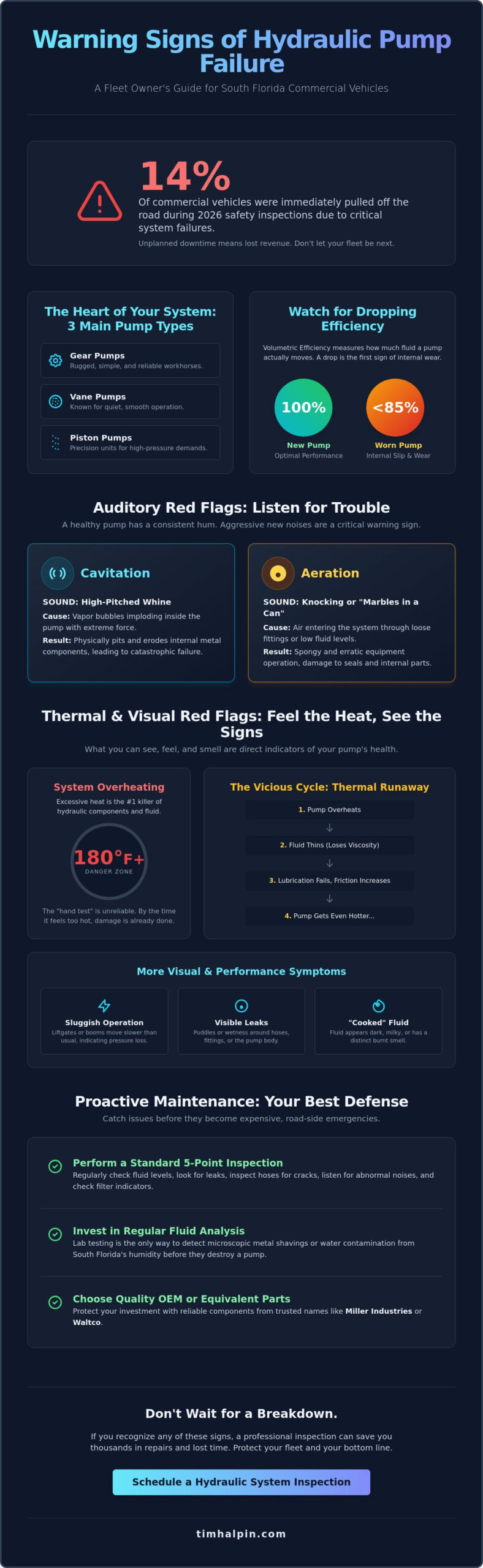
Did you know that in 2026, over 14% of commercial vehicles inspected during safety sweeps were pulled off the road immediately due to system failures? It’s a staggering number that highlights how quickly a small mechanical oversight can turn into a forced shutdown. For fleet owners here in South Florida, where our intense heat and humidity put extra strain on every seal and valve, recognizing the early signs of hydraulic pump failure isn’t just a maintenance task. It’s the difference between a productive day on the Palmetto Expressway and a costly, unplanned trip to a repair bay.
We know that every hour your truck sits idle is an hour of lost revenue and unnecessary stress. You shouldn’t have to wonder if a new whining sound is a minor leak or the start of a total system blowout. This guide will help you pinpoint the specific causes of equipment sluggishness so you can make a confident decision about repair versus replacement. We’ll walk through the ten most critical warnings your truck is giving you and show you how to protect your fleet by catching issues before they become expensive emergencies.
Key Takeaways
- Learn to identify specific auditory red flags, such as high-pitched whining or knocking, which often signal internal issues like cavitation or aeration.
- Spot the early signs of hydraulic pump failure by monitoring sluggish liftgate performance and distinguishing between external leaks and internal pressure losses.
- Understand how Miami’s unique climate impacts your equipment, from humidity-driven water contamination to the way extreme heat taxes your system’s cooling capacity.
- Get clear guidance on performing a standard 5-point inspection and why choosing quality parts from names like Miller Industries or Waltco protects your bottom line.
Understanding Hydraulic Pump Health in Commercial Fleet Equipment
Think of your truck’s hydraulic system as a living thing. The hydraulic pump acts as the heart, converting mechanical energy from your engine or Power Take-Off (PTO) into the fluid power that moves your equipment. Without it, your liftgate is just a heavy slab of metal, and your wrecker is just a truck with a stationary bed. In the commercial upfitting world, we usually see three main types of pumps: gear pumps, which are rugged and simple; vane pumps, known for quiet operation; and piston pumps, which handle high-pressure demands with precision.
One concept we often discuss with our Miami neighbors is volumetric efficiency. This measures how much fluid the pump actually moves compared to its theoretical maximum. Before you see the obvious signs of hydraulic pump failure, you’ll likely notice a drop in this efficiency. Internal wear allows fluid to “slip” back through the pump, meaning it has to work harder and longer to do the same job. Simply put, hydraulic pump failure is the inability of the unit to maintain the flow or pressure required to operate your truck’s auxiliary systems safely.
The Role of the Pump in Liftgates and Towing Systems
Whether you’re running a Waltco or Maxon liftgate, the pump handles the heavy lifting during every delivery. In towing and recovery, the demands are even higher. Wreckers rely on consistent pressure to secure and transport vehicles safely across South Florida. Unlike industrial pumps that run at a steady pace all day, truck pumps face “intermittent duty.” They sit idle, then suddenly jump to 100% capacity. This start-stop cycle creates unique wear patterns that can lead to early failure if you aren’t paying attention to performance changes.
The Relationship Between Fluid Health and Pump Longevity
Your hydraulic fluid isn’t just there to move parts; it’s also the only thing lubricating the pump’s internal components. When that fluid breaks down, you’ll start seeing the signs of hydraulic pump failure much sooner. Heat is the biggest enemy here. On a 95-degree day in Miami, fluid viscosity can drop, leaving metal parts to grind against each other. Regular fluid analysis is your best defense. It tells us if there’s water contamination from our high humidity or if microscopic metal shavings are starting to circulate, giving us a chance to fix the issue before it leaves you stranded on the side of the road.
Auditory and Thermal Red Flags: Noise and Overheating
Your ears are often the most reliable diagnostic tools in your cabin. A healthy hydraulic system should operate with a consistent, rhythmic hum that fades into the background of your engine’s idle. When that sound shifts into something more aggressive, you’re likely hearing the first signs of hydraulic pump failure. Ignoring these auditory warnings is a gamble that usually ends with a stalled liftgate or a frozen boom in the middle of a busy shift.
Heat acts as a silent partner to noise in destroying your equipment. A pump running at or above 180°F is a silent killer of internal seals and valves. While many experienced operators still rely on the “hand test” to check for overheating, it’s an insufficient method for modern diagnostics. By the time a pump feels hot enough to startle you, the internal damage is likely already done. Accurate thermal monitoring is essential because excessive heat doesn’t just damage the hardware; it destroys the chemical integrity of your hydraulic fluid.
Cavitation vs. Aeration: Diagnosing the Sound
Understanding the difference between a high-pitched whine and a rhythmic knocking can save you hours of troubleshooting. Cavitation occurs when vapor bubbles form and then implode against metal surfaces with incredible force. This creates a distinct whining sound and physically pits the pump’s internals. Aeration, on the other hand, sounds like banging or “marbles” rattling in a can. This happens when air enters the system through loose intake fittings or low reservoir levels. Using a mechanic’s stethoscope can help you pinpoint if the sound is coming from a specific bearing or if it’s a system-wide fluid issue.
Thermal Runaway and Fluid Thinning
Extreme heat creates a dangerous feedback loop known as thermal runaway. As the pump gets hotter, the hydraulic fluid thins out and loses its viscosity. This thinner fluid provides less lubrication, which creates more friction, leading to even higher temperatures. In our local South Florida climate, blocked oil coolers or clogged vents can quickly push a system over the edge. You can often spot “cooked” fluid by its darkening color and a distinct, pungent burnt odor. Industry data suggests that fluid contamination and degradation are among the primary causes of hydraulic failure, making thermal management a top priority.
If your equipment is running louder or hotter than usual, don’t wait for a total system blowout. Reaching out for professional hydraulic repair can help you catch these red flags before they turn into a permanent service interruption.
Visual and Performance Symptoms: Leaks and Sluggish Operation
Sometimes the most dangerous signs of hydraulic pump failure are the ones that don’t leave a mess on your shop floor. While a puddle of oil is an obvious cry for help, a pump can look perfectly dry on the outside while failing miserably on the inside. You might notice your liftgate taking twice as long to reach dock height, or your boom arm struggling to lift a load it handled easily last month. These performance drops are clear indicators that your system’s heart is losing its ability to push fluid where it’s needed most.
Erratic movement is another visual cue that something is wrong. If your equipment moves in a jerking, stuttering fashion rather than a smooth glide, the pump is likely struggling to maintain a steady flow. This instability often points to air entrainment or internal mechanical wear that prevents the pump from staying “primed” under pressure. For those running heavy-duty piston pumps, an elevation in case pressure is a specific technical warning that internal components are bypassing fluid at a rate the system can no longer ignore.
Internal vs. External Leakage: Where Is the Pressure Going?
External leaks at the pump shaft seal or housing gaskets are common, especially with the constant vibration of South Florida road work. However, internal leakage is often more deceptive and damaging. This occurs when worn internal seals allow high-pressure fluid to “slip” back to the suction side of the pump. Since the oil stays inside the unit, you won’t see a single drop on the pavement. We’ve seen many “dry” pumps come into the shop that were functionally dead because they could no longer hold the pressure required for a full day of work.
Sluggish Performance Under Load
A failing pump might operate a liftgate like a Waltco or Maxon unit perfectly when the platform is empty. The real test comes when you add a few thousand pounds of cargo. If the pump wear is significant, it won’t be able to hit the necessary relief valve pressure to move the heavy load. We often use a flow meter to verify the pump’s actual output against the original OEM specifications. This objective data takes the guesswork out of the repair process, helping you decide if you need a specific seal kit or a complete unit replacement to get back on the road.
If your truck’s auxiliary systems are starting to feel tired or unpredictable, it’s time for a professional checkup. Catching these performance dips early through expert hydraulic repair can prevent a minor sluggishness from turning into a total equipment blowout during a delivery.
How South Florida’s Climate Accelerates Hydraulic Failure
Living and working in Miami means our trucks face conditions that fleet owners in the Midwest never have to worry about. When the thermometer hits 90°F or higher, your hydraulic system’s cooling capacity is pushed to its absolute limit. In this environment, the signs of hydraulic pump failure often appear much sooner than the manufacturer’s manual might suggest. The combination of relentless heat, high humidity, and salty coastal air creates a “perfect storm” for hydraulic degradation. We’ve seen perfectly maintained systems struggle simply because the ambient air is too warm to dissipate the heat generated by a busy liftgate or tow boom.
Because of these regional stressors, a standard maintenance schedule often isn’t enough for South Florida fleets. You can’t rely on generic advice when your equipment is operating in a tropical environment. Monitoring your system for the early signs of hydraulic pump failure and sticking to an aggressive preventative maintenance plan is the only way to ensure your truck stays on the road instead of sitting in a repair bay during peak season.
Water Contamination and the “Milky” Fluid Issue
Humidity is a constant factor in our local climate. As your hydraulic system breathes during operation, it draws in moisture-laden air through reservoir breathers and worn seals. Once inside, this water undergoes a chemical reaction with hydraulic additives, leading to a condition known as “milky” or emulsified fluid. This isn’t just a cosmetic issue; water reduces the fluid’s ability to lubricate, leading to rapid internal wear. If you pull a dipstick and see fluid that looks like a latte, it’s an immediate signal to stop operation and flush the system before the pump sustains permanent damage.
Corrosion and Seal Hardening in Tropical Environments
Our proximity to the ocean adds another layer of risk. Salt air is incredibly corrosive, specifically targeting exposed pump shafts and fittings. Over time, salt-induced pitting on a shaft acts like sandpaper, destroying rubber seals with every stroke. Additionally, the high UV index in our region accelerates the hardening of rubber components. Flexible seals become brittle and crack, leading to the external leaks that often precede a total pump blowout. Coastal operators should be especially vigilant, inspecting seals for any signs of drying or “alligatoring” caused by sun exposure.
If you’re concerned about how the Miami heat is affecting your equipment’s performance, our team provides specialized hydraulic repair services designed to handle the unique demands of our local environment.
Proactive Maintenance and Hydraulic Repair in Miami
Recognizing the signs of hydraulic pump failure is only the first half of the battle. The second half is having a reliable partner who understands that in the trucking industry, time is literally money. We’ve spent years helping our neighbors in the South Florida logistics community move from reactive firefighting to a steady, predictable maintenance rhythm. A proactive 5-point inspection is the cornerstone of this strategy. It includes a deep dive into fluid health, filter debris analysis, seal integrity, thermal baselines, and a comprehensive flow test. By catching a worn gear or a thinning seal early, we help you avoid the total system blowouts that lead to expensive emergency calls.
Quality matters when it comes to longevity. That’s why we rely on OEM parts from industry leaders like Maxon, Waltco, and Miller Industries. These brands are the gold standard for a reason. They’re built to withstand the rigors of heavy-duty use, and they fit perfectly every time. Choosing a shop with a massive local inventory means you aren’t waiting on a backordered part while your revenue sits idle. We take pride in being the steady hand that guides you through these technical decisions, ensuring your equipment stays compliant and your business stays profitable.
The Diagnostic Roadmap: From Symptom to Solution
One common mistake we see is relying solely on pressure gauges. Pressure testing alone can be misleading because a pump might hold pressure while failing to provide the flow data required for smooth operation. We pay close attention to the filters. Finding “metal glitter” or microscopic shavings is a sure sign of impending failure. This indicates that internal components are physically breaking down. Our goal is to provide a clear roadmap. We’ll tell you honestly if a pump rebuild will solve the issue or if a full replacement is the only way to guarantee your truck won’t be back in the shop next week.
Minimizing Downtime with Local Expertise
The advantage of Tim Halpin Equipment’s Miami location is our deep roots in this community and our commitment to local service. We understand the specific routes and stressors your fleet faces. Our truck hydraulics in Miami services are designed to get you back on the road with minimal disruption. We treat every truck as if it were part of our own fleet, providing the seasoned expertise you need to make the right call for your business. Don’t let a minor symptom turn into a major loss. Contact us today for a professional hydraulic system evaluation.
Protect Your Fleet and Your Bottom Line
Staying ahead of equipment wear is the smartest way to keep your business moving through the streets of Miami. By keeping an eye on fluid clarity and listening for those telltale shifts in pump noise, you can catch the signs of hydraulic pump failure before they lead to a full day of lost revenue. We’ve seen how the combination of tropical heat and high demand can tax even the most rugged systems; however, a proactive approach turns potential disasters into simple, manageable maintenance. You don’t have to wait for a total breakdown to take control of your equipment’s health.
Since 1987, our team has served the South Florida community as a steady, knowledgeable guide for all things truck repair. We specialize in the complex systems found in Maxon, Waltco, and Miller Industries equipment, maintaining one of the largest liftgate parts inventories in the United States to ensure you aren’t stuck waiting on a shipment. We’re here to help you navigate these mechanical challenges with confidence and ease. Get Expert Hydraulic Repair in Miami at Tim Halpin Equipment and let our family ensure your trucks are ready for whatever the road throws your way today.
Frequently Asked Questions
How do I know if my hydraulic pump is cavitating?
You’ll recognize cavitation by a distinct, high-pitched whining or screaming sound coming from the pump during operation. This happens when the pump can’t pull enough fluid, causing vacuum bubbles to form and implode against internal metal. It’s one of the most destructive signs of hydraulic pump failure. If you hear this, you should shut down the system immediately to prevent the pump from literally shaking itself apart from the inside out.
Can I still operate my truck if the hydraulic pump is whining?
You shouldn’t continue operating your equipment if the pump is making a whining noise. This sound usually points to cavitation or aeration, both of which cause rapid and permanent damage to internal components. Running the system for even a few extra minutes can turn a simple fix into a total replacement. It’s always safer to stop and check your fluid levels or intake lines before a minor issue becomes a total blowout.
What is the most common cause of hydraulic pump failure in trucks?
Fluid contamination is the primary reason most truck hydraulic pumps fail. Whether it’s dirt, water, or air getting into the lines, these contaminants destroy the tight tolerances inside the unit. In our South Florida environment, humidity and salt air are constant threats that degrade fluid faster than in other climates. Keeping your filters clean and your reservoir sealed is the best way to avoid the early signs of hydraulic pump failure and keep your fleet moving.
How often should I change the hydraulic fluid in my liftgate or tow truck?
Most manufacturers recommend changing hydraulic fluid every 1,000 to 2,000 hours of operation or at least once a year. However, because Miami’s high humidity leads to faster water buildup, we suggest a more frequent inspection schedule. You should check the color and clarity of your fluid every time you perform a routine oil change. If it looks dark, smells burnt, or appears cloudy, it’s time for a fresh batch and a new filter.
Why is my hydraulic pump getting so hot during normal use?
Excessive heat is usually caused by internal leakage or “slippage” where fluid bypasses worn seals and generates friction. If your pump exceeds 180°F, it can no longer lubricate parts effectively. This often happens because of a clogged oil cooler, a restricted suction line, or simply because the fluid has thinned out too much in the Miami heat. Monitoring temperature is a vital part of proactive maintenance to prevent seal hardening and total system failure.
Is it better to rebuild or replace a failing hydraulic pump?
The choice between rebuilding and replacing depends on the extent of the internal damage. If the issue is just worn-out rubber seals or gaskets, a rebuild is often a cost-effective solution. If we find “metal glitter” or deep scoring on the pump housing, a full replacement is usually the only way to ensure reliability. We always provide an honest evaluation so you can decide what makes the most sense for your truck’s long-term performance.
What does milky or cloudy hydraulic fluid mean for my pump?
Cloudy or milky fluid is a clear indicator of water contamination. This is a common problem in South Florida because our high humidity can easily seep into reservoirs through breathers or worn seals. Water destroys the fluid’s ability to lubricate and can cause internal rust and pitting. If you see this, you need to flush the entire system and replace the fluid immediately to save your pump from a catastrophic failure.
Where can I find reliable hydraulic pump repair in Miami?
Tim Halpin Equipment has been the trusted choice for hydraulic repair in South Florida since 1987. We specialize in diagnosing and fixing systems for tow trucks, dump trucks, and liftgates from brands like Maxon, Waltco, and Miller Industries. Our Miami shop carries a massive inventory of parts to get you back on the road quickly. We pride ourselves on being a neighborly, expert guide for fleet owners who value quality and local accountability.
