

It is 5:00 AM on a humid Monday morning when your driver realizes the platform won’t budge, leaving a full load of cargo stranded just inches from the pavement. We understand that in the fast-paced logistics world of 2026, every minute a vehicle sits idle is a direct hit to your bottom line and your reputation. It’s incredibly frustrating to stand there wondering if you’re dealing with a simple electrical glitch or a total hydraulic collapse while the clock ticks toward a missed delivery window. Mastering the art of troubleshooting waltco liftgate problems is about more than just mechanics; it’s about keeping your fleet moving and your team safe.
This guide will help you isolate the root cause of common failures so you can perform safe on-site fixes and minimize costly downtime. With the 2026 CVSA Out-of-Service criteria now in full effect, maintaining functional equipment is more critical than ever to avoid inspection penalties. We’ll walk through a systematic diagnostic process that covers electrical connectivity and hydraulic pressure. You’ll learn how to identify when a quick fix is possible and when it’s time to reach out for specialized Waltco liftgate parts or expert hydraulic repair services to get your truck back in service.
Key Takeaways
- Master a systematic approach to troubleshooting waltco liftgate problems to distinguish between simple electrical resets and deeper mechanical failures.
- Learn why a battery reading of 12.6V might still fail under load and how to identify the specific corrosion patterns common in our humid Florida environment.
- Identify the critical differences between low and aerated hydraulic fluid to prevent long-term damage to your liftgate’s pump and motor.
- Provide your drivers with a reliable on-site checklist to verify master switches and fuses, potentially saving the cost of an unnecessary service call.
- Understand the benefits of using local expertise and genuine Waltco liftgate parts to ensure your fleet remains compliant with 2026 inspection standards.
Identifying Common Symptoms of Waltco Liftgate Failure
We define a Waltco liftgate failure as any break in the normal sequence of lifting, lowering, or stowing. It’s more than just a total blackout. Sometimes it’s a slow descent that shouldn’t be there or a jerky motion that suggests a deeper struggle. For those managing a fleet, understanding What is a Liftgate? and its basic mechanical principles is the first step toward effective maintenance. Recognizing the early warning signs can save you from a complete roadside breakdown.
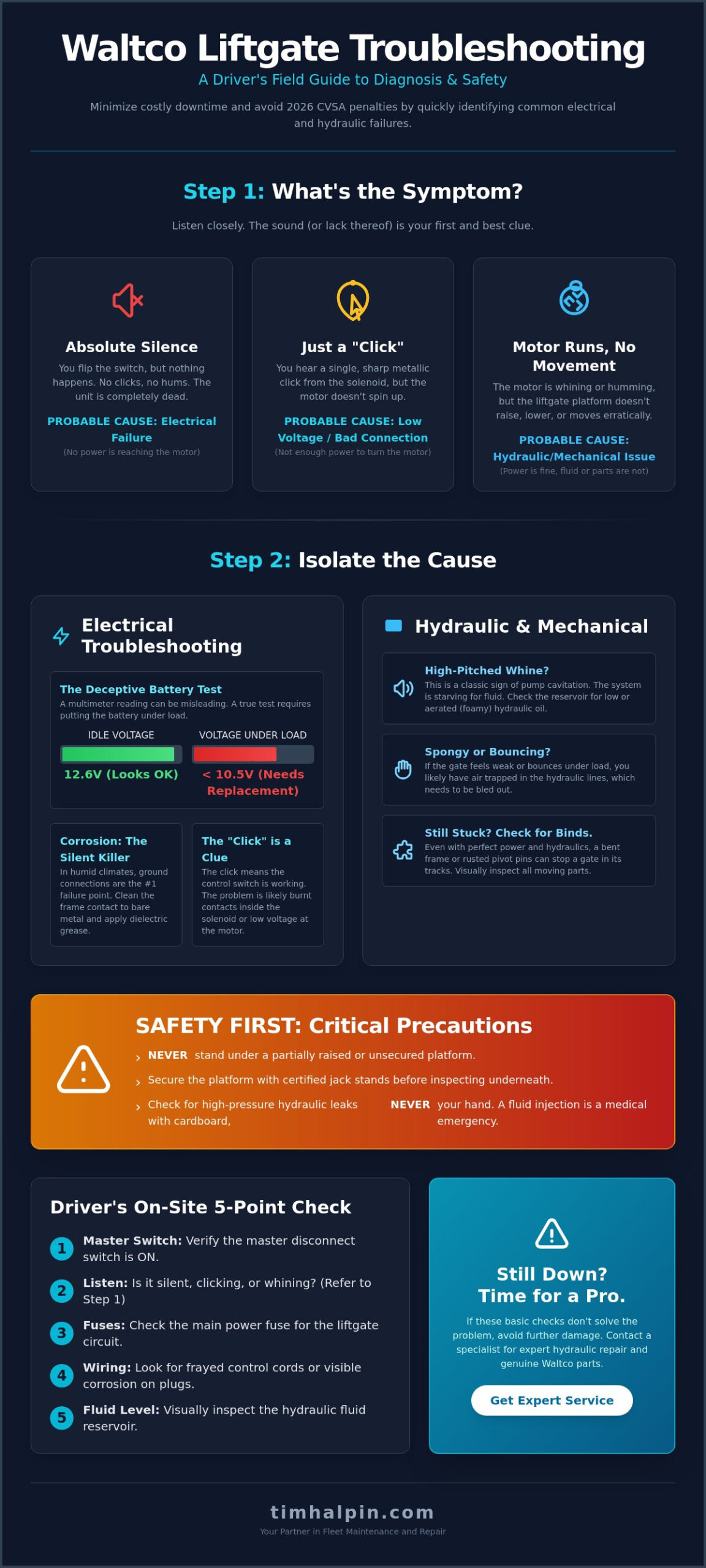
There are three primary symptoms our team sees most often when drivers report issues. First, the motor might run while the platform stays completely still. This usually means the pump is spinning, but fluid isn’t moving through the valves. Second, you might flip the switch and hear absolute silence. In this case, the electricity isn’t reaching the motor at all. Third, you might hear a distinct “click” from the solenoid, but the motor fails to turn. This is a classic sign of low voltage or a failing starter solenoid. Distinguishing between these sounds is the fastest way to narrow down your search for a solution.
It’s also vital to distinguish between intermittent glitches and total system failures. A gate that works “most of the time” but occasionally stalls is often suffering from a loose ground wire or a frayed control cord. These are the “ghosts” that eventually turn into total failures if they aren’t caught during a routine inspection. Total failures, on the other hand, usually point to a blown main fuse, a snapped hydraulic hose, or a seized motor.
Motor vs. Hydraulic Symptoms
Listen closely to the machine during operation. Electrical issues are almost always quiet or characterized by a single metallic click. Hydraulic issues are noisy. A high-pitched whine often means the pump is cavitating, which happens when the reservoir is low on oil. If the gate moves but feels “spongy” or bounces, you likely have air trapped in the lines. Don’t forget that mechanical binds can mimic hydraulic failure. A bent frame or rusted pivot pins can stop a gate in its tracks even if the hydraulic pressure is perfect. Always check the master disconnect switch first. It’s the simplest fix that gets overlooked in the heat of a busy delivery day.
Operator Safety During Diagnostics
Troubleshooting waltco liftgate problems requires a “safety first” mindset. Never stand under a partially raised platform. If a hydraulic seal fails or a pin snaps, that gate becomes a guillotine. We recommend securing the platform with jack stands or a shop crane before you crawl underneath for an inspection. Be extremely wary of high-pressure hydraulic leaks. A pinhole leak can inject fluid directly through your skin, which is a life-threatening medical emergency. Use a piece of cardboard, never your hand, to check for spray. Our goal is to get your equipment back in service without any injuries to your crew.
Diagnosing Electrical and Power Supply Issues
Electrical issues are the silent killers of fleet productivity. When you begin troubleshooting waltco liftgate problems, you should always start at the primary power source. A battery might show a healthy 12.6 volts on a multimeter while sitting idle, but that is often a deceptive number. Once the motor attempts to pull hundreds of amps to lift a heavy load, that voltage can plummet if the battery is weak or aged. You need a load test to see the true health of your power supply; a battery that can’t maintain at least 10.5V under load is a battery that needs replacing.
In our humid South Florida environment, ground connections are the most overlooked failure point. Salt air and moisture create a thin layer of oxidation that resists current flow. If your motor is sluggish or intermittent, pull the ground cable, clean the frame to bare metal, and reattach it with a layer of dielectric grease. Similarly, inspect the control switch and wiring harness for “green” corrosion inside the plugs or fraying where the cable bends. These small points of resistance add up to significant performance loss.
That rhythmic “clicking” sound you hear when pressing the button is actually a helpful diagnostic clue. It tells you the control switch and the solenoid coil are communicating. However, it also reveals that the heavy-duty contacts inside the solenoid might be burnt, or the motor itself isn’t receiving enough juice to spin. The solenoid is a bridge that has failed to close; if you have power going in but nothing coming out, the bridge is broken.
Understanding Waltco Thermalpak and Electropak
Many older maintenance guides suggest looking for an external Thermalpak box. However, modern Waltco motors in 2026 often feature internal Thermalpaks. If the motor stops after heavy use and won’t restart until it cools, the internal sensor is doing its job to prevent a meltdown. If these internal units fail permanently, you will likely need a full motor replacement. The Electropak protects the system from low-voltage spikes. For emergency diagnostics, you can bypass it momentarily to see if the motor spins, but you should never leave it bypassed for daily operations as it leaves your electronics vulnerable.
Voltage Drop Testing
To find a “hidden” culprit like internal cable rot, you must perform a voltage drop test. Place your multimeter leads on the battery positive post and the motor input terminal while the gate is operating under load. If you see a drop of more than 0.5V, you have high resistance somewhere in that line. Most heavy-duty Waltco pumps require a minimum of 10.5V under load to operate reliably. If you identify a bad cable or motor, sourcing high-quality Waltco liftgate parts is the only way to ensure your repair holds up against the rigors of the road.
Resolving Hydraulic and Mechanical Malfunctions
When the motor is humming but the platform refuses to lift, you have moved beyond electrical concerns into the heart of the hydraulic system. This stage of troubleshooting waltco liftgate problems requires a keen eye for fluid behavior and mechanical resistance. We often see fleet managers confuse a simple low-fluid situation with a more complex pump failure. If the gate moves in short, jerky bursts, check the reservoir. Low fluid causes the pump to suck in air, creating “aerated” fluid that looks milky or foamy. This trapped air is compressible, which leads to that unstable, bouncy movement during operation.
The lowering valve, often a solenoid-operated cartridge, is another frequent culprit. If a tiny piece of debris or a metal shaving gets caught in the valve seat, the gate may drift down slowly under its own weight or refuse to stay stowed. You should also inspect the exterior of the cylinders for signs of “weeping.” A small amount of dampness around the rod seal is common as equipment ages, but a steady drip indicates a catastrophic seal failure that requires immediate attention. Ignoring a weeping cylinder often leads to a sudden loss of pressure at the worst possible moment, such as during a heavy delivery.
Mechanical pivot points are just as critical as the fluid that powers them. If your drivers report a “screeching” sound or a platform that seems to hang up halfway through its cycle, it is likely a lack of grease. Waltco gates rely on a series of pins and bushings that must move freely. When these points run dry, they create immense friction that can actually stall the hydraulic pump. Regular lubrication is the simplest way to prevent the pins from seizing and causing permanent damage to the lift arms.
Hydraulic Pump and Valve Diagnostics
In South Florida, the relentless heat can thin out hydraulic fluid, making it easier for worn seals to leak. If your gate is stuck in the raised position due to a coil failure, most Waltco models feature a manual override on the lowering valve. By turning the manual nut or pushing the override pin, you can safely lower the platform to get the vehicle back on the road. If the gate lifts empty but stalls under a load, the internal relief valve may be out of adjustment or failing, allowing fluid to bypass the cylinders entirely.
Mechanical Alignment and Pins
Impacts with loading docks or curbs can easily distort the parallel arm assembly. Even a slight bend in the lift arms will cause the platform to sit unevenly, which puts massive stress on the bushings. If you notice seized pins or platform distortion, it is time to consult the pros. Our team specializes in expert truck hydraulics in Miami, ensuring that your mechanical alignment is as precise as your hydraulic pressure. Keeping these components in sync is the only way to guarantee a long service life for your equipment.
A Step-by-Step Troubleshooting Checklist for Drivers
When you’re out on a delivery route and the equipment fails, the pressure to find a solution is immense. We believe that every driver should have a reliable process for troubleshooting waltco liftgate problems before calling for a tow. This systematic approach helps you rule out simple oversights that often look like major mechanical disasters. It’s about working smarter so you can get back to your route without compromising your safety or the integrity of the vehicle.
- Step 1: Verify the Basics. Ensure the Master Disconnect Switch in the cab or near the battery box is in the ON position. Check the main circuit breaker or fuse; if it has tripped, reset it once. If it trips again immediately, you have a dead short that requires professional attention.
- Step 2: Inspect Power Connections. Look at the battery terminals for “green” crusty corrosion or loose nuts. In our humid climate, a connection that looks tight can still be failing due to oxidation. Give the cables a firm tug to ensure they are seated properly.
- Step 3: Listen to the Motor. Engage the switch and listen. If the motor whines with a high-pitched sound but the platform doesn’t move, your fluid level is likely too low to prime the pump. If you hear nothing at all, refer back to the electrical steps mentioned in the previous sections.
- Step 4: Visual Leak Check. Walk around the vehicle and look for pools of red or amber oil on the pavement. Check the hydraulic hoses for wetness or “balloons” in the outer jacket. A burst hose is a grounding offense and should never be operated.
- Step 5: Isolate the Switch. If your truck has both a fixed toggle switch and a handheld remote, test both. If the remote fails but the fixed switch works, you simply have a bad remote cord or a dead battery in the transmitter.
Emergency Field Fixes vs. Permanent Repairs
There are times when a minor adjustment can save the day. If you hear a click but the motor won’t spin, a gentle tap on the starter solenoid with a rubber mallet can sometimes seat the internal contacts for one last lift. Similarly, cleaning a dirty ground terminal with a wire brush is a valid roadside repair. However, you should never attempt to “jump” the solenoid posts with a screwdriver. This creates massive sparks and can weld the tool to the battery leads, leading to a fire or battery explosion. If the basic steps don’t work, it’s time to seek professional liftgate repair to ensure the fix is handled correctly.
When to Call for Professional Roadside Assistance
Knowing when to stop is just as important as knowing how to start. If you see snapped steel cables, burst hydraulic hoses, or structural cracks in the lift arms, the vehicle must be grounded immediately. These are “Point of No Return” failures that cannot be patched in a parking lot. Most importantly, if the gate begins to drift down on its own, do not attempt to “catch” it or prop it up with dunnage. A drifting gate indicates a total hydraulic seal failure, and the weight of the platform can easily crush anything in its path. Your safety is worth more than any cargo on that truck.
Professional Waltco Service and Parts in South Florida
While the steps we’ve shared for troubleshooting waltco liftgate problems can save you in a pinch, there’s no substitute for the precision of a seasoned expert. In the heart of Miami’s logistics district, we’ve seen how the unique combination of salt air, high humidity, and heavy usage cycles can wear down even the toughest equipment. Since 1987, Tim Halpin Equipment Corp has served as a steady guide for fleet managers who can’t afford a single hour of unnecessary downtime. We take immense pride in our local heritage, supporting the businesses that keep South Florida’s economy moving through every market shift.
Professional upfitting and proactive maintenance are the best defenses against the failures we discussed in previous sections. By ensuring your equipment is installed correctly from day one and serviced by those who understand the nuances of the Waltco brand, you prevent many common electrical and hydraulic issues before they ever start. Whether you’re managing a local delivery fleet or coordinating complex international exports, having a reliable partner in your corner makes all the difference. We treat every vehicle as if it were part of our own fleet, ensuring that your operators stay safe and your cargo stays on schedule.
South Florida’s Largest Liftgate Inventory
We maintain a massive on-site inventory to ensure you aren’t waiting weeks for a backordered component. Finding genuine Waltco liftgate parts in Miami shouldn’t be a struggle for busy professionals. Our warehouse is stocked with OEM motors, solenoids, and cylinder seal kits ready for immediate pickup or shipping. This “in-stock” advantage is vital for local fleet managers and our customers in the Caribbean and Latin America who rely on us for fast, accurate export services. We understand that a part on a shelf doesn’t help your driver; a part on your truck does. Our team is always ready to help you identify the exact component needed to resolve your troubleshooting waltco liftgate problems quickly.
Schedule Your Liftgate Inspection Today
Don’t wait for a total system failure to address your equipment’s health. Our 50-point liftgate safety and performance inspection is designed to catch the “ghosts” in your electrical system and the weeping seals in your hydraulics before they cause a crisis. We invite you to visit our South Florida location for local drop-off service where our team can provide the authoritative care your fleet deserves. Contact Tim Halpin Equipment Corp today to schedule your service or to source the high-quality components you need to keep your operations running smoothly. We’re here to ensure your reputation for reliability remains as strong as our commitment to this community.
Keeping Your Fleet Moving Through 2026 and Beyond
Maintaining a reliable fleet requires a proactive approach to equipment health. We’ve seen how mastering the basics of troubleshooting waltco liftgate problems can turn a potential disaster into a minor delay. By focusing on electrical integrity and training your drivers with a systematic checklist, you protect both your revenue and your team’s safety. Consistency in your maintenance routine is the surest way to avoid the stress of unexpected failures during peak delivery hours.
When a repair goes beyond the basics, you need a partner with the deep expertise and inventory to get you back on the road quickly. Tim Halpin Equipment Corp has been family-owned since 1987, providing the South Florida community with unwavering reliability and industry-leading knowledge. We house one of the largest liftgate parts inventories in the USA, featuring OEM Waltco parts in stock for immediate Miami pickup or international export.
Don’t let equipment downtime dictate your schedule or your bottom line. Get Expert Waltco Liftgate Repair & Parts at Tim Halpin Equipment Corp and experience the peace of mind that comes with working with seasoned local experts. We’re here to help you navigate every mile with confidence and keep your business moving forward.
Frequently Asked Questions
Why does my Waltco liftgate click but won’t go up?
A clicking sound is a common hurdle when troubleshooting waltco liftgate problems and usually indicates the solenoid is receiving a signal but failing to deliver high-amperage power. This typically stems from a weak battery, a loose ground connection, or internal corrosion within the solenoid itself. If the battery is healthy, the motor might have reached the end of its service life or is suffering from worn internal brushes that prevent it from spinning correctly.
How much hydraulic fluid does a Waltco liftgate need?
Most Waltco liftgate reservoirs require enough fluid to fill the tank until it’s approximately one to two inches from the filler neck when the platform is fully lowered. Because different models like the Flipaway or Rail Lift have varying cylinder sizes, you should always check the specific reservoir capacity in your owner’s manual. Overfilling the tank can cause fluid to leak out of the breather cap during operation, which creates an unnecessary mess.
Can I use ATF (Automatic Transmission Fluid) in my Waltco liftgate?
You can use Automatic Transmission Fluid (ATF) in many Waltco models, but it isn’t always the best choice for every South Florida climate. While Dexron III ATF is a common substitute, Waltco often recommends a high-quality ISO 32 hydraulic oil for consistent performance. Mixing different types of fluids can occasionally lead to seal swelling or foaming, so it is best to flush the system if you are switching types to ensure long-term longevity.
Where is the fuse or circuit breaker located on a Waltco liftgate?
The main circuit breaker or fuse is typically located within 18 inches of the truck’s battery box along the primary power cable. You will usually find a manual reset button on the side of a plastic housing that pops out when tripped. If you cannot find it there, check inside the liftgate’s pump box or near the master disconnect switch in the cab. Keeping this area clean prevents premature tripping from road grime and moisture.
Why is my liftgate lowering very slowly or not at all?
A gate that lowers slowly is often suffering from a clogged lowering valve or a failing solenoid coil that isn’t fully opening the cartridge. Debris as small as a metal flake can obstruct the fluid’s return path to the reservoir. Additionally, if the mechanical pivot pins haven’t been greased recently, the resulting friction can physically prevent the gate from descending under its own weight. Regular lubrication is key to ensuring a smooth and safe operation.
How do I find the serial number on my Waltco liftgate for parts?
You can find the serial number on a silver or black metal identification tag riveted to the main mount frame or the lift arm. This tag contains the model number and the specific serial code required to order the correct Waltco liftgate parts. If the tag is missing or painted over, check the owner’s manual or look for a stamped number on the cylinder housing to help our team identify the unit correctly for your needs.
What causes a Waltco liftgate motor to burn out prematurely?
Low voltage is the leading cause of premature motor failure because it forces the motor to draw higher amperage, which generates excessive heat. When troubleshooting waltco liftgate problems, we often find that poor ground connections or undersized battery cables have cooked the internal windings over time. Operating the gate beyond its recommended duty cycle without letting the motor cool will also lead to a shortened lifespan and eventual burnout, requiring a full motor replacement.
Is it safe to operate a Waltco liftgate if it has a small hydraulic leak?
It is never truly safe to operate a liftgate with a hydraulic leak, regardless of its size. A small weep can quickly turn into a catastrophic seal failure under the pressure of a heavy load, causing the platform to drop unexpectedly. Beyond the safety risks, even a minor leak is a violation that can result in your vehicle being placed out of service during a CVSA roadside inspection. It is always better to address leaks early.
