
What if the most important upfit decision isn’t which light bar to choose, but how every piece of equipment supports the vehicle’s mission? A practical plan for first responder vehicle upfitting south florida starts with the role: patrol, fire response, or another fleet need. That role shapes what belongs inside and out, where it should go, and how lighting, wiring, and mounts work together.
Choosing equipment while keeping vehicles available for duty can be challenging. Defining the scope early helps organize decisions and avoid installation surprises. Tim Halpin Equipment Corp. is a family-owned Miami business serving South Florida since 1987. The company installs public safety lighting, custom electrical wiring, and structural mounts, and provides truck equipment repair.
This guide explains how to plan an upfit around the vehicle’s response role, prioritize equipment, coordinate installation, and account for day-to-day fleet needs. It also covers how local installation and repair support can help keep a configuration practical as fleet requirements evolve.
Key Takeaways
- Start with the vehicle’s assigned response role and crew workflow to shape a useful equipment plan.
- Organize needs by function, including visibility, warning, communications, storage, and mounting.
- Compare upfit plans by vehicle fit, equipment integration, installation scope, and future service needs.
- Plan first responder vehicle upfitting south florida from requirements gathering through installation and handover.
- Tim Halpin installs public safety lighting, custom wiring, and equipment mounts, and provides truck equipment repair.
First responder vehicle upfitting in South Florida: start with the mission
Vehicle upfitting means selecting and installing equipment for a vehicle’s assigned work. For a first responder unit, that may include public safety lighting, custom wiring, structural mounting, and interior equipment. Start with the mission, not a shopping list. A coordinated layout accounts for available space and helps crews use the equipment as intended.
That’s why first responder vehicle upfitting south florida should begin with practical questions: What does this unit do during a typical shift? Where does it operate? Who needs to reach each item, and from which seat or access point? A general overview of emergency vehicle equipment can help frame the categories. The specific configuration should reflect the vehicle, crew workflow, and agency requirements.
Match the vehicle configuration to its response role
A law enforcement vehicle, a fire response unit, and another public safety vehicle may have different priorities. One may need a carefully arranged lighting and communications setup; another may need accessible storage and mounts for mission-specific tools. Before choosing components, map daily duties, crew positions, and how equipment will be reached during routine work. Vehicle type matters too: interior space and available mounting areas shape where equipment can go.
Plan lighting, wiring, and mounting together. Adding items one at a time without accounting for placement and integration can crowd the layout or make equipment harder to reach. Planning the full configuration first gives fleet managers a clearer basis for deciding what belongs on each unit.
Plan around South Florida fleet operations
In Miami-Dade, Broward, and across South Florida, heat, humidity, rain, and frequent vehicle use are practical considerations when planning equipment placement and upkeep. Consider exposure, access for routine checks, and whether crews can use the setup comfortably during their work. These factors belong in a review of the vehicle and equipment as a complete system.
For fleets with several vehicles serving similar roles, a consistent layout can help crews locate equipment and simplify installation and maintenance planning. Consistency doesn’t require identical units: differences in vehicle type or assignment may call for a tailored arrangement. Tim Halpin Equipment Corp. installs public safety lighting, custom electrical wiring, and structural mounts for commercial vehicles in South Florida, and provides truck equipment repair.
Takeaway: Define the mission, vehicle, and equipment requirements together before choosing a configuration.
Which equipment belongs in a South Florida first responder vehicle upfit?
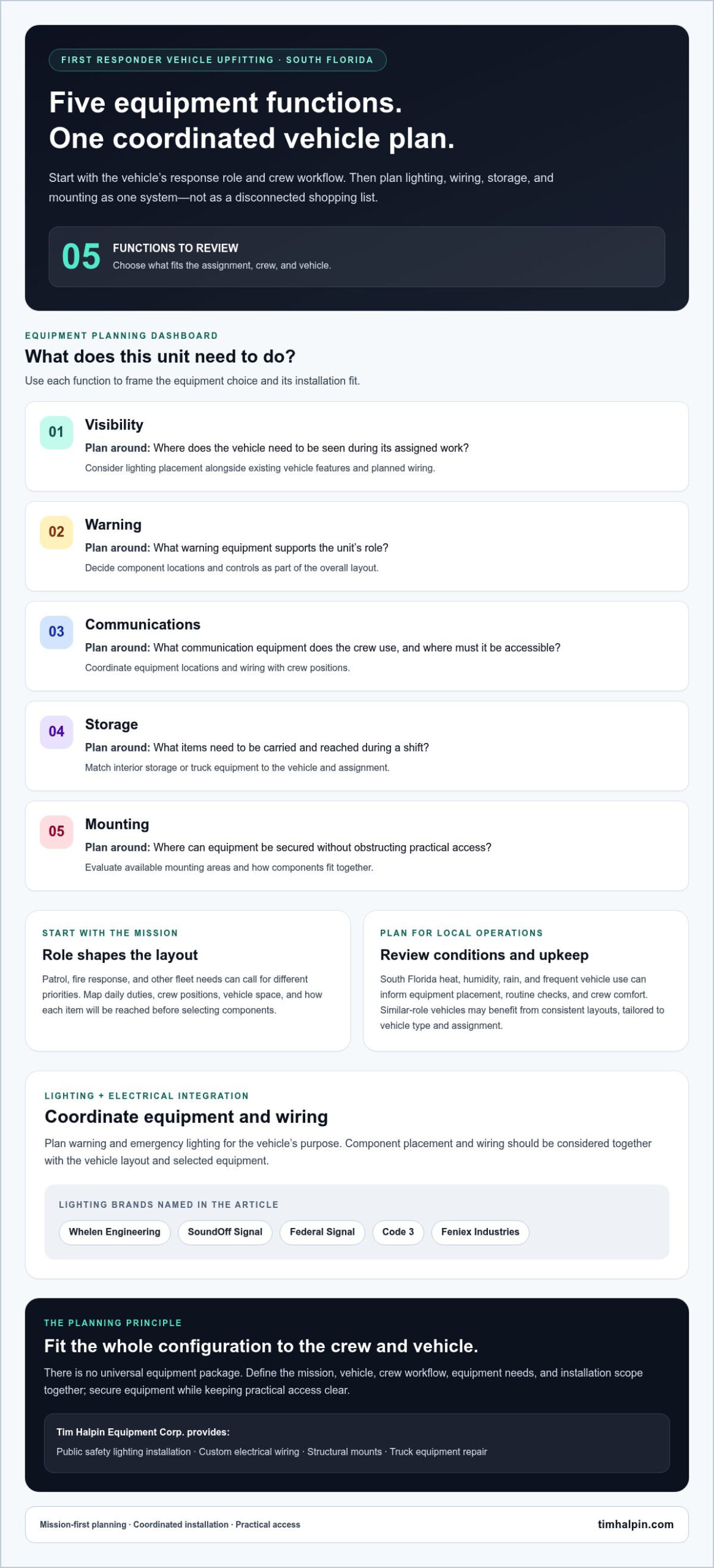
There’s no universal equipment package for every response vehicle. A useful plan considers what the unit needs to do, how the crew works, and what the vehicle can accommodate. For first responder vehicle upfitting south florida, organize the discussion by function, then decide which components fit that specific configuration.
| Equipment function | Planning question | Installation consideration |
|---|---|---|
| Visibility | Where does the vehicle need to be seen during its assigned work? | Consider lighting placement alongside the vehicle’s existing features and planned wiring. |
| Warning | What warning equipment supports the unit’s role? | Plan component locations and controls as part of the overall layout. |
| Communications | What communication equipment does the crew use, and where must it be accessible? | Account for equipment locations and wiring in relation to crew positions. |
| Storage | What items need to be carried and reached during a shift? | Choose interior storage or truck equipment to suit the vehicle and assignment. |
| Mounting | Where can equipment be secured without obstructing practical access? | Evaluate available mounting areas and how components fit together. |
Public safety lighting and electrical integration
Plan warning and emergency lighting around the vehicle’s purpose rather than copying another unit’s arrangement. Tim Halpin Equipment Corp. offers public safety lighting from Whelen Engineering, SoundOff Signal, Federal Signal, Code 3, and Feniex Industries, and installs lighting as part of vehicle upfitting. Consider component placement and wiring together with the vehicle layout and selected equipment. For additional background, see the NFPA 1900 Standard, which covers fire apparatus and other emergency response vehicle categories.
Mounting, storage, and access to essential equipment
Secure mounting and straightforward access go together. Map what the crew needs to reach, where each item will be used, and whether the proposed placement fits the vehicle’s available space. Interior storage or truck equipment may suit some assignments, while others call for a simpler arrangement. Tim Halpin coordinates structural mounting, custom electrical wiring, and equipment installation around the project scope. Explore public safety vehicle upfitting as you develop the equipment plan.
How to compare first responder vehicle upfitting options
An upfit can feel complex when equipment choices, wiring, mounting, and installation are treated as separate decisions. Compare them as one project to make the scope easier to understand. For first responder vehicle upfitting south florida, look beyond the component list: assess whether the work fits the vehicle, coordinates the equipment, includes installation, and accounts for future service.
A product-only purchase provides equipment but doesn’t necessarily address how it will be wired, mounted, or arranged alongside other components. Professional installation brings those decisions into the project scope. This distinction matters when a fleet needs a functional configuration, not a collection of items awaiting separate installation planning.
Questions that clarify the upfit scope
Document the vehicle, its assigned role, crew needs, and equipment that must stay accessible. Then separate fleet-wide standards from requests tied to an individual vehicle. This helps maintain consistency across similar units while allowing for differences in vehicle layout or assignment.
- Which components need electrical wiring, structural mounting, or coordination with other equipment?
- Where will equipment be placed, and can crew members reach it during normal use?
- Which requirements apply to every vehicle, and which are specific to this unit?
For lighting decisions, refer to the Florida statute on emergency vehicle lighting when reviewing project requirements. Use it as a planning resource alongside the complete installation scope.
Compare installation and long-term support
When reviewing an upfit, check that the scope includes the work needed to install the equipment in the vehicle, including wiring and mounting where required. Consider practical use too: does the arrangement reflect the crew’s workflow and the vehicle’s available space? A clear scope connects equipment choices with installation instead of leaving those decisions until later.
Future service is another useful comparison point. Truck equipment repair and maintenance can help fleets address vehicle and equipment needs over time and manage downtime. Tim Halpin Equipment Corp. provides installation, custom electrical wiring, structural mounting, and truck equipment repair for commercial vehicles. For broader fleet context, explore commercial truck upfitting in Miami.
Plan a first responder vehicle upfit in South Florida from scope to installation
A clear sequence turns an equipment request into an installation plan. For first responder vehicle upfitting south florida, the vehicle’s details, assigned role, and selected equipment inform the work. Gather those details early to give fleet and installation teams a useful starting point.
- Define the assignment. Describe the vehicle’s primary duties, who will use it, and what the crew needs to reach during a shift. Separate requirements that apply across the fleet from needs unique to this unit.
- Record vehicle details. Gather the make, model, year, and current fleet configuration. Include existing equipment, wiring, and mounting areas so the proposed layout reflects the actual vehicle.
- Build the equipment and placement list. Identify the equipment needed for the role, preferred locations, and access needs for each crew position. Flag components that require electrical wiring or structural mounting, as well as items that need coordination with other equipment.
- Develop the installation scope. Use the vehicle information and equipment priorities to plan the installation as connected work. Tim Halpin Equipment Corp. installs vehicle equipment, custom electrical wiring, and structural mounts for specialized fleet requirements.
- Review the finished setup and document it. At handover, record installed components and practical operating information for fleet staff. This gives vehicle users and maintenance teams a helpful reference as the unit enters service.
Prepare the vehicle and equipment requirements
Specifics matter. A lighting and wiring plan for one vehicle may not transfer directly to another, even if both units share a role. Note existing electrical or mounting considerations and identify what must remain accessible. This helps align equipment choices with the vehicle’s available space and the crew’s day-to-day use before installation begins.
Coordinate installation, handover, and ongoing support
Installation brings selected components together through mounting and electrical work suited to the project. After handover, keep the equipment record with fleet documentation so staff can refer to it during operation or service. Repair and maintenance support can also help address equipment and vehicle needs over time as fleet teams work to manage downtime.
Tim Halpin Equipment Corp. is a family-owned Miami business serving South Florida since 1987, providing upfitting, installation, and truck equipment repair. Use our South Florida upfitting guide to prepare your vehicle and equipment requirements.
Choose Tim Halpin for first responder vehicle upfitting in South Florida
A first responder upfit should reflect the vehicle’s assigned role and the equipment its crew needs. Based in Miami, Tim Halpin Equipment Corp. serves fleets across South Florida with a project-focused approach. The family-owned business connects equipment selection with installation, custom electrical wiring, and structural mounting for commercial vehicles.
Local equipment, installation, and repair experience
Tim Halpin installs emergency lighting and other vehicle equipment, coordinating the work around the project scope. Lighting placement, wiring, and mounting are planned together so the installation reflects how the vehicle and its equipment will be used. Public safety lighting options include brands such as Whelen Engineering, SoundOff Signal, Federal Signal, Code 3, and Feniex Industries.
Upfitting is one part of a fleet’s ongoing needs. Repair and equipment support also matter as vehicles remain in service and requirements evolve. Tim Halpin provides truck equipment repair and maintenance alongside installation work, serving South Florida fleets with project and vehicle support. Learn more about Tim Halpin’s South Florida equipment legacy.
Take the next step with a clear project brief
Prepare a few details for your project brief: the vehicle’s make, model, and year; its intended response role; the fleet’s standard configuration; and the equipment to integrate. Include crew access needs, preferred equipment locations, and existing wiring or mounting considerations. These details keep the project discussion grounded in the vehicle and its day-to-day work.
With a clear brief, the project discussion can focus on scope, installation, and ongoing vehicle support. Tim Halpin installs public safety lighting, custom wiring, structural mounts, and other vehicle equipment to meet the outlined requirements. Defining the scope helps identify the work involved and keeps the plan specific to the vehicle.
Ready to talk through the vehicle and its role? Discuss your vehicle upfitting needs with Tim Halpin Equipment Corp.
Put your fleet’s mission at the center of the next upfit
A well-planned response vehicle starts with its assigned role, crew workflow, and equipment needs. Bringing lighting, custom wiring, and structural mounting into one installation plan keeps those decisions connected to the vehicle’s layout. Planning for repair and equipment support also helps fleet teams account for ongoing vehicle needs.
For first responder vehicle upfitting south florida, Tim Halpin Equipment Corp. brings local experience from its family-owned Miami business serving the region since 1987. The company installs public safety lighting, custom electrical wiring, and structural mounts, and provides truck equipment repair and maintenance.
Share your vehicle details, intended role, and equipment priorities to start a focused project discussion. Discuss your first responder vehicle upfitting needs with Tim Halpin Equipment Corp. A clear plan helps shape an upfit around the work ahead.
Frequently Asked Questions
What does first responder vehicle upfitting include?
First responder vehicle upfitting means equipping a vehicle for its assigned public safety work and installing the selected components. Depending on the vehicle and project scope, this can include emergency lighting, custom electrical wiring, structural mounting, and other equipment. The right configuration reflects the vehicle, crew workflow, and agency requirements. A clear project scope connects equipment choices with how the unit will be used.
How do I choose equipment for a first responder vehicle?
Start with the vehicle’s role and the tasks its crew performs. List the equipment the unit needs, where each item should be mounted, and how staff will access it. Then consider vehicle fit, electrical integration, and fleet standards. Planning these details together helps avoid treating components as isolated purchases and gives the installation team a practical brief.
Can emergency lighting be installed on an existing vehicle?
Yes, an existing vehicle can be upfitted. The configuration depends on the vehicle, its current equipment, and the installation scope. Account for available mounting areas, wiring, and how the selected equipment fits the vehicle’s intended use. Tim Halpin installs public safety lighting and other commercial vehicle equipment as part of its upfitting work.
How long does first responder vehicle upfitting take?
Project timing depends on the vehicle, selected equipment, installation requirements, and overall scope. A focused installation and a more involved custom configuration require different planning. Define the vehicle and equipment requirements early, then coordinate the project around those details. A specific scope helps set realistic expectations without assuming every upfit follows the same schedule.
What should a fleet manager prepare before requesting an upfit?
Gather the vehicle’s make, model, and year, along with its assigned role and current configuration. List required equipment, preferred mounting locations, crew access needs, and fleet-wide standards. Include known electrical or structural considerations, such as existing equipment that must remain in place. These details make the project discussion specific and support an installation plan tailored to the vehicle.
Does first responder vehicle upfitting include lighting installation?
Lighting can be included when it fits the vehicle’s mission and project scope. Tim Halpin installs public safety lighting and offers options from Whelen Engineering, SoundOff Signal, Federal Signal, Code 3, and Feniex Industries. The suitable lighting and installation plan depend on the vehicle and agency requirements. Plan wiring and placement alongside the other equipment in the configuration.
Why work with a South Florida vehicle upfitter?
A local upfitting partner can coordinate equipment installation and related vehicle support in the region. For fleets in Miami-Dade, Broward, and surrounding South Florida communities, local experience is one practical consideration alongside vehicle fit and installation scope. Tim Halpin Equipment Corp. is a family-owned Miami business serving South Florida since 1987, providing installation, public safety lighting, and truck equipment repair.
