

A bucket truck’s slow lift may point to a hydraulic concern, while an intermittent control issue may involve the electrical system. When equipment trouble interrupts field work, describing the symptoms clearly helps the repair team focus its assessment. For fleets searching for bucket truck repair miami, Tim Halpin Equipment Corp provides bucket truck and commercial truck equipment repair in South Florida.
It can be difficult to tell whether a warning sign involves the hydraulics, electrical system, or mechanical components, especially when the truck is still partly operational. This guide covers symptoms to report, details to gather before arranging service, and ways to distinguish an unexpected issue from planned maintenance. A clear description helps you discuss the problem without assuming a cause.
Key Takeaways
- Note new noises, leaks, irregular movement, or electrical symptoms, including when they occur.
- Describe the affected function rather than guessing at a failed component. Hydraulic, electrical, and mechanical symptoms can overlap.
- Sort the issue as an unexpected symptom, planned maintenance, or a known repair to organize your service request, not to assess whether the truck is safe to operate.
- When arranging bucket truck repair miami service, share the truck’s details, symptoms, and how they affect operation.
- Tim Halpin Equipment Corp is a family-owned Miami business serving South Florida, with hydraulic and mechanical repair experience.
Bucket Truck Repair in Miami: Recognize Problems Before Downtime Grows
Bucket truck repair can involve the truck itself and the specialized equipment that raises and positions the work platform. A fault may affect the vehicle, the lifting equipment, or how their functions work together. A symptom is a useful starting point, not a diagnosis. For a general explanation of the bucket as a machine part, see What is a Bucket Truck?
Pay attention when the truck sounds, moves, or responds differently than usual. A new noise, visible fluid, uneven movement, hesitation, or intermittent control response is a reason to arrange a service evaluation. Even if the equipment still operates, noting changes can help the repair team decide what to inspect. Don’t identify a faulty part or attempt a field repair based on appearance alone.
Which bucket truck symptoms should prompt a service evaluation?
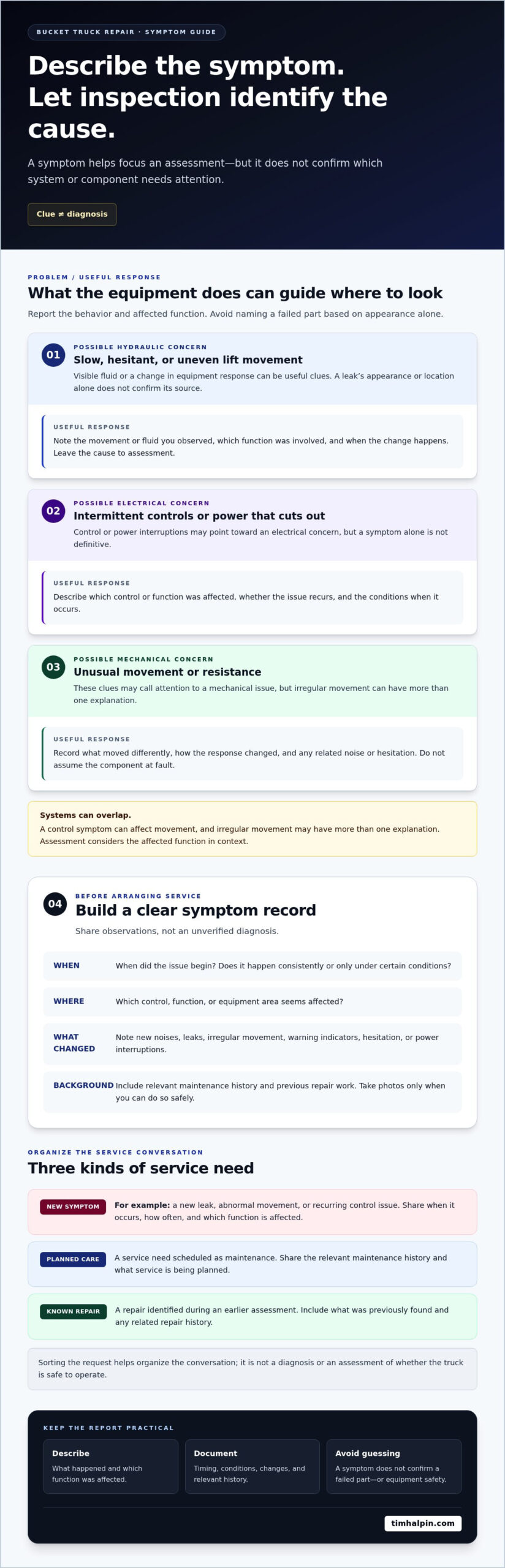
Note fluid around the truck or equipment, but don’t assume its source from its location or appearance. Record unusual movement, hesitation, or inconsistent responses when a function is used. Intermittent controls or power that cuts out can be electrical warning signs. Describe what happened and which function was involved. A symptom alone doesn’t confirm which system or component needs attention.
What information helps explain a bucket truck problem?
Start with observations: when the issue began, whether it happens every time or only under certain conditions, and which function was affected. Note how the symptom changes, if it does, and include relevant maintenance history or previous repair work. Take photographs only when you can do so safely, without approaching or operating equipment in a way that adds risk.
- When: When did the issue begin, and does it happen consistently?
- Where: Which control, function, or equipment area seems affected?
- What changed: Note noises, leaks, movement, warning indicators, or power interruptions.
- Background: Share relevant maintenance and repair history, plus photos taken safely.
These details make a bucket truck repair miami service conversation more focused, whether your fleet works in Miami or elsewhere in South Florida. Document what you observe rather than making a diagnosis you can’t verify. A concise record of the symptom, operating conditions, and affected function gives the repair team a practical place to start.
How Bucket Truck Repair Diagnostics Trace Hydraulic, Electrical, and Mechanical Faults
A useful diagnosis starts with what the operator noticed and which function was affected, not a guess about a failed part. A lift that hesitates, for example, describes an operating symptom. It doesn’t establish whether the cause is hydraulic, electrical, mechanical, or a combination. The repair process narrows those possibilities by comparing the report with what can be observed and assessed on the equipment.
A symptom points to where to investigate, but it doesn’t identify the part that failed. This distinction matters on complex equipment, where one system’s behavior can affect another system’s response. Notes about timing, operating conditions, and affected functions give technicians a more useful starting point for inspection and appropriate testing.
How hydraulic symptoms are assessed
For a concern that appears hydraulic, the evaluation can consider visible fluid, equipment movement, and changes in response. A leak’s appearance or location alone doesn’t confirm its source. Slow or uneven movement doesn’t point to one specific cause either. Hydraulic systems contain connected elements, so the reported symptom needs to be considered alongside the equipment’s overall condition. For a broader explanation, read our truck hydraulics repair guide.
How electrical and mechanical symptoms are separated
Control or power interruptions may suggest an electrical concern, while unusual movement or resistance may call attention to a mechanical issue. These clues guide inspection but aren’t definitive: a control symptom can affect movement, and irregular movement can have more than one explanation. Technicians use the reported conditions to focus their assessment, then determine what the evidence supports rather than relying on assumptions or an unqualified repair attempt.
Because these trucks combine vehicle and lifting equipment systems, an evaluation should consider how the affected function operates in context. The OSHA Regulations for Bucket Trucks provide a reference for aerial-lift safety requirements. Keep safety considerations separate from troubleshooting: a symptom description helps explain the concern, but doesn’t establish whether equipment is safe to use.
For fleets arranging bucket truck repair miami service, share the operator’s observations and relevant maintenance history with Tim Halpin Equipment. This information helps frame the repair conversation without locking it into an unverified diagnosis. Learn more about Tim Halpin Equipment and its commercial truck equipment repair services in South Florida.
Bucket Truck Repair or Maintenance? Match the Service to the Problem
Not every service need starts the same way. A new symptom calls for a different conversation than planned maintenance or a repair identified during an earlier assessment. Sorting the request into a broad category helps fleet teams share useful context and plan what to discuss, without trying to diagnose equipment from a brief description.
| Service need | What it may look like | Useful information to share |
|---|---|---|
| Unexpected symptom | A new leak, abnormal movement, or recurring control issue | When it occurs, how often, and which function is affected |
| Planned maintenance | Service scheduled as part of fleet upkeep | Relevant records, prior concerns, and equipment configuration |
| Known repair | An issue already assessed or documented for follow-up | Previous findings and any change in the symptom |
This table helps organize a service request. It can’t determine whether a bucket truck is safe or appropriate to operate. If equipment safety is uncertain, follow your workplace procedures rather than relying on an online description.
When does a new symptom call for repair assessment?
Give prompt attention to a new leak, abnormal operation, or recurring control problem. A symptom that returns may offer useful context, even if the equipment responds differently each time. Describe what changed and how it affects the task. Don’t treat a brief description as proof that a truck is safe or unsafe. Follow established workplace processes when operation is in question.
How can planned maintenance support fleet readiness?
Keep service records together and note recurring concerns, even if they seem minor. A history can show whether a symptom is new, has returned, or has changed since prior service. Planned attention also gives operators a reference point for noticing changes in equipment response. For hydraulic upkeep context, Hydraulic System Maintenance for Bucket Trucks offers additional reading on the topic.
Equipment configuration also shapes fleet planning. A truck’s intended role and installed equipment help frame maintenance priorities, so the Miami truck equipment and upfitting guide can provide related planning context.
Routine maintenance is planned attention; repair is a response to a known fault or a change in operation. For bucket truck repair miami service, organized records and a clear description help make the initial conversation more useful. Learn more about Tim Halpin Equipment and its commercial truck equipment services.
Preparing for Bucket Truck Repair in Miami and South Florida
A focused service conversation starts with useful details, not a perfect diagnosis. Before discussing bucket truck repair miami, gather information about what the truck is doing, where it operates, and how the issue affects your fleet’s plans. A few clear notes can make the initial discussion more practical.
What details should a fleet manager have ready?
Work through this sequence before arranging service. Don’t delay a safety decision to complete the checklist. If equipment safety is uncertain, follow your workplace procedures first.
- Identify the truck. Note its make, model, year, fleet or unit number, and any available identifying details for the bucket equipment.
- Describe the concern. Record what happened, which function was affected, when the issue began, and whether it happens consistently or under particular conditions.
- Note recent changes. Mention changes in operation, relevant work, or earlier symptoms that may help explain the current concern. Stick to observations rather than guessing at a failed part.
- Gather useful records. Have relevant maintenance and repair history available, along with photographs taken safely if they help show the issue. Records shouldn’t delay urgent safety decisions.
- Share scheduling and access needs. Explain how the truck fits into your work schedule and describe practical arrangements for presenting the equipment for service.
How does local service planning help reduce uncertainty?
Location and fleet timing provide useful context when arranging service. Tell the repair team where the truck is based or operates, whether the need affects a scheduled job, and what planning constraints matter to your crew. Include equipment access details so the service discussion can account for the truck’s circumstances.
Tim Halpin Equipment is based in Miami and serves South Florida, including Doral, Medley, Hialeah, Kendall, and Fort Lauderdale. Sharing your operating area along with the truck’s details gives the team a clearer picture of the request. The family-owned business has served customers since 1987 and provides commercial truck equipment repair to South Florida fleets.
With the truck information, symptom notes, records, location, and scheduling needs together, you can have a more direct conversation about the issue. Discuss your bucket truck repair needs with Tim Halpin Equipment.
Bucket Truck Repair in Miami with Tim Halpin Equipment
Bucket truck repair calls for an understanding of both commercial trucks and the specialized equipment they carry. Tim Halpin Equipment Corp is a family-owned Miami business focused on commercial truck equipment, serving South Florida customers since 1987. The company repairs bucket trucks as well as other commercial truck equipment.
For a fleet manager, the first conversation is about the truck’s symptoms and the work it needs to support. A reported change in movement, a visible leak, or another operating concern gives the repair team context. The cause still needs to be assessed rather than assumed. Clear communication connects the concern to the appropriate service discussion.
What makes a local equipment repair relationship useful?
Local service is useful when it supports a practical exchange about the equipment and its role in your fleet. Tim Halpin Equipment’s Miami base and South Florida focus bring commercial equipment repair to the communities it serves. Share what operators have observed, how the issue affects daily operations, and relevant service requirements. This context keeps the conversation specific without assuming a diagnosis or result.
Bucket truck issues may involve hydraulic or mechanical repairs, and symptoms can be difficult for operators to distinguish. Tim Halpin Equipment provides hydraulic and mechanical repair as part of its broader truck equipment repair services. A focused service discussion connects those capabilities to the reported concern while distinguishing an observed symptom from a confirmed fault.
What is the next step for a bucket truck issue?
Before discussing service, bring together the details that help explain the truck and the concern:
- Truck identification and available information about its equipment configuration.
- A concise description of the symptom, when it occurs, and which function is affected.
- Relevant service history and any recent changes that may add context.
These notes don’t need to establish a diagnosis. They give the conversation a clear starting point. If the issue raises a safety concern, follow your workplace procedures while arranging the appropriate next step.
For fleets looking for bucket truck repair miami, Tim Halpin Equipment provides bucket truck repair in South Florida. Share what you know, including relevant history, to start a focused conversation about the equipment concern. Talk with Tim Halpin Equipment about bucket truck repair.
Keep Your Fleet Moving with a Clear Service Plan
Good repair planning starts with noticing what’s changed and describing it clearly. A new leak, inconsistent movement, or control issue is a symptom to report, not a diagnosis. Sharing when it occurs, which function is affected, and relevant service history helps focus the repair conversation. Maintenance records also give your team a useful reference as equipment concerns develop.
For fleets seeking bucket truck repair miami, Tim Halpin Equipment brings a local commercial truck equipment focus. The family-owned Miami business has served customers since 1987 and provides hydraulic and mechanical repair. That experience connects bucket truck concerns to the wider systems that support your equipment and day-to-day operations.
Gather your truck details and symptom notes, then Discuss your bucket truck repair needs with Tim Halpin Equipment. Contact the team to start a focused conversation about service for your fleet.
Frequently Asked Questions
Can I keep operating a bucket truck if its hydraulics are leaking?
Don’t assume it’s safe to keep operating a bucket truck with a hydraulic leak. Follow your workplace equipment-safety procedures, keep people clear of potential hazards, and arrange an assessment. A leak can indicate a system problem, but its source and seriousness can’t be determined by appearance alone. If it’s safe to do so, note where and when the leak appears, then share those observations with the repair team.
What does bucket truck repair in Miami typically include?
Bucket truck repair may involve assessing a reported issue and addressing the affected truck or equipment system. Tim Halpin Equipment provides bucket truck repair and commercial truck equipment repair, including hydraulic and mechanical repair services. The appropriate work depends on the symptoms and assessment findings, not an assumed cause. For bucket truck repair miami, share the operating concern and relevant service history to focus the service discussion.
How do I know whether a bucket truck problem is hydraulic or electrical?
Symptoms can offer clues, but they don’t confirm the cause. A visible leak or unusual equipment movement may point toward a hydraulic concern, while intermittent controls or power interruptions may involve an electrical system. Since systems can interact, don’t guess at a failed part or replace components based only on a symptom. Note what happens, when it happens, and which function is affected for a more useful diagnostic assessment.
How often should a bucket truck receive maintenance?
Follow the truck and equipment manufacturers’ guidance, workplace procedures, and inspection requirements that apply to your operation. There isn’t one service interval that suits every bucket truck, work pattern, and equipment configuration. Keep maintenance and repair records, note recurring concerns, and report changes promptly. A consistent history can help the repair team distinguish a new issue from a recurring one and understand how the equipment has been maintained.
What information should I provide when arranging bucket truck repair?
Have the truck’s identifying details, available equipment information, symptom description, and relevant service history ready. Explain when the issue began, whether it happens repeatedly or under particular conditions, and which function is affected. If you can safely document a visible symptom, include that information. These details give the repair conversation a clear starting point, though an assessment is needed to determine the actual fault and appropriate work.
Does Tim Halpin Equipment serve bucket truck customers around Miami?
Yes. Tim Halpin Equipment is based in Miami and serves South Florida, including Miami, Doral, Fort Lauderdale, Medley, Hialeah, Kendall, and Key West. The company provides bucket truck repair and commercial truck equipment repair, including hydraulic and mechanical repair services. When discussing a bucket truck concern, share where the truck operates and how it fits into your fleet schedule. That local context helps frame the conversation around your equipment needs.
How long does bucket truck repair take?
Repair time depends on the fault, assessment findings, work required, and equipment involved, so a symptom description alone can’t establish a reliable completion estimate. Share the issue and relevant maintenance history when discussing service. Once the equipment has been assessed, the findings can clarify the work involved and next steps. Avoid planning around a specific turnaround until you have information about your truck and its repair needs.
