

What if the best first step toward becoming a commercial truck parts exporter in Miami isn’t finding overseas buyers, but choosing parts you can identify and source reliably? Export opportunities can be appealing, but a viable business depends on more than demand. Buyers return to a commercial truck parts exporter in Miami that provides accurate product information and prepares each order carefully.
This guide covers the practical stages of building an export operation, from selecting a focused parts niche to researching sourcing, shipping, documentation, and buyer expectations before accepting an order. You’ll also learn how clear compatibility details and dependable service can help your business stand out. Tim Halpin Equipment Corp serves local and international customers with liftgate, tow truck, box truck, and service-vehicle parts. Its Miami-area experience illustrates why product knowledge matters: the more precisely you can identify a part and explain what is known about its application, the more confidently buyers can assess whether it meets their needs.
Key Takeaways
- Define your export business around a clear product focus, buyer fit, and repeatable service process.
- Compare liftgate, towing, box-truck, hydraulic, and heavy-hauling parts, then start with a category you can identify and describe accurately.
- Before accepting an order, check part identity, inventory accuracy, packaging needs, and shipment details.
- A dependable commercial truck parts exporter Miami buyers can work with keeps them informed from initial inquiry through shipment coordination and follow-up.
- Use a consistent workflow for verifying parts and sharing clear order updates to build buyer confidence over time.
How to Become a Commercial Truck Parts Exporter: Start with the Business Model
A commercial truck-parts exporter sources or supplies truck components and sells them to buyers in other countries, coordinating product identification and shipment preparation for each order. That differs from local retail, where the buyer purchases nearby, and from repair or installation work, where the business performs labor on equipment. Exporting parts requires a process built around products, buyer needs, and cross-border orders. A repair shop’s workflow alone won’t cover every step.
What does a commercial truck parts exporter do?
An exporter connects parts supply with an international buyer’s requirements. The buyer may be a repair business, fleet operator, equipment dealer, or parts reseller looking for components suited to its vehicles or equipment. The exporter needs to describe the part accurately and gather enough information to assess what the buyer is seeking. Selling components is not the same as exporting complete vehicles, and it doesn’t automatically include repairing or installing them.
The business model depends on the categories you focus on and the buyers you intend to serve. Liftgate components, towing-equipment parts, box-truck parts, and hydraulic or heavy-hauling components serve different equipment and purchasing needs. Understanding the basics of International Trade can help frame how a sale connects a supplier in one market with a buyer in another. In practice, start with the part and the customer: what equipment is involved, what component is needed, and what information will identify it?
Why build a focused export business in Miami?
Miami is the local business context for this article, not a guarantee of easier shipping or automatic access to overseas customers. A new exporter still needs to develop supplier relationships, understand product categories, and identify buyers whose needs align with the parts offered. Local sourcing relationships and international demand are separate parts of the business. Nearby contacts may help you understand supply, while overseas buyers define the product details and order expectations you need to meet.
A commercial truck parts exporter Miami venture is easier to plan when its first niche is specific. A focused category helps narrow which suppliers to approach, which product details to document, which buyers to pursue, and how to organize each order. Starting with fewer categories can make identification and communication more consistent while you learn how your process performs.
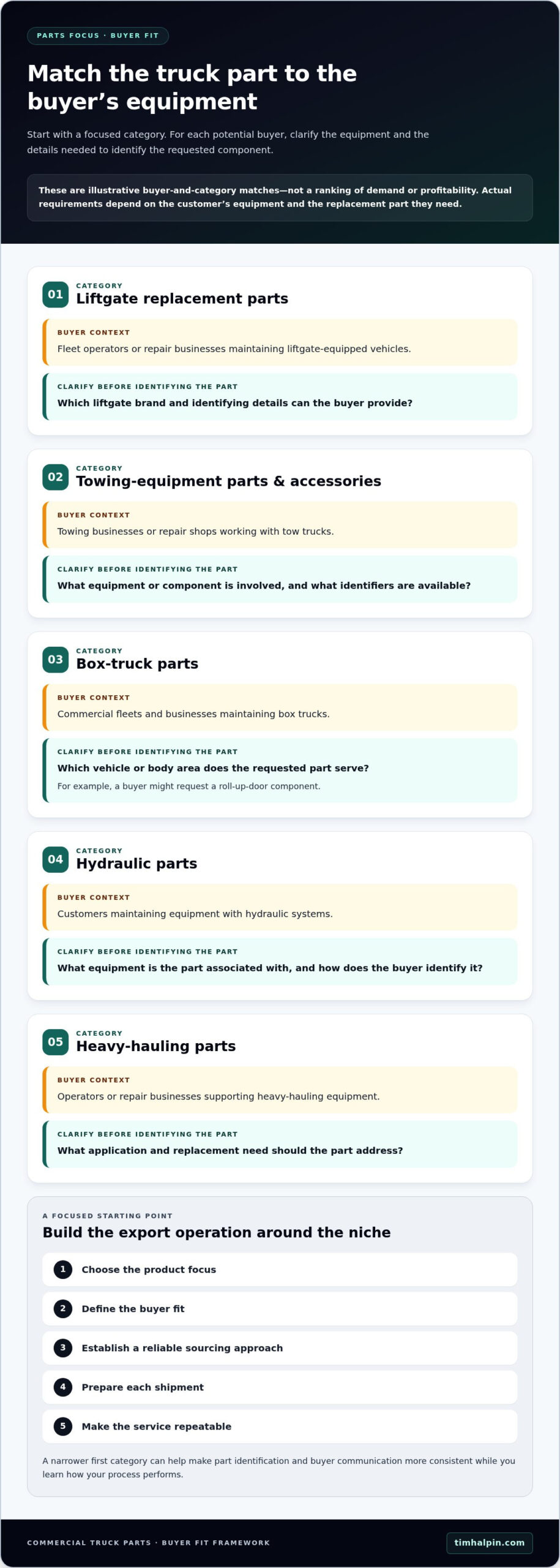
Think of the setup as a sequence: choose the product focus, define the buyer fit, establish a reliable sourcing approach, prepare each shipment, and make the service repeatable. These decisions are connected. A buyer’s equipment and purchasing needs shape the parts you offer, while the part category shapes what you need to know about sourcing and shipment preparation.
Tim Halpin Equipment Corp offers a local example of category knowledge in practice. Family-owned and operating since 1987, the company serves local and international customers with liftgate, towing, box-truck, hydraulic, transport, and heavy-hauling parts. Its range illustrates the variety of possible niches. An aspiring exporter can use that landscape to identify a narrower starting point and build familiarity with the parts and buyers in that category.
Choose Truck Parts and Buyers Before Building Your Export Operation
A focused product range makes it easier to learn what buyers need and describe parts accurately. Rather than trying to export every component used in commercial vehicles, compare a few categories against the customers you hope to serve. A fleet operator maintaining liftgate-equipped box trucks, for example, may have different purchasing needs from a towing-equipment repair business or a heavy-hauling operator.
Match truck-parts categories to customer needs
Use the table as a starting framework, not a ranking of demand or profitability. These are illustrative buyer-and-category matches. Actual requirements depend on the customer’s equipment and the replacement part they’re seeking.
| Parts category | Potential buyer context | Questions to clarify |
|---|---|---|
| Liftgate replacement parts | Fleet operators or repair businesses maintaining liftgate-equipped vehicles | Which liftgate brand and identifying details can the buyer provide? |
| Towing-equipment parts and accessories | Towing businesses or repair shops working with tow trucks | What equipment or component is involved, and what identifiers are available? |
| Box-truck parts | Commercial fleets and businesses maintaining box trucks | Which vehicle or body area does the requested part serve? A buyer might, for example, request a roll-up-door component. |
| Hydraulic parts | Customers maintaining equipment with hydraulic systems | What equipment is the part associated with, and how does the buyer identify it? |
| Heavy-hauling parts | Operators or repair businesses supporting heavy-hauling equipment | What application and replacement need should the part address? |
Buyer geography matters because a customer’s equipment, terminology, and order requirements may differ from those familiar to a local supplier. Before shaping your product mix, learn what vehicles or equipment your intended buyers maintain, which parts they need to replace, and what information they can provide to identify a component. The International Trade Administration (ITA) offers U.S. businesses export and market resources that can help inform research into target markets.
For a new commercial truck parts exporter miami, a manageable niche is one where you can consistently recognize the product category, record useful identifiers, and explain what is known without guessing about fit. A narrower range can also make early sourcing and recordkeeping easier to organize.
Create a reliable part-identification process
Good identification starts with a clear record. Capture the brand, part description, and any identifiers supplied by the buyer. Ask for clear photographs when they can help distinguish the item, and document its condition accurately. Don’t infer compatibility from appearance alone or substitute an assumed part number for information the buyer hasn’t provided.
These habits reduce avoidable confusion: the buyer can review what’s being discussed, and your team has a consistent record to use as the order progresses. Tim Halpin Equipment Corp’s range of liftgate and towing-equipment parts, alongside box-truck and heavy-hauling categories, offers a local reference for seeing how distinct customer needs shape a parts mix. You can explore commercial truck parts categories as you consider where to focus.
Build a Sourcing and Export-Readiness Process for Truck Parts
A repeatable process helps prevent a promising inquiry from becoming a mismatched order or incomplete shipment. For a commercial truck parts exporter in Miami, treat readiness as a series of checks, from identifying the component to confirming the buyer’s order and shipment details. Accurate descriptions keep buyer expectations and order records aligned.
Prepare product and order information
Use the same clear product record as an order moves from inquiry to shipment. Include the brand, part description, quantity, and condition where applicable. Compare the buyer’s requested details with the product information you have before treating the order as ready. Keep descriptions consistent across quotes, invoices, and shipment records so each document refers to the same item.
- Identify the part. Record its brand and description, along with buyer-supplied identifiers and relevant photographs when available.
- Check sourcing and inventory. Confirm that the item being offered matches the record and that inventory information reflects what can be allocated to the order.
- Review the buyer’s request. Compare the requested component and quantity with the product details. Resolve discrepancies before proceeding.
- Research export requirements. Review current guidance for the product, destination, and transaction, including any applicable classification or documentation considerations.
- Plan the shipment. Consider package dimensions, weight, protection needs, handling, and the responsibilities agreed with the buyer before dispatch.
Research export requirements before accepting an order
Export rules and paperwork can vary by product and destination, so don’t assume one set of requirements applies to every truck part or customer. Research current authoritative guidance for the specific transaction, including relevant classification requirements, and verify details before accepting an order as ready to ship. Requirements may depend on the product, destination, and transaction. A document, permit, or duty that applies in one case may not apply in another.
Build time for this review into your order workflow. Keep a record of the guidance checked and the product information used to make the decision. If an order’s details change, revisit the review rather than relying on assumptions drawn from a previous shipment.
Plan packing, freight, and buyer communication
Packing choices should reflect the part’s size, weight, condition, and protection needs. A small component and a bulky equipment part present different handling considerations, so record the planned packaging and make sure it corresponds to the item being shipped. Discuss shipment coordination and each party’s responsibilities clearly with the buyer. Don’t promise a freight method, delivery date, or shipping availability without verified details.
Before dispatch, compare the final product description and quantity with the order and shipment records, then communicate the transaction status to the buyer. A steady process helps a commercial truck parts exporter in Miami handle different orders with care and keep information consistent from sourcing through shipment.
Turn Export Readiness into a Repeatable Sales and Service Workflow
A clear sales process gives each international inquiry a sensible next step, from identifying the requested part to following up after the order. For a commercial truck parts exporter miami, consistency matters: buyers should understand what’s being offered, what information is still needed, and where the transaction stands. A simple workflow also helps your team keep inquiries organized as the product range and customer base grow.
Make international inquiries easier to qualify
Start by gathering the details that shape the order. Ask where the shipment is going, what vehicle or equipment the part is for, and how the buyer identifies the requested component. Clarify quantity, condition expectations, and which shipment tasks each party is responsible for. Direct questions early can reveal missing details before they lead to a parts mismatch or an incomplete order.
- Log the inquiry. Record the buyer’s contact details, destination, requested category, and the date of the request.
- Verify the part. Compare the buyer’s description and supplied identifiers with the product information available. Request clarification when details don’t align.
- Confirm order terms. Document the agreed part, quantity, condition, and other order details in clear language.
- Coordinate shipment. Confirm responsibilities and share transaction updates using information that has been verified.
- Follow up. After the order, check whether the buyer has questions or needs information recorded for future requests.
Build confidence through accurate service information
Good communication is specific, not grand. Share verified details about the product and transaction, and avoid implying a delivery date or shipment arrangement that hasn’t been established. If an important detail is unresolved, explain what information is needed and set a clear next step. This helps the buyer make decisions without having to interpret vague updates or conflicting records.
Clear descriptions, status updates, and consistent order records help buyers understand product fit and transaction progress, building confidence without relying on promises. Stock visibility supports the same goal: keep internal records aligned with what can be offered, then communicate changes promptly so buyers aren’t acting on outdated information. For repeat orders, retain useful product identifiers and order notes, while checking that each new request matches the buyer’s current need.
A broad commercial-parts range can serve different professional vehicle needs, from liftgate and towing-equipment components to box-truck, hydraulic, transport, and heavy-hauling parts. That range is useful when each inquiry is matched to accurate product information. Tim Halpin Equipment Corp has served local and international customers since 1987, with parts across these categories.
For more detail on organizing the product and shipment side of an export order, see this guide to export truck parts sourcing and shipping. To explore commercial truck parts for professional equipment needs, view Tim Halpin Equipment Corp’s parts range.
Use Miami Commercial Truck Parts Experience as a Practical Starting Point
Building an export business takes careful decisions, but you don’t have to treat every part category as unfamiliar territory. Tim Halpin Equipment Corp is a family-owned and operated business with a long history serving commercial truck and equipment customers. Its tagline, “Quality Since 1987,” reflects the company’s years of experience. That history offers a local example of how product-category knowledge develops over time, not a promise of particular export outcomes.
What established parts experience can teach a new exporter
Commercial parts aren’t one uniform market. Liftgate, towing, box-truck, hydraulic, transport, and heavy-hauling parts serve different equipment and professional needs. Tim Halpin Equipment Corp maintains one of the country’s largest inventories of replacement parts for tow trucks, liftgates, box trucks, and service vehicles, and serves international export markets. For a new exporter, the lesson is to learn a category in practical detail before expanding the range.
That means developing reliable ways to identify products, record buyer information, and explain what’s known about a requested part. A wide selection can illustrate how varied the field is, but it doesn’t remove the need to match each order to its product details and buyer requirements. Experience is a starting point for careful decisions, not a substitute for checking them.
Next steps for aspiring Miami truck-parts exporters
Use a short operating checklist to turn that perspective into action:
- Choose a niche. Begin with a parts category you can identify and describe with confidence.
- Understand the buyer. Learn the equipment context, replacement need, destination, and information the customer can provide.
- Organize product records. Keep descriptions, identifiers, quantities, and condition details consistent across order documents.
- Research requirements. Verify current export guidance for the product and transaction before accepting an order as shipment-ready.
- Make the process repeatable. Record how inquiries, order details, shipment coordination, and follow-up are handled, then improve the process as you learn.
For anyone developing a commercial truck parts exporter miami business, a focused, verifiable process is a steadier foundation than trying to offer every category at once. Miami-area operators in Miami, Doral, Fort Lauderdale, Key West, Medley, Hialeah, Kendall, and across South Florida can use this Miami truck-parts sourcing and shipping guidance to learn more about preparing export orders. For an example of a specific equipment category, see the guide to tow truck parts in Florida.
Good export work is built one well-understood order at a time. Explore Tim Halpin Equipment Corp’s commercial truck-parts offerings, including liftgate, towing, box-truck, and other parts for professional equipment needs. The company serves local and international markets with a family-owned approach and a commitment to quality since 1987.
Take the First Step Toward Your Export Business
Your next move doesn’t need to be a large launch. Choose one commercial parts category, learn what information buyers need to identify the right component, and use that knowledge to shape a clear, dependable offer. As you build experience, let real inquiries guide what you refine and where you expand.
For anyone considering a commercial truck parts exporter miami business, an established parts resource can offer a practical view of the categories and customers that make up this industry. Tim Halpin Equipment Corp serves local and international markets with commercial truck parts, backed by a family-owned approach and the “Quality Since 1987” commitment.
Explore the range at Tim Halpin Equipment Corp’s commercial truck parts as you consider your own starting point. For liftgate, towing, box-truck, and other commercial vehicle parts, visit the site to explore the company’s offerings.
Frequently Asked Questions
Is Miami a good place to start a commercial truck parts export business?
Miami can be a practical base, provided you validate your product niche and target buyers rather than relying on location alone. The search phrase “commercial truck parts exporter miami” points to a local opportunity, not a complete business plan. Consider the commercial truck and equipment needs of businesses in Miami, Doral, Medley, Hialeah, Kendall, Fort Lauderdale, Key West, and across South Florida, then assess how they relate to the category you plan to serve.
Can I start exporting truck parts with just one product category?
Yes. A single category gives you room to learn its product details, buyer terminology, and sourcing process before broadening your range. For instance, you might focus on liftgate parts and develop a clear way to distinguish buyer requests before adding another category. Keep track of inquiries you can’t serve; those patterns can help you decide whether expansion makes sense without committing to a wider inventory too early.
What information should I collect before quoting truck parts to an international buyer?
Collect the destination country, equipment application, requested brand and part description, buyer-supplied identifiers, quantity, and condition expectations. Ask for photographs or equipment details if the written description leaves room for confusion. Clarify what the quote covers and who is responsible for shipment arrangements. If a buyer provides a vehicle identifier, record it accurately, but don’t assume it alone proves that a requested component is the correct match.
Do I need export permits to sell commercial truck parts overseas?
Not necessarily. Don’t assume every part needs an export permit or that none do. Requirements can depend on the item, destination, end user, and transaction. Before accepting an order, check current guidance from the U.S. Bureau of Industry and Security and other relevant authorities for the specific product and destination. Revisit that review if the buyer, destination, or order details change, rather than relying on a previous shipment’s paperwork.
How do I choose which truck parts to export first?
Start with a category you can describe precisely and source through a process you can manage. Then compare it with actual buyer inquiries: what equipment do they maintain, what replacement need do they describe, and can they provide useful identifiers? A category that sounds broad or appealing isn’t automatically a good fit. Keep notes on requests, missing information, and sourcing challenges so you can make a decision based on your ability to serve buyers reliably.
Can I export used commercial truck parts?
Whether a used part can be shipped and accepted depends on the product and destination’s current requirements. Before quoting, document the part’s condition plainly, distinguish used components from new ones, and share relevant photographs with the buyer. Avoid implying that a part is functional, compatible, or acceptable for import unless you have a sound basis for saying so. Verify applicable rules for that specific item and destination before proceeding.
How can a new exporter reduce mistakes in truck-parts orders?
Use a written order checklist and pause when details conflict. Compare the buyer’s requested description and identifiers with the item record, then cross-check the agreed product and quantity against the quote, invoice, and package labels. Don’t substitute a different part without the buyer’s documented approval. Keep a record of clarifications and updates so both sides can refer to the same order details if a question comes up later.
