

Could uneven liftgate movement point to trapped air, or is another hydraulic problem at work? If the platform jerks, moves slowly, or doesn’t respond as expected, it’s understandable to want the truck back in service quickly. Learning how to bleed a liftgate hydraulic system can help, but there is no sequence that suits every model. Follow the manufacturer’s procedure, because the wrong steps can create safety risks or damage equipment.
This guide explains signs that air may be involved, what to inspect before attempting a bleed, and how to follow the procedure for your liftgate safely. It also covers when to stop, especially if you find a leak, the liftgate behaves unpredictably, or bleeding does not resolve the problem. These checks can help distinguish possible causes and avoid repeating a procedure that isn’t addressing the underlying issue. If you need liftgate diagnostics or hydraulic repair in Miami or South Florida, Tim Halpin Equipment Corp can help.
Key Takeaways
- Slow or uneven movement may suggest air, but symptoms alone can’t confirm the cause.
- Before opening the system, review the liftgate manual and keep people clear of any moving platform or load.
- For how to bleed a liftgate hydraulic system, follow the exact manufacturer procedure rather than assuming there is a universal sequence.
- Check fluid level and type using the liftgate’s instructions, and don’t loosen fittings as a general air-release method.
- If the problem persists after bleeding, stop and arrange liftgate diagnostics or hydraulic repair instead of repeating the procedure.
How to Tell Whether Your Liftgate Hydraulic System May Need Bleeding
Slow, uneven, or inconsistent liftgate movement can raise a reasonable question: could air be affecting the hydraulic system? Spongy or jerky motion may be a clue, especially if it began after hydraulic components were opened or serviced. But movement alone can’t confirm trapped air. Liftgate designs and diagnostic instructions vary, so identify the make and model before troubleshooting or deciding how to bleed a liftgate hydraulic system.
Bleeding means removing air from a hydraulic circuit by following the procedure specified for that liftgate. It isn’t a universal step-by-step method. The reservoir, pump, lines, and cylinders are parts of the system, but their layout doesn’t establish where to bleed or what order to use. The basics of hydraulics explain how fluid transmits power, but your liftgate manual is the guide for your particular equipment.
What symptoms can suggest air in a liftgate system?
Air may be one possibility when the platform feels spongy, moves jerkily, or operates inconsistently. It might travel differently during raising and lowering, or the symptom might appear only after the system has been used for a while. These details help describe the problem, but they don’t prove air is present.
Pay attention to the pattern rather than relying on a single impression. Note which movement is affected, whether the platform stops or simply slows, and when the behavior occurs. Record whether it happens every time or only intermittently. Unusual whining or knocking can also signal a problem, but noise and poor movement may have causes beyond trapped air. A clear description gives you a useful starting point for comparing the symptom with the manufacturer’s troubleshooting guidance.
Why symptoms do not prove the system needs bleeding
Similar behavior can result from fluid loss, worn components, or an electrical-control problem. An electrical fault may affect operation even when the hydraulic circuit isn’t the source. A leak may contribute to low fluid, while component wear can lead to weak or irregular movement. These possibilities call for diagnosis, not an assumption that bleeding will solve the problem.
Before considering a procedure, look from a safe distance for visible signs of fluid around the liftgate and its hydraulic components. Don’t touch suspected high-pressure components or use your hands to search for a leak. If you see fluid, stop troubleshooting and follow the manufacturer’s guidance.
Use the manual for the exact liftgate model to compare symptoms and find its diagnostic instructions. If you can’t identify the model or the manual doesn’t clarify the next step, don’t guess at a bleed point or sequence. The cause may need further diagnosis before the system is opened.
How Air Enters a Liftgate Hydraulic System, and What to Check First
Air can enter a hydraulic circuit when a component is opened or serviced, such as during hydraulic-line work. Fluid loss may also be a reason to investigate the system, but it doesn’t prove air is present or explain how it got there. The cause depends on the equipment’s condition and service history. Inspect the system and consult the correct documentation instead of assuming a particular part or connection is responsible.
Hydraulic bleeding removes air from a circuit using a procedure specific to the liftgate’s design. The reservoir, pump, hydraulic lines, and cylinders are components to understand, not a map of universal bleed points. Liftgates can differ in circuit layout, control positions, fluid requirements, and service sequence. Never use another model’s instructions as a substitute for the manual that matches your equipment.
Common service conditions that can introduce air
Work that opens hydraulic components can allow air into the circuit, and fluid loss may call for system-specific checks. If the reservoir level appears low, treat that as a clue to investigate, not simply as a reason to add fluid and continue. Fluid loss can point to a leak or another problem that needs attention. Reservoir location and type, circuit arrangement, and the appropriate bleeding method vary by liftgate.
Checks to make before attempting a bleed
Start with identification and documentation. A careful pre-check can prevent guesswork and help you recognize when to stop before opening the system.
- Identify the equipment. Use the liftgate’s labels and equipment records to find its manufacturer and model. If the identification is missing or unreadable, don’t rely on a procedure intended for a different unit.
- Find the matching manual. Review its instructions for the approved hydraulic fluid, required control positions, and any specified service sequence. Don’t choose a fluid based on appearance or assume a familiar type suits every liftgate.
- Look for visible problems. Check from a safe position for signs of fluid loss or apparent damage. Don’t touch suspected high-pressure components or open a fitting to look for air.
- Pause if something is wrong. Visible damage or fluid loss is a reason to stop and follow the manufacturer’s diagnostic guidance, not to proceed with a routine bleed as though the system were sound.
Stored hydraulic pressure also matters before maintenance. OSHA’s interpretation on hydraulic-system hazards discusses releasing pressure before servicing. Review the OSHA safety guidelines for hydraulic systems alongside the liftgate manufacturer’s instructions. The reference doesn’t replace model-specific service steps.
Once you’ve identified the equipment and found its manual, you can decide whether the specified procedure applies. If fluid loss or recurring symptoms suggest a component issue, Tim Halpin Equipment Corp provides liftgate diagnostics and hydraulic repair for commercial vehicle owners in Miami and South Florida.
Liftgate Bleeding Safety: When to Stop Before Opening the System
A liftgate can move unexpectedly, and its platform may be carrying a load. Before considering how to bleed a liftgate hydraulic system, make safety the first decision, not an afterthought. Follow the shutdown and securing instructions for the specific liftgate. Keep people clear, keep your hands away from moving parts, and never work beneath a raised platform that isn’t properly supported as directed by the manufacturer.
There isn’t a universal safe setup for every liftgate. The platform position, approved support method, and steps for making the equipment safe can differ. If the manual doesn’t clearly explain how to prepare your model, don’t improvise or open the hydraulic system. A pause is safer than guessing.
Prepare the truck and work area according to the manual
Park the truck on a stable, level surface, then follow the manufacturer’s shutdown instructions before any service work. Remove cargo from the platform and secure it only as the manual directs. Don’t assume that turning off a control or lowering the platform is enough to make the equipment safe for the task.
Keep bystanders away from the liftgate and its operating area. Use protective equipment appropriate for the work and specified by the manufacturer’s instructions. Make sure you can reach the controls and follow the procedure without placing yourself beneath an unsupported platform or near moving components. If the work area or platform can’t be secured as directed, stop.
Do not loosen hydraulic fittings as a general way to release air. A fitting may be pressurized, and opening one without an explicit model-specific instruction can create a hazard or worsen the problem. Use only the bleed points and actions described in the liftgate’s procedure.
Situations where a DIY bleed is not the next step
Some conditions make it safer to arrange liftgate service than to continue. Stop before opening the system if you encounter any of these:
- You can’t identify the correct procedure or the manufacturer-approved hydraulic fluid.
- Fluid is actively leaking, or a line, cylinder, or other component appears damaged.
- The platform moves unexpectedly, or you can’t secure or support it as the manual requires.
- The steps in the manual are unclear, or symptoms continue despite following the specified procedure.
Don’t try to compensate for uncertainty with extra bleeding attempts or improvised supports. A leak or damaged component may need diagnosis before the system can be serviced safely. If the platform’s movement is unpredictable or you’re unsure it’s properly supported, step away and keep others clear. Tim Halpin Equipment Corp provides liftgate diagnostics, liftgate repair, and hydraulic repair to address problems that shouldn’t be handled by guesswork.
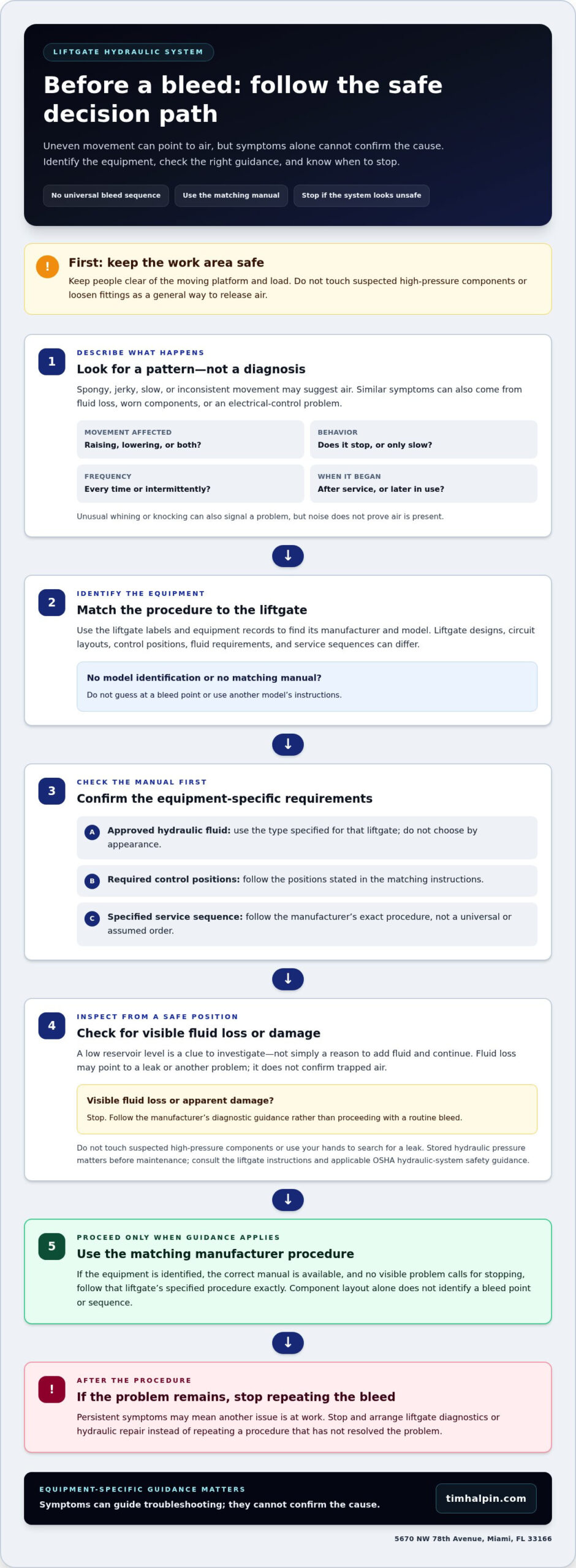
How to Bleed a Liftgate Hydraulic System Using Its Manufacturer Procedure
There’s no reliable one-size-fits-all sequence for every liftgate. The correct steps depend on the manufacturer’s instructions for the specific model, including which controls to use and whether any operating cycle is required. Treat the manual as the procedure, not just a reference. If it doesn’t clearly describe the bleeding process, stop rather than applying steps from another liftgate.
No single bleeding sequence applies to every liftgate hydraulic system. Following a model-specific procedure is the safest way to think about how to bleed a liftgate hydraulic system without guessing at valve locations, fitting positions, or cylinder order.
Follow the liftgate’s specified bleeding sequence
Before starting, confirm that the manual matches the liftgate and review the complete procedure. Pay particular attention to its instructions for fluid checks, control positions, and any required platform movement. A sequence that’s appropriate for one design may not suit another. Don’t loosen lines or fittings unless the model-specific procedure explicitly directs you to do so.
- Confirm the procedure. Identify the model and read the relevant bleeding instructions from beginning to end, including setup and stop conditions.
- Check the fluid as directed. Use the manual to locate the correct checking method, level, and approved fluid type. Don’t substitute fluid based on familiarity or appearance.
- Set up the controls and liftgate. Put the controls and platform in the positions specified by the manufacturer. Keep people clear and maintain the secure setup required by the manual.
- Carry out only the listed bleeding steps. Follow the stated sequence exactly, including any prescribed control operation or cycle. Don’t add extra movements or repeat steps unless instructed.
- Pause at any warning sign. Stop if you see a leak, notice damage, or the platform moves unexpectedly. Don’t continue in hopes that another cycle will correct it.
Recheck operation without bypassing safety instructions
After completing the specified procedure, make only the test movements allowed by the manual. Keep the platform area clear and observe its movement without placing yourself near moving parts. Note whether the original symptom improves, remains, returns, or worsens. One apparently smooth movement doesn’t establish that the underlying issue is resolved.
- Stop for a leak or unexpected movement. Don’t keep cycling the liftgate to see if the behavior settles.
- Don’t repeat the bleed by guesswork. Follow additional steps only if the manufacturer’s procedure calls for them.
- Arrange diagnosis if symptoms persist. Ongoing or recurring problems may need inspection beyond bleeding.
If the procedure is unclear or symptoms remain, Tim Halpin Equipment Corp provides liftgate diagnostics and hydraulic repairs. Arrange liftgate service rather than continuing with uncertain steps.
When Liftgate Bleeding Does Not Solve the Problem
If the liftgate still moves unevenly, operates inconsistently, or makes unusual noises after you’ve followed its manufacturer’s bleeding procedure, don’t keep repeating the process in hopes of a different result. Persistent or returning symptoms call for diagnosis. Bleeding addresses air only when air is the cause; it won’t correct an electrical, hydraulic, or mechanical fault.
Stop operating the liftgate if it moves unexpectedly, leaks, or appears damaged. Keep people clear and follow the equipment manual’s safety instructions. Record what you observed, when it happens, and which procedure you completed. Those details can help a technician assess the concern without guessing or replacing parts before the cause is understood. Just as with general vehicle troubleshooting at full-service facilities like Eagle Automotive, professional diagnostics ensure repairs target the underlying issue rather than unnecessary component replacements.
Faults that may need liftgate or hydraulic diagnosis
Different problems can produce overlapping signs. Inconsistent movement might relate to the hydraulic system, an electrical control issue, or a mechanical fault. Noise or sluggish operation also doesn’t identify a specific failed component. A symptom is useful evidence, but it isn’t a diagnosis.
Professional inspection helps narrow down the cause before repair decisions are made. Avoid replacing a pump, control, cylinder, or other part based on symptoms alone. A technician can assess the liftgate and its hydraulic system, identify whether a component issue is present, and determine whether repair or replacement parts are appropriate. For commercial operators in the Southwest, heavy-duty service facilities such as IQ Truck Center offer experienced technicians to run these comprehensive diagnostics. This ties the next step to the actual fault instead of another round of trial and error.
Tim Halpin Equipment Corp provides liftgate diagnostics and repairs, along with hydraulic repairs. If inspection identifies a component issue, replacement parts may be part of the repair. The company also provides Expert Truck Hydraulics in Miami for hydraulic concerns and Waltco Liftgate Parts in Miami when inspection points to a parts need.
Getting liftgate service in Miami
If your liftgate remains unreliable after the specified procedure, arrange diagnosis rather than continuing to cycle or bleed the system. Share the liftgate make and model, the symptoms, when they occur, any visible fluid loss or damage, and the steps already taken. This gives the service team a practical starting point for assessing the issue.
Tim Halpin Equipment Corp is located at 5670 NW 78th Avenue, Miami, FL 33166. For liftgate diagnostics, repair, or hydraulic service, call 305-591-3164 Monday to Friday, 8:00 am to 5:00 pm, or contact Tim Halpin Equipment Corp. A clear diagnosis is the sensible next step when bleeding hasn’t resolved the problem.
Make Your Next Liftgate Decision With Confidence
The best next step is guided by what the equipment is actually doing, not another round of trial and error. If you’re still weighing how to bleed a liftgate hydraulic system, let the liftgate’s manual set the limits. When symptoms persist, a proper diagnosis can help identify whether the issue is hydraulic, electrical, or mechanical before parts are replaced.
Tim Halpin Equipment Corp is family-owned and operated, serving commercial vehicle owners since 1987. The company maintains one of the country’s largest inventories of replacement parts for liftgates and commercial vehicles, with parts selected when inspection points to a component issue. That experience and parts support can help make the next repair decision more informed.
For liftgate diagnostics and repair in Miami and South Florida, contact Tim Halpin Equipment Corp.
Frequently Asked Questions
Can I bleed a liftgate hydraulic system without the manufacturer’s manual?
It’s safer to find the correct manual before starting. Liftgate models can differ in control setup and service steps, so a procedure from another unit may not apply. For how to bleed a liftgate hydraulic system, use the instructions that match the equipment rather than guessing at controls or fittings. If you can’t identify the model or the procedure is unclear, pause and arrange liftgate service.
How do I know if there is air in my liftgate hydraulics?
You can’t confirm air from movement symptoms alone. A platform that hesitates, jerks, or travels inconsistently may have air in the circuit, but fluid loss, component damage, or an electrical-control issue can look similar. Keep a brief record of what the platform does, when it happens, and whether any warning lights or control changes occur. This observation log can help guide the next diagnostic step.
Can I bleed a liftgate by loosening a hydraulic line?
No, don’t loosen a hydraulic line as a general bleeding method. The system may retain pressure, and opening a line without model-specific instructions can create a hazard or cause fluid loss. Only perform a service action if the correct manufacturer procedure explicitly directs it and explains the required safety steps. If the instructions don’t clearly call for that action, leave the line closed and arrange an assessment.
What should I check before bleeding a liftgate?
First, confirm the liftgate’s make and model from its identification label or equipment records. Then check the matching manual for the correct fluid, preparation steps, and service sequence. Before operating the platform, clear the work area and handle cargo and equipment as the manual directs. If you notice fresh fluid beneath the truck, stop and investigate the loss rather than treating it as routine maintenance.
What happens if bleeding does not fix the liftgate?
If the same problem remains after the specified procedure, don’t keep repeating it. Record which steps you completed and whether the symptom changed during the test. Persistent trouble may need hydraulic, electrical, or mechanical diagnosis, and symptoms alone don’t identify a failed part. A technician can assess the system and determine whether a repair or replacement part is appropriate, rather than relying on trial-and-error parts changes.
Is it safe to bleed a liftgate hydraulic system while the platform is raised?
Don’t work beneath a raised platform unless the manufacturer’s instructions specify how to secure it for that task. A raised platform can move, and hydraulic pressure may remain even when the controls are off. Keep people outside the operating area and never put your hands near moving parts. If you can’t confirm the platform’s safe position and support method, don’t begin the procedure.
When should I call a liftgate repair technician in Miami?
Arrange service if you can’t follow the correct procedure, see fluid loss or damage, notice unexpected platform movement, or still have symptoms after following the manual. Tim Halpin Equipment Corp provides liftgate diagnostics, repairs, and hydraulic repairs for commercial vehicle operators in Miami and South Florida, including Doral, Fort Lauderdale, Medley, Hialeah, Kendall, and Key West. The company’s location is 5670 NW 78th Avenue, Miami, FL 33166. A technician can assess the fault and help determine a sensible next step.
