

The best tool box setup for contractors in Florida starts with a truck-mounted box that fits the vehicle, protects tools from rain and humidity, and keeps them accessible during the workday. Prioritize weather protection and durable construction, then choose a size and layout suited to the tools you use most. A box that is hard to reach or poorly organized can slow down a job.
Daily use tests every part of a setup, from opening and loading to working around changing job-site conditions. Compare fit, weather protection, security, materials, and storage layout, then weigh common setups against your needs. Aim to protect essential tools and keep them ready without adding unnecessary bulk to the truck.
Key Takeaways
- Match the box layout to your trade and keep frequently used tools easy to reach.
- Measure the truck bed and confirm fit before choosing a toolbox size or configuration.
- Compare construction materials and overall build quality against the demands of daily jobsite use.
- Consider weather protection, locking features, and routine maintenance to help protect tools in Florida conditions.
- Organize tools so smaller items stay in place and valuable equipment is less exposed to loss or damage.
What Makes the Best Truck Tool Box for Contractors?
The right setup depends on your trade, vehicle, and work environment. A contractor carrying a drill, hand tools, and small parts needs a different layout from someone transporting bulky equipment.
Storage by Trade and Work Environment
Start with the tools you use on a typical job. An electrician may need testers and small parts within reach, while a plumber may prioritize space for fittings and longer hand tools. Then consider whether your truck travels between jobsites or stays near one work area. A labeled, color-coded 5S system, described by the U.S. Environmental Protection Agency, can group tools by task and give each item a clear place.
Modular and Accessible Tool Storage
Modular storage lets you adjust the setup as jobs change. A rolling system can separate power tools, hand tools, testers, and small parts, with additional boxes added as needed. Keep frequently used tools near the opening and reserve deeper compartments for equipment used less often. For example, store a daily-use drill and tape measure together instead of burying them beneath supplies for a specific task.
Tool Bags and Toolbox Styles
Tool bags are easy to carry from a truck to an indoor work area, and separate bags can group tools by job. A crossover toolbox spans the bed behind the cab, with access from either side. A trunk-style box sits inside the bed and offers a different access layout. Compare how much room each leaves for materials, then use trays or labeled pouches to organize smaller items and reduce searching.
Truck Bed, Van, and Jobsite Box Setups
A truck-bed toolbox suits contractors who need tools secured on the vehicle while keeping space available for other cargo. A van provides enclosed storage for organizing tools inside the vehicle, while a jobsite box keeps equipment together at a work location. For the best tool box setup for contractors in Florida, consider how often tools move between the vehicle and the site.
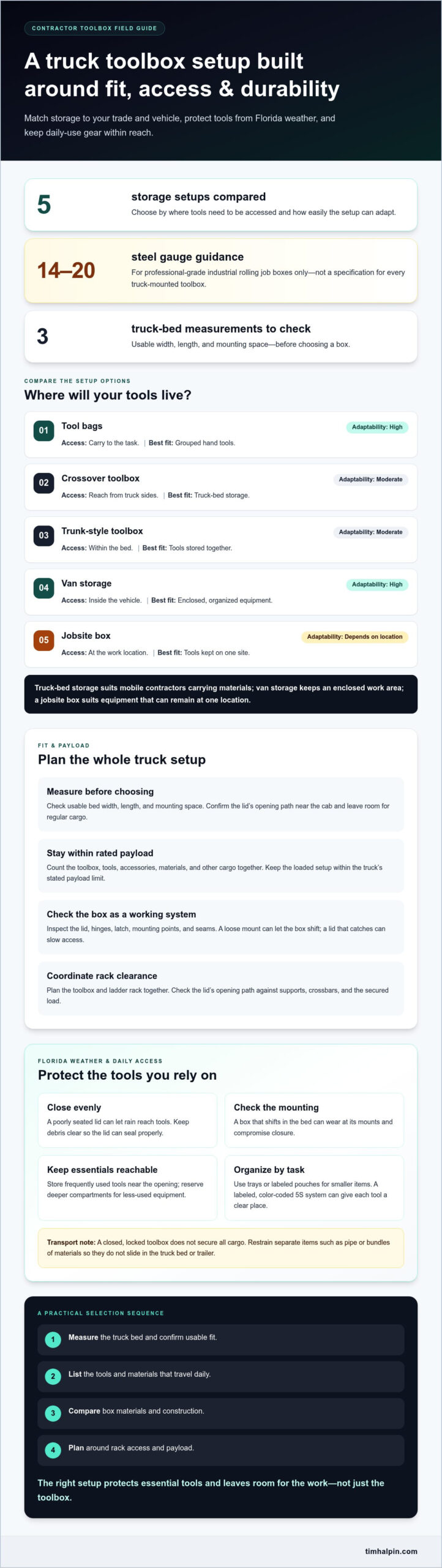
Truck-bed storage suits mobile contractors who also carry materials. Van storage is useful when you want an enclosed, organized work area, while a jobsite box works for equipment that can remain at one location.
Costs vary with storage type, capacity, materials, and how the setup fits the vehicle.
| Setup | Access | Adaptability | Best fit |
|---|---|---|---|
| Tool bags | Carry to the task | High | Grouped hand tools |
| Crossover toolbox | Reach from truck sides | Moderate | Truck-bed storage |
| Trunk-style toolbox | Access within the bed | Moderate | Tools stored together |
| Van storage | Access inside vehicle | High | Enclosed, organized equipment |
| Jobsite box | Access at the work location | Depends on location | Tools kept on one site |
Match your most-used tools and daily travel pattern to the access and capacity each setup provides.
Choosing toolbox durability for daily jobsite use
Payload depends on the truck’s rated capacity and the combined weight of the toolbox, tools, accessories, and other cargo. Keep the loaded setup within the truck’s stated payload limit, accounting for materials and equipment already onboard.
For a full-size pickup, measure the bed and note usable width, length, and mounting space before choosing a toolbox. Check the lid’s opening path near the cab and leave room for cargo you carry regularly. A box may fit the bed but still block a ladder rack or take up loading space you need.
Durability depends on how the box handles repeated opening, loading, and travel over uneven job-site surfaces. Inspect the lid, hinges, latch, mounting points, and seams as one working system. A loose mount can let the box shift, while a lid that catches can slow access during a busy day. Consider rolling units only if they can be moved safely between the truck and work area.
Material affects both weight and resistance to wear. Aluminum can be a practical choice where reducing added load matters, while steel offers a sturdy option for demanding use. For professional-grade industrial rolling job boxes, steel gauge thickness should be between 14 and 20. Treat that range as guidance for that box category, not a specification for every truck-mounted toolbox. Also inspect the finish and exposed edges, where scratches can become starting points for wear.
Trade needs shape the layout. A plumber carrying fittings and hand tools may benefit from a gullwing toolbox paired with lo-side toolboxes to separate storage across the bed. An electrician may prioritize divided compartments for testers and small parts. Choose accessories for the tools you actually carry, rather than adding weight with storage that sees little use.
A ladder rack adds another fitment consideration. Compare the toolbox lid’s opening path with the rack’s supports, crossbars, and secured load. For example, a lid that needs to open fully may conflict with a rack positioned close to the cab. Plan the rack and box together, then confirm clearance and access before loading tools.
Follow a practical sequence: measure the truck bed, list the tools and materials that travel daily, compare box materials and construction, then plan around rack access and payload. A compatible setup leaves room for the work, not just the toolbox.
Weather protection, locks, and maintenance
Florida weather makes the toolbox seal, latch, and mounting points practical priorities. Rain can reach tools through a poorly seated lid, and damp equipment stored after a wet job may remain exposed inside. Choose a box that closes evenly and keep debris clear of the lid so it can seal properly. Fit matters too: a box that shifts in the bed can wear at its mounts and compromise closure.
A toolbox alone does not secure all cargo for transport. Use a closed, locked box for tools and restrain separate items, such as pipe or bundles of materials, so they do not slide in the truck bed or trailer.
Weather resistance depends on the whole setup, not just the box material. Check the lid seal, corners, seams, and drainage path for gaps or damage. After a rain-soaked drive, open the box and dry damp tools before storing them again. Smaller containers inside the main box can help organize items, but secure their lids and keep them stable during travel.
A lock limits access, but it does not replace good organization or cargo restraint. Choose a locking mechanism that closes smoothly without forcing the lid into place. Keep keys or access tools in a consistent location, and close every compartment before leaving a job site. The box should remain firmly mounted even when locked, or the entire unit may move during transport.
Use a short maintenance routine to catch problems early. After a muddy or rainy workday, wipe the lid and seal, clear grit from around the latch, and look for loose mounting hardware. If the lid binds, check for an obstruction before applying force. Inspect painted or coated surfaces for chips, especially near corners and contact points, and remove accumulated moisture before it sits against tools.
For safe, efficient job-site transport, group tools by task and secure each group in a compartment or bag. Place heavier equipment low, keep frequently used items reachable, and restrain loose cargo separately. A drill case, for example, should not slide freely beside fittings or metal stock. Before driving, close and lock the toolbox, secure other cargo, and make sure nearby equipment does not block the lid.
After an outdoor job, a quick end-of-day check helps maintain the setup: confirm the box is dry inside, the lock works, and the mount remains steady. These steps help preserve organization and weather protection over repeated trips.
Durability and construction materials
A toolbox’s useful life depends on more than its outer shell. Daily loading, road vibration, weather exposure, and repeated opening all test its panels, seams, hinges, and latches. Inspect those parts together: a sturdy body won’t compensate for a latch that fails to align or a lid that flexes under routine use. For industrial rolling job boxes, professional-grade steel gauge thickness typically ranges between 14 and 20.
Material choice affects weight, upkeep, and wear. Steel is a durable option for demanding tool storage, while aluminum may suit setups where limiting added vehicle weight matters. Compare the complete construction, including corners, seams, mounting points, and the finish on exposed surfaces. A coating can help protect metal, but deep scratches and chipped areas still need attention before moisture collects.
Florida contractors should consider the effects of rain and humidity throughout the workweek. Look for a lid that closes evenly and a seal that sits continuously around the opening. After wet work, dry tools before putting them away, then check corners and seams for trapped moisture. This routine helps protect tools and the box, especially when equipment stays stored between jobs.
Check moving parts before judging overall durability. Open and close the lid several times; it should move smoothly without catching. Test each latch for secure engagement, then check hinges and mounting points for movement. A box that rattles on the road may have loose hardware or poor fit. Addressing those issues early can reduce strain on the shell and fasteners.
Popular contractor toolbox brands are best compared model by model, using construction, latch design, fit, warranty terms, and intended use as consistent criteria. Brand names alone don’t establish which box lasts longer, and warranty coverage should be read for its stated limits. Prices depend on the model, material, capacity, finish, and accessories, and are provided after a quote request.
For an expensive tool collection, prioritize a box that suits the cargo and daily routine rather than choosing by appearance alone. A crew carrying heavy equipment may value reinforced contact points, while a service vehicle making frequent stops may benefit from smooth, dependable latches. Compare the empty box’s weight with the tools and materials it will carry, then account for the rest of the vehicle load.
Before settling on a setup, inspect the finish, press along panels for unwanted flex, test the latches, and confirm the mounts sit securely. Weather Guard truck toolboxes are one option to include in the same practical comparison. Choose a model whose construction and maintenance needs fit the contractor’s work, vehicle, and storage demands.
Protecting tools and business assets
A contractor’s storage system protects more than equipment; it supports daily work and helps keep valuable tools organized. Electrical contractors may carry more than $10,000 to $30,000 worth of tools in a single service vehicle. A missing tester or damaged drill can disrupt a job, so plan storage around what travels and how each item is secured.
Begin with an inventory by task. Group frequently used tools, then separate small parts, power tools, and delicate equipment. For example, put testers in a dedicated case and keep fittings in a divided organizer. This makes it easier to notice an empty space after a job and return each item to its assigned location.
Next, secure the toolbox itself. Check that the mounting hardware holds the box firmly and that the hinges open without shifting the lid or stressing the attachment points. Close each compartment before driving, and keep loose materials from sliding against the box. A locked lid limits access to the contents, while a stable mount reduces movement during transport.
Organization also helps crews keep track of shared equipment. Label sections by trade or task, such as electrical testing, plumbing repairs, or general hand tools. If a crew member borrows a favorite wrench, its assigned compartment makes it easier to notice that it is missing. After each job, return tools to their labeled places and remove damp or dirty equipment for cleaning.
Use a short closeout routine at the end of the workday:
- Return tools and small parts to their assigned compartments.
- Check the hinges, latches, and mounting points for visible movement or damage.
- Close and lock compartments, then secure loose cargo separately.
- Remove wet equipment and dry it before storing it again.
These steps make tool organization repeatable, even when several people use the same vehicle. A clear layout also makes it easier to spot a misplaced case, accessory, or tool. Keep the system simple enough to follow after a demanding job, and adjust compartments as the work changes.
Match the box to the tools and vehicle rather than choosing by appearance alone. Consider how the lid opens, how the hinges and latches feel during regular use, and whether the layout supports the equipment you carry. Tim Halpin Equipment Corp offers Weather Guard truck toolboxes for contractor vehicles.
Keep frequently used tools in the easiest-to-reach locations, and organize smaller items so they do not get lost. Giving regular-use tools a clear, accessible place can reduce the need to move other equipment while working. Designated spaces also make smaller tools easier to track, helping crews notice when something has not been returned.
Tim Halpin Equipment Corp: Truck Repair
Tim Halpin Equipment Corp provides truck repair for contractors whose work depends on a reliable truck and organized equipment. If a vehicle issue affects your ability to carry tools or reach a job site, truck repair may be the practical next step. The company also handles liftgate, trailer, and hydraulic repairs when those systems are part of your work setup.
A toolbox plan works best alongside a vehicle that supports the daily routine. Trailer problems may disrupt transport, while liftgate or hydraulic issues can affect equipment handling. Tim Halpin Equipment Corp repairs these systems, helping contractors address vehicle and equipment concerns.
For help with a truck or related equipment repair, contact Tim Halpin Equipment Corp or visit timhalpin.com.
Make Your Setup Work for the Long Term
Think of the best tool box setup for contractors in Florida as part of an evolving work plan, not a decision that stays fixed forever. New projects can change the tools, materials, and vehicle demands your crew handles. A brief review during job planning helps keep storage aligned with the work ahead.
Before your next major project, identify what has changed: added equipment, a different crew routine, or a new need for vehicle access. Then decide whether your current setup still supports those demands. Small adjustments before work begins can help your team start with a clear, practical arrangement.
If truck or equipment repair is part of keeping your operation ready, Tim Halpin Equipment Corp can help contractors address those needs. Contact the company to discuss the repair work your vehicle or equipment requires.
Contact Tim Halpin Equipment Corp for help, and take the next step toward a setup that supports your work with confidence.
Frequently Asked Questions
What are the best contractor toolboxes for Florida heat, humidity, rain, and salt air?
Choose an outdoor-rated toolbox with a durable finish and a lid that closes evenly, but do not assume any box is waterproof. For coastal work, include salt residue in your cleaning routine, especially after driving near the shore. Store sensitive items, such as electronic testers, in protective cases inside the box. At the end of a wet shift, remove damp items rather than leaving them enclosed overnight.
What toolbox sizes and storage layouts suit common Florida contractor trades?
Match capacity to the tools and materials your trade carries, not simply to the largest box that fits. For electricians, divided spaces can separate testers and small components; carpenters may need room for longer hand tools. Rolling toolboxes commonly fall into compact widths of 12 to 24 inches, medium widths of 26 to 40 inches, or large widths of 60 inches or wider. These categories describe rolling boxes, not truck-bed fitment.
Which toolbox materials and finishes resist rust and corrosion in coastal Florida?
Aluminum avoids the rust concerns associated with steel, while coated steel can provide durable tool storage if its finish stays intact. In coastal conditions, pay attention to scratches, seams, and fasteners where salt and moisture can linger. Clean residue from exposed surfaces and care for damaged finishes according to the manufacturer’s guidance. The right choice also depends on vehicle load and the demands of the tools being carried.
How can contractors protect tools from theft in Florida, and which toolbox security features matter?
Use a lockable box with secure mounting, then reduce the temptation and confusion around valuable equipment. Keep a private tool inventory with identifying details and photographs, and record which crew member has checked out shared items. Avoid leaving loose tools visible in an open truck bed. For overnight parking, choose a location with controlled access when practical, and take especially valuable portable tools out of the vehicle.
How much do contractor truck toolboxes and van storage systems cost in Florida?
Costs vary with storage type, capacity, materials, and how the setup fits the vehicle.
