

A work truck’s resale value can be shaped by what its upfit protects, not just by what it adds. Custom upfitting means equipping a truck with accessories and storage tailored to the work it does. The benefits of professional truck upfitting include safer equipment storage, a more organized workflow, and better protection for the vehicle’s interior and body.
A well-planned setup can deliver practical benefits, especially when tools and equipment have secure storage instead of shifting during transit. Weather-sealed compartments and corrosion-resistant materials can help protect service bodies from exposure and preserve the truck’s condition. No upfit guarantees a particular resale price, but a well-maintained vehicle with equipment suited to the job may appeal to a future buyer.
This article explains what custom upfitting involves and how professional installation can support safer transit, efficient workflows, and equipment protection. It also covers how storage choices and protective materials may affect resale value, helping you plan a truck for today’s work and possible future use.
Key Takeaways
- Resale appeal is supported by an upfit that suits the truck’s intended work and helps preserve its condition.
- Securely mounted equipment and a planned load help keep tools in place during transit and reduce strain on the vehicle.
- Installation planned around the truck’s dimensions and use can make modifications more durable for daily work.
- Storage arranged around trade-specific tools and routines can make equipment easier to access and keep the work area organized.
- Weather-sealed compartments and corrosion-resistant materials can help shield service bodies from environmental exposure.
Do professional upfits increase resale value?
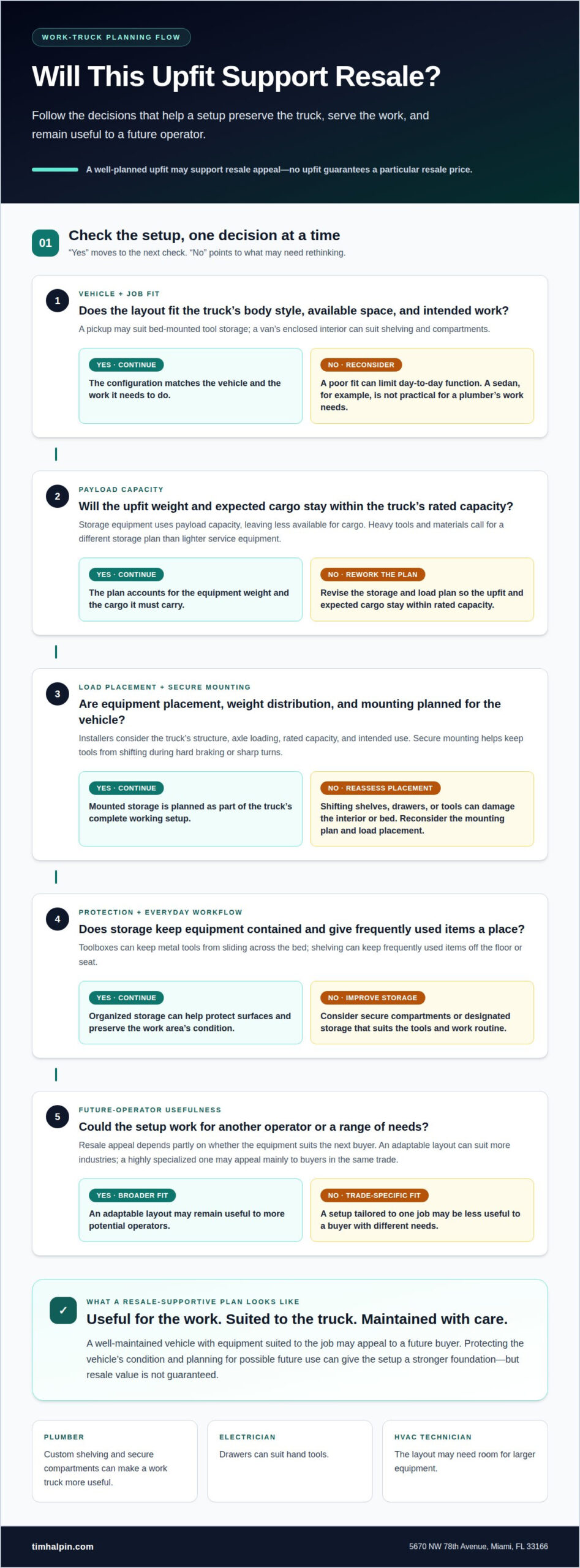
Professional truck upfitting can support resale value by preserving a vehicle and making its setup useful to future operators. Shelving and toolboxes use payload capacity, leaving less available for cargo. Weight distribution and aerodynamics can affect fuel consumption, while a well-planned configuration can help manage those effects. Resale also depends on the truck’s condition and whether its equipment suits the next buyer.
For a plumber, custom shelving and secure compartments can make a work truck more useful than an unconfigured vehicle. An electrician may value drawers for hand tools, while an HVAC technician may need room for larger equipment. These examples show why an upfit can appeal to buyers in a particular trade, but a setup tailored to one job may be less useful to someone with different needs.
Plan installation around the vehicle’s dimensions, weight distribution, electrical systems, and intended use. Upfit equipment reduces available payload, so its weight and the expected cargo must stay within the vehicle’s rated capacity. A truck carrying heavy tools and materials needs a different storage plan from one carrying lighter service equipment. Matching the layout to the vehicle helps avoid limiting its day-to-day function.
Well-installed interior systems can help protect the vehicle from wear caused by loose equipment and poor storage. For example, a toolbox keeps metal tools contained instead of sliding across the bed and causing damage. Shelving gives frequently used items a designated place rather than leaving them loose on the floor or seat. Preserving the interior and work area can help maintain the truck’s condition for resale.
Secure mounting matters during hard braking and sharp turns. If shelving or drawers shift, equipment can move with them and damage the truck’s interior or bed. A planned installation keeps storage in place and helps prevent tools from becoming loose cargo. This practical protection benefits the current operator and helps a future buyer understand how the vehicle was used and maintained.
Vehicle body style helps determine which storage solutions make sense. A pickup can accommodate bed-mounted tool storage, while a van’s enclosed interior can suit shelving and compartments. A sedan, by contrast, is not practical for a plumber’s work needs. The right fit depends on the job, available space, and equipment being carried. Those factors also affect whether an upfit can serve another operator later.
For resale, a useful upfit supports the vehicle rather than restricting it. Organized storage, protected surfaces, and equipment suited to the truck’s capacity can demonstrate practical care. A highly specialized arrangement may appeal mainly to buyers in the same trade, while an adaptable layout can suit more industries. Planning for current work and future use gives the vehicle a stronger foundation for its next owner.
Secure equipment installation and transit safety
During a sudden stop or sharp turn, unsecured tools and accessories can shift inside a work truck. Professional truck upfitting keeps equipment firmly mounted, helping prevent movement that could damage the vehicle or distract the driver. Professional installers consider the truck’s structure, equipment placement, and intended use, rather than treating each accessory as a standalone addition.
Load placement matters, too. A toolbox, ladder rack, and specialized equipment all add weight, so the finished layout needs to distribute the load appropriately. Installers consider axle loading and the truck’s rated capacity when planning mounting locations. Ignoring those factors can put excess stress on vehicle systems. Coordinated installation also avoids problems that can arise when equipment is added over time without an overall plan.
Safety accessories can improve visibility and help address risks in the situations they are designed for. LED work lights illuminate a task area, while properly mounted ladder racks secure ladders for transit. Backup cameras, strobe warning systems, and electronic protection are other examples of work-truck additions—specialists such as Safe & Sound Mobile demonstrate how professional vehicle security and audio installation help protect commercial vehicles and their equipment. Each serves a different purpose, so choices should reflect the vehicle’s working conditions and the tools and equipment it carries.
State equipment rules are another consideration. Professional upfitters are familiar with state equipment regulations and can help ensure a truck meets applicable standards. Requirements depend on the equipment and vehicle configuration. Proper installation and placement matter, especially when specialized lighting or other safety equipment is involved. A professional plan accounts for these details alongside the truck’s daily role.
- Work lighting: LED lights can make work areas easier to see in low-light conditions.
- Warning systems: Strobe lighting can improve a work vehicle’s visibility in situations where warning signals are needed.
- Mounted accessories: Toolboxes and ladder racks should be secured to suit their loads and the vehicle’s structure.
For lighting-focused builds, public safety lighting options can be considered as part of the vehicle’s equipment plan. The right recommendation depends on the truck’s use, where its equipment will be mounted, and how the setup works with other accessories. A cohesive installation helps keep specialized tools accessible and secured, while avoiding unnecessary additions that complicate the layout.
Professional installation can also reduce the risk of modification errors that lead to repairs. Mounting points, electrical connections, and equipment placement all need to work with the truck as a complete system. A secure, carefully planned setup supports safer transit and helps keep the vehicle ready for its intended work.
Quality materials and professional installation
Materials and installation methods affect how a truck upfit holds up under daily use. When choosing an installer, businesses should consider durability, project scope, scheduling, and the equipment involved.
Material Quality and Installation Durability
Durable upfitting combines materials suited to commercial use with mounting methods matched to the vehicle. High-strength steel and powder-coated finishes are examples used in commercial installations. Their value depends on proper fit and secure attachment, not material choice alone. A compartment carrying heavy tools regularly needs a stable installation suited to its intended workload.
Professional planning accounts for truck dimensions, weight distribution, electrical systems, and intended use. These details affect where components fit and how they connect to the vehicle. For example, shelving in a service van must suit the interior and the equipment stored there. Careful installation can help prevent errors that lead to repairs or interfere with productivity.
DIY work may appear less expensive upfront, but the full cost also includes materials, installation time, possible rework, and vehicle downtime. A professional upfit may take one day, while a DIY project can take a few days or more. Improper modifications could also affect warranty coverage, depending on the manufacturer’s modification clauses. The right comparison considers the complete project, not just the initial purchase.
Scheduling affects operations, too. Businesses can plan fleet installations during expected periods of lower activity instead of taking every work vehicle out of service at once. For fleets with vehicles assigned different roles, sequencing the work around daily assignments can help preserve access to essential equipment. Clear communication about scope, vehicle requirements, and scheduling keeps the installation plan aligned with work demands.
Choosing a Truck Upfitter
Choosing a truck upfitter means assessing whether its installation approach suits the vehicle, materials, equipment, and work schedule. Even a well-made compartment needs correct mounting and integration. A project involving electrical components, for example, requires planning around the truck’s electrical system, while shelving must fit the interior and intended load.
Ask how the proposed layout accounts for vehicle dimensions, weight distribution, and daily use. For a fleet, discuss scheduling that keeps essential vehicles available. Compare the full project scope, including materials and installation, instead of focusing only on the initial expense. These considerations help businesses assess the potential effects on productivity and durability.
Authorized distributor involvement is another point to clarify for equipment-specific installations. Product guidance and installation planning should work together, with the mounting method suited to the vehicle and accessory. For instance, a toolbox or interior system needs secure placement that fits the truck’s structure. A coordinated plan helps avoid treating product selection and installation as separate decisions.
A practical selection process also considers the installer’s familiarity with the vehicle and equipment. A truck configured for daily service calls has different needs from one carrying specialized equipment. Aligning those needs with materials, installation methods, and timing helps create a durable setup while limiting disruption to work.
Custom storage solutions and workflow efficiency
Truck upfitting options vary by trade, vehicle style, tools, and daily tasks. HVAC technicians, electricians, plumbers, and telecommunications workers can use tailored shelving, compartments, roof units, and other equipment to organize their work vehicles.
Start with the work sequence. A technician who uses diagnostic equipment throughout the day benefits from accessible storage near the vehicle’s entry. A contractor carrying materials for different jobs may need separate compartments to keep small parts apart from larger equipment. The aim is to reduce searching and repeated handling, not simply fill every available space.
- HVAC work: Shelving can separate service tools from replacement parts, while a planned layout leaves room for larger equipment.
- Electrical work: Compartments can group testing tools, fittings, and supplies by task, helping workers retrieve items without sorting through mixed storage.
- Plumbing work: Dedicated storage can keep frequently used hand tools accessible and separate them from materials reserved for a specific service call.
- Telecommunications: A customized interior can organize installation equipment and supplies around the work performed at each site.
These examples are starting points, not fixed templates. A one-size-fits-all configuration may overlook important differences between contractors, even within the same industry. One plumbing crew may carry bulky equipment, while another relies on a wider range of small fittings. The storage plan should reflect the actual equipment’s size, weight, and frequency of use.
Vehicle style also shapes the available modifications. An enclosed work van can use interior shelving and compartments, while a pickup can use bed storage or a roof unit. Cooling units and hangars may suit particular work requirements, but each addition needs to fit the vehicle and preserve practical access to other equipment. Thoughtful planning helps prevent an upgrade from creating new obstacles.
Workflow can guide the layout. Keep frequently used tools within easy reach and place less-used items in secondary storage. Grouping supplies by task can also help a technician prepare for a service call without unloading unrelated equipment. These choices make the work area more orderly and support efficiency across repeated jobs.
For fleet managers, input from drivers and workers can clarify which modifications will help most. A discussion about daily tool use, equipment dimensions, service-call routines, and safety needs can reveal where existing storage slows the team down. Turning those observations into a vehicle-specific plan helps ensure each setup serves its trade rather than adding storage for its own sake.
Weather-sealed compartments and corrosion-resistant materials
Moisture and road exposure can gradually affect a service body, stored tools, and compartment hardware. Weather-sealed storage and corrosion-resistant materials help limit exposure, protect equipment, and preserve the truck’s condition. Match compartment protection to the work environment and the items carried.
A sealed compartment helps reduce water and debris entering through its openings. For technicians carrying electrical tools or small replacement parts, enclosed, organized storage can keep those items separate from open-bed cargo. It can also help protect the service body from repeated exposure to damp equipment. Seals and closures need to fit properly; an enclosure alone does not make every stored item impervious to moisture.
Corrosion-resistant materials matter on surfaces exposed to rain, humidity, road spray, or wet equipment. A toolbox used for frequently handled tools faces different conditions from a compartment carrying dry supplies inside an enclosed vehicle. Choose materials based on where the compartment sits, what it carries, and how often workers open it. A suitable finish can help protect exposed surfaces from deterioration, while sound installation supports the compartment’s intended use.
Protection also depends on the details around a compartment. Its lid, seams, and mounting points affect how well it handles environmental exposure. A poorly fitting closure can let water or debris in, while a loose mount can stress the body during regular use. Pairing an appropriate enclosure with secure installation helps preserve both the storage system and the surface beneath it.
- Stored equipment: Separate moisture-sensitive tools from wet materials or equipment.
- Compartment location: Consider whether the storage sits on an exposed bed or inside an enclosed work area.
- Materials and finish: Match the construction to the expected exposure and daily handling.
- Closures and mounting: Ensure the lid, seams, and attachment points work together as a system.
These choices can matter for resale: a cleaner, better-preserved work area gives a future buyer a clearer picture of vehicle care. A properly equipped truck may also be more useful to another operator if its compartments remain organized and practical. Protective storage does not guarantee a higher sale price. Overall condition, vehicle suitability, and buyer needs still shape resale.
For a truck that carries tools in exposed conditions, Weather Guard truck toolboxes are one storage option to consider. The right arrangement depends on the vehicle, cargo, and work routine. Explore Weather Guard truck toolbox options when planning storage for tools that need a dedicated place.
Tim Halpin Equipment
Tim Halpin Equipment Corp repairs work trucks and equipment to help keep them functioning. After planning an upfit, turn to the team when a truck, liftgate, trailer, or hydraulic system needs attention. Maintaining these components supports the vehicle’s day-to-day role and helps owners address mechanical issues as they arise. The right service depends on which part of the work setup needs repair, whether it is the truck itself or attached equipment.
For help with a work vehicle or its equipment, contact Tim Halpin Equipment Corp to discuss your repair needs.
Plan for the Truck’s Next Chapter
The benefits of professional truck upfitting extend beyond today’s route when each decision supports the vehicle’s work and maintenance over time. Before making another change, consider how the truck’s duties may evolve, which equipment remains essential, and whether the current setup still fits the work. This perspective helps keep future decisions deliberate, rather than adding modifications that no longer serve the vehicle.
Maintenance is part of that long-term plan. A truck or attached system that needs repair can affect how reliably the vehicle serves its role. Tim Halpin Equipment Corp offers truck repair, liftgate repair, and trailer repair to address those needs as they arise.
Keep the next step simple: identify the vehicle or equipment concern and get the right conversation started. Contact Tim Halpin Equipment Corp today to discuss repair support for your work vehicle. A well-considered plan can help you keep moving with confidence.
Frequently Asked Questions
What Is Custom Upfitting?
Custom upfitting equips a work vehicle with features selected for a particular job. A contractor might need dedicated spaces for fasteners and power tools, while a technician may prioritize room for diagnostic equipment. The goal is a setup that reflects the work, not accessories without a clear purpose. Choices depend on the vehicle, equipment dimensions, how often items are used, and the tasks performed during a typical workday.
What Is Vehicle Upfitting?
Vehicle upfitting means adding accessories or modifications to adapt a vehicle to work requirements. It can apply to trucks and vans, with options such as toolboxes, interior systems, lighting, or work bodies. The term describes the broader process; custom upfitting means tailoring those additions to a particular operator or trade. Two service vehicles can have different layouts even when they support the same type of business.
What risks can professional truck upfitting help businesses avoid compared with DIY installation?
Professional installation helps address risks from loose mounts, poor load placement, and modifications that do not suit the truck. A toolbox attached without an overall plan, for example, can stress the vehicle or leave equipment unsecured. Incorrect work can also lead to repairs, and manufacturer warranty terms may treat modifications differently. An installer considers the vehicle’s structure and intended use as part of the configuration.
What are the main benefits of professional truck upfitting?
The main benefits include a setup suited to the job, securely installed equipment, organized storage, and better protection for the work area. A well-planned layout can make tools easier to find and help keep cargo from damaging the truck’s interior. Weather-protective compartments can help shield equipment from exposure. For resale, a functional, well-kept vehicle may be more useful to a buyer whose work matches its configuration.
How does professional truck upfitting improve safety and reduce workplace injuries?
Upfitting can address hazards such as shifting cargo, hard-to-reach tools, and limited visibility around work areas. Securely mounted storage keeps tools in place during transit, while task lighting helps technicians see their work in low light. Organizing frequently used items within easy reach also reduces repeated searching and handling. These measures address specific vehicle and job-setup risks, while safe work practices remain important at each jobsite.
How can truck upfitting increase productivity and workflow efficiency?
A purposeful layout reduces the time workers spend locating equipment or moving unrelated items to reach it. Grouping service-call supplies by task, for example, lets a technician prepare without sorting through every compartment. Storage can also reflect how often items are used: keep daily tools accessible and place occasional-use equipment in secondary areas. For Miami-area businesses, consistent layouts across similar fleet vehicles can make equipment placement familiar between assignments.
How much does professional truck upfitting cost in the United States?
Professional truck upfitting costs depend on the vehicle, project scope, selected equipment, materials, and installation requirements. A storage-focused setup differs from one that also includes lighting or specialized equipment, so the work involved affects the quote. For businesses in Miami, Doral, Fort Lauderdale, Key West, Medley, Hialeah, Kendall, and across South Florida, the vehicle’s intended tasks help define the project scope. Contact Tim Halpin Equipment Corp to discuss your upfitting needs and request a quote.
What are the differences between professional truck upfitting and DIY installation?
Professional upfitting brings installation experience and vehicle-specific planning; DIY work leaves design, fit, and mounting decisions to the owner. A professional plan considers dimensions, weight distribution, electrical systems, and intended use together. DIY installation may take longer and can require rework if parts do not fit or mounts prove unsuitable. The choice affects not only installation effort but also how well the finished setup supports daily work.