

A commercial vehicle maintenance plan in Miami should combine scheduled service with battery and electrical inspections, fleet repairs, and maintenance suited to diesel trucks. Build diesel maintenance into the plan from the start, rather than waiting for a problem to appear.
Keeping commercial vehicles ready for work takes more than reacting to breakdowns. A clear service routine helps fleet managers organize inspections and repairs around the vehicles they operate and the work those vehicles perform.
This guide explains how to structure scheduled maintenance, what battery and electrical checks can cover, and how to plan fleet repairs and diesel truck maintenance. It also outlines the details that shape a practical service approach, helping you make informed decisions for your Miami fleet without relying on a one-size-fits-all schedule.
Key Takeaways
- Organize fleet service around each vehicle’s role and workload to make maintenance easier to plan.
- Use scheduled inspections to catch wear and service needs before they disrupt day-to-day operations.
- Include battery and electrical system checks in your maintenance approach, especially when vehicles rely on powered equipment.
- Give diesel trucks maintenance attention suited to their systems and working demands.
- Know when fleet repairs, liftgate work, trailer repairs, or hydraulic repairs can help address a vehicle’s specific needs.
Fleet repair and service for Miami-area businesses
Fleet service works best when routine maintenance and repairs follow a clear plan. In Miami, begin by matching the service scope to each vehicle’s role, equipment, and operating demands.
A delivery truck, work van, and vehicle carrying specialized equipment may each need different attention. A useful plan sets out how to report a fault, arrange an inspection, approve repairs, and record completed work. For example, document a liftgate problem in the vehicle’s repair history rather than as an unrelated note. Clear procedures help managers coordinate service and make consistent maintenance decisions across the fleet.
Maintenance Scheduling and Service Records
Set maintenance schedules using manufacturer guidance, vehicle condition, workload, and operating routines. Keep a record for each vehicle that lists the work performed, parts used, concerns identified, and recommended follow-up. If a fault returns, those records give the repair team useful context and help managers identify which vehicles need attention next.
Schedule service around the business calendar, not just a preferred date. Clarify how appointments are arranged, whether extended service hours are available, and what happens when a vehicle needs roadside or after-hours attention. Treat these as service terms to compare, not assumptions. A written plan should distinguish routine appointments from urgent repairs and explain how work is authorized when a vehicle is away from its usual service location.
Provider, Plan, and Contract Criteria
Compare Miami-area fleet maintenance providers by their commercial vehicle experience, repair capabilities, recordkeeping, scheduling options, and stated response process. Fleet maintenance plan costs depend on vehicle types, service scope, parts, and repair needs; pricing is provided after a quote request. Review the contract for included work, exclusions, approval steps, and how unexpected repairs are handled.
For Volkswagen vehicles, identify model-specific service needs and whether genuine Volkswagen parts are included. Written terms should clarify parts selection, coverage limits, and how related repairs are treated. Review exclusions for parts, labor, roadside assistance, and after-hours work, since these affect what the plan covers. Miami businesses should choose services that match their fleet’s documented needs, not rely on a broad promise of coverage.
Before adding a specialized service truck to a maintenance plan, record its assigned work, equipment, expected use, and repair approval process. Treat the listing as a starting point for evaluation, not a substitute for a written service scope. Identify the inspections and repairs the fleet needs, and make sure the provider can explain how those needs will be documented and authorized.
When considering a vehicle like this, compare its stated price with your business’s service requirements and budget. Separately establish how repairs, parts, equipment concerns, and downtime will be handled. Keep the vehicle’s records with its fleet file, note recommended follow-up, and review whether the written agreement covers the work required. This brings a specialized vehicle into the same managed process as the rest of the fleet.
Scheduled preventative maintenance for delivery and commercial fleets
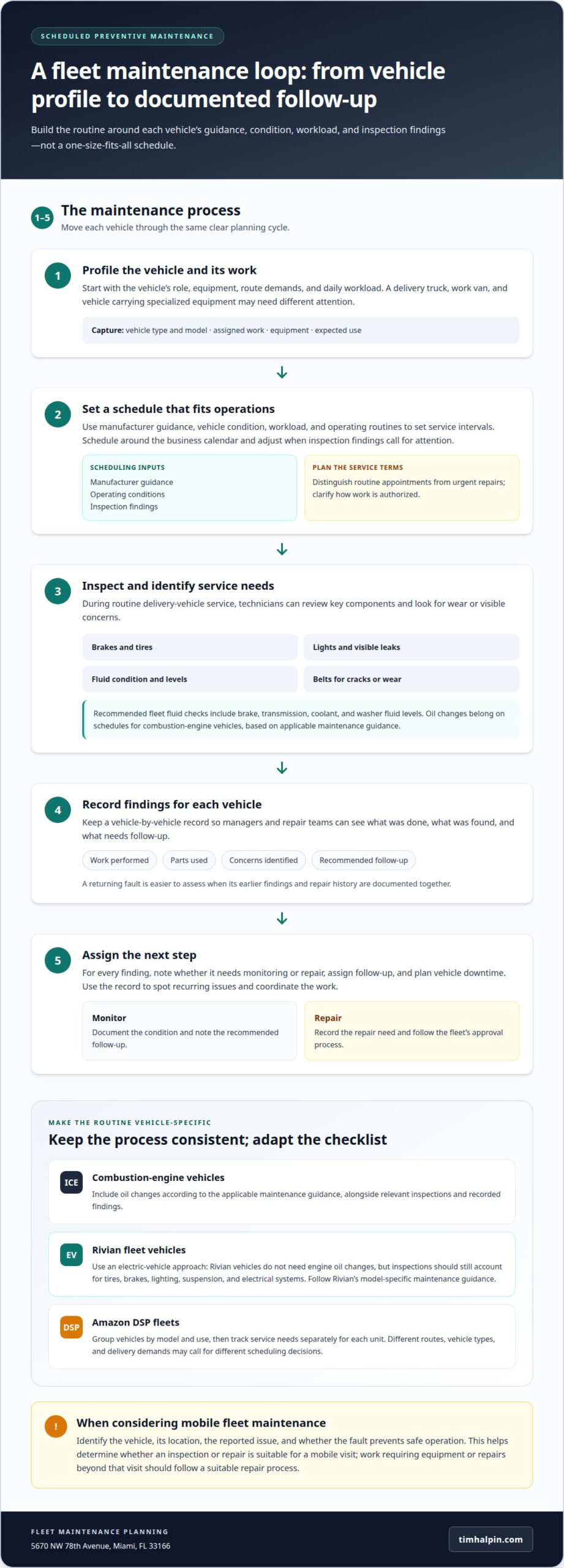
A delivery fleet needs a maintenance routine that reflects vehicle type, route demands, and daily workload. Set service intervals using each vehicle manufacturer’s guidance, then adjust scheduling to operating conditions and inspection findings. This gives fleet managers a consistent way to plan maintenance without treating every truck or van alike.
For a delivery vehicle, technicians can review brakes, tires, lights, fluid condition, belts, and visible leaks during routine service. Tim Halpin Equipment Corp recommends checking brake, transmission, coolant, and washer fluid levels in fleet vehicles, and inspecting belts for cracks or wear. Oil changes belong on schedules for vehicles with combustion engines, based on the applicable maintenance guidance—a baseline preventive maintenance standard emphasized by automotive service centers like San Juan Auto Smog to support engine performance and longevity.
Preventive maintenance also means acting on inspection results. Record each finding by vehicle, note whether it needs monitoring or repair, and assign follow-up. For example, if an inspection reveals belt wear, document the condition and schedule the appropriate next step. Consistent records help managers spot recurring issues and plan vehicle downtime.
Rivian fleet vehicles need an electric-vehicle maintenance approach, not an unchanged combustion-engine checklist. They don’t need engine oil changes, but inspections should still account for tires, brakes, lighting, suspension, and electrical systems. Use Rivian’s model-specific maintenance guidance to shape the schedule and record findings for each vehicle. Don’t assume every inspection task or interval applies equally to gas and electric vehicles.
Amazon DSP fleets may include different vehicle types, routes, and delivery demands. Group vehicles by model and use when scheduling, then track service needs separately for each unit. For example, a high-use delivery van and a lower-mileage support vehicle may call for different scheduling decisions. Fleet records make those differences visible and help managers coordinate work without treating every vehicle alike.
Mobile fleet maintenance can reduce the need to move a commercial vehicle for suitable inspections or repairs. Before arranging mobile work, identify the vehicle, its location, the reported issue, and whether the problem prevents safe operation. This information helps determine the appropriate service approach. If the fault requires equipment or repairs beyond a mobile visit, schedule it through a suitable repair process.
For Miami businesses, a reliable commercial vehicle maintenance plan miami means scheduled checks produce clear findings, documented follow-up, and fewer surprises in fleet planning. Build the routine around vehicle guidance and actual operating conditions, then refine it as service records show where attention is needed.
Scheduled preventive maintenance programs
A preventive maintenance program connects vehicle condition and service needs with planned work. A commercial vehicle maintenance plan in Miami should reflect each fleet’s vehicles, workloads, and diagnostic findings.
Customized Plan Options
Organize commercial vehicle maintenance plans by vehicle type, service scope, and operating demands. A business might group vans separately from heavy trucks, then account for equipment such as liftgates or hydraulic systems. Define routine inspection tasks, how findings are recorded, and how additional repairs are handled.
To decide what belongs in a program, group vehicles by model, use, and condition. A truck assigned to frequent heavy work may need a different inspection focus from a lightly used support vehicle. Review manufacturer guidance and service history when setting tasks. In Miami, compare plans by the work and processes they include, not by their labels alone.
Maintenance plans may focus on scheduled inspections, diagnostic checks, or a broader combination of preventive work and repair coordination. The right scope depends on vehicle condition, engine and equipment needs, operating patterns, and records for each unit. A commercial vehicle maintenance plan in Miami should specify the routine tasks included and how inspection findings inform repair decisions.
Preventive Maintenance Scheduling
Commercial trucks and vans should follow manufacturer maintenance intervals, adjusted for operating conditions and inspection results. A fixed calendar may not reflect how a vehicle is actually used. Track the schedule by vehicle, record completed work, and bring inspections forward when diagnostics or visible condition indicate a concern.
Build each vehicle’s schedule around its model, workload, service history, and current condition. For example, a truck with recurring engine warnings may need diagnostic attention before its next routine service date. Account for time out of operation, too, so managers can coordinate work with deliveries and other commitments.
To enroll vehicles in a commercial maintenance program, gather each unit’s make, model, year, current mileage or usage information, and available service records. Decide which vehicles belong in the program, define the maintenance scope, and document how inspection findings and repair approvals will be handled. Keep the vehicle list current so the schedule remains useful as fleet needs change.
Review the program when vehicles are added, assigned different work, or show changing service needs. A diagnostic result may prompt an inspection or repair decision, while repeated findings may indicate that the routine needs adjusting. Record decisions by vehicle so preventive maintenance can evolve with fleet conditions.
Battery and electrical system inspections
Battery and electrical checks can reveal faults before they interrupt a commercial vehicle’s workday. A technician can inspect battery condition, terminals, cables, charging components, lights, and wipers, then record findings by vehicle. For example, a loose connection or damaged cable may call for diagnostic testing rather than repeated battery replacement.
Begin with a visual battery inspection. Look for corrosion, loose connections, damaged insulation, and signs of leakage, then assess whether the battery and charging system are working as expected. A vehicle that struggles to start may need more than a replacement battery. Testing the related electrical system helps identify whether the concern involves the battery, connections, or charging components.
Inspect headlamps, brake lights, turn signals, and any installed work or warning lights. Technicians can check that each light functions and look for visible damage to lenses, wiring, and mounting points. For public safety lighting, record issues by component and address them through the appropriate repair process. Check wiper blade condition and operation, since worn blades can reduce visibility in rain.
Brake and suspension inspections complement electrical checks by assessing other systems that affect vehicle operation. A technician can look for visible brake wear, leaks, damaged components, or unusual tire wear that may point to suspension concerns. For example, uneven tire wear warrants a closer inspection rather than being treated only as a tire issue. Recording the finding and recommended action gives fleet managers a clear repair history.
On-site inspections can be useful when moving a commercial vehicle to a service location would disrupt operations. They can document the vehicle’s condition, identify visible concerns, and indicate whether further diagnostic work is needed. Keep this maintenance record separate from any formal DOT inspection record. Note the inspection type, vehicle, findings, and follow-up so managers know what was examined.
For DOT-related inspection planning, identify which vehicles need attention and organize records before inspection appointments. A maintenance check can surface issues such as inoperative lights, damaged wipers, or visible brake concerns, but it is not a substitute for a formal inspection. Clear records also help technicians connect earlier findings with current symptoms, rather than starting each visit without the vehicle’s service history.
Consistent inspections can help prevent a small electrical fault from becoming a costly interruption. Use a practical checklist to record the battery and charging system, lighting, wipers, brakes, and suspension, along with the condition found and any next step. Fleet managers can review recurring issues across vehicles and schedule repairs based on documented findings.
Diesel truck maintenance
Diesel trucks need maintenance routines built around engine condition and work demands. Start with manufacturer service guidance, then use inspection findings and repair history to set priorities. A delivery truck carrying regular loads may need different attention from a dump truck working at changing sites. Keep a separate plan for each diesel unit, even within the same fleet.
Schedule engine oil and filter service according to the truck manufacturer’s guidance. During service, technicians can check oil condition, look for leaks, and record unusual changes. A sudden increase in oil use or a visible leak deserves attention before the truck returns to its usual workload. Good records help connect later engine symptoms with earlier observations.
The fuel system also needs routine attention. Inspect for visible leaks or damaged lines, and service fuel filters according to applicable maintenance guidance. If a diesel truck loses power or starts unevenly, record the symptoms and arrange diagnostic work. A clear account of when the concern occurs can help technicians narrow down the issue.
Cooling and air systems support reliable engine operation. During scheduled service, check coolant condition, hoses, belts, and the air intake. For example, document and address a damaged hose or worn belt before it affects the truck’s work. Keep these findings in the vehicle’s service history instead of relying on a driver’s memory.
Don’t overlook starting and charging components, brakes, tires, and transmission concerns. A slow start, warning light, unusual vibration, or uneven tire wear may signal a need for closer inspection. Record the symptom, when it appeared, and any changes in vehicle operation. These details help distinguish a one-time concern from an issue that is becoming persistent.
To limit avoidable downtime, plan diesel service around the truck’s workload and known maintenance needs. Keep a current list of vehicles due for service, note outstanding repair findings, and coordinate appointments before assigning demanding work. If a truck develops a new symptom between scheduled visits, document it and arrange an assessment instead of waiting for the next routine service.
A diesel maintenance plan works best when each inspection leads to a clear next step: monitor, schedule service, or address a repair. For a truck that needs repair, arrange truck repair as part of its maintenance follow-through.
Tim Halpin Equipment Corp
Tim Halpin Equipment Corp helps Miami businesses address commercial vehicle repair needs identified during maintenance or after a fault appears. Its truck, liftgate, trailer, and hydraulic repair services support fleet managers when equipment needs attention before returning to regular duties.
For example, a truck with a documented mechanical issue, a trailer needing repair, or a liftgate with an operating problem may need focused service. Sharing the vehicle or equipment type and its reported issue helps clarify the repair need. Tim Halpin Equipment Corp is located at 5670 NW 78th Avenue, Miami, FL 33166.
Contact Tim Halpin Equipment Corp to discuss your commercial vehicle repair needs.
Make your next maintenance decision count
A commercial vehicle maintenance plan in Miami is most useful when it guides decisions as fleet needs change. Use each vehicle’s condition and work demands to decide what needs attention next. This connects planned maintenance with practical repair decisions instead of treating them as separate concerns.
When an inspection identifies a repair need, Tim Halpin Equipment Corp can help with truck, liftgate, and trailer repairs. The right next step depends on the vehicle and the issue, so clear service records can make the conversation focused and useful.
For help with a fleet repair need, get in touch with Tim Halpin Equipment Corp. A steady maintenance approach starts with one informed decision, and your next step can help keep your fleet moving forward.
Frequently Asked Questions
What services are included in a commercial vehicle maintenance plan?
The written scope determines which services are included. A program might cover scheduled inspections and routine service, while repairs, parts, and specialized equipment work may be separate. For a truck with a liftgate, clarify whether liftgate checks or repairs are included alongside vehicle maintenance. Keep covered tasks and approval processes clear so you can distinguish planned service from additional repairs.
How do preventive maintenance plans compare with pay-as-you-go service?
A preventive plan organizes recurring service in advance, while pay-as-you-go service addresses needs as they arise. Planned maintenance can make upcoming work easier to coordinate across a fleet, while individual service lets a business decide case by case. Compare the written scope, scheduling process, and how additional repairs are handled. The better fit depends on vehicle use, available records, and how your business manages maintenance.
Are there Florida or federal inspection requirements for commercial vehicles?
Inspection obligations depend on the vehicle and how it operates, so don’t assume one maintenance checklist covers every requirement. Keep routine service records separate from documents related to required inspections. For a commercial truck used across different operations, identify the applicable requirements before treating a maintenance visit as an official inspection. A repair inspection can identify condition issues, but it doesn’t automatically replace a required formal inspection.
Do Miami maintenance plans include roadside assistance and emergency repairs?
Roadside assistance and emergency repairs aren’t automatic features of every maintenance plan. Look for explicit terms describing roadside coverage, emergency response, included repair work, and exclusions. If a vehicle becomes undrivable, determine whether the agreement covers assistance at its location or only service arranged through a repair facility. Don’t treat scheduled maintenance as a substitute for a separately defined emergency service.
Do Miami maintenance providers offer mobile service or fleet pickup?
Mobile service and fleet pickup are separate arrangements, not features to assume from a maintenance plan. The plan or service agreement should state whether work happens at the vehicle’s location, whether pickup is included, and which repairs can be completed on-site. For example, a diagnostic visit may identify a problem that requires shop-based equipment. Distinguish mobile inspections from repair work before planning vehicle availability.