

A non-functioning liftgate is more than a simple mechanical hiccup. It’s a silent thief that steals your fleet’s productivity and puts your drivers at unnecessary risk. We understand the frustration of watching a delivery schedule crumble just because a platform won’t lower or a motor won’t engage. When you’re staring at a stuck gate in the middle of a busy shift, the distinction between a hydraulic failure and an electrical short can feel incredibly confusing. Identifying common liftgate problems quickly is the only way to keep your operations moving and your team safe on the job.
We’ve spent decades helping our neighbors in the South Florida community navigate these exact challenges with reliability and care. Our goal is to take the stress out of your maintenance routine by providing a clear, professional roadmap for troubleshooting. You’ll learn how to pinpoint failures in systems from major brands like Waltco, Maxon, and Tommy Gate before they lead to costly downtime. This guide covers everything from battery health and motor issues to hydraulic cylinder leaks. We’re here to share the expertise we’ve gained since 1987, ensuring you have the knowledge to resolve equipment failures and get your trucks back on the road.
Key Takeaways
- Master the “click test” to quickly distinguish between simple electrical shorts and complex hydraulic failures.
- Discover how our local South Florida climate accelerates common liftgate problems and learn the best methods to shield your fleet from salt air corrosion.
- Pinpoint brand-specific vulnerabilities in Waltco, Maxon, and Palfinger systems to streamline your repair process.
- Adopt a proactive 90-day inspection and lubrication routine that acts as cheap insurance against major mechanical breakdowns.
- See how keeping a deep inventory of OEM parts on hand can transform a logistics emergency into a minor, manageable delay.
Why Liftgate Failures Happen: Understanding the Core Causes
A sticking liftgate isn’t just a minor nuisance. It’s a logistics emergency that halts your operations and drains your revenue. For fleet managers and owner-operators, every minute a truck sits idle represents money lost and promises unkept. Often, these common liftgate problems arise from a combination of harsh regional environments and the physical demands of daily heavy lifting. Understanding why these systems fail is the first step toward maintaining a reliable fleet and ensuring your drivers stay safe.
The Impact of Coastal Climates on Liftgate Systems
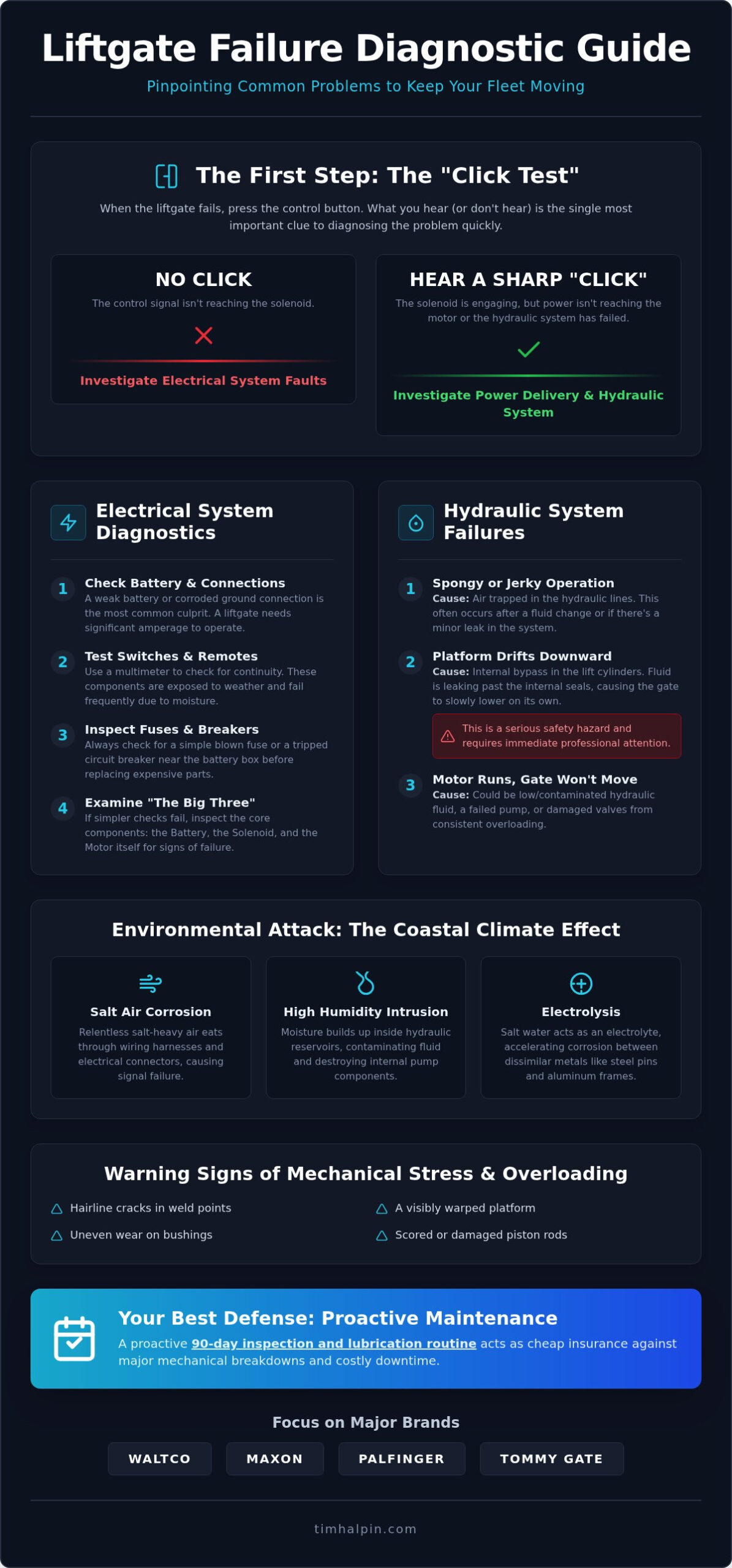
Living and working in South Florida brings unique challenges that many inland operators never face. Our salt-heavy air acts as a relentless catalyst for oxidation. It eats through wiring harnesses and corrodes connectors until electrical signals simply stop reaching the motor. Moisture intrusion is another silent killer. High humidity allows condensation to build up inside hydraulic reservoirs. This eventually contaminates the fluid and destroys the pump’s internal components. Electrolysis in this context is the electrochemical process where salt water acts as an electrolyte, causing accelerated corrosion between dissimilar metals, such as steel pins and an aluminum Tail lift (liftgate) frame.
Mechanical Stress and Overloading Symptoms
Operator error often masquerades as mechanical failure. When a liftgate is consistently pushed beyond its rated weight capacity, the hydraulic valves suffer permanent internal damage. This leads to drifting or sluggish operation that frustrates your crew. You can spot the signs of structural fatigue if you know where to look. Hairline cracks in the weld points or a visibly warped platform are clear indicators that the equipment has been overworked. If you’re inspecting a used vehicle, look for uneven wear on the bushings or scored piston rods. These visual cues suggest the previous owner may have ignored weight limits, leading to the common liftgate problems that eventually require a total system rebuild.
As equipment ages, the frequency of repairs naturally increases. When you find yourself replacing the same solenoid or fixing the same leak every few months, the metal itself has likely reached its fatigue limit. Since 1987, we’ve seen how a well-maintained gate can last for years. Eventually, however, the cost of constant small repairs outweighs the investment in a professional rebuild. Recognizing these patterns early keeps your business moving forward without the stress of unexpected failures.
Electrical vs. Hydraulic: Troubleshooting the Most Common Issues
Distinguishing between an electrical glitch and a hydraulic failure is the first hurdle in resolving common liftgate problems. Many operators assume a silent motor means a total system replacement. In reality, the culprit is often a simple loose connection or a battery that can’t hold a charge under load. We always recommend starting with the basics. Check your battery voltage first. A liftgate requires significant amperage, and even a slightly drained battery will fail to engage the motor solenoid. If your ground connections are corroded, the circuit won’t complete, leaving your platform stranded. You can perform a simple “click” test to narrow it down. If you hear a sharp metallic click when you press the button, your solenoid is likely receiving the signal, but the motor or the heavy-gauge power cable is failing to deliver the necessary current.
Electrical System Diagnostic Steps
Once you’ve verified the battery, move to the control side of the system. Test the master switch and the handheld remote for continuity using a multimeter. These components are exposed to the elements and frequently fail due to internal moisture. It’s also vital to inspect the “big three”: the battery, the solenoid, and the motor. Often, a dead system is caused by nothing more than a blown fuse or a tripped circuit breaker tucked away near the battery box. These safety devices are designed to fail before your expensive motor does, so always check them before ordering replacement parts.
Common Hydraulic System Failures
If the motor is spinning but the gate won’t move, the issue is likely hydraulic. Spongy or jerky operation usually points to air trapped in the lines, which can happen after a minor leak or fluid change. If your platform slowly drifts downward while parked, you’re likely dealing with an internal bypass in the lift cylinders. This is a serious safety concern. Operators have been fatally injured after being struck by falling platforms due to neglected mechanical and hydraulic maintenance. A gear pump failure typically causes a sudden, complete loss of lifting power when the internal gears wear down, whereas a piston pump failure usually shows up as a slow, stuttering lift as the individual pistons lose their seal. If you’re struggling to diagnose a stubborn leak, our technicians can provide the expert hydraulic repair services needed to restore your equipment’s integrity.
Pressure relief valves can also cause confusing symptoms. If your gate powers up perfectly but refuses to lower, the lowering valve or the relief setting might be stuck. This often happens when debris enters the hydraulic fluid. Keeping your fluid clean and your seals tight prevents these headaches and ensures your equipment remains a reliable partner in your daily work.
Brand-Specific Liftgate Problems: Maxon, Waltco, and Palfinger
Every manufacturer designs their equipment with specific operational goals in mind, which means they also come with unique vulnerabilities. Whether you’re running a heavy-duty Maxon or a versatile Waltco, understanding these brand-specific common liftgate problems allows you to prepare your maintenance team more effectively. Since we opened our doors in 1987, we’ve seen how regional factors like our South Florida humidity specifically target certain designs more than others. Knowing the “personality” of your liftgate brand can save you hours of diagnostic guesswork and prevent minor glitches from turning into total system failures.
Maxon and Waltco Failure Patterns
Maxon is widely recognized for the “Tuk-A-Way” design, a favorite for its space-saving footprint and reliability. However, the slide components and folding mechanisms are prone to binding if they aren’t kept clean and well-lubricated. If your platform is sticking or unfolding unevenly, check the slide runners for debris or hardened grease before assuming the motor has failed. Maxon motors also tend to show wear in the brushes over time. Replacing these brushes is a cost-effective way to extend the motor’s life without a full replacement. Waltco units, by contrast, are often sensitive to switch corrosion. The internal contacts in their switch assemblies are particularly vulnerable to moisture intrusion. If you’re experiencing intermittent power or a gate that only works “sometimes,” it’s likely time for new Waltco Liftgate Parts in Miami to ensure your electrical signals stay clear and reliable.
Palfinger and Anthony Liftgate Nuances
Palfinger and Anthony gates present their own specialized challenges, particularly regarding rail alignment and hydraulic settings. Palfinger rail gates rely on precise vertical alignment to function correctly. If the platform refuses to stay level during the lift cycle, you’re likely looking at uneven wear in the rails or a tension issue in the lifting chain. Neglecting these potential safety issues can lead to shifted loads or platform drops that put your operators at risk. Anthony liftgates are known for their specific solenoid variations. It’s surprisingly easy to accidentally install a 24-volt solenoid on a 12-volt system, which leads to immediate failure. Even for older Leyman or Thieman models, sourcing the correct OEM parts is non-negotiable for long-term reliability. We maintain one of the largest inventories in the country to make sure you aren’t waiting weeks for a specialized pin or seal that your fleet depends on.
Choosing OEM parts over generic alternatives is the best way to ensure your repair holds up under the daily grind. Generic parts often lack the precise tolerances required for hydraulic seals or electrical connectors, leading to repeat failures. By focusing on brand-specific solutions, you keep your trucks on the road and your delivery schedules on time.
Preventive Maintenance: How to Extend Your Liftgate’s Lifespan
Your maintenance routine should be methodical and thorough to ensure no component is overlooked. Start by checking the hydraulic fluid levels and clarity. If the oil looks milky or dark, it has likely been contaminated by moisture or internal wear and needs immediate attention. Inspect every hose for “weeping” or signs of dry rot. These small, damp spots on a hose are early warnings of a burst waiting to happen. Finally, always test the safety cutoff switch and emergency release valves. These features are your last line of defense during an equipment malfunction, and they must be functional at all times to protect your drivers and your cargo.
Climate-Specific Protection Strategies
Operating in South Florida requires a specialized strategy to combat our unique environmental stressors. The combination of high heat and salt air is particularly brutal on both electrical and hydraulic systems. Use dielectric grease on all electrical connections to seal out the moisture and salt that lead to common liftgate problems like solenoid failure. For your hydraulic system, the intense Florida sun can cause standard oils to thin out too much, leading to sluggish performance. We suggest using a fluid with the correct viscosity to maintain pressure during our hottest months. Miami fleets also benefit from more frequent hydraulic filter changes to remove the fine grit and contaminants that thrive in our humid environment. If your system is overdue for a professional flush, our team provides Expert Truck Hydraulics in Miami to keep your fleet running at peak performance.
Protecting the under-vehicle wiring with anti-corrosive coatings can save you from a complete harness replacement down the road. It’s these small, neighborly details in your maintenance plan that make the biggest difference in long-term reliability. If you’re unsure about the current state of your equipment, don’t wait for a breakdown. We are here to help you establish a maintenance schedule that fits your specific operational needs and keeps your team safe. Contact us today for professional liftgate repair and maintenance services tailored specifically to the South Florida climate.
Expert Liftgate Repair and Parts in Miami: The Tim Halpin Advantage
When your equipment fails, you need more than just a mechanic; you need a partner who understands the urgency of your schedule. Since 1987, Tim Halpin Equipment Corp has served as a steady guide for fleet managers navigating the complexities of heavy equipment maintenance. We take deep pride in our roots right here in Hialeah, where we’ve built a reputation for reliability and neighborly service. Our team doesn’t just swap parts. We diagnose the root cause of common liftgate problems to ensure your trucks stay on the road longer and your drivers remain safe. Whether you are dealing with a flickering electrical connection or a total hydraulic collapse, we bring decades of hands-on experience to every bay in our shop.
One of the biggest hurdles in South Florida fleet maintenance is the wait time for specialized components. We’ve solved this by maintaining one of the largest on-site liftgate parts inventories in the United States. We stock genuine OEM parts for industry leaders like Waltco, Maxon, Tommy Gate, and Palfinger, as well as Anthony, Thieman, and Leyman. Having these components in stock today means we can minimize your downtime from days to hours. We support both local Miami businesses and international fleets with export-ready parts and the technical expertise required to keep diverse equipment running at peak performance.
Local Miami Service and Global Parts Export
Our facility is equipped to handle everything from minor solenoid replacements to the most complex commercial truck upfitting projects. We believe that quality is the only foundation for long-term success, which is why we only stock the most reputable OEM and aftermarket brands. This commitment to excellence ensures that every repair we perform meets the highest industry standards for safety and durability. Our legacy of family-owned service remains the heartbeat of our business, providing a personal guarantee of accountability that faceless corporations simply cannot match.
Get Your Fleet Back on the Road
If you’re noticing sluggish operation or unusual noises from your equipment, don’t wait for a total failure to occur. You can easily schedule a diagnostic appointment at our Hialeah/Miami facility to get ahead of common liftgate problems before they disrupt your logistics. Our in-house hydraulic repair capabilities extend to all truck makes and models, ensuring a one-stop solution for your entire fleet. We invite you to reach out to our seasoned team for a professional consultation. Contact us today for a quote on parts or to discuss our professional installation services, and let us help you keep your business moving forward with confidence.
Keep Your Fleet Moving with Professional Care
Resolving common liftgate problems requires a balance of technical diagnostics and a commitment to regular maintenance. We’ve explored how simple electrical checks can prevent unnecessary motor replacements and how a strict 90-day inspection schedule keeps your mechanical components from seizing under pressure. Whether you’re managing a local delivery route or an international logistics fleet, the goal remains the same: ensuring every lift is safe and every schedule is met. You don’t have to navigate these mechanical challenges alone.
Since 1987, we’ve stood by our South Florida neighbors as a trusted guide in the truck equipment industry. As an authorized dealer for Waltco, Maxon, and Palfinger, we maintain one of the largest liftgate parts inventories in the US to ensure you’re never left waiting for a critical component. Our team is ready to provide the hands-on expertise and high-quality parts your business deserves. We invite you to Contact Tim Halpin Equipment Corp for Expert Liftgate Repair & Parts and experience the difference that local accountability makes. Let’s work together to keep your operations running smoothly and your team safe on the road.
Frequently Asked Questions
How do I know if my liftgate solenoid is bad?
You can identify a failing solenoid by performing a simple “click test” with the help of a colleague. When you engage the control switch, a functioning solenoid should make a distinct, sharp metallic clicking sound. If you hear the click but the motor doesn’t spin, the internal contacts are likely burnt or corroded. If there’s no sound at all, verify that the battery has a full charge and the ground connection is clean before replacing the component.
Why is my liftgate moving so slowly?
Sluggish operation is often caused by low battery voltage or poor electrical grounding, which prevents the motor from reaching full power. In our humid South Florida climate, moisture can also contaminate the hydraulic fluid, leading to internal pump wear or “spongy” performance. Check your fluid levels and clarity first. If the oil appears dark or milky, a full system flush and filter change are necessary to restore the lifting speed and protect your internal valves.
Can I use regular transmission fluid in my liftgate hydraulics?
You should avoid using standard automotive transmission fluid unless the manufacturer’s manual explicitly permits it for your specific model. Most modern systems require a dedicated low-pour-point hydraulic oil to ensure consistent viscosity across different temperatures. Using the wrong fluid can lead to seal degradation or foaming, which creates air pockets in the lines. For trucks operating in the Miami heat, selecting a fluid with the correct thermal stability is essential for preventing common liftgate problems.
How often should I grease my liftgate pins and bushings?
We recommend greasing all pivot points, pins, and bushings at least every 90 days as part of a professional maintenance routine. However, for fleets operating near the coast where salt air accelerates corrosion, a monthly lubrication schedule is even better. Proper grease acts as a protective barrier against moisture and grit. Neglecting these points leads to metal-on-metal friction, which eventually warps the platform and causes expensive structural failures that are difficult to reverse.
What is the most common cause of a liftgate not lifting a load?
The most frequent culprit is an overloaded platform that has triggered the pressure relief valve to prevent structural damage. If the weight is within the rated capacity, the problem usually stems from low hydraulic fluid levels or a failing pump that can’t generate enough pressure. Inspect the system for visible leaks around the cylinder seals. A small leak might not seem urgent, but it eventually leads to a loss of lifting power during critical delivery windows.
Is it better to repair an old liftgate or replace the entire unit?
Deciding between repair and replacement depends on the overall condition of the structural frame and the frequency of recent failures. If the platform is rusted through or the main rails are warped, a full replacement is usually the safer, more cost-effective choice. However, if the structure is sound, replacing key components like the motor or cylinders can give the unit a second life. We’ve helped many neighbors make this choice by providing honest, professional diagnostic assessments.
What should I do if my liftgate is stuck in the down position?
First, ensure the master power switch is engaged and the circuit breaker hasn’t tripped near the battery box. If the electrical system is dead, many models have a manual override or an emergency release valve that allows you to stow the gate for transport. Never attempt to drive with the platform extended. If the gate is physically jammed due to a mechanical obstruction, it’s best to call for professional assistance to avoid damaging the hydraulic cylinders.
Does Tim Halpin stock parts for Maxon and Waltco liftgates?
Yes, we maintain one of the largest on-site liftgate parts inventories in the United States at our Miami facility. We are an authorized dealer for both Maxon and Waltco, as well as Palfinger and Tommy Gate. Our shelves are stocked with everything from solenoids and switches to complete power units and seal kits. This allows us to provide immediate solutions for our South Florida community and minimize the downtime caused by common liftgate problems.
