

Fleet management dashboards track every mile and idle minute, but software alone won’t keep your vehicles out of the service bay. Real progress in reducing work truck operating costs begins with the physical integrity of your auxiliary hardware, from your hydraulic liftgates to the service bodies carrying your daily payload. If you’re tired of watching revenue vanish into sudden equipment failures, stranded field crews, and low-grade replacement components that fail well ahead of schedule, you aren’t alone. Balancing immediate job commitments against rising mechanical expenses is easily one of the toughest pressures vocational fleet managers face.
You don’t have to accept relentless downtime as an inevitable cost of doing business. This complete guide reveals actionable strategies to slash operating expenses through disciplined equipment care, smarter body upfitting, and proactive maintenance. From eliminating preventable roadside emergencies to extending the working lifecycle of your specialized truck bodies, here is your roadmap to lowering your total cost per mile while keeping your crews productive on the road.
Key Takeaways
- Achieve lasting results in reducing work truck operating costs by looking beyond fuel consumption and controlling auxiliary hardware repairs.
- Prevent catastrophic liftgate and hydraulic pump failures with targeted fluid checks and pressure testing routines.
- Optimize payload capacity and cut long-term chassis wear through strategic body selection and balanced weight distribution.
- Eliminate expensive repeat repairs and warranty issues by avoiding bargain aftermarket parts for vital vocational equipment.
- Partner with an experienced local upfitting and repair specialist to access ready inventory and minimize costly downtime.
Understanding Work Truck Operating Costs Beyond Simple Fuel Consumption
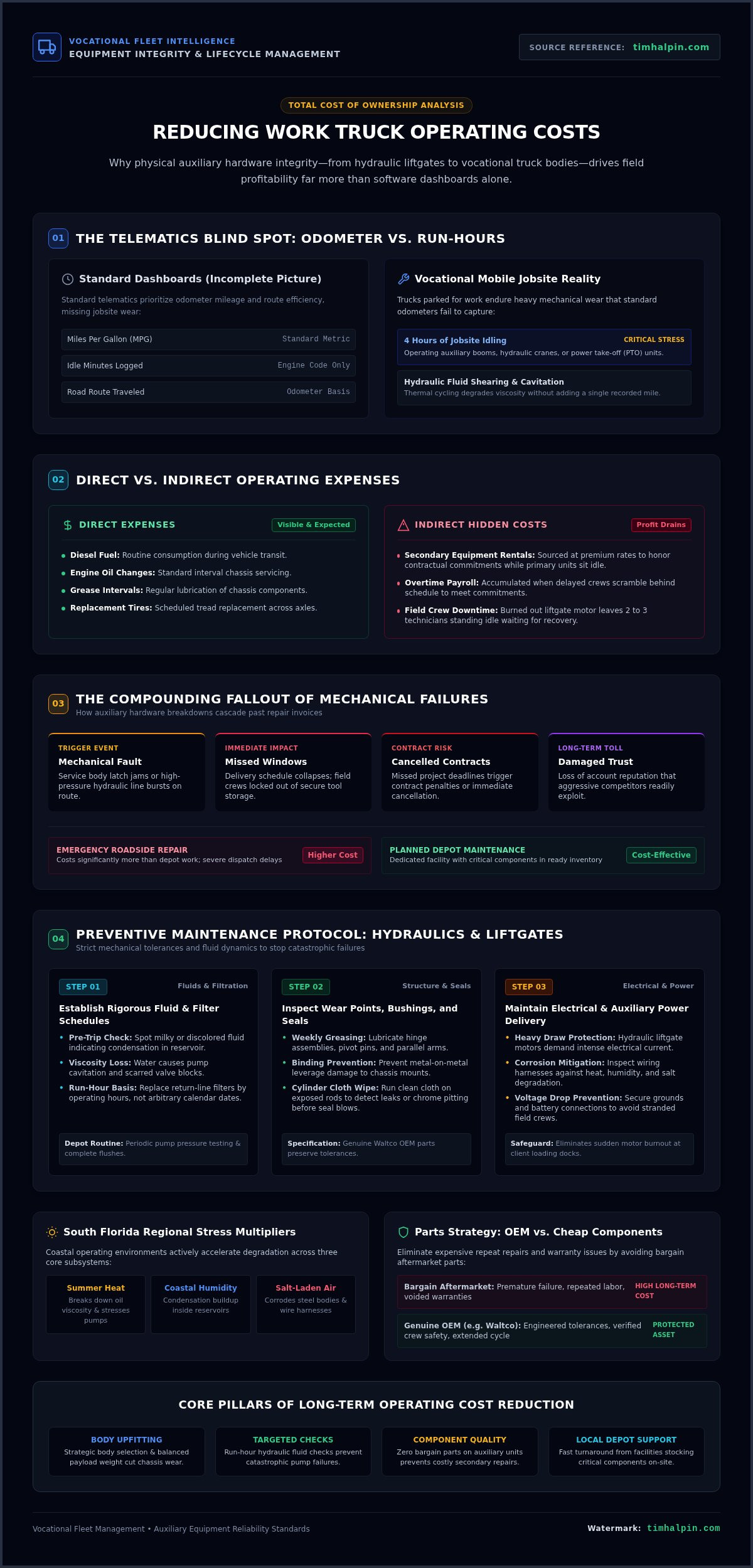
Most fleet dashboards focus heavily on miles per gallon and driver routing. While those metrics matter, they tell only half the story. Vocational vehicles are mobile job sites. True success in reducing work truck operating costs requires calculating auxiliary equipment wear, power take-off run-hours, and mechanical attachment integrity alongside standard chassis expenses. When a truck spends four hours idling at a job site operating a boom or hydraulic crane, standard odometer readings fail to reflect the actual mechanical strain placed on the platform.
South Florida presents unique challenges. Relentless summer heat, coastal humidity, and salt-laden air actively degrade hydraulic assemblies, wiring harnesses, and structural steel bodies. A comprehensive approach to modern fleet management must account for this regional wear. Factoring auxiliary equipment service into your total hourly calculations prevents sudden mechanical setbacks from draining operational reserves.
Direct vs. Indirect Operating Expenses in Vocational Fleets
Direct costs are visible and expected. They include diesel, engine oil changes, grease intervals, and replacement tires. Indirect expenses, however, represent the quiet budget drains that derail annual profitability. These include:
- Secondary equipment rentals required to keep commitments while primary trucks sit idle.
- Overtime payroll accumulated when crews scramble to finish behind schedule.
- Crew downtime: If a liftgate motor burns out at a loading dock, you pay two or three technicians to stand by waiting for recovery.
The True Cost of Unscheduled Work Truck Downtime
Preventable mechanical failures create compounding costs. When a service body latch jams or a hydraulic line bursts, the fallout extends far beyond the repair shop invoice. Missed customer delivery windows lead to cancelled contracts, missed project deadlines, and lasting damage to client trust that competitors will gladly exploit.
Emergency mobile roadside repairs inevitably cost significantly more than planned maintenance conducted at a dedicated depot. Securing fast turnaround times with specialized facilities that stock critical components on-site keeps vehicles generating income. Minimizing idle shop time remains one of the single most effective levers for reducing work truck operating costs across municipal, commercial, and industrial fleets.
How to Build a Preventive Maintenance Plan for Hydraulic and Liftgate Systems
Telematics dashboards log engine trouble codes, but they cannot spot a scored hydraulic cylinder rod or a hair-line crack in a liftgate platform pin before it shears. Auxiliary equipment relies on strict mechanical tolerances and clean fluid dynamics. Building a disciplined maintenance routine around these auxiliary components is one of the most effective strategies for reducing work truck operating costs across your fleet.
Step 1: Establishing Rigorous Fluid and Filter Change Intervals
Hydraulic assemblies face intense heat and humidity in coastal operations. Check reservoir fluid levels during pre-trip walk-arounds, watching for milky or discolored fluid that indicates condensation buildup. Water breaks down hydraulic oil viscosity, leading to rapid pump cavitation and scarred valve blocks. Replace return-line filters based on actual operating run-hours rather than standard calendar schedules. Fleets dealing with complex pressure drops or valve sticking rely on specialists in expert truck hydraulics in Miami to pressure-test pumps and perform complete system flushes.
Step 2: Inspecting Structural Wear Points, Bushings, and Seals
Cantilevered liftgates transfer immense leverage onto chassis mounts and pivot points. Grease hinge assemblies, pivot pins, and parallel arms weekly to prevent metal-on-metal binding. Technicians should run a clean cloth along exposed cylinder rods to catch hydraulic leaks or chrome pitting before a seal fails on a delivery route. When components show fatigue, install genuine Waltco liftgate parts in Miami to retain original engineering tolerances and ensure crew safety on the job.
Step 3: Maintaining Electrical Systems and Auxiliary Power Delivery
Hydraulic pumps place tremendous demand on the vehicle electrical system. Corrosion on secondary battery terminals, master switches, and ground straps chokes current delivery. This voltage drop burns out starter solenoids and pump motors prematurely. Clean auxiliary power terminals quarterly, check voltage draw under full load, and route wiring harnesses securely away from sharp frame edges. According to recent fleet maintenance benchmark reports, proactive electrical inspections dramatically reduce emergency roadside service calls.
Executing these targeted inspections turns chaotic repair cycles into controlled, predictable shop appointments, fundamentally reducing work truck operating costs. If your team needs experienced assistance with certified component rebuilds or structured maintenance routines, consulting with the technicians at Tim Halpin Equipment Corp keeps your service bodies and lift units running reliably.
Optimizing Truck Upfitting and Weight Distribution to Slash Fuel Usage
Driver monitoring software tracks speeding and rapid acceleration, but it cannot fix an improperly configured vocational body. Carrying dead tare weight burns fuel on every single mile driven. Beyond consumption at the pump, chronic imbalance accelerates brake pad glazing, stresses steering linkages, and triggers uneven tire cupping across front steering axles. Addressing these structural factors during initial builds or fleet retrofits creates substantial leverage in reducing work truck operating costs over the life of the vehicle.
Comparing Steel, Aluminum, and Composite Truck Bodies
Selecting the right body material requires aligning structural toughness with gross vehicle weight ratings (GVWR). Consider the working environment of your equipment:
- Heavy-gauge steel service bodies: Excellent for harsh industrial demolition and heavy impact trades where puncture resistance is paramount.
- Aluminum utility bodies: Slash hundreds of pounds of chassis tare weight. This weight reduction increases usable payload capacity, reduces baseline fuel burn, and shrugs off South Florida coastal corrosion.
- Composite configurations: Provide chemical resistance and structural lightness for lighter-duty urban delivery roles.
Ergonomic Interior Shelving and Tool Organization
Unsecured cargo shifts during cornering, causing unstable center-of-gravity changes that overwork suspension leaf springs and shocks. Installing engineered Weather Guard truck toolboxes balances weight across the chassis rail footprint while securing heavy hand tools. For delivery and service vans, integrating professional modular van interiors organizes fittings over the rear axle, preventing crew injuries and cargo damage. To match specific vocational trades with ideal chassis weights, study this detailed resource on commercial truck upfitting in Miami offered by Tim Halpin Equipment Corp.
Aerodynamic and Auxiliary Electrical Considerations
Wind drag and electrical draw quietly drain powertrain efficiency. Bulky roof racks create substantial resistance at highway speeds; switching to low-profile ladder carriers restores aerodynamics. Auxiliary loads also tax the engine alternator. Outfitting bodies with low-draw Whelen Engineering or SoundOff Signal LED public safety lighting reduces electrical drag. Integrating high-amp master disconnect switches stops phantom battery drains while trucks sit parked overnight in municipal yards. As noted by the U.S. Department of Energy, reducing vehicle idling time and auxiliary engine strain delivers immediate dividends in fuel economy and engine longevity, making thoughtful upfitting fundamental to reducing work truck operating costs.
OEM vs. Aftermarket Parts: Avoiding the Hidden Costs of Cheap Components
Procurement spreadsheets often reward purchasing managers for selecting the lowest invoice price on replacement components. On paper, a budget hydraulic valve or an unbranded solenoid looks like an immediate win for the operating budget. In reality, sub-par aftermarket hardware introduces compounding labor costs, frequent secondary failures, and unpredictable field breakdowns. Genuine cost efficiency in reducing work truck operating costs comes from component longevity, exact mechanical tolerances, and keeping trucks on the road rather than on jack stands.
The False Economy of Budget Replacement Hardware
Labor rates do not change whether a technician installs an authentic factory part or a cheap alternative. When a low-grade replacement hydraulic pump fails three months after installation, you pay for the same repair teardown, fluid flush, and system bleed all over again. The initial savings on the hardware vanish immediately beneath double the shop hours and lost service revenue.
In high-stakes applications like vehicle recovery and towing, off-spec hardware is a severe safety liability. A snapped aftermarket winch cable or a deformed sub-standard wheel-lift pin can drop a loaded vehicle in traffic. Fleets operating recovery vehicles depend on verified, authentic tow truck parts in Florida to maintain certified working load limits and protect crews from catastrophic failure under heavy strain.
Standardizing Critical Spares Across Your Commercial Fleet
Fleet managers can simplify depot storage and trim operating overhead by standardizing hardware across their vocational builds. Rather than stocking a confusing mix of random replacement components, establish uniform factory standards across your service vehicles:
- Electrical assemblies: Standardize control solenoids, master disconnects, and push-button pendants across identical body platforms.
- High-turnover consumables: Keep verified manufacturer seal kits, hydraulic line fittings, and pressure relief cartridges in your local inventory.
- Lighting hardware: Use uniform LED lightheads and wiring harnesses to simplify depot repairs and speed up replacements.
Sourcing these components through established distributors eliminates long shipping waits that paralyze your schedule. Keeping factory-certified replacement parts readily accessible remains a cornerstone of reducing work truck operating costs over the life of your fleet. If you are looking to audit your parts inventory or source guaranteed OEM components for your utility and recovery bodies, contact Tim Halpin Equipment Corp to secure the exact parts your fleet needs.
Partnering with Local Equipment Specialists to Maximize Fleet Lifespan
Fleet managers often burden in-house technicians with every repair, from routine oil changes to intricate hydraulic overhauls. When specialized auxiliary equipment goes down, general mechanics can spend days diagnosing issues that a specialist could solve in hours. Building a trusted relationship with an experienced local upfitter and equipment partner radically compresses emergency turnaround windows. This collaborative approach plays a vital role in reducing work truck operating costs across diverse vocational fleets.
What to Look for in a Commercial Upfitter and Repair Center
Choosing the right local service partner requires looking beyond generic mechanical shops. You need a dedicated facility capable of handling customized structural welding, high-pressure line fabrication, and precision electrical diagnosis. Keep these evaluation criteria in mind:
- Specialized technical expertise: Confirm technicians hold practical experience across hydraulic pumps, DC auxiliary electrics, and structural body mounting.
- On-site parts inventory: A shop waiting days for common seals or control solenoids leaves your truck stranded. Facilities with extensive on-site parts stock start repairs the moment your vehicle arrives.
- Local track record: Established facilities with decades of regional service understand South Florida’s unique working climate and prioritize keeping community businesses moving.
The Value of Proactive Commercial Fleet Audits
Preventive care should extend beyond standard engine maintenance. Scheduling annual structural audits catches hidden metal fatigue, subframe corrosion, and stressed outrigger welds before an on-the-job failure occurs. These inspections also help fleet managers evaluate aging vocational bodies and identify outdated configurations that quietly bleed maintenance budgets.
Partnering with a proven local specialist keeps your equipment safe and productive year after year. The factory-trained team at Tim Halpin Equipment Corp has served South Florida commercial fleets since 1987, providing the deep technical know-how, dedicated hydraulic repair services, and massive parts inventory essential for reducing work truck operating costs and extending vehicle lifespan.
Build a More Resilient, Cost-Effective Commercial Fleet
Achieving true progress in reducing work truck operating costs isn’t about cutting corners on hardware. It demands a deliberate strategy focused on auxiliary equipment reliability. When you prioritize disciplined hydraulic maintenance, balance body payloads, and eliminate low-grade replacement parts, you protect your crews from stranded workdays and keep predictable profit margins intact.
Serving South Florida fleets and international export since 1987, Tim Halpin Equipment Corp provides the specialized support vocational fleet managers rely on every day. With factory-trained technicians in hydraulics, electrical systems, and commercial upfitting, backed by one of the largest inventories of liftgate and towing parts nationwide, our shop has the resources to turn unplanned downtime into seamless productivity. Schedule a commercial fleet equipment assessment with Tim Halpin Equipment Corp today, and let our experienced team help you build a safer, more profitable fleet for years to come.
Frequently Asked Questions
How much does routine preventive maintenance reduce work truck operating costs?
Routine preventive maintenance substantially lowers total fleet expenditures by catching minor mechanical defects before they cause roadside failures. Regular inspections of hydraulic lines, pivot bushings, and electrical connectors prevent cascading component damage. Rather than paying emergency dispatch fees, towing bills, and secondary equipment rentals, fleets keep assets running on scheduled routes. This disciplined strategy is the single most reliable foundation for reducing work truck operating costs across demanding vocational environments.
Can upgrading an existing truck body cost less than purchasing a new truck?
Upgrading or remounting an existing service body onto a sound chassis is significantly more economical than replacing an entire commercial vehicle. Commercial chassis often outlast their mounted hardware, or a change in vocational trades may require a different storage layout. Refurbishing structural bodies, retrofitting new interior drawer systems, or installing a modern liftgate revitalizes your operational capacity without the massive capital outlay and insurance hikes associated with acquiring brand-new commercial trucks.
What are the most common mechanical causes of sudden work truck downtime?
Auxiliary hydraulic pump failures, electrical connection corrosion, and neglected liftgate hinge pins are the leading mechanical culprits behind sudden downtime. While standard engine components trigger dashboard warnings, auxiliary vocational gear often fails silently without regular hands-on checks. In South Florida’s humid and coastal atmosphere, oxidized battery cables cause voltage drops that burn out liftgate starter solenoids, while ungreased pivot pins bind up and bend cantilever arms under heavy working loads.
How do I determine whether to use aluminum or steel when upfitting a service body?
Your decision hinges on balancing severe impact resistance against legal payload limits and corrosion exposure. Heavy-gauge steel excels in severe demolition, scrap handling, and masonry work where raw physical impact would dent lighter metals. Conversely, lightweight aluminum bodies shed substantial tare weight to maximize payload, cut daily fuel consumption, and resist salt air corrosion. Reviewing your typical route weight and cargo types ensures you choose the most cost-effective body material.
Why is genuine OEM hardware recommended over cheaper aftermarket alternatives for liftgates?
Genuine OEM parts guarantee exact factory tolerances, certified safe working load limits, and manufacturer warranty protection. Cheap generic alternatives often lack proper metallurgical hardening, causing premature shearing in pivot pins and valve blowouts under maximum rated hydraulic pressure. A substandard part that fails in the field requires duplicate labor hours to replace, completely erasing any initial purchase savings and undermining your long-term efforts in reducing work truck operating costs.
What happens if my fleet operations continue using contaminated hydraulic oil?
Operating auxiliary equipment with contaminated hydraulic fluid rapidly destroys pumps, scores cylinder rods, and clogs delicate control valves. Water intrusion turns fluid milky, stripping away essential lubricating properties and causing intense metal-on-metal friction. Suspended dirt particles act like liquid sandpaper, carving grooves into precision-machined spool valves and piston seals. Left unchecked, dirty fluid turns a simple maintenance filter swap into a complete hydraulic rebuild across your entire vocational platform.
