
The brightest light bar isn’t automatically the best choice for a tow truck. For fleet buyers researching tow truck light bar installation miami, the right setup depends on the truck’s role, available mounting space, wiring needs, and how the vehicle operates on the roadside. A poor fit can create visibility or installation concerns, so compare options before work begins.
Choosing the equipment is only part of the decision. You’ll also want to understand what professional installation involves and confirm which warning-light configurations are appropriate for your operation. Tim Halpin Equipment Corp is a Miami-based, family-owned commercial vehicle upfitter serving South Florida since 1987, with public safety lighting and installation capabilities.
This guide explains how to compare light bar options, prepare useful details about your truck, and ask an upfitter clear questions about mounting, wiring, compatibility, and scheduling. It also outlines local compliance questions to verify with the appropriate authorities before the truck returns to service, so you can make an informed decision.
Key Takeaways
- Match the light bar to the truck’s duties, body configuration, existing equipment, and intended use before comparing options.
- For tow truck light bar installation miami, ask how the upfitter will assess mounting space, wiring needs, controls, and equipment compatibility.
- Compare providers by installation scope and service support, not just the light bar’s features.
- Verify permitted colors and operating conditions with the appropriate Florida and local authorities before selecting a configuration.
- Bring truck details and operational needs to a conversation with a Miami commercial upfitter such as Tim Halpin Equipment Corp.
What to Evaluate Before Booking Tow Truck Light Bar Installation in Miami
Warning-light visibility matters during roadside recovery and work-zone operations, where others nearby need to understand the truck’s position and activity. But choosing a light bar isn’t simply a matter of picking a size or brightness. The truck’s job, body layout, existing equipment, and intended use all affect which options may fit.
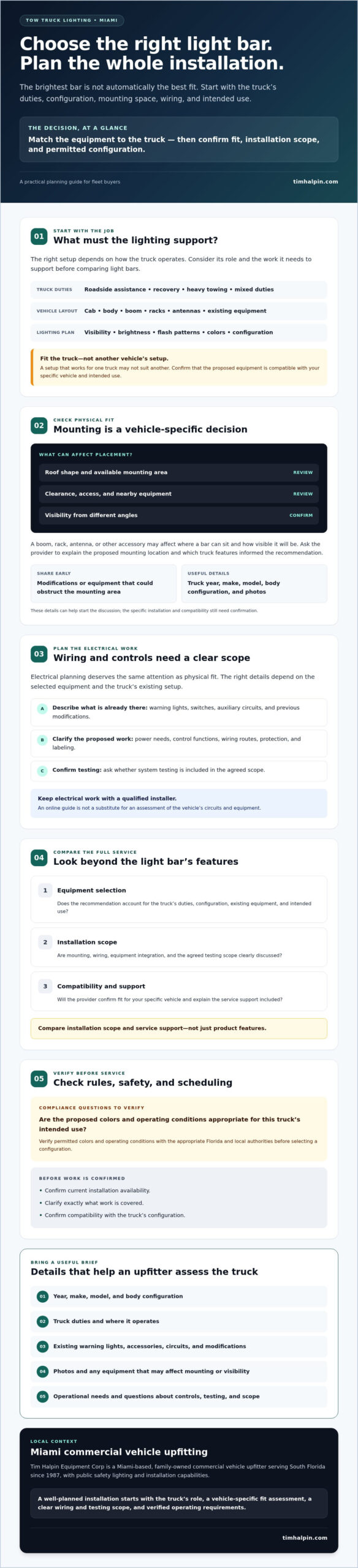
Keep two decisions separate: selecting lighting equipment and planning its installation. A light bar may look suitable on paper, yet the cab roof, mounting area, wiring requirements, or nearby equipment can change what’s practical. Before booking tow truck light bar installation miami, describe the truck’s duties and ask the provider to confirm equipment compatibility and the work included.
Match the lighting plan to the tow truck’s work
Start with the truck’s actual role. Does it handle roadside assistance, recovery, heavy towing, or a mix of duties? Then consider the cab, body, boom, and other equipment that could affect visibility or placement. A setup that works for one truck may not suit another. For general background on lighting types and mounting approaches, see this overview of emergency vehicle lighting.
Describe where and how the truck operates, and whether existing warning lights or accessories need to be considered alongside the bar. Check brightness, flash patterns, colors, and configurations against the intended use and applicable requirements. The lighting should suit the truck’s work, not simply look like another vehicle’s setup.
Clarify the installation provider’s role
Ask what the provider will assess: equipment selection, mounting, wiring, and whether system testing is included in the agreed scope. Purchasing the light bar and installing it are related, but separate tasks. Confirm compatibility for your specific truck rather than assuming every option will fit.
Commercial trucks can have body structures and work equipment that make their upfit needs different from those of passenger vehicles. Choose a provider prepared to discuss the full vehicle configuration, not just the accessory. For broader project considerations, see this guide to commercial truck upfitting in Miami.
Professional light bar installation typically assesses vehicle fit, mounting location, wiring needs, equipment integration, and the agreed testing scope. Tim Halpin Equipment Corp is a family-owned Miami commercial vehicle upfitting business that has operated since 1987. Before proceeding, confirm current installation availability, the work covered, and compatibility with your truck’s configuration.
How Light Bar Fit, Mounting, and Wiring Affect a Tow Truck Installation
A light bar has to work with the truck it’s going on. Roof shape, available mounting area, nearby equipment, and electrical configuration all influence placement and installation scope. Review those details before selecting equipment to help prevent a mismatch between the bar, the vehicle, and the work it needs to support.
Check mounting location and truck configuration
Have the installer review the roof shape, existing accessories, clearance, and access to the proposed mounting area. A boom, rack, antenna, or other equipment may affect where a bar can sit and how visible it will be from different angles. The mounting approach should suit how the truck is used, not just the available space.
Ask the provider to explain the proposed location and which truck features informed the recommendation. If the vehicle has been modified or carries equipment that may obstruct a mounting area, share those details early. Photos and the truck’s year, make, model, and body configuration can help start the discussion, though the specific installation and compatibility still need confirmation.
Review wiring and controls before work begins
Electrical planning deserves the same attention as physical fit. Give the installer a clear picture of existing warning lights, switches, auxiliary circuits, and previous modifications. Ask how the proposed scope will address power needs, control functions, wiring routes, protection, labeling, and testing. The right details depend on the selected equipment and the truck’s existing setup, so confirm them with the installer.
Keep electrical work with a qualified installer. An online guide is not a substitute for an assessment of the vehicle’s circuits and equipment. Before authorizing work, clarify which controls the proposed system supports and what testing is included. If operating rules affect the selected configuration, review the applicable source, including Florida Statute 316.2397, and verify requirements with the appropriate authorities.
Assess fit and electrical needs before installation so the light bar, mounting approach, and controls can be considered as one system. Raise this point when discussing tow truck light bar installation miami. Tim Halpin Equipment Corp’s installation capabilities include lighting systems, custom electrical wiring, and structural mounting. Confirm current availability and the scope for your truck. For a conversation about truck configuration and lighting needs, visit Tim Halpin Equipment Corp.
How to Compare Tow Truck Light Bars and Miami Installation Providers
Compare the complete installation plan, not just a light bar’s product description. Brightness, flash patterns, colors, controls, and configuration should fit the truck’s duties and be checked against approved use. Florida requirements are a separate consideration: review Florida Statute 316.2397 and confirm applicable rules with the appropriate authorities. An installer can discuss fit and installation scope, but shouldn’t be treated as the authority on legal approval.
Compare the light bar against operational needs
Ask which specifications matter for your truck’s operating environment and work. A unit intended for one mounting location may not fit another, especially if the cab, body, or existing equipment limits available space. Don’t choose by appearance alone. Check compatibility with the proposed mounting position and the truck’s existing lighting and controls, and confirm availability and fit for the specific equipment under consideration.
| Compare | What to confirm |
|---|---|
| Fit and intended use | Does the proposed setup match the truck’s duties and operating environment? |
| Mounting | Has the provider considered the roof, available space, clearance, and nearby equipment? |
| Wiring scope | Does the written estimate describe the electrical integration included? |
| Controls | Which functions will the selected equipment and controls support? |
| Service support | What support is available after installation, and how can the fleet contact the provider? |
Assess a Miami-area installer’s project process
Ask whether the provider first reviews the truck in person or requests details such as its configuration, existing equipment, and intended use. Then compare written scopes. They should make clear what mounting and electrical integration are included, which controls are covered, and whether testing is part of the agreed work. This lets you compare proposals on equal terms instead of relying on broad descriptions.
Buyer rule: verify the truck, intended use, and applicable requirements together before choosing equipment. This can surface fit or compliance questions before installation is scheduled. For broader fleet-lighting considerations, read this guide to Miami public safety lighting guidance.
For tow truck light bar installation miami, Tim Halpin Equipment Corp brings commercial vehicle equipment and installation experience to the conversation. The Miami-based, family-owned business has operated since 1987 and offers public safety lighting and installation services. To discuss your truck’s configuration, mounting, and wiring needs, visit Tim Halpin Equipment Corp’s website. Confirm current service scope and equipment compatibility before proceeding.
What to Verify About Florida Rules, Safety, and Installation Scheduling
A light bar’s color and operating pattern aren’t automatically permitted just because they’re common on another tow truck. Requirements can depend on the vehicle’s role and use, so verify the configuration with appropriate Florida authorities and relevant local agencies before choosing equipment or putting the truck into service. Don’t rely on online assumptions, another fleet’s setup, or an installer’s opinion as legal approval.
Verify lighting rules for the truck’s intended use
Ask which rules apply to your truck and its work. Confirm questions about colors, flash patterns, when lights may be used, or whether an exception applies with the relevant authority. Rules can vary by vehicle role and situation, so don’t treat a particular color or configuration as universally permitted. You can also ask the installer what documentation or authority confirmation would help with planning, while keeping compliance verification with the appropriate officials.
Separate what you know about the truck from what still needs an authoritative answer:
- Confirm for the installation plan: truck make, model, year, body type, intended duties, existing warning lights, and known modifications.
- Verify with the appropriate authorities: permitted colors, operating conditions, any applicable restrictions or exceptions, and local requirements.
- Confirm with the provider: equipment compatibility, mounting and wiring scope, controls, testing, and any documents they need before work begins.
- Coordinate directly: vehicle availability, appointment timing, expected work scope, and how to plan fleet coverage while the truck is unavailable.
Prepare for a smoother installation appointment
Providing good details up front can help avoid preventable back-and-forth. Share the truck’s specifications and existing lighting modifications, along with relevant information about its body, boom, or other equipment. Then discuss scheduling and the expected scope directly with the provider. Don’t assume a particular turnaround. Ask what the proposed work involves and plan fleet coverage around the confirmed schedule.
If lighting work is part of a broader maintenance or equipment plan, review this guide to tow truck parts in Florida for related planning considerations. Tim Halpin Equipment Corp is a Miami-based, family-owned commercial vehicle equipment and upfitting business. For tow truck light bar installation miami, discuss your vehicle configuration, lighting needs, and potential installation scope with the team, then verify current availability and compatibility. Discuss your truck’s lighting installation needs.
Plan Tow Truck Light Bar Installation with a Miami Commercial Upfitter
A well-planned installation starts with the truck’s work, not a product name. Define its duties, assess how the cab and equipment affect fit, verify applicable lighting requirements with the appropriate authorities, then confirm the proposed installation scope with the provider. Keeping those decisions in order helps your fleet compare suitable options and identify open questions before scheduling.
Tim Halpin Equipment Corp is a Miami-based, family-owned commercial vehicle equipment and upfitting business serving South Florida. Family-owned and operated since 1987, the company offers public safety lighting from Whelen Engineering, SoundOff Signal, Federal Signal, Code 3, and Feniex Industries, along with installation capabilities that include lighting systems, custom electrical wiring, and structural mounting. Confirm equipment availability, vehicle compatibility, and installation scope for each truck.
What information to provide when requesting an installation discussion
Give the provider enough context to understand both the vehicle and its work. A clear first conversation can help establish what needs an in-person assessment and what details or documentation to gather before moving forward.
- Vehicle: Share the make, model, year, body type, and relevant configuration details.
- Work: Describe the truck’s applications and the conditions in which it operates.
- Existing equipment: Note current warning lights, controls, electrical modifications, and equipment that may affect mounting or access.
- Timing: Explain your preferred timing and fleet scheduling needs, then ask about availability and expected work scope directly.
- Open questions: Bring compliance questions and any confirmation you’ve received from the relevant authorities.
Then ask which lighting options and installation services are currently available for that configuration. Request clarity on equipment compatibility, mounting, wiring, controls, and testing as applicable. Confirm what the quoted scope includes and identify any requested work that falls outside installation, so expectations are clear before the truck is scheduled.
Choose a provider that understands commercial vehicle integration
A light bar is part of a working truck, so its installation should be considered alongside the vehicle’s existing electrical setup and work equipment. A provider familiar with commercial vehicle integration can discuss those connections and help clarify what needs assessment. Tim Halpin Equipment Corp’s Miami upfitting background offers a place to begin that conversation. Confirm current service availability and scope for your vehicle.
If you’re planning tow truck light bar installation miami, bring your truck details, intended use, and outstanding compliance questions to the discussion. Discuss tow truck lighting installation in Miami and ask what options, compatibility checks, and installation work can be confirmed for your fleet.
Move Forward with a Clear Installation Plan
A confident decision starts with a clear picture of the truck’s role and the installation it needs. Compare options against vehicle fit, confirm the proposed mounting and wiring scope, and verify applicable lighting requirements with the appropriate authorities. This groundwork helps turn tow truck light bar installation miami from a guess into a well-prepared fleet decision.
For a local conversation, Tim Halpin Equipment Corp brings Miami commercial vehicle upfitting and lighting installation capabilities, backed by a family-owned history serving customers since 1987. Confirm current availability, equipment compatibility, and project scope for your specific truck before scheduling.
Discuss your tow truck lighting installation needs with the team and share your vehicle details, work applications, and questions. With the right information and a thoughtful plan, you can take the next step with greater confidence.
Frequently Asked Questions
How much does tow truck light bar installation cost in Miami?
There isn’t one set price for tow truck light bar installation in Miami because the quote depends on the truck and the work involved. The light bar, mounting location, existing equipment, wiring needs, and requested controls can all affect the project scope. Share your vehicle details and installation goals with an upfitter, then request a project-specific estimate that lists what’s included before approving the work.
Are light bars legal on tow trucks in Florida?
Whether a lighting setup is permitted depends on the tow truck’s role, how it’s used, and the requirements that apply to the situation. Don’t assume a configuration is allowed just because another truck uses it or a product is sold for towing. Before selecting equipment or putting the truck into service, verify current requirements with the appropriate Florida authorities and relevant local agencies. An installer can discuss fit and scope, but can’t guarantee legal approval.
Can any light bar be installed on a tow truck?
No. A light bar needs to suit the vehicle’s roof or mounting area, available clearance, existing equipment, and electrical setup. The truck’s intended work also matters, since a configuration suitable for one application may not fit another. Before choosing equipment, ask the installer to confirm compatibility for your specific truck and proposed mounting location. Verify product details, including controls and configuration, for the exact equipment under consideration.
How long does tow truck light bar installation take?
Installation timing depends on the truck’s condition and the project scope. A straightforward fit may involve different work from a setup that requires additional mounting, wiring integration, controls, or attention to existing modifications. Rather than relying on a general time estimate, share the truck’s details and requested work with the installer, then confirm the expected schedule directly. If the vehicle is part of a fleet, coordinate availability and coverage before booking.
What should I look for in a Miami tow truck light bar installer?
Look for an installer who understands commercial vehicles and assesses the truck’s configuration before confirming the work. Ask how they’ll review mounting options, existing equipment, and wiring needs. Request a clear written scope identifying the equipment and installation tasks, along with any testing included. In South Florida, Tim Halpin Equipment Corp is a Miami-based commercial vehicle upfitting business. Confirm its current service availability and scope for your truck.
Do tow truck light bars need professional wiring and mounting?
Professional assessment can help determine whether the proposed mounting and electrical integration suit the specific truck and equipment. The installer should review the mounting area, existing lights and controls, power needs, wiring route, and agreed testing scope. Don’t assume a light bar can simply connect to any available circuit or attach securely to any surface. Ask what work is included and confirm compatibility before installation begins.
Which light bar color can a tow truck use in Florida?
There isn’t a universal answer for every tow truck and operating situation. Permitted colors and when they may be used depend on the vehicle’s role and applicable current requirements. Before purchasing or installing a light bar, check the rules that apply to your truck with the appropriate Florida authorities and relevant local agencies. Don’t rely on another operator’s setup or assume a product listing confirms lawful use.
