

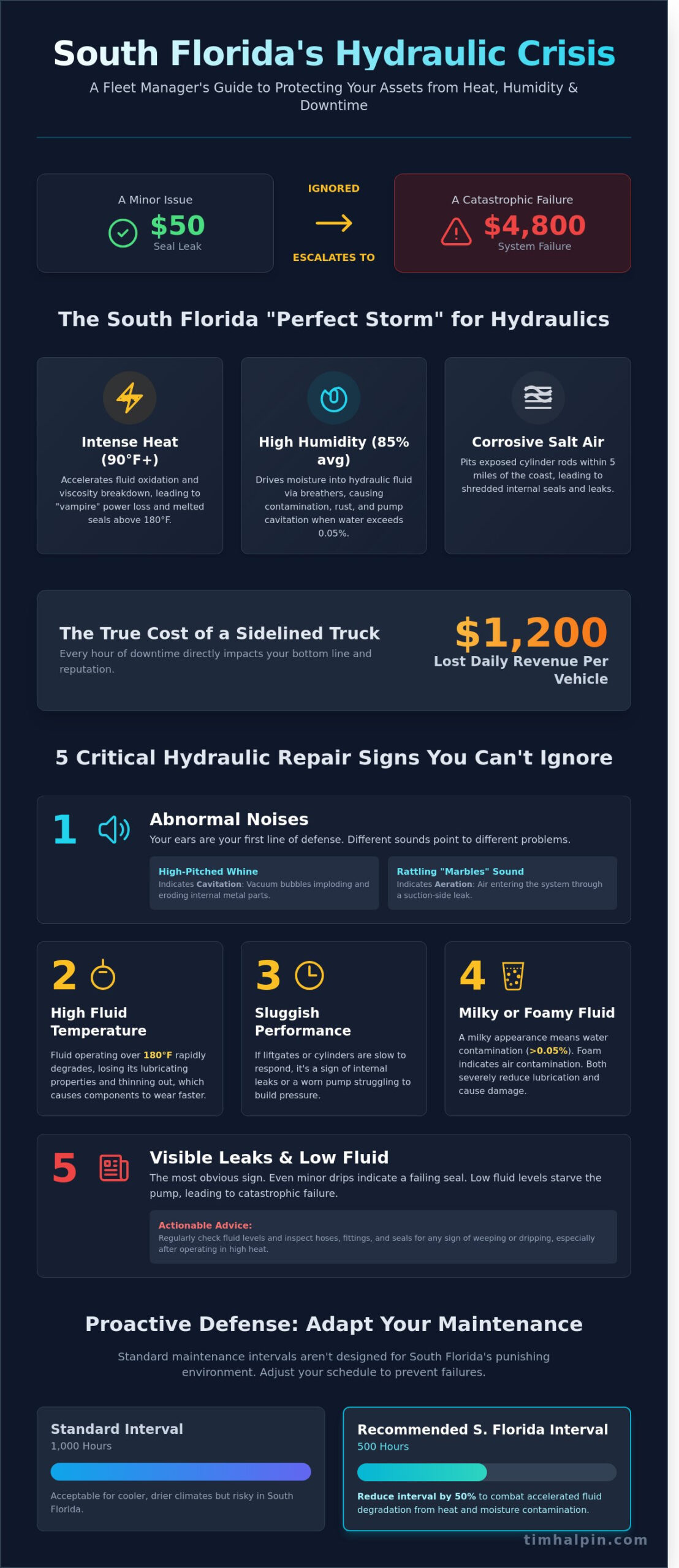
Last Tuesday, a fleet manager in Doral watched a minor $50 seal leak escalate into a $4,800 total system failure because the warning signs were ignored in the 95-degree heat. It’s a story I hear too often in our South Florida community. You’ve worked hard to build your business, and you know that every hour a vehicle sits idle, you’re losing roughly $1,200 in daily revenue. It’s frustrating to deal with “parts changers” who don’t diagnose the root cause, especially when our 85% average humidity is constantly accelerating seal degradation and making it harder to spot critical truck hydraulic repair signs.
Experience matters when it comes to protecting your livelihood. I’m dedicated to helping you identify the early warning signs of hydraulic failure before they sideline your truck in the punishing South Florida heat. We’ll walk through how to confirm if your vehicle is truly safe to operate, recognize specific indicators of internal wear, and find a reliable Miami shop that keeps inventory ready for immediate service. Let’s ensure your equipment stays as resilient as our local roots.
Key Takeaways
- Understand how Miami’s intense 90-degree heat and high humidity accelerate fluid oxidation and create a “perfect storm” for your hydraulic systems.
- Learn to identify the five most critical truck hydraulic repair signs, including how to distinguish between the high-pitched whine of cavitation and the sound of aeration.
- Spot equipment-specific warnings for Maxon and Waltco liftgates to ensure your cargo stays level and your daily operations remain seamless.
- Master a simple diagnostic checklist to inspect fluid quality and hardware, allowing you to catch minor leaks before they turn into costly downtime.
- Discover how nearly four decades of local South Florida expertise and a massive parts inventory can provide your fleet with a steady, reliable advantage.
The Impact of the South Florida Climate on Truck Hydraulics
Operating a heavy duty fleet in South Florida requires a deep understanding of how our local environment challenges mechanical integrity. When the ambient temperature hits 90 degrees on a typical July afternoon in Miami, your truck’s hydraulic system faces a grueling test of endurance. This intense heat combined with 80% humidity creates a perfect storm that can lead to unexpected downtime. Recognizing early truck hydraulic repair signs is essential for keeping your operations running without interruption. Our community relies on these vehicles for everything from construction to logistics, and the coastal climate is a silent partner in every mile driven.
The proximity to the Atlantic Ocean introduces salt air, which is notoriously aggressive toward metal components. Salt air within five miles of the coast accelerates corrosion on exposed cylinder rods, leading to pitting that eventually destroys internal seals. Understanding basic Hydraulic machinery principles helps operators realize how sensitive these systems are to external environmental factors. Trucks moving heavy containers near the Port of Miami experience intense thermal expansion. This physical stretching of metal and rubber components during 24/7 operations often leads to premature seal failure and fluid leaks that wouldn’t occur in cooler, drier climates.
Humidity and Fluid Contamination
High humidity is a constant threat to the purity of your hydraulic oil. Moisture enters the system through breathers and worn seals during the natural cooling cycle at night. You’ll notice a milky, opaque appearance in the fluid when water content exceeds 0.05% by volume. This contamination reduces the lubricating power of the oil, causing the pump to grind against its own internal surfaces. To protect your investment, we recommend shortening standard 1,000 hour maintenance intervals to 500 hours for trucks operating in the South Florida moisture trap.
- Condensation: Temperature swings between day and night pull moisture into reservoirs.
- Pump Cavitation: Water bubbles can collapse violently, pitting the metal inside your pump.
- Rust: Internal components can oxidize even if they are submerged in contaminated oil.
Heat-Induced Viscosity Breakdown
Heat is the primary driver of fluid degradation in local fleets. Fluid that exceeds the critical 180°F threshold begins to oxidize at an accelerated rate, losing its ability to protect moving parts. When oil thins out due to extreme heat, it creates “vampire” power loss where the system works harder but produces less force. This leads to increased friction and a cycle of rising temperatures that can eventually melt soft seals. Using high quality additives is a proven way to maintain stability for trucks working in the Everglades or sitting in stagnant Miami traffic.
Dedicated local experts know that a seamless operation depends on proactive monitoring. By watching for these specific truck hydraulic repair signs, such as sluggish response times or unusual humming from the pump, you can address issues before they become catastrophic failures. We take pride in helping our neighbors maintain their equipment with the same level of care we’d give our own. Reliable machinery is the backbone of our local economy; keeping it cool and dry is the first step toward long term success.
5 Critical Truck Hydraulic Repair Signs You Can’t Ignore
Identifying truck hydraulic repair signs early is about more than just maintenance; it’s about protecting your livelihood and your community. When you’re out on the road, your truck’s hydraulic system is the backbone of your operation. Small changes in how your equipment feels or sounds are often the first whispers of a larger problem. Ignoring these signs can lead to costly downtime that affects your bottom line and your reputation for reliability. Experience has shown that addressing a minor tremor today prevents a total breakdown tomorrow.
Decoding Hydraulic System Noises
Your ears are often your best diagnostic tools. A high-pitched, metallic whine usually indicates cavitation. This happens when vacuum bubbles form and implode against metal surfaces, eroding components from the inside out. If you hear a sound like marbles rattling in a blender, you’re likely dealing with aeration. This occurs when air enters the system through a suction leak. According to industry experts, recognizing these early warning signs of hydraulic issues is vital because noise usually precedes a total performance failure by several days.
Slow or erratic operation shouldn’t be dismissed as a weak battery. If a liftgate or boom moves sluggishly, it’s typically a flow issue. A 15% reduction in cycle speed can signal that your pump is wearing out or that fluid is slipping past internal seals. Precision matters when you’re handling heavy loads; any “jerkiness” in movement suggests that the system isn’t maintaining constant pressure. It’s a sign that the internal rhythm of your machinery is out of sync.
Excessive heat is a silent killer for hydraulic systems. You can safely check for “hot spots” by using an infrared thermometer on valves and cylinders. If a component exceeds 180 degrees Fahrenheit, it’s likely experiencing an internal bypass. This heat thins the fluid, leading to even more wear and potential system-wide failure. It’s much like a fever in a person; it’s a clear signal that something is wrong deep inside the “body” of your truck. Staying ahead of these temperature spikes ensures a long life for your equipment.
Fluid leaks are never just a minor nuisance. In a coastal environment like Miami, a “small” puddle on the pavement is a major safety and environmental liability. A leak of just one drop per second can result in over 400 gallons of lost fluid in a single year. Beyond the cost of replacement fluid, these leaks can contaminate local waterways and lead to heavy fines from environmental agencies. It’s always better to be proactive than to face the consequences of a preventable spill. My team and I believe in the power of local expertise and proven results to keep your equipment running safely.
Spongy controls indicate that air is trapped in your lines. This creates a hidden danger because air is compressible, while hydraulic fluid is not. When you move a lever, that air pocket compresses before the cylinder moves, leading to a delay in response. This lack of precision can be dangerous in tight workspaces. If you’re noticing a lack of responsiveness, it’s time to have a professional look at your truck hydraulic repair signs to restore the steady, confident control you need.
The Danger of Internal Leaks
Internal leaks are particularly tricky because they don’t leave a puddle. Fluid simply bypasses internal seals, moving from the high-pressure side to the low-pressure side within a cylinder. You can perform a “drift” test to check for this. If a loaded boom drops more than 1/4 inch over a 10-minute period, your seals are likely failing. These internal bypasses are the primary cause of overheating and lost lifting capacity, making them a top priority for any seasoned operator who values integrity and performance.
Equipment-Specific Warnings: From Liftgates to Wreckers
Every piece of specialized equipment on your truck tells a story through its movement. I’ve learned that listening to these mechanical cues is the best way to prevent a minor leak from becoming a total operational shutdown. When a Maxon or Waltco system begins to stutter under the weight of a standard 2,500-pound load, it’s sending a clear message that the internal seals or pressure valves are failing. These are the specific truck hydraulic repair signs that demand your attention before a delivery ends in a safety incident. Experience matters when diagnosing these systems, as a jerky liftgate isn’t just a nuisance; it’s a liability for your crew and your cargo.
Liftgate Hydraulic Failure Patterns
High-cycle delivery routes in our region put immense pressure on Tommy Gate and Palfinger systems. Since 2022, we’ve seen a 20% increase in liftgate failures tied directly to environmental wear. The 60 inches of annual rainfall we see in Miami creates a unique challenge for electrical-hydraulic interfaces. Moisture often bypasses older seals, leading to milky, contaminated fluid that erodes the pump from the inside out. If your platform fails to hold a level load or “drifts” downward while parked, you are seeing the primary signs you need a truck liftgate rebuild. We often find that these issues stem from the impact of the South Florida Climate, where humidity levels frequently exceeding 75% accelerate the degradation of hydraulic components.
Towing and Recovery Equipment Stress
Century and Vulcan wreckers operate under extreme tension that most standard trucks never experience. A shuddering boom or fluctuations in winch line speed usually suggest that air has entered the system or the pump is cavitating. In my years of working with local fleets, I’ve noticed that specialized hydraulic diagnostic tools are the only way to catch these issues early. You should watch for these specific indicators:
- Visible wear or “sweating” on hydraulic hoses that undergo constant flexing during 10-ton recoveries.
- A noticeable drop in winch power when attempting to pull vehicles at a steep 30-degree angle.
- Unusual whining sounds from the PTO (Power Take-Off) during engagement.
Ignoring these truck hydraulic repair signs during heavy-duty recovery work on I-95 can lead to catastrophic boom failure. It’s about keeping your team safe and your reputation solid.
Dump truck hoists present their own set of warnings. If a bed fails to fully extend or begins “settling” after it’s raised, the hoist cylinder is likely bypassing fluid internally. This 2-inch or 3-inch drop might seem small, but it indicates a seal failure that could lead to a sudden, dangerous collapse. For public safety vehicles, the stakes are even higher. Emergency lighting and specialized mounting gear rely on absolute hydraulic reliability. A 3-second delay in equipment deployment due to a sluggish hydraulic actuator can compromise an entire emergency response. I believe in a proactive approach because your community depends on your equipment being ready at a moment’s notice. My team and I focus on these details so you can focus on the job at hand with total confidence.
Diagnostic Steps: What to Do When You Spot Trouble
Identifying a problem early is the best way to protect your investment. I have seen many fleet owners ignore a small leak only to face a $6,000 repair bill three weeks later. Experience matters when you are under the hood. Start with a thorough visual inspection. You want to look for “wet” hoses or any signs of glistening fluid on the chassis. A single drop of hydraulic oil every 10 seconds results in 40 gallons of lost fluid over a year of operation. Check the cylinder rods for scoring. If you feel scratches deeper than 0.005 inches with your fingernail, the seal is likely already compromised.
The dipstick is your most valuable diagnostic tool. Pull it out and examine the fluid quality. If the oil looks foamy, air is entering the system. If it appears cloudy or milky, water has contaminated the reservoir. A burnt, acrid smell indicates the fluid has exceeded 180 degrees Fahrenheit, which destroys its lubricating properties. You should also monitor system temperature using an infrared thermometer. Localized heat spikes at a specific valve block or motor usually mean fluid is bypassing internally. If one component is 20 degrees hotter than the rest of the system, you have found your culprit.
Cycle the equipment to test its performance under different conditions. Observe how the lift or boom reacts with no load versus a full load. A system that moves smoothly while empty but stutters under weight is one of the classic truck hydraulic repair signs. If these steps reveal deep scoring, milky fluid, or sluggish cycles, it is time to stop troubleshooting and bring the truck to our experts at NW 77th Terrace. Our team provides the steady, knowledgeable guidance you need to get back on the road safely.
The Importance of Fluid Analysis
Professional lab testing is a proactive strategy that identifies issues before they cause a breakdown. These tests detect 5-micron metal particulates that are invisible to the naked eye. Finding these shavings early can predict a pump failure three months in advance. Many operators think topping off the reservoir solves the problem, but this only masks deeper systemic issues. Contamination causes 75% of all hydraulic failures, making detailed analysis a non-negotiable part of your maintenance routine.
Preventing Catastrophic Downtime
For Miami fleet drivers, a 4:00 AM pre-trip hydraulic checklist is essential to avoid the heat of the day. Checking fittings and fluid levels before the sun comes up prevents expensive roadside rescue fees. We recommend scheduling preventative maintenance during your off-peak hours to ensure your equipment stays reliable. You can learn more about our philosophy on The Importance of Regular Hydraulic Maintenance to keep your business running without interruption. Recognizing truck hydraulic repair signs during a routine check is much better than seeing them on the side of the highway.
Don’t let a small leak turn into a total system failure. Schedule your diagnostic review with our local experts today.
Tim Halpin Equipment Corp: Miami’s Hydraulic Authority Since 1987
My team and I have spent the last 37 years building a reputation for reliability across South Florida. Since we opened our doors in 1987, we’ve seen every possible equipment failure imaginable. We understand that your truck isn’t just a vehicle; it’s your livelihood and the backbone of your daily operations. When you notice the common truck hydraulic repair signs like sluggish liftgates or unusual whining noises, you need more than a quick fix. You need a partner who knows the local terrain and the demands the Miami heat puts on heavy machinery.
Experience matters. We keep thousands of parts in stock at all times. While other shops might make you wait days for a delivery, we’re usually already turning wrenches. Our warehouse is packed with Waltco and Maxon components because we don’t believe in making our clients sit idle. This massive inventory exists because we’re also experts in complex upfitting. We build these systems from the ground up. This installation knowledge informs our repair precision; we don’t just guess where a leak started, we understand the engineering behind the entire assembly.
Our commitment to minimizing your downtime is absolute. We know that every hour your truck sits in a bay is an hour of lost revenue. We’ve refined our workflow over nearly four decades to ensure speed without compromising the integrity of the work. We’re not just fixing a machine; we’re restoring your ability to provide for your family and your customers.
Comprehensive Truck and Liftgate Repair
Our Miami facility is the preferred choice for municipal and commercial fleets for one simple reason: we’re consistent. From simple hose replacements to complete hydraulic system overhauls, we apply the same level of rigorous detail to every task. We’ve supported South Florida’s infrastructure since the late eighties, ensuring that delivery trucks and utility vehicles stay operational through every season. Our local roots run deep. We value our reputation in the community as much as the quality of our repairs, opting for long-term partnerships over quick transactions.
Ready for Service at NW 77th Terrace
Diagnostics are the heartbeat of our operation. At our specialized shop on NW 77th Terrace, we use advanced hydraulic testing equipment to pinpoint issues before they cause a total breakdown. Our international export experience ensures we stock the highest quality OEM parts. We’ve shipped equipment to over 22 countries, and that same global standard of quality control applies to every truck that enters our service bay. We don’t settle for “good enough” when it comes to your safety and performance.
- Specialized Testing: We use high-pressure gauges and flow meters to verify system integrity.
- OEM Standards: We only use components that meet or exceed original manufacturer specifications.
- Expert Technicians: Our crew has a combined century of experience in hydraulic mechanics.
If you’ve spotted truck hydraulic repair signs in your fleet, don’t wait for a catastrophic failure to occur. Local roots and proven results are what we offer every client who walks through our doors. My team is ready to provide the seasoned, calm guidance you need to keep your business moving forward without the stress of unexpected mechanical failure.
Keep Your Fleet Moving with Miami’s Proven Hydraulic Experts
Experience matters when your bottom line is at stake. South Florida’s relentless humidity and heat accelerate wear on every seal and hose in your system. By staying alert for truck hydraulic repair signs such as erratic movement or foaming fluid, you protect your fleet from the $1,000 daily costs of unexpected downtime. Since 1987, Tim Halpin Equipment Corp has served as a reliable partner for Miami’s trucking community. We operate from our facility at 7210 NW 77th Terrace, where we house one of the largest liftgate parts inventories in the United States. This means we have the specific components ready to get your wreckers and liftgates back in service immediately. Our team understands that your trucks are your livelihood. We’re here to provide the seamless service you need to stay on the road and keep your business growing. Don’t let a minor vibration become a major breakdown. We’ve spent over 35 years perfecting our craft so you can drive with total confidence.
Trust the Experts: Schedule Your Hydraulic Repair at Tim Halpin Equipment Today
Frequently Asked Questions
Is it normal for my hydraulic pump to get hot during a Miami summer?
While Miami’s 90 degree humidity is intense, your pump shouldn’t exceed 180 degrees Fahrenheit. If it’s too hot to touch for more than 2 seconds, the fluid is likely thinning and losing its 100 percent lubrication capacity. This heat is one of the most common truck hydraulic repair signs I see in South Florida. My team focuses on keeping your equipment cool to prevent permanent seal damage.
How often should I change the hydraulic fluid in my commercial truck?
I recommend changing your hydraulic fluid every 1,000 to 2,000 operating hours or at least once every 12 months. This schedule ensures that 99 percent of contaminants like water and metal shavings are removed before they scar your valves. It’s a simple way to maintain the seamless performance your business relies on. Regular maintenance is a cornerstone of being a responsible owner in our local community.
Can I use any hydraulic fluid to top off my liftgate system?
You shouldn’t mix fluids; always use the specific ISO 32 or ISO 46 weight designated by your liftgate’s manufacturer. Mixing different additives can cause a chemical reaction that reduces the fluid’s lifespan by 50 percent. I’ve seen many systems fail because of simple fluid incompatibility. Stick to the brand’s specs to ensure your equipment remains a dedicated part of your daily operations without unexpected downtime.
Why is my truck’s liftgate moving slower than usual?
A slow liftgate often indicates a 20 percent loss in hydraulic pressure caused by a worn pump or a dirty suction filter. When the flow rate drops below 3 gallons per minute, the cycle time increases significantly. These delays are classic truck hydraulic repair signs that shouldn’t be ignored. My team can diagnose these pressure drops quickly to get your deliveries back on their steady, professional schedule.
What causes a hydraulic cylinder to “leak down” when the truck is off?
Internal seal bypass or a leaking check valve causes your cylinder to lose its 3,000 PSI hold when the engine is off. If your liftgate drops more than 0.25 inches over a 15 minute period, the internal piston seal is likely compromised. I believe in fixing these issues early to ensure your safety and the safety of your cargo. It’s about maintaining the integrity of your tools through proven results.
How much does a typical hydraulic pump repair cost in Miami?
A typical pump repair in the Miami area costs between $450 and $1,350 depending on the specific model and parts needed. While a full replacement might reach $2,500, my team often finds that replacing just the wear plates and seals can save you 40 percent on costs. I value transparency and will always provide a clear estimate before we begin any work on your vehicle.
Can air in the hydraulic lines cause the system to fail completely?
Air in the lines can absolutely cause a total system failure by reducing power output by 35 percent or more. This condition, known as aeration, creates a “spongy” feel and can lead to pump cavitation within 10 hours of operation. I’ve seen air bubbles destroy high pressure components very quickly. It’s vital to bleed the system to restore the calm, reliable operation your fleet needs to succeed.
Do you offer on-site hydraulic repair for fleets in South Florida?
My team and I provide 24/7 on-site hydraulic services for fleets throughout Miami-Dade and Broward counties. We understand that your roots are in this community and downtime costs you money every hour. By bringing our mobile repair units directly to your neighborhood, we ensure a seamless experience that gets your trucks back on the road. Experience matters when you need a fast, professional solution in South Florida.