

A new truck isn’t always the answer. Commercial truck body installation in Florida can equip an existing truck with a body suited to its work, as long as the body and equipment match the chassis and capacity. Before installation, consider the truck’s configuration, axle ratings, payload, and day-to-day demands.
It makes sense to want to get more from a truck you already rely on. The right upfit can align the vehicle with daily work while keeping the existing chassis in service. This guide explains what body installation can involve, how compatibility and payload affect the choice, and what to expect from the installation process. You’ll also learn which project details shape the work, so you can approach an upfit with a clearer understanding of the decisions ahead.
Key Takeaways
- Start with the work the truck needs to do, then match the body and equipment to the existing chassis rather than choosing by appearance alone.
- Review chassis compatibility, axle ratings, and payload together to understand whether the truck can support the planned upfit.
- Plan installation around body mounting and equipment integration so the finished setup suits the truck’s intended use.
- Installation costs depend on the truck, selected body, and scope of work; understanding those factors helps clarify the project before it begins.
- When truck, liftgate, trailer, or hydraulic repairs are part of the job, the right repair support can address those needs alongside the upfit.
Upfits for customers’ existing trucks
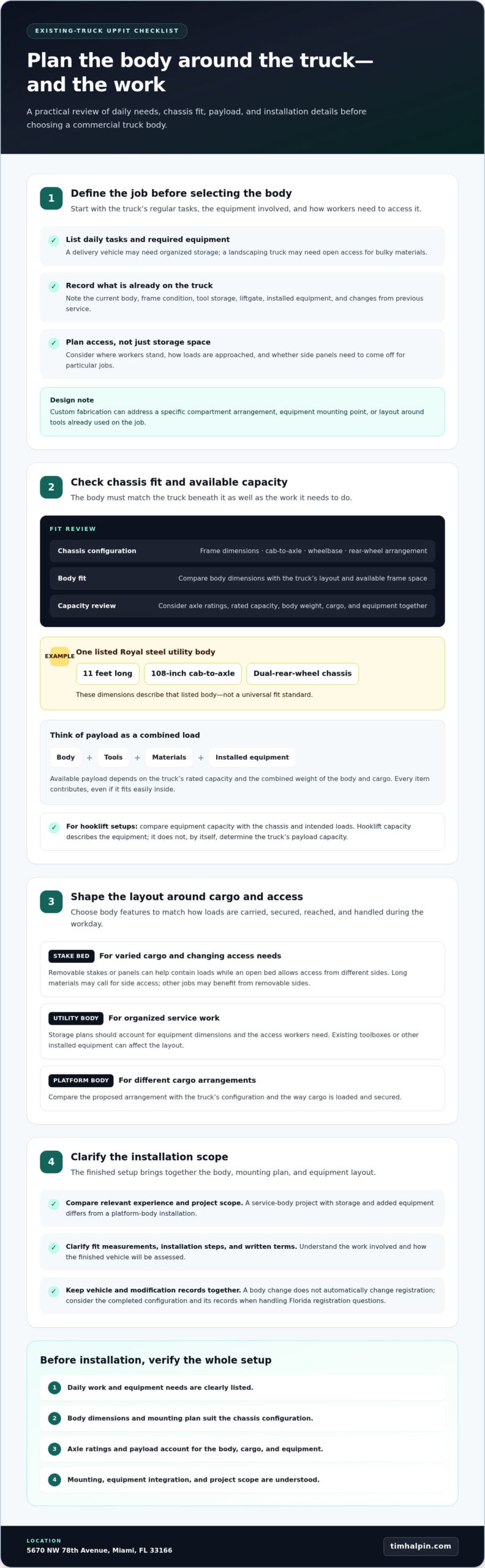
A carefully planned upfit can give an existing work truck a new role. A delivery vehicle may need organized storage, while a landscaping truck may need open access for bulky materials. Start by listing the truck’s regular jobs, the equipment it carries, and what workers need to reach during a typical shift.
Next, assess the truck as it is now. Note its body, frame condition, current equipment, and changes made during previous service. A truck with a toolbox or liftgate may need a different layout than a bare chassis. This review helps identify what can stay, what must move, and where new equipment could conflict with existing components.
Custom truck fabrication can meet needs that a standard body layout does not. A crew may need a specific compartment arrangement, a mounting point for work equipment, or a body designed around tools already used on the job. Begin with those practical requirements. Accurate measurements and equipment details help define a workable plan before fabrication starts.
Stake bed customization can suit businesses carrying varied cargo. Removable side stakes or panels help contain loads, while an open bed allows access from different sides. A building-supply crew may prioritize side access for long materials; a grounds crew may value removable sides when loading equipment or supplies.
Plan the layout around how cargo is loaded and secured, not just the apparent bed space. Consider where workers stand, how forklifts or hand tools approach the load, and whether side panels need to come off for particular jobs. A truck carrying both palletized supplies and loose materials, for example, may need a different arrangement from one carrying fixed equipment.
Use this sequence to keep an existing-truck upfit focused:
- List daily tasks and the equipment each task requires.
- Record current body features, tool storage, and installed equipment.
- Sketch the preferred layout, including access points and stake locations.
- Compare the proposed arrangement with the truck’s existing configuration.
These steps turn a general request for more capability into specific design decisions. A Weather Guard Truck Toolbox may suit a storage plan, while a customized stake bed may better support changing cargo needs. The right choice depends on the work routine, equipment dimensions, and access required. A task list gives the upfit plan a practical starting point.
Chassis compatibility, axle ratings, and payload capacity
The body must match the truck beneath it as well as the work it needs to do. Start with the chassis configuration: frame dimensions, cab-to-axle measurement, wheelbase, and rear-wheel arrangement. These details help determine whether a service body, utility body, or platform body will fit. Record the truck’s identification and existing equipment before comparing options.
Cab-to-axle measurement is especially useful when comparing bodies. It describes the distance from the cab to the rear axle and helps establish body fit behind the cab. For example, a listed Royal steel utility body is 11 feet long and has a 108-inch cab-to-axle dimension for a dual-rear-wheel chassis. Those dimensions are specific to that listed body, not a universal fit standard.
Axle ratings and payload capacity affect how the completed truck can be used. The body adds weight before tools, materials, or equipment are loaded. Available payload depends on the truck’s rated capacity and the combined weight of the body and cargo. For a service truck carrying a toolbox and job materials, every item contributes to the total load, even if it fits easily inside.
For a hooklift setup, compare equipment capacity with the truck’s chassis and intended loads. Hooklift capacity varies by equipment model and does not determine a truck’s payload capacity on its own. That figure describes the hooklift, not the payload capacity of every truck it might be paired with. The chassis, axles, body, and load must be considered together when planning a complete installation.
Use this practical review before selecting a body:
- Identify the chassis and rear-wheel configuration.
- Measure cab-to-axle distance and available frame space.
- Compare the body’s dimensions with the truck’s layout.
- Account for body weight, tools, materials, and installed equipment.
- Match equipment capacity to the truck’s intended operating load.
A utility body may suit organized service work, while a platform body can accommodate different cargo arrangements. Choose based on fit and the truck’s role, not body category alone. If the body conflicts with chassis dimensions or leaves too little capacity for work materials, revise the configuration before installation.
For a truck body that needs to work with an existing chassis, reviewing utility body options can help focus the fit discussion on dimensions, axle setup, and intended use.
Commercial truck body and equipment installation
A truck body installation combines the body, mounting plan, and equipment layout into one working setup. In Florida, compare the installer’s relevant experience, project scope, and documentation before choosing a provider.
Choosing a Truck Body Installer
Match the installation plan to the body and equipment your truck needs. A service-body project with storage and added equipment differs from a platform-body installation. Clarify the scope, fit measurements, installation steps, and written terms so you understand the work involved and how the finished vehicle will be assessed.
Keep the vehicle’s existing records and modification documents together when addressing Florida registration requirements. A body change does not automatically change registration; consider the completed configuration and its records when handling registration questions.
When comparing new and used commercial truck bodies, consider condition, fit, and preparation work. A used body may need more adaptation to suit the truck, while a new body can be selected around the planned layout. In either case, check mounting points, dimensions, and equipment compatibility before installation.
Installation Costs and Financing
Installation cost depends on the body, truck configuration, equipment, and labor included in the project. A body-only installation differs from a job that also involves equipment integration or additional fabrication. Financing options vary by provider and purchaser; compare available payment arrangements and their terms against the project scope. A written quote should make the included work clear before you commit.
Warranty and certification terms can vary by body, equipment, and installer. Review any written warranty coverage for the body and installation separately, and check what each document covers. For certification claims, compare the stated credential with the work planned.
Florida Installation Companies and Locations
For work in Miami, Doral, Fort Lauderdale, Key West, Medley, Hialeah, Kendall, or elsewhere in South Florida, consider where the truck is based and how it will reach the installation site. Tim Halpin Equipment Corp serves commercial vehicle needs with upfitting, installation, parts, and repair services. Match the project scope to the body and equipment your vehicle requires.
Before work begins, gather the truck’s details, body selection, equipment list, and intended use. A utility-body installation with added equipment, for example, needs a different scope from a body replacement alone. A clear project brief helps align the installation plan, documentation, and finished configuration.
Body mounting and installation
Installation time depends on the body, truck condition, and equipment being integrated. A body replacement and a custom setup involve different steps, so the project scope determines the schedule.
Mounting starts with preparing the truck and comparing the body with its frame. Installers need to account for frame rails, existing brackets, and equipment in the planned mounting area. If a body would interfere with an existing component, adjust the layout before attachment.
Next, position and align the body with the vehicle. Even placement helps doors, compartments, and access points work as intended. Poor alignment can cause uneven gaps, binding doors, or added stress at mounting points. It may also complicate later service when technicians need access beneath the body.
After positioning, fit the mounting points and supporting hardware to the truck’s configuration. The approach must suit both the body and frame, rather than rely on a one-size-fits-all arrangement. With a service body, check that compartments open freely and planned equipment remains accessible after attachment.
Equipment integration calls for additional coordination. A toolbox, liftgate, or other work component may need a particular location, clearance, or connection. Plan these interfaces before securing the body to avoid removing installed parts later to reach a blocked area or revise the layout.
A practical installation sequence includes these steps:
- Inspect the truck frame and note existing brackets or equipment.
- Compare the selected body’s layout with the frame and cab.
- Position the body and assess alignment, access, and clearance.
- Attach the body using a mounting plan suited to the configuration.
- Integrate planned equipment and review how its parts operate.
The final review should focus on the installed body and its working features. Open each compartment, inspect access around equipment, and look for contact between moving parts and nearby surfaces. For example, make sure a toolbox lid opens without hitting an adjacent body panel. Resolve any interference before the truck returns to regular work.
Installation duration also depends on the truck’s condition and preparation needs. Existing damage, altered mounting areas, or added equipment can change the work sequence. A clear scope distinguishes a direct body replacement from a project that needs custom adjustments. This helps with planning vehicle downtime and coordinating the truck’s return to service.
There is no fixed installation time. It depends on the body, truck condition, equipment being integrated, and preparation required. A replacement and a custom setup involve different steps, while existing damage, altered mounting areas, or added equipment can affect the schedule.
Commercial truck body installation cost in Florida
The cost of a truck body project depends on the vehicle, selected body, and installation scope. For a useful estimate, describe the truck and the work it must support, such as carrying tools or handling job-site materials. Commercial truck body installation in Florida can range from a body fit to work involving added equipment and adjustments, so project details matter.
The quote depends on the project. Key cost factors include body type, truck configuration, equipment integration, fabrication needs, and labor. A service body with a specific storage layout, for example, involves a different scope from replacing a body without additional equipment.
Truck condition can also shape the work. Existing damage, altered mounting areas, or components occupying the planned installation space may require extra preparation. A clear review of the truck helps identify those needs early. Provide the make and model, current body setup, intended equipment, and a concise description of daily tasks when outlining the project.
Compare estimates by scope, not just by the final figure. Check whether each covers body placement, mounting, planned equipment, and necessary adjustments. An estimate for a body alone differs from one that includes equipment integration. A written breakdown makes those differences clear before scheduling.
Use this list to prepare for a quote request:
- Describe the truck’s current configuration and condition.
- Name the body type and equipment planned for installation.
- Explain the vehicle’s regular work and cargo needs.
- Ask for the project scope and included labor in writing.
- Review how any fabrication or added adjustments affect the work.
Financing arrangements vary by provider and purchaser, so review payment terms directly within the estimate process. Compare the stated payment schedule with the project scope, and consider how vehicle downtime affects your operating plans. For example, a fleet manager may need to coordinate installation around routes or other available trucks.
Clear project details help keep the estimate aligned with the actual job. If a Weather Guard Truck Toolbox will be added during installation, include it in the scope alongside the body work. That makes the planned configuration and included work easier to understand.
To discuss the truck’s configuration and installation scope, plan your body installation project with the relevant vehicle details ready.
Tim Halpin Equipment Corp: Truck Repair
Tim Halpin Equipment Corp provides Truck Repair for commercial vehicles that need attention to stay in working condition. If a truck develops a mechanical issue alongside body or equipment work, repair support can address that separate need. Liftgate Repair, Trailer Repair, and Hydraulic Repair are also available when those components require service.
When discussing a repair, describe the truck’s symptoms and affected equipment. Note, for example, whether a liftgate problem occurs during operation or hydraulic equipment behaves differently. These details help identify the concern and the relevant system.
For truck repair or related equipment service, contact Tim Halpin Equipment Corp to discuss your needs.
Put Your Truck’s Next Role in Motion
A well-planned upfit can help an existing truck take on new work. Before moving forward, gather the vehicle details, intended use, and equipment needs that will shape the project. This gives the installation conversation a practical starting point and helps focus decisions on a configuration that fits.
For commercial truck body installation in Florida, turn your requirements into a clear project plan. Consider how the truck will be used each day, what equipment it needs, and how the completed setup should support your team. To discuss truck body installation, upfitting, or related repair needs in Miami and South Florida, contact Tim Halpin Equipment Corp.
Tim Halpin Equipment Corp also offers Truck Repair, Liftgate Repair, and Trailer Repair when those needs are part of keeping your commercial vehicles working. Contact Tim Halpin Equipment Corp today to discuss your truck and the work you have in mind. A clear next step can help move your upfit plans forward with confidence.
