Last Tuesday, a local fleet manager watched a small puddle of amber fluid spread across the hot asphalt of a Hialeah loading dock, knowing his delivery schedule was about to evaporate. It’s a scene we’ve seen many times since we opened our doors in 1987. A commercial truck hydraulic leak repair isn’t just about topping off a reservoir; it’s about stopping a systemic failure before it leads to a safety hazard or an expensive environmental fine from Miami-Dade authorities.
You’ve likely felt the frustration of watching a truck sit idle while the overhead costs continue to climb. We understand that your fleet is the heartbeat of your business, and every hour of downtime is a direct hit to your bottom line. This guide provides the expertise you need to identify whether you’re facing a simple hose swap or a full cylinder rebuild. We’ll walk through the latest 2026 diagnostic techniques and long-term prevention strategies to keep your equipment moving and your operations profitable.
Key Takeaways
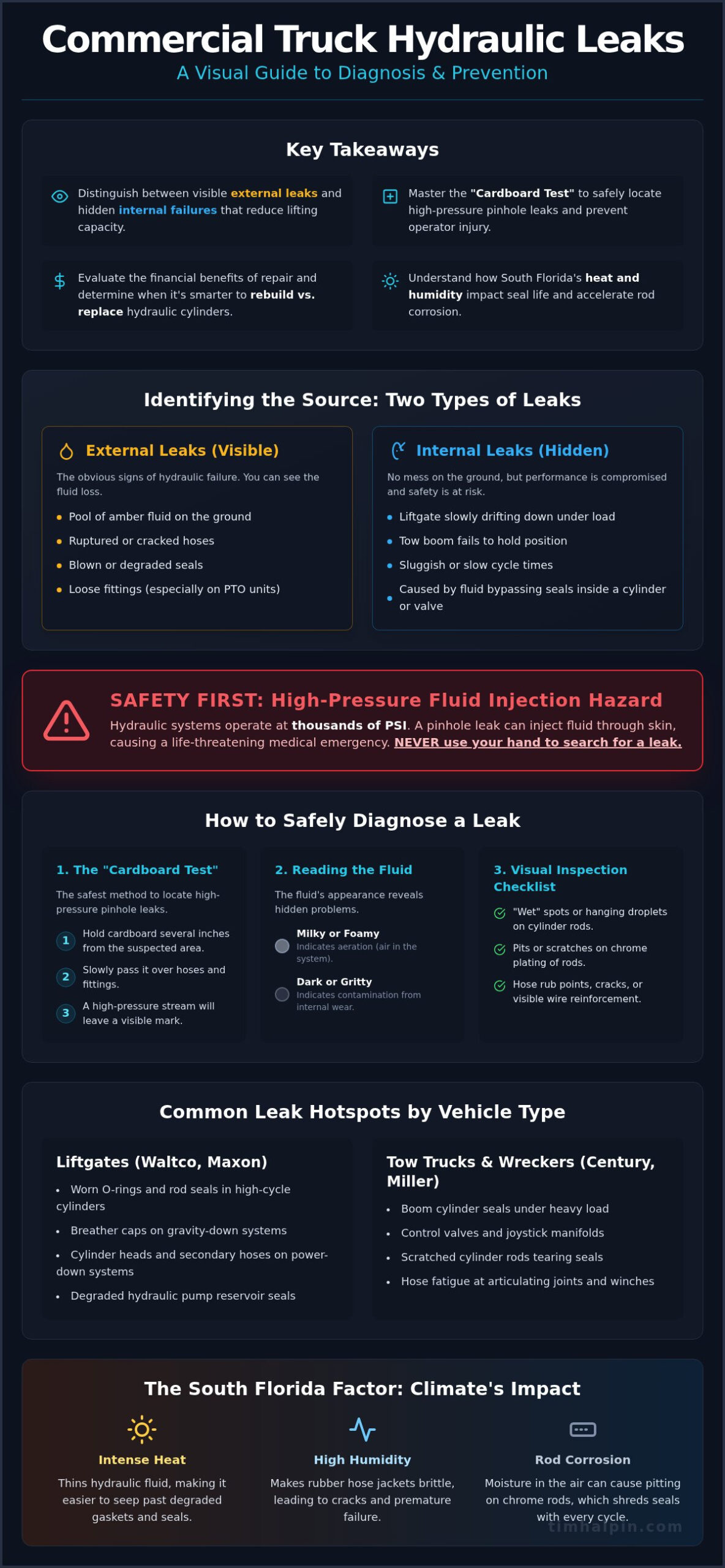
- Learn to distinguish between visible external leaks and hidden internal failures that compromise your liftgate’s lifting capacity.
- Master the “cardboard test” to safely locate high-pressure pinhole leaks before they cause system failure or operator injury.
- Evaluate the financial benefits of commercial truck hydraulic leak repair and determine when it’s smarter to rebuild versus replace your cylinders.
- Discover how South Florida’s specific climate impacts seal life and learn the steps to prevent premature rod corrosion.
- Gain insights into minimizing downtime by utilizing a massive local inventory of OEM parts for brands like Waltco, Maxon, and Miller Industries.
Common Sources of Commercial Truck Hydraulic Leaks
Identifying the source of a leak is the first step in any successful commercial truck hydraulic leak repair. Most fleet managers look for the obvious sign: a pool of amber fluid under the vehicle. These are external leaks, typically caused by a ruptured hose or a blown seal. However, internal leaks are just as dangerous. An internal leak occurs when fluid bypasses a seal inside a cylinder or valve. You won’t see a mess on the ground, but you’ll notice the liftgate slowly drifting down or a tow boom failing to hold its position. Understanding how hydraulic machinery works helps you realize that pressure loss anywhere in the loop compromises the entire system’s safety.
Loose or vibrating fittings in Power Take-Off (PTO) units are another frequent culprit we see at our Miami shop. The constant vibration of the truck’s engine and drivetrain can back off even the most secure connections over time. We’ve found that regular inspections of these fittings can prevent a catastrophic fluid loss while your driver is on the highway. Effective commercial truck hydraulic leak repair starts with knowing exactly where the pressure is escaping before a minor drip becomes a major failure.
Liftgate Specific Leak Points
In our experience since 1987, high-cycle liftgate cylinders on Waltco and Maxon units are prone to worn O-rings and rod seals. If your fleet uses gravity-down systems, leaks often manifest at the breather cap or the single hose connection. Power-down systems are more complex and often leak at the cylinder head or the secondary hose line. Don’t overlook the hydraulic pump reservoir seal. The intense South Florida heat thins the hydraulic fluid, making it easier for it to seep past a degraded gasket or a loose reservoir cap.
Tow Truck and Wrecker System Vulnerabilities
Wreckers and tow trucks face extreme pressures that accelerate wear. Boom cylinder seals on Century or Miller Industries units often degrade under heavy loads. We frequently find seal damage caused by minute scratches on the cylinder rod, which then tears the seal during every cycle. Control valves and joystick manifolds are also vulnerable. These components have multiple ports and seals that can fail due to high-frequency vibration or fluid contamination. Additionally, articulating joints and winches are high-wear areas where hose fatigue and chafing are almost inevitable due to constant movement.
How to Safely Diagnose a Hydraulic System Failure
Safety is the most important part of any commercial truck hydraulic leak repair. Before you start looking for drips, you must understand the danger of high-pressure fluid. Systems on modern liftgates and tow trucks can operate at thousands of pounds per square inch. This pressure is high enough to cause fluid injection, where hydraulic oil is forced through your skin and into your bloodstream. It’s a life-threatening medical emergency that isn’t always visible on the surface. We always tell our clients in Miami: never use your hand to feel for a leak. Adhering to fluid power industry standards during your inspection keeps you safe and ensures your equipment remains compliant.
The “Cardboard Test” is the safest way to locate a pinhole leak. Hold a piece of clean cardboard or wood several inches away from the suspected area and pass it slowly over the fittings and hoses. If a high-pressure stream exists, it will leave a visible mark on the cardboard without putting your hands at risk. Beyond visible leaks, pay attention to how your fluid looks. Milky or foamy fluid usually indicates aeration, where air is being sucked into the system. If the fluid looks dark or feels gritty, you’re likely dealing with contamination from internal wear. Sluggish cycle times are another red flag. If your liftgate takes longer to rise than it did last month, you likely have an internal bypass or a pump that’s starting to fail.
Visual Inspection Checklist
Start with the basics. Look for “wet” spots on cylinder rods. A light film of oil is normal, but a hanging droplet means the seal is failing. Check the chrome plating on the rods for any pits or scratches. These imperfections act like sandpaper on your seals. Inspect the entire length of your hoses for rub points where they might be vibrating against the truck frame. In our humid South Florida climate, hose jackets can become brittle and crack. If you see the wire reinforcement peeking through the rubber, that hose is a ticking time bomb. If these signs look familiar, our team at Tim Halpin Equipment Corp can help you identify exactly which parts need attention before they fail on the job.
Pressure Testing and Manifold Diagnostics
When a visual check isn’t enough, you need a pressure gauge. We use gauges to check for internal bypass in cylinders. If a cylinder drifts under load but shows no external leak, the piston seal is likely leaking internally. You should also check your relief valve settings. If the pressure is set too high, you’ll blow seals; if it’s too low, your equipment won’t lift its rated capacity. Understanding whether the problem lies in the hydraulic pump or the actuator saves you from replacing expensive parts that are still functional.
Repair vs. Replace: Making the Cost-Effective Choice
A commercial truck hydraulic leak repair often presents a difficult fork in the road. We’ve spent over three decades helping South Florida businesses decide whether to invest in a rebuild or opt for a full replacement. It’s a decision that impacts your immediate budget and your fleet’s long-term reliability. For specialized equipment like Waltco or Maxon liftgates, we strongly advocate for OEM parts. These manufacturers engineer components to handle specific pressures and cycle rates that generic alternatives simply can’t match. Choosing a “will-fit” part might save a few dollars today, but it often leads to premature failure and another round of downtime next month.
Evaluating the health of your hydraulic pump is equally vital. A small leak at the shaft seal can sometimes be a symptom of a much larger problem, such as worn internal bearings or cavitation damage. If your pump is whining or running unusually hot, the leak is likely a signal of total pump failure. In these instances, replacing the unit is the only way to protect the rest of your system from metal contamination that could ruin every cylinder in the circuit.
When to Rebuild a Hydraulic Cylinder
Rebuilding is often the most cost-effective path if the cylinder barrel remains viable. We look for internal walls that are smooth and free of deep pitting. If the barrel is healthy, a professional honing and a high-quality seal kit can restore the unit to factory performance. However, you must inspect the rod carefully. If the chrome is peeling or the rod is scored, a new seal won’t last more than a few days. Scored rods act like sandpaper, shredding new seals during every cycle. In those cases, a full replacement is the smarter investment for your fleet.
The Criticality of High-Quality Hydraulic Hoses
We see many operators attempt to “patch” a leaking hose with a sleeve or a temporary clamp. This is a dangerous practice that we never recommend. A hydraulic hose is a precision-engineered component designed to contain immense pressure. When a hose shows signs of weeping or the outer jacket is cracked, it requires a full replacement. You must match the hose PSI rating and diameter exactly to your specific truck equipment, whether it’s a Century wrecker or a Vulcan car carrier. If you are looking for Expert Truck Hydraulics in Miami, you know that using the right materials is the only way to ensure your drivers stay safe on the road. High-quality hoses with proper abrasion resistance are essential for the articulating joints found on tow truck booms and winches.
The South Florida Factor: Climate and Hydraulic Health
Operating a fleet in Miami isn’t the same as running one in the Midwest. Our unique combination of tropical heat and high humidity creates a punishing environment for hydraulic systems. While a national guide might suggest standard intervals, a commercial truck hydraulic leak repair in South Florida is often the result of climate-accelerated wear. We’ve seen how the stagnant, humid air in industrial hubs like Doral or Medley can cause moisture to condense inside reservoirs during the cool-down phase. This leads to internal rust and fluid contamination before the truck even hits the Palmetto Expressway. Heat thins the oil.
The salt air is another silent killer. Even if your trucks don’t drive directly on the beach, the Atlantic breeze carries corrosive particles miles inland. This salt accelerates the oxidation of fittings and control valves, turning a small amount of surface rust into a structural failure. Staying ahead of these environmental factors is the only way to maintain a reliable fleet in our region.
Managing Heat-Related Fluid Degradation
Extreme heat is the primary enemy of hydraulic fluid. When temperatures soar during a Miami summer, your hydraulic oil loses its viscosity, becoming thin and watery. This reduced film strength means the oil can no longer provide the necessary lubrication between moving parts. It also makes it much easier for fluid to bypass seals that would normally be tight. This heat-induced thinning often leads to the sluggish liftgate performance we discussed earlier. We recommend South Florida fleet managers consider switching to a higher viscosity grade fluid during the peak summer months to compensate for this thermal thinning. Regular filter changes are also non-negotiable. As fluid breaks down due to heat, it forms varnish that clogs sensitive valves and manifolds.
Corrosion Resistance for Coastal Fleets
For fleets serving Miami-Dade delivery routes, particularly near the Port or the beaches, corrosion protection is essential. Exposed cylinder rods on liftgates and tow booms are particularly vulnerable to pitting. This occurs when salt air eats through the chrome plating, creating a rough surface that destroys seals. We often suggest upgrading to stainless steel fittings and lines where possible. For existing equipment, a simple routine of washing down the hydraulic components to remove salt residue can add years to their service life. If you’re noticing rust on your fittings or weeping seals, the team at Tim Halpin Equipment Corp can provide a specialized assessment to protect your investment from our coastal climate.
Why Tim Halpin Equipment is Miami’s Hydraulic Authority
Since 1987, we’ve stood as a cornerstone of the South Florida trucking community. We aren’t just another repair shop; we’re a family-owned institution that understands the pulse of Miami’s logistics and the specific needs of local operators. When your fleet requires a commercial truck hydraulic leak repair, you need more than just a technician with a wrench. You need a partner who knows the history of your equipment and the unique demands of our local roads. Our team brings decades of specialized knowledge to every job, ensuring that your upfitting and hydraulic systems are handled with a level of precision that only comes from years of hands-on experience.
We believe that high-level industry expertise should always be paired with a warm, neighborly approach. This philosophy has guided us for over 35 years, allowing us to build long-term relationships with fleet managers who value reliability and integrity. Whether you’re managing a single tow truck or a massive delivery fleet, our goal remains the same: minimizing your downtime and maximizing your safety. A commercial truck hydraulic leak repair at our facility is a comprehensive service that looks beyond the immediate drip to ensure your entire system is robust and ready for the road.
Immediate Access to OEM Parts
Waiting for a shipment to arrive from out of state is the primary cause of prolonged fleet downtime. We’ve built our reputation on having what you need right when you need it. Our facility maintains a massive on-site stock of Waltco liftgate parts, along with components for Maxon, Century, and Miller Industries. This inventory isn’t just for common repairs. We take pride in sourcing hard-to-find components for older towing equipment that other shops might overlook. Having these parts on the shelf means we can start your repair immediately, turning days of waiting into hours of productive service.
The Tim Halpin Service Guarantee
Every interaction at our shop is backed by a personal guarantee of quality and accountability. We’ve operated as a family business since the beginning, and we treat every client with the respect they deserve. This isn’t corporate rhetoric; it’s the foundation of The Legacy of Tim Halpin. We understand that a repair is an investment in your company’s future. Our technicians don’t just fix the current leak. They look for the root cause to prevent recurring issues, drawing on a deep understanding of commercial upfitting that few others in the region possess. We value our reputation in the Miami community as much as we value the quality of our work. It’s a commitment to excellence that has kept South Florida moving for decades.
Securing Your Fleet’s Future on South Florida Roads
Protecting your bottom line starts with a proactive approach to maintenance. By mastering the safety protocols for leak detection and understanding how Miami’s intense humidity affects your seals, you can prevent minor drips from turning into catastrophic system failures. Making the right choice between a cylinder rebuild and an OEM replacement ensures that your liftgates and tow trucks stay operational for the long haul. Our team understands how the right diagnostic tools can save thousands in environmental fines and lost revenue.
Since 1987, our family-owned business has been the steady guide for local fleet managers navigating the complexities of hydraulic systems. We maintain South Florida’s largest inventory of Waltco, Maxon, and Miller Industries parts to ensure your downtime is kept to an absolute minimum. When you need a reliable commercial truck hydraulic leak repair, you deserve a partner who values your reputation as much as their own. Our decades of experience mean we’ve seen every fluctuation in the industry and remain ready to help.
Contact Tim Halpin Equipment Today for Expert Hydraulic Repair and let’s keep your business moving forward with the reliability your clients expect.
Frequently Asked Questions
Is it safe to drive a truck with a small hydraulic leak?
It is never truly safe to operate a vehicle with a known hydraulic leak. Even a minor weep can escalate into a high-pressure burst that causes an immediate safety hazard or an environmental spill. In South Florida, local authorities are strict about fluid runoff into the drainage system. Addressing the issue early with a professional commercial truck hydraulic leak repair prevents these risks and keeps your equipment compliant with safety standards.
How much does it cost to repair a leaking hydraulic cylinder?
The total cost for repairing a cylinder depends on the extent of the internal damage and the cost of the required components. A simple reseal is generally more affordable than a full rod replacement or barrel honing. Factors like labor hours and whether you choose OEM parts from brands like Waltco or Maxon also influence the final investment. We focus on providing a durable fix that prevents recurring downtime for your fleet.
Can I replace a hydraulic hose myself on a commercial liftgate?
You can replace a hose yourself if you’re trained in high-pressure systems, but we don’t recommend it for most fleet operators. Incorrectly crimped fittings or the wrong PSI rating can lead to a catastrophic failure under load. If you choose to do it, ensure you use the exact specifications for your equipment. We keep a deep stock of hoses and fittings for those who perform their own maintenance in our Miami shop.
What color is hydraulic fluid and how do I know if it is leaking?
New hydraulic fluid is typically a clear amber or light straw color, making it easy to spot against the truck’s chassis. If you see dark, burnt-looking puddles or a milky white fluid, you’re likely dealing with a leak or severe contamination. Wet spots on the chrome plating of your cylinder rods are another clear indicator that your seals are beginning to fail and need immediate attention before the system fails.
How often should hydraulic fluid be changed in a commercial truck?
Most manufacturers recommend changing your hydraulic fluid every 1,000 operating hours or at least once a year. However, the intense South Florida heat and humidity mean your fluid breaks down much faster than in cooler climates. We often suggest more frequent intervals for Miami fleets to prevent varnish buildup. Regular changes are the best way to avoid a costly commercial truck hydraulic leak repair during your busiest season.
Why is my liftgate moving slowly even though I don’t see a leak?
Sluggish movement usually indicates an internal leak, even if you don’t see fluid on the ground. This occurs when fluid bypasses the piston seal inside the cylinder, causing a loss of pressure. It can also be a sign that your hydraulic pump is losing efficiency. Our technicians use pressure gauges to diagnose these invisible failures and determine if a rebuild or a part replacement is necessary to restore your equipment’s lifting capacity.
What is the most common cause of hydraulic pump failure?
Contamination is the leading cause of hydraulic pump failure in commercial equipment. Dirt, metal shavings, or water in the fluid can quickly destroy the tight tolerances inside the pump. In our tropical climate, condensation inside the reservoir is a frequent source of water contamination. Keeping your filters clean and using high-quality fluid is essential for protecting your pump from premature wear and total system failure on the job.
Does Tim Halpin Equipment stock parts for older tow trucks?
Yes, we maintain one of the largest inventories of towing equipment parts in the country, including components for older models. Since we’ve been in business since 1987, we’ve accumulated a deep knowledge of legacy systems from Miller Industries, Century, and Vulcan. We understand that keeping an older truck on the road is vital for your business, and we’re committed to sourcing the hard-to-find parts that other shops might overlook.
