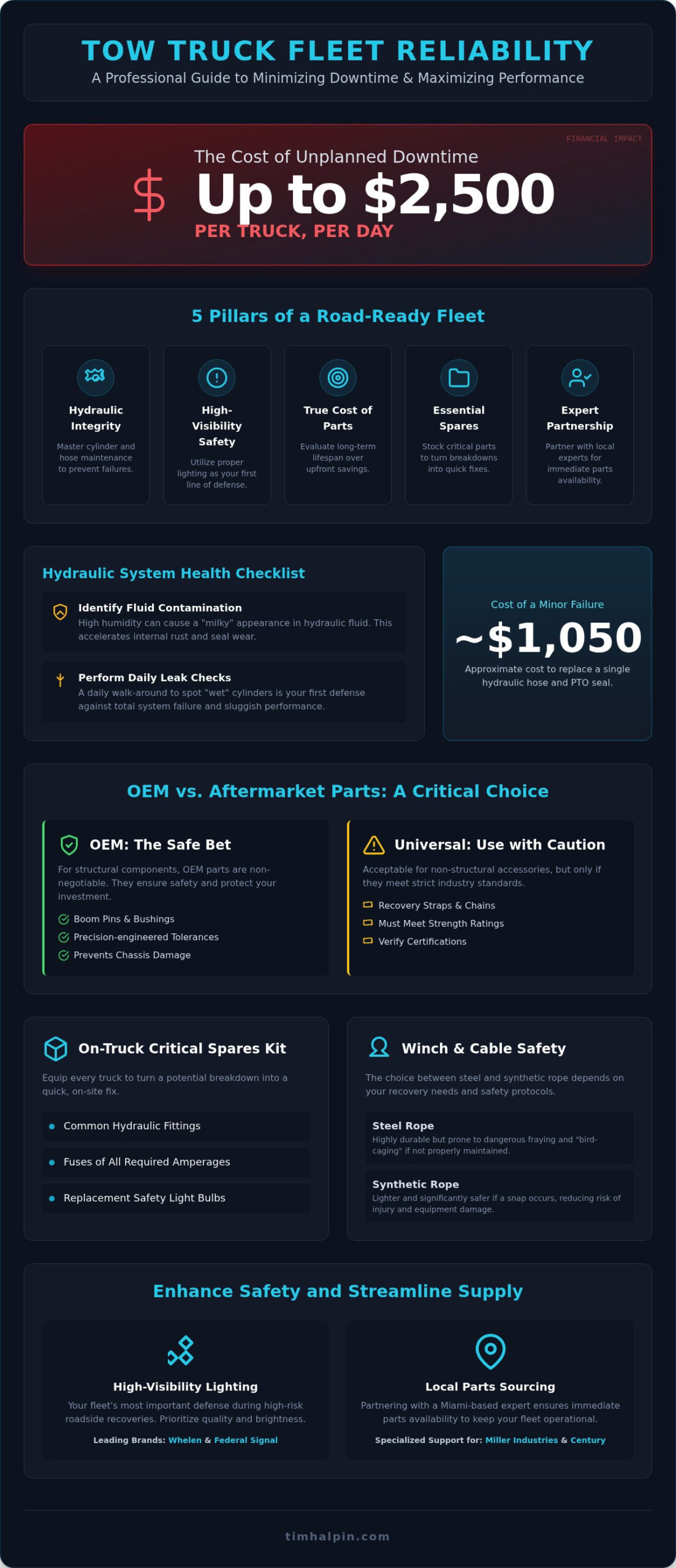
Did you know that unplanned downtime for a single commercial truck can now cost your business up to $2,500 per day? For South Florida fleet owners, that isn’t just a statistic; it is a direct hit to the livelihood you have worked so hard to build. We understand that staying on top of tow truck hydraulic system maintenance and proactive parts management is the only way to prevent these expensive delays. You deserve the peace of mind that comes from knowing every component is road-ready when the next call comes in.
In this 2026 professional guide, we will help you master the critical components that keep your wrecker or rollback operational. You’ll learn how to choose the right parts to minimize fleet downtime and keep your trucks on the road where they belong. We are going to explore the essential inventory you should keep on hand, the latest safety standards for lighting, and how our family-owned team in Miami supports your long-term success through expert parts sourcing. By the end of this article, you will have a clear roadmap for maintaining a reliable, high-performing fleet.
Key Takeaways
- Learn the specific inspection protocols for cylinders and hoses to master your tow truck hydraulic system maintenance and avoid costly roadside failures.
- Understand why high-visibility lighting from brands like Whelen and Federal Signal is your fleet’s most important defense during high-risk recoveries.
- Discover how to evaluate the true cost of parts by weighing upfront savings against long-term operational lifespan and equipment warranties.
- Identify the essential list of spare parts you should always have in stock to turn a potential breakdown into a quick fix.
- Find out why partnering with a local Miami expert for Miller Industries and Century parts ensures your fleet stays operational with immediate availability.
Understanding the Anatomy of a Reliable Tow Truck
Maintaining a tow truck is a serious commitment to both your business and the safety of your community. A wrecker isn’t just a vehicle; it’s a specialized tool where hydraulics, recovery gear, and safety lighting must work in perfect harmony. For a comprehensive overview of tow trucks, one can see how these systems have evolved to handle immense loads under extreme pressure. When you prioritize tow truck hydraulic system maintenance, you’re doing more than just checking a box. You’re ensuring that when an operator is working on a dark highway shoulder, they can trust their equipment to perform without hesitation. Substandard parts don’t just lead to leaks; they create safety risks that no owner should accept.
As a family-owned Miami authority, we’ve seen how the intense Florida heat and salt air can stress these mechanical systems. Unplanned downtime can cost your business up to $2,500 daily, making the cost of keeping an essential inventory feel like a small investment in comparison. For Miller Industries and Century units, brand-specific parts are vital. These systems are engineered with specific tolerances that generic alternatives often fail to meet, leading to premature wear and potential system failure during a critical recovery.
The Role of OEM vs. Universal Parts
Structural components are the backbone of your truck’s lifting capacity. Boom pins and bushings should always be OEM. These parts handle the pivot points of every lift, and any slight deviation in size or metal grade from universal alternatives can cause permanent damage to the truck chassis. However, universal accessories like straps and chains are often acceptable for fleet use, provided they meet strict industry strength ratings. Precision-engineered OEM parts protect the long-term value of your investment and ensure your equipment stays within its original design specifications.
Inventory Management for Fleet Owners
Every truck in your fleet should carry a critical spares kit to handle minor issues on-site. This kit should include common hydraulic fittings, fuses, and replacement light bulbs. Tracking wear and tear on high-frequency items, such as winch cables, allows you to identify potential failure points before they become hazards. Tow truck hydraulic system maintenance includes the regular inspection of these parts to ensure they aren’t nearing their breaking point. Fleet uptime is the measurable result of replacing a component on your own schedule before a mechanical failure forces you off the road.
Critical Hydraulic and Mechanical Components for Recovery
Every successful recovery starts with the mechanical integrity of your equipment. While the chassis provides the foundation, your cylinders, hoses, and control valves do the heavy lifting. Consistent tow truck hydraulic system maintenance is your best defense against the sudden failures that sideline trucks during peak hours. A leaking seal or a weathered hose might seem minor, but by 2026 standards, the cost to replace a hydraulic hose and a PTO seal can reach approximately $1,050. Catching these issues early during a routine preventive service is simply smart business for any fleet owner.
Mechanical wear isn’t limited to the hydraulic lines. Your wheel lift components, including L-arms, pivots, and receivers, endure constant stress from road vibration and heavy loads. We’ve seen how quickly a neglected pivot can seize, leading to expensive repairs that could have been avoided with a simple grease gun. Following the professional standards established by the Towing and Recovery Association of America ensures your fleet meets the rigorous safety requirements of our industry.
Hydraulic Cylinder Maintenance
South Florida’s humidity is a silent enemy for hydraulic systems. High moisture levels often lead to fluid contamination, which you’ll recognize by a “milky” appearance in the sight glass. This contaminated fluid causes internal rust and accelerates seal wear. Identifying seal leaks before they lead to a total system failure is vital. We recommend a daily walk-around to check for “wet” cylinders. If you’re noticing sluggish performance or visible leaks, our team provides Expert Truck Hydraulics in Miami to help restore your equipment’s precision.
Winch and Cable Safety
Your winch is your truck’s lifeline, and the choice between synthetic rope and steel wire rope depends on your specific recovery needs. Steel rope is durable but prone to fraying and “bird-caging” if not tensioned correctly. Synthetic rope is lighter and safer if a snap occurs, yet it’s more susceptible to UV damage and internal abrasion. For those operating Vulcan or Century winch assemblies, regular inspection of the tensioners, fairlead rollers, and clutches is mandatory. Ensure the cable wraps evenly; an uneven spool is the primary cause of core damage that leads to catastrophic failure during a pull.
Safety Lighting and Electrical Systems for Visibility
While tow truck hydraulic system maintenance ensures your boom and wheel lift perform under pressure, your lighting system is what protects your operators when they are most vulnerable. Roadside recovery is a high-risk profession, and visibility is your primary line of defense. We have spent decades helping Miami fleet owners select and maintain the gold standard in warning systems. Brands like Whelen Engineering and Federal Signal provide the rugged durability needed to withstand the constant vibration and intense South Florida heat that often degrades lesser components.
A high-performance lightbar is only as reliable as the wiring harness that powers it. In our humid coastal environment, poorly insulated wires and cheap connectors are the leading causes of electrical fires and intermittent failures. We always recommend using sealed, high-quality harnesses to prevent moisture from wicking into the electrical system. For a deeper look at maximizing your fleet’s presence on the road, you can explore our guide on Public Safety Lighting in Miami. Maintaining these systems is just as vital as your mechanical inspections.
Lightbars and Traffic Advisors
In Florida, navigating the choice between amber and multi-color lighting requires an understanding of both local regulations and operator safety. Most wreckers rely on amber for warning, but integrated traffic advisors help direct motorists safely around the recovery zone. LED technology has revolutionized this sector by offering incredible brightness with minimal battery drain. When mounting these systems, ensure the hardware is securely attached to the headache rack. We have seen universal brackets fail under highway wind speeds, which can lead to expensive damage or dangerous debris.
Work Lights and Scene Lighting
Strategic placement of work lights is essential for safe nighttime operations. Floodlights should be positioned to illuminate the entire recovery zone without creating glare for oncoming traffic. For temporary towing needs, wireless tow light kits have become a must-have tool for every driver in your fleet. These kits provide a quick, reliable way to ensure the towed vehicle is visible to others. Even with modern gear, common failure points like corroded grounding points and moisture in junction boxes remain a threat. Professional standards vary, but reviewing Utah’s tow truck certification requirements offers a solid benchmark for the lighting and equipment standards that keep professional fleets compliant and safe.
How to Choose Between OEM and Aftermarket Towing Parts
Deciding between Original Equipment Manufacturer (OEM) parts and aftermarket alternatives is a balancing act that every fleet manager faces. While the lower upfront price of a generic part can be tempting, it’s vital to analyze the true cost of ownership. A part that costs 30% less but fails twice as fast isn’t a bargain; it’s a liability that doubles your labor costs and increases vehicle downtime. We’ve seen how the right choice today prevents a headache tomorrow.
Warranty considerations are another critical factor. Using non-approved aftermarket components on a newer truck can sometimes jeopardize your manufacturer warranty, especially if that part is linked to a major system failure. When you’re performing tow truck hydraulic system maintenance, using the wrong seals or valves can lead to internal damage that a manufacturer won’t cover. We recommend spending your budget on safety-critical components while finding savings in non-critical accessories like toolboxes or interior organizers.
When to Stick with OEM
Structural integrity is the backbone of recovery work. For Miller Industries, Century, and Vulcan equipment, we strongly advise sticking with OEM for boom pins, bushings, and lift components. These parts are forged to precise metallurgical standards that generic manufacturers rarely match. Hydraulic valves and specialized electrical controllers also fall into the “must-be-OEM” category. “Close enough” doesn’t work when you’re managing a 50-ton recovery; you need parts engineered for the exact tolerances of your specific unit to ensure tow truck hydraulic system maintenance remains effective and safe.
Evaluating Aftermarket Quality
There are certainly places where aftermarket quality is excellent. Many reputable brands specialize in high-strength recovery chains, straps, and shackles. When evaluating these, look for clear metallurgical certifications and load-rating stamps. You’ll want to ensure that every hook or shackle meets or exceeds the industry standards for the work you do. Sourcing these through a trusted local partner is key to avoiding counterfeit or substandard gear. Our team at Tim Halpin Equipment Corp is here to help you navigate these choices with the honesty and expertise our neighbors have trusted since 1987. For more localized insights, you can review our professional’s guide to Tow Truck Parts in Florida.
Sourcing Quality Tow Truck Parts in Miami and Beyond
Proximity is often the most valuable asset in your maintenance strategy. When a truck is down, every hour spent waiting for a shipment is an hour of lost revenue. We’ve spent nearly four decades positioning ourselves as the steady, knowledgeable guide for fleet managers who can’t afford to wait. As a primary distributor for Miller Industries, Century, and Vulcan, we stock a massive inventory right here in Miami. This local presence allows us to provide the immediate availability you need to keep your operations moving without the stress of logistics delays.
Our commitment to your success goes beyond simply handing over a box. We believe in individual accountability, which is why we offer professional installation services to ensure every part is fitted to exact specifications. Whether you are performing routine tow truck hydraulic system maintenance or replacing a structural boom component, our seasoned team provides a personal guarantee of excellence. We value our reputation in the community as much as the transactions themselves, treating every client like a neighbor rather than a number.
Local Service in South Florida
Minimizing downtime is our top priority for our South Florida partners. We offer same-day parts availability for the most critical components, allowing you to get back on the road before the next big call. Beyond parts, you have access to our professional Miami Truck Repair services. Building a long-term relationship with a family-owned expert means you always have a reliable source for advice and technical support. It’s about more than just a quick fix; it’s about ensuring the long-term health of your fleet through consistent, high-quality care.
International Export Expertise
Our expertise isn’t limited to the Miami-Dade area. We have developed specialized export services to support international fleets across the Caribbean and Latin America. Shipping heavy-duty parts globally requires a deep understanding of logistics and documentation. We ensure that every OEM component is packed securely and accompanied by the proper paperwork to ensure smooth customs compliance. Proper tow truck hydraulic system maintenance relies on having access to genuine components, no matter where your fleet is stationed. You can trust our group to handle the complexities of export truck parts while you focus on managing your business.
Secure Your Fleet’s Future on the Road
Maintaining a profitable fleet in 2026 requires more than just reactive fixes. It demands a commitment to quality components and a steady schedule for tow truck hydraulic system maintenance. By choosing precision-engineered OEM parts for your structural needs and prioritizing high-visibility lighting, you protect your operators and your bottom line. We’ve spent decades helping our neighbors in Miami and across the Caribbean navigate these choices with confidence.
As an authorized Miller Industries dealer with the largest liftgate and towing inventory in South Florida, we’re here to ensure your trucks stay road-ready. Since 1987, our family-owned team has provided expert export services and local support to minimize your downtime. We invite you to browse our massive inventory of tow truck parts or contact us for expert advice today.
Your reputation is built on reliability, and we’re proud to be the partner that helps you maintain it. Let’s keep your business moving toward a successful year ahead.
Frequently Asked Questions
What are the most common tow truck parts that fail?
Hydraulic hoses, winch cables, and safety lighting are the most frequent failure points we see in South Florida fleets. Hoses often suffer from abrasion or UV degradation, while winch cables can fray from improper tensioning or overloading. Electrical connectors in lighting systems also corrode easily due to our salty coastal air. Proactive replacement of these high-wear items is the best way to avoid a roadside breakdown that sidelines your truck and eats your profits.
Should I use synthetic or steel winch cables for my wrecker?
The choice depends on your specific recovery environment and safety priorities. Steel wire rope is more durable against sharp edges and rough terrain, but it can be dangerous if it snaps. Synthetic rope is much lighter and safer for the operator, though it requires more protection from UV rays and heat. We suggest evaluating your most common call types; many modern fleets are moving toward synthetic for its handling ease and reduced weight.
How often should I inspect my tow truck’s hydraulic hoses?
You should perform a visual inspection of your hydraulic hoses every day as part of your pre-trip walk-around. A deeper inspection for cracks, “wet” spots, or bulging should occur during your monthly tow truck hydraulic system maintenance check. Catching a small leak early prevents the system from losing pressure during a heavy lift. It also saves you from the approximately $1,050 cost of emergency hose and seal repairs that can happen without warning.
Are Miller Industries parts compatible with other tow truck brands?
While some accessories like straps or lighting are universal, structural components from Miller Industries are specifically engineered for their own brands like Century and Vulcan. Using a Miller boom pin on a different brand’s wrecker can lead to improper fitment and structural failure. We always recommend using brand-specific OEM parts to maintain the integrity of your equipment. This ensures your truck operates within the precise tolerances designed by the original manufacturer.
What lighting is legally required for tow trucks in Florida?
Florida law requires tow trucks to be equipped with amber warning lights that are visible from 360 degrees. These lights must be active whenever the truck is performing a recovery or poses a hazard to traffic. While multi-color lightbars are popular, amber remains the legal standard for public safety. High-quality LED systems from Whelen or Federal Signal ensure you meet these visibility requirements while drawing minimal power from your truck’s battery.
Why is OEM usually better than aftermarket for towing equipment?
OEM parts are forged to the exact metallurgical and dimensional standards required for heavy-duty recovery. Aftermarket parts often use different metal grades that don’t always handle the same stress loads over time. Sticking with OEM is especially critical for tow truck hydraulic system maintenance, as generic seals or valves can cause internal damage. Choosing original parts protects your equipment’s longevity and ensures it performs exactly as it was designed.
How can I get tow truck parts shipped internationally from Miami?
Our team handles the entire export process for you, shipping OEM components from Miami to the Caribbean and Latin America. We manage the secure packaging and all necessary customs documentation to ensure your parts arrive without delay. Since 1987, we’ve helped international fleet owners source reliable Miller Industries and Century parts. We understand the logistics of heavy-duty shipping and work to make the process as simple as a local pickup for our neighbors abroad.
What is the best way to maintain my truck’s wheel lift pins?
Regular lubrication with high-quality grease is the most effective way to keep your wheel lift pins and pivot points moving freely. You should apply grease to these pins at least once a week, or more frequently if you’re working in wet or sandy conditions. Check for any signs of scoring or “egging” of the holes, which indicates the metal is wearing down. Replacing worn pins early prevents the entire assembly from seizing or failing under load.
