

Could a coating meant to protect a truck make corrosion harder to spot? In South Florida, humidity, frequent rain, and salty coastal air keep rust on fleet managers’ minds year-round. The right approach depends on each truck’s materials, routes, exposure, and condition, so inspect the vehicle before choosing a treatment. For fleets seeking commercial truck equipment repair miami operators can rely on, it also makes sense to include working components in corrosion checks.
This guide compares rust-prevention options, including underbody coatings and broader rust-proofing approaches, and explains the tradeoffs to consider before applying a barrier. Learn how to adapt maintenance to coastal or inland routes, why existing corrosion should be assessed first, and how consistent inspections can help limit avoidable interruptions. Tim Halpin Equipment Corp serves South Florida with repair capabilities for commercial trucks, trailers, liftgates, and hydraulic systems. A practical prevention plan starts with the truck’s actual condition and keeps equipment serviceability in view.
Key Takeaways
- Match rust-prevention methods to the truck’s materials, configuration, condition, and exposure instead of choosing a one-size-fits-all treatment.
- Compare where each approach applies, what preparation it needs, whether it preserves inspection access, and how it fits ongoing maintenance.
- Use a repeatable inspect, clean, dry, document, and repair routine, adjusting inspection frequency to route and worksite conditions.
- Separate preventive measures from active corrosion that needs diagnosis, especially around working equipment and components.
- When corrosion affects trucks, trailers, liftgates, or hydraulic systems, commercial truck equipment repair miami fleets can use helps address equipment condition as part of maintenance planning.
Why commercial truck rust proofing in Florida starts with exposure
Commercial truck rust proofing isn’t one universal treatment. It covers a range of prevention measures, and the right plan depends on where a truck operates, how it’s stored, and its current condition. Florida’s humid air and recurring rain can leave metal damp, while coastal salt exposure may add corrosion risk. Exposure varies across South Florida: a truck that regularly works near the coast may face different conditions from one that operates inland and parks under cover.
Rust can appear on visible surfaces, develop out of sight in seams and enclosed areas, or affect exposed underbody parts and equipment mounts. Dirt that holds moisture against a surface can make corrosion harder to spot. For a foundational overview of the science of rust, see how moisture and salt contribute to corrosion. Effective rust prevention in Florida starts with the truck’s actual exposure and condition, not a one-size-fits-all coating.
Which Florida conditions can increase corrosion exposure?
Consider the truck’s entire work pattern. Coastal routes can mean more exposure to salt-laden air, while repeated rain and wet worksites can keep surfaces damp. Inland operation still brings humidity and rain, though the combination and frequency of exposures may differ. Outdoor parking increases time in the elements; covered storage can reduce direct rain exposure but doesn’t eliminate moisture-related concerns.
Pay particular attention to places where dirt or moisture can collect, including seams, joints, and the edges of mounted equipment. Washing routines, routes, and parking habits all affect what needs checking. Vehicle age and equipment configuration matter, too: added bodies, brackets, and working components create more surfaces and connections to monitor.
Which truck areas should fleets inspect first?
Start with a consistent visual check of the frame and underbody, then examine seams, fasteners, and equipment mounting points. Include areas relevant to the vehicle, such as liftgate structures, trailer connections, hydraulic components, and body attachments. Look for rust-colored staining, damaged finishes, or debris and moisture buildup. A visual check can flag concerns, but it can’t diagnose hidden corrosion.
- Take dated photographs from consistent angles so changes are easier to compare.
- Record the location and appearance of concerns in brief, repeatable inspection notes.
- Track route, parking, washing, and equipment changes that may affect exposure.
These records help fleet teams decide what needs closer attention. When corrosion affects working components, commercial truck equipment repair miami fleets rely on can help address equipment condition and reduce preventable service interruptions.
Compare rust-proofing methods for commercial trucks before choosing
Rust prevention involves several different steps, and they don’t all protect the same areas. A barrier on an exposed underbody, material applied inside a cavity, a corrosion inhibitor, and regular washing each serve a different purpose. No single option suits every truck or prevents every form of corrosion. Before deciding, compare the method with the vehicle’s materials, current condition, duty cycle, equipment configuration, and exposure.
| Approach | Application area | Preparation to consider | Inspection access and upkeep |
|---|---|---|---|
| Protective underbody coating | Accessible, exposed underbody surfaces | Inspect and prepare surfaces according to the material and coating requirements | Plan how covered areas will be inspected; check for damage or changes during upkeep |
| Cavity treatment | Enclosed sections, seams, or other less accessible spaces | Review access points, existing condition, material compatibility, and drainage | Consider how internal areas can be monitored after treatment |
| Corrosion inhibitor | Surfaces or joints specified for the chosen inhibitor | Confirm the surface is suitable and follow product-specific preparation guidance | Account for inspection and any maintenance the product instructions call for |
| Routine cleaning | Accessible surfaces where dirt and residue collect | Remove buildup and allow areas to dry before assessing their condition | Repeat as operating exposure warrants, and use each cleaning as an inspection opportunity |
How do underbody coatings and cavity treatments differ?
Underbody coatings are intended for exposed surfaces; cavity treatments address areas inside enclosed sections where direct access is limited. They solve different problems. Before applying protective material, assess the surface and prepare it appropriately. Seams need attention, not simply a blanket covering. Compatibility with vehicle materials, drainage paths, and future inspection access are important considerations, particularly around complex bodies and mounted equipment.
When are cleaning and inspection better priorities than coating?
If a truck already shows corrosion, peeling or damaged finishes, or buildup that conceals a surface, assess its condition before covering it. Cleaning and inspection can reveal what needs attention. A coating is preventive, not a repair for structural damage or a substitute for necessary repairs. Separate routine prevention on suitable surfaces from diagnosis and repair of existing damage.
Choose an approach for the truck, not by a universal ranking. If corrosion affects a liftgate, trailer, hydraulic system, or other working equipment, commercial truck and equipment repair can help address the repair needs involved in keeping the vehicle serviceable. This distinction keeps rust-prevention decisions grounded in what the truck actually needs.
How to evaluate rust-proofing options for a Florida fleet
A useful fleet assessment starts with the truck, not the treatment. Protection that suits a vehicle with clean, accessible surfaces may be a poor fit for one with visible corrosion, enclosed seams, or equipment that needs regular service. Match protection to documented exposure and the truck’s actual condition.
What should a fleet rust-prevention assessment include?
Build a simple record for each vehicle before comparing options. Note its age, body and frame materials if known, typical routes, parking conditions, visible corrosion, and equipment configuration. Identify seams, underbody areas, fasteners, and mounted components that need consistent inspection. For trucks with added bodies, brackets, or other equipment, commercial truck upfitting in Miami helps put installation points in context with the vehicle’s overall configuration.
Group vehicles by exposure and condition rather than treating the fleet as uniform. A truck that frequently operates near the coast and parks outdoors may need a different prevention plan from an inland vehicle kept under cover. Flag visible corrosion for assessment before planning preventive work.
- Condition: Record existing corrosion, finish damage, or areas obscured by dirt.
- Exposure: Track routes, worksite conditions, parking, and washing patterns.
- Configuration: Mark seams, mounting points, underbody areas, and equipment that needs inspection.
- Priority: Direct attention first to vehicles with greater exposure or more concerning visible changes.
How can treatment choices affect future repairs?
Think beyond initial coverage. A preventive approach should leave a workable path to inspect fasteners, seams, hydraulic components, and serviceable equipment. Consider whether technicians can clean and examine those areas, whether drainage remains clear, and whether protective material could make a developing problem harder to see. Hidden corrosion can complicate diagnosis, so inspection and preparation belong in the decision from the start.
Pay particular attention to hydraulic equipment if it is exposed or needs routine access. Truck hydraulic repair in Miami is part of keeping working systems serviceable. If corrosion is already affecting components, prioritize diagnosis and repair rather than treating a coating as a fix. For fleets considering commercial truck equipment repair miami, equipment condition is an important part of the maintenance picture.
Build a Florida truck rust-prevention and inspection routine
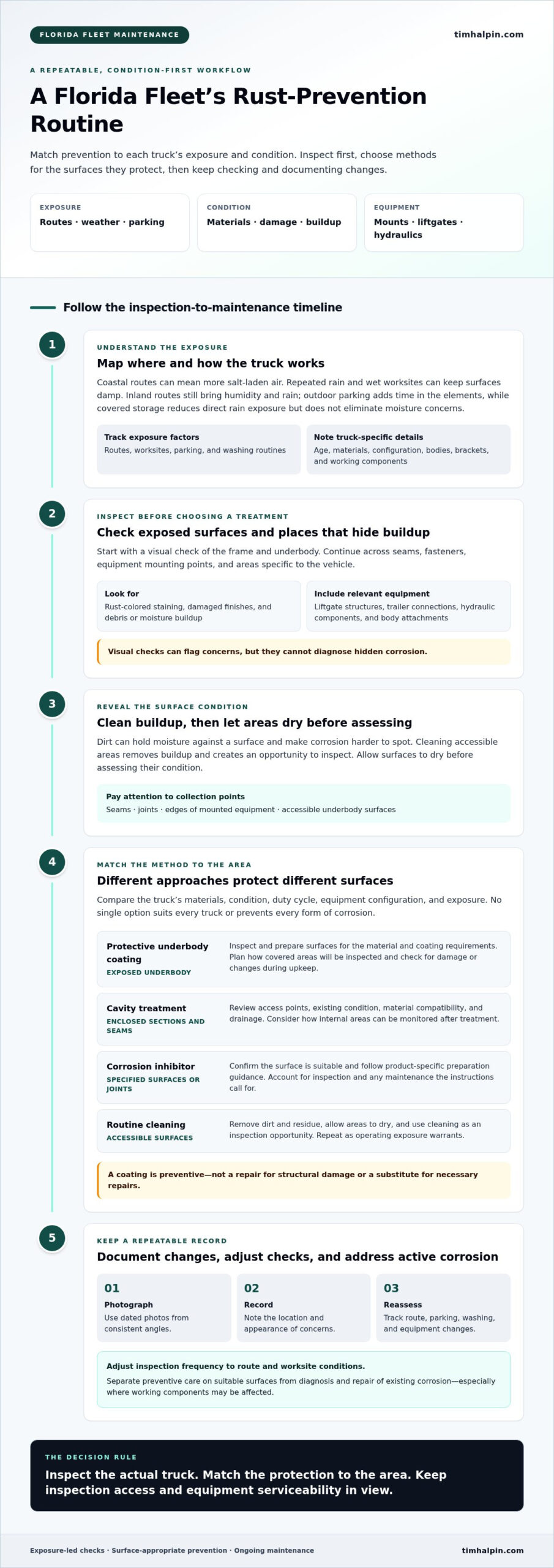
A repeatable routine helps catch changes before dirt, moisture, or a damaged finish makes them harder to assess. Use the same basic sequence across the fleet, then adjust inspection frequency to each truck’s routes, parking, worksite conditions, and equipment exposure. No single inspection interval fits every vehicle.
Inspect, clean, dry, document, and address damage promptly. Follow vehicle and equipment manufacturer guidance for cleaning and care. Use methods that won’t damage finishes, electrical connections, seals, or hydraulic components. Keep the routine simple enough for operators to follow consistently, and make sure any inspection beneath a vehicle uses proper service access. Don’t crawl under an unsupported truck.
What should operators do after wet or coastal-duty cycles?
After a particularly wet shift or coastal route, check safely accessible areas for accumulated dirt, residue, or moisture. Remove debris using methods appropriate for the vehicle and its equipment. Look at visible seams and exposed components for standing water or blocked drainage, and let cleaned surfaces dry before recording their condition. If an area is out of reach, arrange a safe inspection instead of attempting to access it beneath the vehicle.
How can fleets make the routine consistent?
Use a checklist that prompts operators to inspect, clean, dry, and record, with a clear process for flagging damage for follow-up. Dated photographs from consistent angles make changes easier to compare. Notes should identify the location, visible condition, and any change in equipment function. Review the records over time and tailor inspection frequency to actual exposure and operating conditions.
When should corrosion move from monitoring to repair?
Not every surface mark is an emergency, but don’t simply cover a worsening condition. Flaking material, expanding rust, compromised equipment mounts, or a change in how a component works are reasons to seek qualified assessment. Structural or safety-critical damage needs diagnosis and appropriate repair, not a cosmetic cover-up. For towing fleets, regular attention to equipment condition can complement guidance on tow truck parts and maintenance in Florida.
When corrosion affects a truck, liftgate, trailer, hydraulic system, or towing equipment, timely repair can help keep working components serviceable. For commercial truck equipment repair miami fleets can rely on, connect with Tim Halpin Equipment Corp about truck and equipment repair.
Keep commercial truck equipment serviceable with the right maintenance partner
Rust prevention is one part of a fleet maintenance plan. When corrosion appears on working components, first understand what’s affected and whether repair is needed. That assessment should come before any surface treatment that could make inspection or service more difficult.
Tim Halpin Equipment Corp is a family-owned Miami business serving South Florida since 1987. Its commercial truck and equipment repair work includes trucks, liftgates, trailers, hydraulic systems, and towing equipment. Fleet operators can turn to the company when corrosion concerns involve components that need to remain accessible and functional.
How can equipment repair support a corrosion-aware fleet plan?
Include installed equipment in routine condition checks, not just the truck’s frame and body. Corrosion around a liftgate, trailer connection, hydraulic component, or towing equipment mount can raise questions about both the affected part and how it’s attached. Have damaged parts or mounts assessed before considering a protective covering. A coating can’t replace necessary diagnosis or repair.
Keep maintenance focused on the condition and function of each component. If equipment behaves differently, a mount appears compromised, or corrosion is progressing, note the change and include it in the repair discussion. This connects corrosion records to the systems trucks rely on every day.
What information helps make a service discussion productive?
A concise vehicle record helps explain the concern clearly. Gather:
- Truck make and model, plus the type of body or mounted equipment.
- Typical routes, parking conditions, and relevant exposure or worksite details.
- A clear description of visible corrosion, affected locations, and any change in equipment function.
- Dated inspection notes and photographs that show the affected areas.
Photos and notes provide useful context, but they don’t replace a hands-on assessment. Explain what changed and when it was first observed, and keep the discussion focused on the vehicle’s condition and repair needs. For commercial truck equipment repair miami fleets depend on, Tim Halpin brings a local perspective built over decades of serving South Florida.
Explore commercial truck repair in Miami and discuss the equipment maintenance needs affecting your fleet.
Protect your fleet with a practical maintenance plan
Florida rust prevention works best when it reflects each truck’s exposure, condition, and equipment, not a one-size-fits-all treatment. Compare options with inspection access and future maintenance in mind, and document changes so visible corrosion can be assessed before it affects working components.
When corrosion affects a liftgate, hydraulic system, trailer, or towing equipment, timely repair can help keep the vehicle serviceable. For commercial truck equipment repair miami fleets need, Tim Halpin Equipment Corp brings family-owned experience serving South Florida since 1987.
Discuss your commercial truck equipment repair needs with Tim Halpin and take a considered next step for your fleet. With clear inspection records and the right maintenance support, you can make more confident decisions and keep your trucks working toward the next job.
Frequently Asked Questions
Does Florida’s climate make rust proofing necessary for commercial trucks?
Florida’s climate can increase corrosion exposure, but it doesn’t mean every commercial truck needs the same rust-proofing treatment. In South Florida, humidity and recurring rain can keep surfaces damp, while coastal routes may add salt exposure. Route patterns, outdoor parking, washing practices, vehicle condition, and equipment configuration all matter. Use those details to guide inspection and prevention choices instead of assuming one treatment is necessary for the entire fleet.
What is the difference between undercoating and rust proofing?
Undercoating generally means applying protection to exposed underbody surfaces. Rust proofing is a broader term that may include protection for less visible areas, such as enclosed cavities and seams. The approaches address different parts of a vehicle, so one isn’t automatically a substitute for the other. Before applying any material, assess the existing condition, preparation needs, drainage, compatibility, and whether the area will remain accessible for future inspection and service.
Can rust proofing be applied over existing rust?
Don’t assume it’s appropriate to cover existing rust. First determine whether visible corrosion is limited to the surface or signals more serious damage, and check for damaged finishes or areas hidden by dirt. Protective material doesn’t repair corrosion or structural damage. Preparation and suitability depend on the vehicle and the specific material, so assess existing corrosion before considering preventive treatment.
How often should commercial trucks in Florida be inspected for rust?
There isn’t one inspection interval that suits every Florida fleet. Set a schedule based on routes, coastal or wet-site exposure, parking, washing practices, vehicle condition, and equipment configuration. Inspect more closely when operating conditions change or after a particularly wet or exposed work cycle. Record findings consistently with dated photos and notes, and follow the vehicle and equipment manufacturers’ inspection guidance.
Can a rust-proofing coating affect liftgates or hydraulic equipment?
It can create problems if protective material reaches areas that need to move, drain, connect, or remain accessible for service. Liftgates and hydraulic equipment have working components that should be inspected and maintained according to manufacturer guidance. Before considering treatment near mounted equipment, review the component’s condition, material compatibility, drainage, and service access. If corrosion affects function or mounting points, arrange assessment and repair instead of relying on a coating.
What is the first step in choosing rust protection for a commercial truck?
Start by documenting the truck’s condition and actual exposure. Note its age, routes, parking, body and frame materials if known, visible corrosion, and installed equipment. This helps distinguish preventive planning from damage that needs diagnosis or repair. If a working component is affected, fleets searching for commercial truck equipment repair miami can use those notes and photos to explain the concern and support a focused service discussion.
