

Which lights can your vehicle legally display in Florida? The answer depends on more than color: the vehicle’s authorized role and how the lights are used matter, too. Understanding the florida emergency vehicle lighting regulations can help you avoid a setup that confuses other drivers or conflicts with state law.
Before choosing or installing lights, distinguish emergency-response lighting from warning lights used for roadside work, construction, and other hazards. A color permitted for one vehicle or purpose may not be authorized for another.
This 2026 guide explains key statutes, including Florida Statutes Sections 316.2397 and 316.2398, and shows how vehicle classifications and operating conditions affect permitted lighting. You’ll learn how to identify the rules relevant to your vehicle and plan a visible, professionally integrated setup. For South Florida fleets, Tim Halpin Equipment Corp provides public safety lighting, commercial vehicle upfitting, custom electrical wiring, and installation. Use this guide as a practical starting point for equipment decisions, while keeping legal authorization in view.
Key Takeaways
- Florida emergency vehicle lighting regulations depend on a vehicle’s role, authorization, light type, and intended use, not color alone.
- Florida’s rules distinguish emergency-response lights from warning and hazard lights used by tow, utility, and construction vehicles.
- Compare lighting considerations for police, fire-rescue, EMS, tow, utility, and construction vehicles without assuming equipment alone grants legal authority.
- Use a step-by-step checklist to identify the vehicle’s role, review applicable rules, specify equipment, and plan installation and operation.
- Public safety lighting, custom wiring, and commercial vehicle upfitting can support a carefully planned vehicle setup.
Florida emergency vehicle lighting regulations: start with vehicle authority
Under florida emergency vehicle lighting regulations, legality depends on the vehicle’s role, its authorization, the type of light, and how and when that light is used. Color alone doesn’t determine whether a light may be displayed. Florida Statutes Sections 316.2397 and 316.2398 are central provisions addressing prohibited and authorized vehicle lights. Review their current text and applicability before planning an installation.
Emergency-response lighting and warning lighting serve different purposes. Red or blue lights may be restricted to specifically authorized emergency uses, while amber lights can warn of roadside work or a vehicle-related hazard. A work light illuminates a task or work area; it doesn’t automatically authorize a vehicle to signal an emergency or direct traffic. For context on the principles behind emergency vehicle lighting, color and placement can help communicate a vehicle’s purpose, but Florida law determines what a particular vehicle may use.
What counts as an emergency or warning light in Florida?
Emergency warning lights are signals used by authorized vehicles in emergency-response roles. Auxiliary warning lights alert other road users to a hazard or operating condition, such as roadside recovery or roadwork. Work lights illuminate the vehicle’s immediate task area rather than identify it as an emergency responder. Because these categories can overlap in appearance, the vehicle’s official function, status, and circumstances of use all matter. A public-safety or commercial vehicle doesn’t gain the same permissions simply because it carries specialized equipment.
Why vehicle classification matters before choosing lights
Start with the job the vehicle is legally performing. Police, fire-rescue, and EMS vehicles may have emergency-response roles subject to specific statutory permissions and conditions. Tow vehicles may use warning lighting for recovery operations, while utility and construction vehicles may need lights to warn of work or hazards. Those purposes aren’t interchangeable. Identify the statutory category for each vehicle and verify applicable authorization, permits, and operating conditions in current official sources before choosing colors or controls.
Authority comes first: classify the vehicle and its permitted use before selecting its lights. Buying or installing a light doesn’t itself authorize its use. For fleets, include compliance planning in equipment selection and custom wiring, rather than treating it as an afterthought. Tim Halpin Equipment Corp supports South Florida commercial vehicle upfitting with public safety lighting and installation, helping integrate a planned setup with the vehicle’s intended role.
Which light colors and uses do Florida rules allow?
Florida’s rules don’t assign a color to every vehicle in the same way. Sections 316.2397 and 316.2398 of the Florida Statutes address prohibited and authorized lights, with permissions and conditions tied to vehicle type and use. Use this overview as a planning aid, then review current statutory wording and applicable agency rules before installation or operation.
Having a light installed is not the same as being authorized to display or operate it on a public roadway. Florida’s general restrictions and vehicle-specific exceptions matter. The FLHSMV Handbooks and Manuals offer general driver guidance; consult the current statutes for specific legal authority and conditions.
| Color | Vehicle role and intended use | Official-source verification status |
|---|---|---|
| Red or red and white | Authorized fire and fire patrol vehicles, ambulances, and specified medical or organ-transport vehicles; some emergency-response agencies may use flashing red lights in defined circumstances. Volunteer firefighters’ private vehicles require a written permit. | See Sections 316.2397 and 316.2398; verify vehicle eligibility, permit terms, and use conditions. |
| Blue | Generally reserved for law-enforcement vehicles. Statutory exceptions described for certain government fire and correctional vehicles have specific conditions. | Check the current statutory text for each exception and authorization. |
| Amber | Examples include wreckers during roadside recovery or loading, and specified roadwork, refuse, petroleum, mail, and escort operations. | Verify the vehicle category and operating circumstances under applicable provisions. |
| White | Flashing white lights or strobes are allowed for specified work or transport vehicles in defined situations, including hazards for road-maintenance or construction equipment. | Confirm the applicable vehicle type and conditions in current law. |
Red and blue lights: verify authorization and vehicle eligibility
Red, red-and-white, and blue lights visible from the front are generally prohibited except on authorized vehicles. Blue is principally associated with law enforcement, while listed fire, medical, and other exceptions have their own eligibility requirements. A 2025 update increased the penalty for using prohibited lights to attempt a traffic stop to a third-degree felony. Don’t treat a light’s color or a vehicle’s public-safety appearance as proof of authority.
Amber and other warning lights: match color to purpose
Amber isn’t blanket permission for any work vehicle to use warning lights in every setting. Florida’s rules address wrecker lights during roadside recovery and loading, with use while towing tied to operator judgment. Work-vehicle permissions also depend on the specified role and circumstances. Color alone doesn’t make a light lawful; vehicle authority and operating purpose matter.
For a fleet setup, pair statutory review with equipment selection and installation planning. Tim Halpin Equipment Corp provides public safety lighting and commercial vehicle upfitting in South Florida. Explore public safety lighting and vehicle upfitting as part of that planning.
Emergency vehicle lights versus warning lights: what changes by vehicle type?
A lighting system suited to a fleet’s work isn’t automatically legal for that vehicle to display. Under Florida Statute 316.2397, permissions and conditions vary by vehicle category and purpose. The statute is a key reference, but fleets should verify current law, related provisions, and agency requirements for the specific vehicle and operation before settling on equipment or controls.
Use this role-by-role comparison to frame the review. It identifies questions to resolve, not blanket approval for a particular color or setup.
| Vehicle role | Authority to verify | Color, use, and operating conditions to check |
|---|---|---|
| Police | Is the vehicle and operator authorized for law-enforcement duties? | Verify blue-light eligibility and when lights may be displayed or activated during assigned duties. |
| Fire-rescue | Does the vehicle qualify as an authorized fire department or fire patrol vehicle? | Check red or red-and-white permissions, any private volunteer vehicle permit, and specific exceptions. Certain government fire vehicles have a limited rear-blue-light exception with conditions. |
| EMS | Is it an ambulance, qualifying volunteer ambulance, or an eligible medical responder’s vehicle? | Verify red-light authority, required permits where applicable, and any operator or response conditions. |
| Tow | Is the vehicle operating as a wrecker in a covered activity? | Check amber-light use during roadside recovery and loading, and the conditions for use while towing. |
| Utility | Does the vehicle fit a category covered by the applicable warning-light provision? | Confirm the authorized color and whether use depends on active work, a hazard, or another stated condition. |
| Construction | Is the vehicle road-maintenance or construction equipment under the relevant rule? | Check amber warning-light permissions and any separate provisions for flashing white lights or strobes when a hazard exists. |
Emergency-response vehicles require separate review
Police, fire-rescue, and EMS aren’t one legal category with identical privileges. Police blue-light authority differs from fire vehicle permissions, and EMS rules distinguish ambulances from other eligible medical-response situations. Volunteer firefighters’ private vehicles, for example, require a written permit to display red or red-and-white lights. Confirm statutory definitions, permits, operator qualifications, and agency policies rather than assuming a responder’s job title settles eligibility.
Work and recovery vehicles have a different purpose
Tow, utility, and construction lighting generally warns others of roadside activity or hazards; it doesn’t claim emergency-response authority. A wrecker’s amber-light use may depend on whether it is recovering or loading a vehicle, or towing under the specified conditions. Utility and construction applications also turn on vehicle category and operating context. Keep product selection secondary to those legal checks. For visibility planning, see this South Florida public safety lighting guide.
Choose lighting only after confirming the vehicle’s authority, permitted color, purpose, and operating conditions. This authority-first approach helps translate Florida rules into a fleet setup without confusing equipment suitability with legal eligibility.
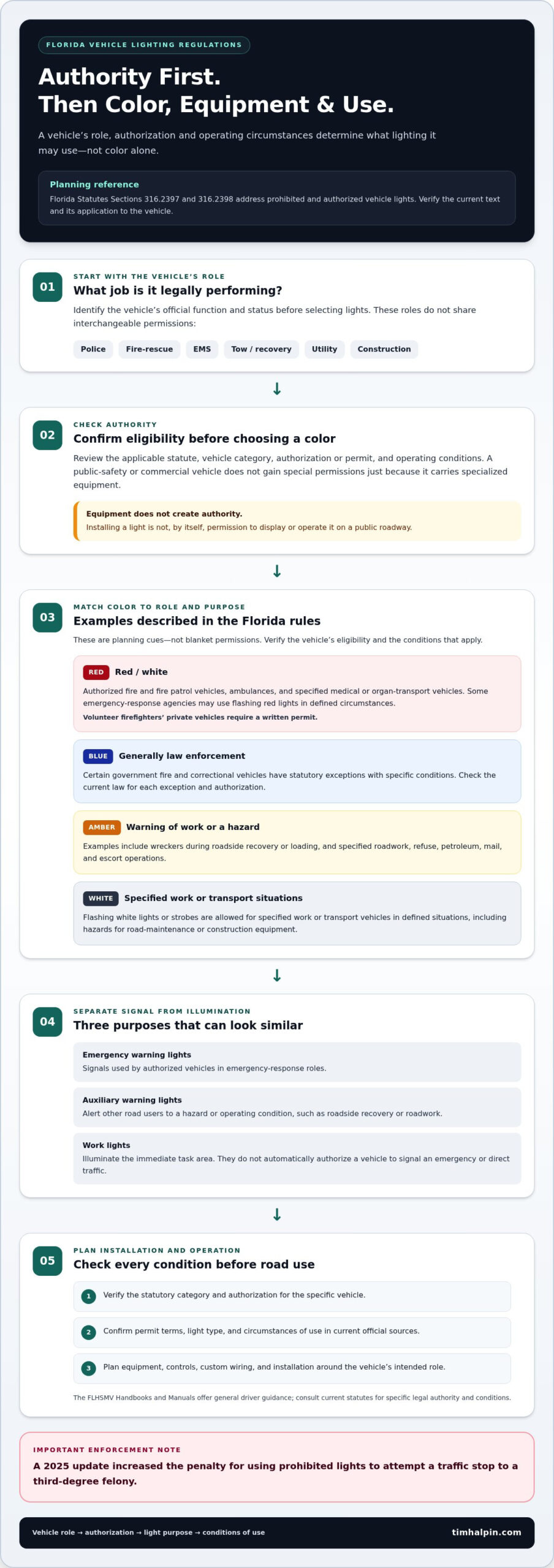
Florida lighting compliance checklist before installation or road use
Turn the legal review into a documented upfitting plan before choosing equipment. This sequence helps fleet managers apply florida emergency vehicle lighting regulations to a vehicle’s actual role while keeping statutory permissions separate from workplace and equipment decisions.
A five-step pre-installation compliance review
- Identify the vehicle and its role. Record its classification, primary purpose, operator authorization, and intended operating environment. A truck used for roadside recovery, for example, needs a different review from a vehicle assigned to emergency response.
- Check current official rules. Review the current wording and applicability of Florida Statutes Sections 316.2397 and 316.2398, along with official guidance relevant to that vehicle category. Confirm permitted colors, authorization requirements, and when lights may be used. Don’t rely on an old fleet specification or product description as legal guidance.
- Separate other requirements. Identify applicable federal requirements, local rules, agency directives, and employer policies. These are distinct from Florida statutes and may address other aspects of vehicle operation or equipment. Document which requirements apply to the specific fleet and assignment.
- Specify the equipment and layout. Once the vehicle’s authority and intended use are clear, record the selected lighting, placement, controls, and wiring plan. Include agency-specific requirements and operating procedures in the design review; product suitability alone doesn’t establish legal eligibility.
- Install, test, and review use. Plan secure mounting, protected wiring, clear sightlines, and controls suited to the vehicle. Before road use, compare the completed setup with documented permissions and the organization’s operating procedures. Revisit the review if the vehicle’s role or equipment changes.
Installation and day-to-day use checks
Good integration supports a dependable setup, but it doesn’t replace legal authorization. In South Florida, consider exposure to rain, heat, and road spray when planning mounting and wiring. These are practical durability considerations, not statutory rules. Commercial vehicles may also have body and equipment layouts that affect where lighting can be integrated without obstructing sightlines or interfering with normal use.
Keep a record of the sources reviewed, the vehicle classification, approvals or permits where applicable, the installed configuration, and procedures for operating the lights. Recheck the record when a vehicle changes assignments. Before applying guidance fleet-wide, review statutory citations, interpretations, and local or agency policies against current official sources.
For broader integration considerations, read the commercial truck upfitting guide. Tim Halpin Equipment Corp provides commercial vehicle upfitting, custom electrical wiring, and installation. Plan your vehicle lighting installation around the vehicle’s intended role.
Choose and install Florida-compliant public safety lighting with confidence
A well-planned lighting setup starts with the vehicle’s documented role, not a catalog category. Use the florida emergency vehicle lighting regulations that apply to that role to establish what the vehicle is authorized to display and when. Then select equipment and plan integration around the verified use. This connects legal review, equipment decisions, and installation without treating a light or brand as automatic permission.
Match lighting equipment to a verified vehicle use
Before specifying equipment, bring together the vehicle’s purpose, applicable permissions, and intended operating conditions. Manufacturer information can describe a light’s features and installation requirements, but it can’t replace Florida law or an agency’s direction. As the setup takes shape, consider:
- Visibility: Plan placement so the intended warning or emergency signal can be seen without creating avoidable obstruction.
- Mounting: Account for the vehicle’s body and work equipment so lighting is securely integrated and suited to its assigned use.
- Wiring and controls: Map the wiring and switching to the selected equipment and documented operating procedures.
- Review: Compare the proposed configuration with current legal permissions and agency requirements before the vehicle goes into service.
These are planning considerations, not a guarantee of compliance. If the vehicle’s assignment changes, revisit whether the installed configuration and its use still fit the verified authorization.
Plan professional integration for South Florida fleets
For commercial fleets, a coordinated installation brings lighting, wiring, mounting, and vehicle layout into one organized setup. South Florida’s weather and daily operating conditions make durable mounting and thoughtful wiring practical considerations. They don’t change the legal rules, but they matter when integrating equipment for a vehicle’s work.
Tim Halpin Equipment Corp is a family-owned Miami business serving South Florida since 1987, with public safety lighting from Whelen Engineering, SoundOff Signal, Federal Signal, Code 3, and Feniex. Its commercial vehicle upfitting, custom electrical wiring, and installation connect equipment selection with vehicle integration once the fleet has established the vehicle’s role, reviewed applicable rules, and selected appropriate equipment. The installation itself doesn’t establish legal eligibility.
With the compliance review in hand, visit Tim Halpin Equipment Corp to explore public safety lighting and vehicle integration for your fleet.
Put your lighting plan on solid ground
A compliant vehicle setup starts with its authorized role, not the light you want to install. The florida emergency vehicle lighting regulations require fleets to consider vehicle classification, permitted colors, and the circumstances in which lights may be used. Emergency-response lights and general warning lights serve different purposes, so verify applicable rules before selecting equipment.
Then turn that review into a practical plan: document the vehicle’s use, choose suitable lighting, and consider placement, wiring, and controls as part of installation. Equipment specifications can guide technical decisions, but they don’t replace statutory permissions or agency requirements.
For South Florida fleets, Tim Halpin Equipment Corp is a family-owned business serving the region since 1987. The company provides public safety lighting from established manufacturers, along with commercial vehicle upfitting, custom electrical wiring, and installation. Thoughtful integration helps connect equipment to the vehicle’s intended role.
Explore public safety lighting and vehicle equipment to plan your fleet setup.
Frequently Asked Questions
Is it legal to have blue emergency lights on a personal vehicle in Florida?
Generally, a personal vehicle isn’t authorized to display blue lights just because the owner has installed or possesses them. Florida law reserves blue lights primarily for law-enforcement vehicles, with specific statutory exceptions for certain government vehicles. Installation alone doesn’t establish authority, and displaying or operating lights on a roadway raises separate legal concerns. Review current Florida Statutes Sections 316.2397 and 316.2398 for the vehicle’s exact status and circumstances.
Can tow trucks use amber warning lights in Florida?
Yes, Florida law allows wreckers to use amber rotating or flashing lights during roadside recovery and loading. The statute also addresses their use while towing when the operator deems it necessary. These warning lights alert road users to a work or roadside hazard; they don’t give a tow truck emergency-response privileges. Compare the current wording of Sections 316.2397 and 316.2398 with the vehicle’s equipment and actual use.
What color lights can an emergency vehicle use in Florida?
There isn’t one color list that applies to every emergency vehicle. Florida’s permissions depend on vehicle category, operator authority, and intended use; red, blue, amber, and white each have distinct rules and exceptions. Sections 316.2397 and 316.2398 are key statutory references, but product availability doesn’t establish legal eligibility. For fleet planning, record the official source and specific authorization used for each vehicle’s lighting configuration.
Are amber lights considered emergency lights in Florida?
Amber lights generally serve as warnings for hazards or work rather than identifying a vehicle as an emergency responder. Florida law allows wreckers to use amber rotating or flashing lights during roadside recovery and loading, and addresses use while towing when the operator considers it necessary. Other vehicle categories have their own conditions. Amber equipment doesn’t authorize emergency privileges; review the current statute for the vehicle and operating context.
Can a private security vehicle use red or blue lights in Florida?
A private security role alone doesn’t authorize red or blue lights. Florida reserves blue lights primarily for law enforcement, subject to specific statutory exceptions; red and red-and-white lights are also limited to authorized vehicle categories and uses. Owning or installing equipment is different from being permitted to display or operate it on a roadway. Before outfitting a security fleet, document the applicable legal basis using current statutory text and relevant agency guidance.
Do Florida emergency vehicle lighting rules apply while a vehicle is parked?
Parking doesn’t automatically make otherwise restricted lighting lawful. Florida law addresses displaying certain lights as well as their use, and the result can depend on the vehicle’s classification, the light, and the circumstances. A stopped or disabled vehicle may have separate hazard-light rules, but that doesn’t create a general exemption for emergency-colored lights. Review the current statute before displaying or operating lights while parked, especially on or near a roadway.
Where can I check the current Florida emergency lighting statutes?
Use the Florida Legislature’s official statutes to review current Sections 316.2397 and 316.2398, which address vehicle lights and applicable permissions. Confirm that each section applies to the vehicle category and use under review. Agency policies may add operating requirements, but they don’t replace statutory review. For fleet records, note the date the article and each vehicle configuration were checked; this guide’s review date is October 2026.
