

The maintenance manual sets how often to service truck hydraulics, especially when it comes to changing hydraulic fluid. For trucks used regularly for tipping or lifting, inspect hose condition and oil cleanliness every 3 months or 500 operating hours. The right inspection rhythm also depends on the truck’s duty cycle, since frequent use brings different wear than occasional lifting.
Hydraulic maintenance is more than changing fluid. Hoses, filters, seals, and cylinders also need attention. Daily checks can catch visible leaks or damage early, while scheduled inspections help identify changes in fluid condition or system performance.
This guide explains how to use the maintenance manual and manufacturer’s schedule to set service timing, what to check during routine inspections, and which warning signs need attention. It also covers how workload and fluid condition affect maintenance decisions.
Key Takeaways
- Use the maintenance manual and manufacturer schedule to set fluid service intervals for the specific truck and hydraulic system.
- For trucks used regularly for lifting or tipping, plan to inspect hose condition and oil cleanliness every 3 months or 500 operating hours.
- Match inspection frequency to the truck’s duty cycle, and make daily checks part of routine operation.
- Watch for leaks, damaged hoses, discolored fluid, slow response, or loss of pressure, since these can signal a developing problem.
- Tim Halpin Equipment provides hydraulic repair when inspection findings point to a system fault that needs attention.
How Often Should You Service a Truck’s Hydraulic System?
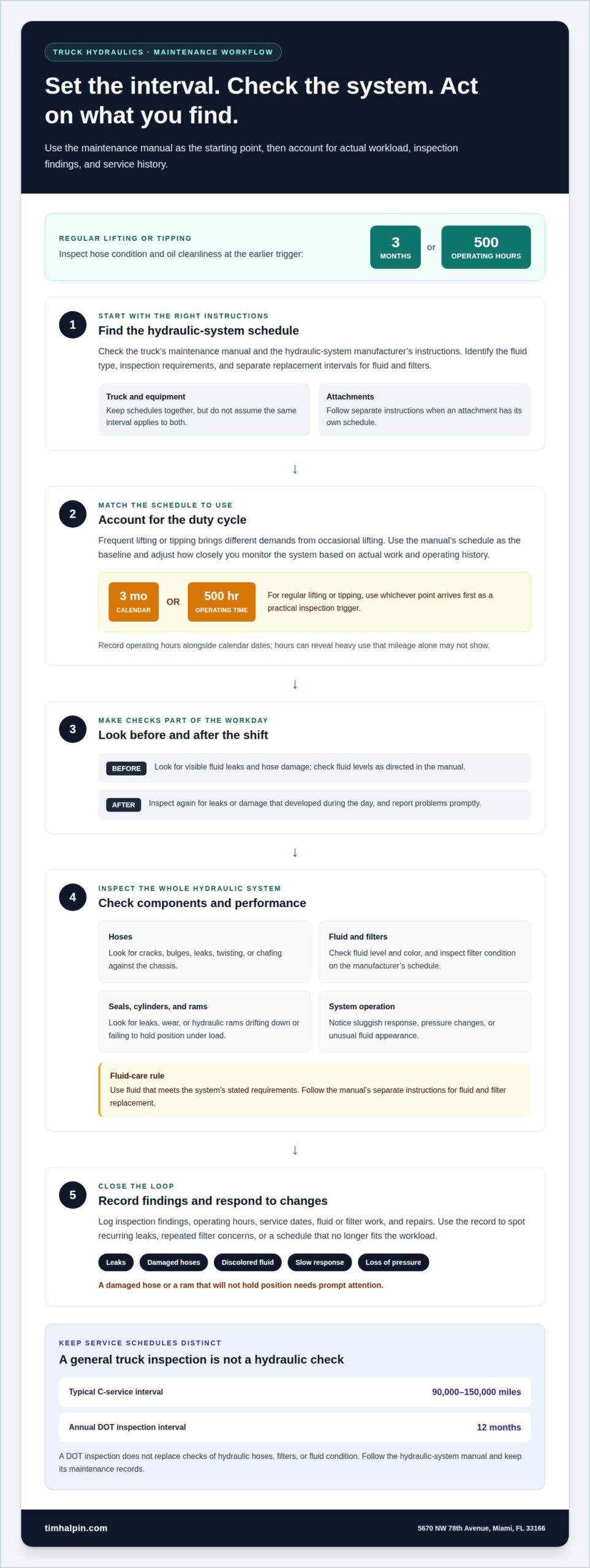
For trucks used regularly for lifting or tipping, inspect hose condition and oil cleanliness every 3 months or 500 operating hours. The right interval also depends on duty cycle and the hydraulic system manufacturer’s maintenance schedule.
In the United States, maintenance costs depend on the system, parts required, and labor. The cost is determined after reviewing the work needed.
Inspection Intervals by Duty Cycle
A duty cycle describes how often and how intensively a truck’s hydraulics operate. A truck lifting loads throughout each shift faces different demands from one making occasional lifts, so match inspection frequency to actual use.
For regular tipping or lifting, inspect hoses and oil cleanliness every 3 months or 500 operating hours. Use whichever point arrives first as a practical inspection trigger, then follow the manual’s service intervals. Record operating hours alongside calendar dates; hours can reveal heavy use that a mileage reading alone may not show.
Hose, Seal, Cylinder, and Filter Checks
Routine checks assess hydraulic parts that can wear or become damaged. Inspect hoses for cracks, bulges, leaks, twisting, or chafing against the chassis. Check fluid level and color, filter condition, and whether hydraulic rams drift down under load.
Seals and cylinders can wear over time, so check for leaks and changes in lifting behavior. A damaged hose or a ram that will not hold position needs prompt attention. These checks can reveal developing problems before they affect reliable lifting or tipping.
Build hydraulic checks into the daily routine. Before a trip, look for visible fluid leaks and hose damage, and check fluid levels as directed in the manual. At the end of the shift, inspect again and report problems promptly. A post-shift check can reveal damage or leaks that developed during the day.
Keep hydraulic servicing distinct from broader truck service intervals. A typical C-service interval is 90,000-150,000 miles. According to the Federal Motor Carrier Safety Administration, an annual DOT inspection has a 12-month interval. A DOT inspection does not replace checks of hydraulic hoses, filters, or fluid condition.
Maintenance records make inspection history useful. Federal motor carriers must record maintenance dates, specific repairs performed, and the mechanic’s name. Add hydraulic findings and operating hours to the truck’s maintenance log. These details can reveal recurring leaks, repeated filter concerns, and whether the schedule suits the truck’s workload.
Using the maintenance manual to determine service timing
Hydraulic service assesses fluid condition, filters, hoses, leaks, and system operation. Costs in the United States depend on the parts, labor, and system condition involved. The cost is determined after reviewing the work needed.
Preventive Fluid and Filter Care
Preventive maintenance follows the manual’s instructions for keeping hydraulic fluid and filters in proper condition. Check fluid level and appearance, and inspect the filter according to the manufacturer’s schedule. Contamination or a clogged filter can affect operation, so record findings alongside completed repairs. Use fluid that meets the system’s stated requirements; the correct specification matters more than appearance.
Routine service should also assess how the hydraulic system performs under load. Sluggish operation, pressure changes, or unusual fluid appearance can signal a developing problem. Use the manual to distinguish scheduled fluid and filter care from repairs prompted by a fault. If it gives separate replacement instructions for fluid and filters, follow each interval separately.
Customizing the Maintenance Schedule
Tailor maintenance to the manufacturer’s instructions, the truck’s actual work, and its operating history. The manual provides the starting point; duty cycle, service records, and observed condition help determine how closely to monitor the system. A truck making frequent lifts may need closer attention than one with lighter hydraulic use, even if both follow the same base schedule.
Hydraulic service can include reviewing fluid level and condition, checking filters and components, and investigating changes in performance. The work depends on inspection findings and the system’s maintenance instructions. Record service dates, operating hours, fluid or filter work, and repairs so later inspections can reveal patterns.
Use the maintenance manual as the first reference for service timing. Find the hydraulic-system section and identify the fluid type, inspection instructions, and replacement intervals. If an attachment, such as a lift mechanism, has separate instructions, follow those too. Keep truck and equipment schedules together, but do not assume the same interval applies to both.
Federal requirements address broader vehicle upkeep. According to the Electronic Code of Federal Regulations, 49 CFR Part 396 requires motor carriers to systematically inspect, repair, and maintain vehicles under their control. That requirement is not a hydraulic-fluid interval. The manual and service records help translate a carrier’s maintenance program into routine, truck-specific attention.
When schedules differ, compare the system manual, truck manufacturer’s recommendations, and service history. Follow the instructions for the specific hydraulic components rather than borrowing an interval from another truck. Record changes in operating demands, such as more frequent lifting, and consider them at the next maintenance review. A clear schedule organizes inspections, fluid care, and repairs around the truck’s actual condition.
Warning signs of hydraulic-system problems
Loss of pressure, slow response, and discolored fluid can signal hydraulic trouble. A lift that moves sluggishly or fails to hold pressure needs attention, especially if the change occurs during normal work. Changes in fluid condition can also affect pressure control. Compare current operation with the truck’s usual performance and note when the change began.
Set aside a thorough hydraulic-system check each month in addition to routine walkarounds. Inspect hoses for cracks, bulges, twisting, leaks, and chafing against the chassis. Check fluid level and color, filter condition, and whether rams drift down under load. Drivers can record these observations, including new noises or slower movement, to help identify patterns over time.
Small leaks can be hard to spot beneath a truck or among crowded components. Look for fresh wetness near hose connections, seals, cylinders, and fittings. If the source is difficult to see, dye in hydraulic fluid can help reveal the leak’s path. Do not treat a falling fluid level as normal consumption. A leak may let air or contamination into the system and affect performance.
Cloudy or dark oil can indicate water contamination or internal wear that produces metal particles. If discoloration occurs alongside sluggish operation, stop and report the change rather than assuming the system needs more fluid. Record the oil’s appearance and the affected function. This information helps a technician distinguish fluid concerns from component damage or a pressure-control problem.
Coolant checks address the engine cooling system, not the truck’s hydraulic circuit. Keep the checks separate: inspect coolant according to the vehicle manual and investigate hydraulic-fluid leaks independently. A coolant-level change alone does not identify a hydraulic fault. If both systems show changes, document each separately so maintenance staff can assess the correct components.
Hydraulic-system symptoms do not automatically indicate brake failure. The circuit powering a lift or dump body may be separate from the truck’s braking system. Treat a brake warning, changed braking response, or visible fluid around brake components as a separate vehicle concern and report it promptly. Hydraulic checks do not replace brake inspections.
If a monthly check finds pressure loss, slow response, discoloration, or a visible leak, record the symptom and when it occurs. Note whether it appears under load or during a particular movement. These details connect the warning sign to the affected hydraulic function and help guide diagnosis before a breakdown disrupts work.
Fluid contamination, aeration, and cavitation
Hydraulic fluid transfers force through the system, so its condition affects performance. Heat, moisture, and particles from component wear degrade fluid over time. Contamination can wear valves and seals, while degraded fluid may dissipate heat less effectively. The added heat stresses the system and can contribute to damage or failure. Proper fluid care protects the parts that control pressure and movement.
Aeration occurs when air enters and mixes with hydraulic fluid. Because air is compressible, the mixture can disrupt fluid movement and pressure, making operation inconsistent. Cavitation is different: it occurs when low pressure forms vapor cavities in the fluid. Keeping fluid at the proper level helps prevent conditions that contribute to aeration and cavitation. Check the level using the equipment manual’s procedure.
Low fluid can interfere with the pump’s supply and create conditions that promote cavitation. A leak or disrupted fluid supply can allow air to enter and contribute to aeration. During routine checks, compare the level with the manual’s specified range. Look for changes in appearance and note whether the system responds differently during normal operation.
Cloudy or dark hydraulic oil can indicate water contamination or internal wear that produces metal particles. Those particles can circulate through the system and wear valves and seals. A change in appearance is a warning, not a diagnosis on its own. Record what you see and when it appears, then follow the system’s maintenance instructions to assess fluid condition.
Heat affects hydraulic fluid performance. As fluid degrades, it may dissipate heat less effectively, increasing system stress during operation. If a lift or ram starts responding slowly, compare its behavior with the truck’s normal performance. Consider fluid appearance and level alongside recent operating conditions instead of treating each clue in isolation.
Contamination can enter during fluid handling or through an opening in the system; wear particles can also form inside components. Keep containers and service equipment clean, and follow the manual’s fluid-handling directions. Use the fluid specification required for the system. Mixing or substituting fluids without checking compatibility can affect performance and make later condition checks harder to interpret.
If a check finds cloudy fluid, unusual darkening, a low level, or changed operation, document it before service. Note the affected function and any visible leak or component concern. Do not dismiss recurring changes as normal. A clear record helps connect fluid condition with pressure problems, wear, and maintenance history, supporting timely investigation before further damage or system failure.
Manufacturer-recommended truck service schedules
The manufacturer’s schedule is the starting point for servicing each vehicle. Use the owner’s manual for the truck’s specific service intervals, then follow separate hydraulic-system instructions where provided. A mileage-based engine service schedule does not automatically determine hydraulic-fluid replacement timing. Keeping the schedules distinct ensures routine truck maintenance does not replace required hydraulic checks.
General truck service intervals offer context, not a substitute for system guidance. A typical A-service interval is 15,000 miles, while a B-service interval is 30,000-45,000 miles. Freightliner and Western Star list A-service every 15,000 miles and B-service every 30,000 miles. These figures describe truck service schedules, not universal hydraulic-fluid change intervals.
Many modern trucks need routine inspections every 5,000 to 7,500 miles. The manufacturer’s schedule also sets the timing for other maintenance areas. For example, air filters, suspension components, belts, and hoses may be checked every 15,000 to 30,000 miles, according to the truck’s schedule. Transmission fluid, differential fluid, and cooling-system condition may be reviewed every 30,000 to 60,000 miles, as specified for the vehicle.
Use the manual’s hydraulic section to identify the recommended fluid, inspection points, and service interval. If the hydraulic equipment has its own maintenance instructions, follow them alongside the truck schedule. A dump body and a liftgate may have different operating demands, so do not automatically copy one vehicle’s schedule to another. Record the applicable intervals for each truck and attachment.
- Use mileage and operating hours appropriately. The truck schedule may be mileage-based, while hydraulic inspections can reflect operating hours and lifting frequency.
- Keep separate records. Note truck services, hydraulic inspections, fluid work, and repairs as distinct maintenance entries.
- Review changes in use. A vehicle that shifts from occasional lifting to frequent work may need closer attention to its hydraulic schedule.
The key point is to follow the manufacturer’s instructions for the specific truck and hydraulic equipment. General service milestones help organize vehicle maintenance but do not replace hydraulic-system guidance. Track the schedule for each component and use inspections to spot changes between planned services, helping reduce avoidable downtime.
If hydraulic performance changes between scheduled maintenance visits, explore hydraulic repair support to address the system concern.
Tim Halpin Equipment: Truck Repair
Tim Halpin Equipment Corp provides truck repair and hydraulic repair when inspections reveal leaks, damaged components, or changes in system performance. The company also repairs liftgates when an issue affects that equipment. These services are the next step when a fault requires repair rather than routine fluid or filter maintenance.
For a truck with a suspected hydraulic problem, share the symptoms and inspection findings to help clarify the repair need. Tim Halpin Equipment Corp is located at 5670 NW 78th Avenue, Miami, FL 33166.
Contact Tim Halpin Equipment Corp or visit timhalpin.com to discuss your truck repair needs.
Build a Maintenance Rhythm That Works
Turn the maintenance plan into a routine by assigning responsibility for recording inspections, service decisions, and changes in equipment performance. Clear records help the next operator or technician understand what happened and what needs attention. They also make it easier to adjust the plan when the truck’s work changes.
Determining how often to service truck hydraulics is not a one-time decision. Keep the manufacturer’s instructions accessible, review system condition as workloads shift, and respond to symptoms before they become routine. Consistent attention helps your team plan repairs and keep equipment ready for its intended work.
When a problem needs professional attention, Tim Halpin Equipment Corp offers truck repair, liftgate repair, and trailer repair. Contact Tim Halpin Equipment Corp today to discuss your equipment repair needs and take the next step with confidence.
Frequently Asked Questions
What Happens When Maintenance is Ignored?
Neglected hydraulic maintenance can allow contamination, leaks, and worn components to worsen. Contaminants can wear valves and seals, while degraded fluid may dissipate heat less effectively. A small change in lift response can develop into a larger system problem if it goes unrecorded. For trucks working around Miami, recording symptoms and repair history helps operators spot recurring issues and plan follow-up checks.
How often should truck hydraulic systems be serviced?
To decide how often to service truck hydraulics, start with the maintenance manual and the truck’s actual duty cycle. For trucks used regularly for tipping or lifting, inspect hose condition and oil cleanliness every 3 months or 500 operating hours. Daily checks can help catch visible changes between scheduled inspections. If the workload changes, review the schedule and operating records rather than relying on an old routine.
How often should hydraulic fluid and filters be changed in a truck?
Change fluid and filters according to the hydraulic-system manual, because intervals vary by truck. System design, fluid requirements, and operating demands shape the schedule. Record fluid and filter work separately, since replacement instructions may differ. If oil looks cloudy or dark before scheduled service, document the change and assess its condition rather than treating appearance as a universal replacement interval.
How do operating hours and severe-duty use affect truck hydraulic service intervals?
Operating hours show how much the hydraulic system has worked, even when mileage remains low. A truck lifting throughout regular shifts has a different duty cycle from one making occasional lifts. For regular tipping or lifting, inspect hose condition and oil cleanliness every 3 months or 500 operating hours. Track hours and workload so maintenance reviews reflect real use, not just calendar time.
What are signs that truck hydraulics need maintenance or repair?
Loss of pressure, slower movement, leaks, or changes in fluid appearance can signal a hydraulic problem. Note the affected function, such as a lift moving slowly or a ram drifting under load. Record whether the symptom occurs during a particular task or load condition. These details give maintenance staff useful context for assessment and help distinguish a recurring change from an isolated observation.
What happens if truck hydraulic fluid is not changed on schedule?
Fluid kept in service beyond its prescribed interval can degrade as heat, moisture, and wear particles affect its condition. Degraded fluid may dissipate heat less effectively, while contamination can wear valves and seals. Cloudiness or dark color can indicate water contamination or internal wear. Follow the system’s replacement instructions and treat a visible change as a reason to assess the fluid, not proof of a specific failure.
Are truck hydraulic service intervals specified by the manufacturer?
Yes. The manufacturer’s maintenance instructions set the service schedule for the specific truck or hydraulic equipment. How often to service truck hydraulics depends on those instructions and how the equipment is used. Check the manual for fluid requirements, inspection guidance, and replacement intervals. If the truck and attached hydraulic device have separate manuals, keep both schedules available and record service for the equipment each covers.
How to check hydraulic fluid level and condition on a truck?
Follow the manual’s checking procedure because the correct method and level reference depend on the system. Compare the fluid level with the stated range, then note any cloudiness, darkening, or other visible change. Review previous readings to see whether the condition recurs. Consistent records give maintenance staff more context than a single observation and help guide further assessment.
