

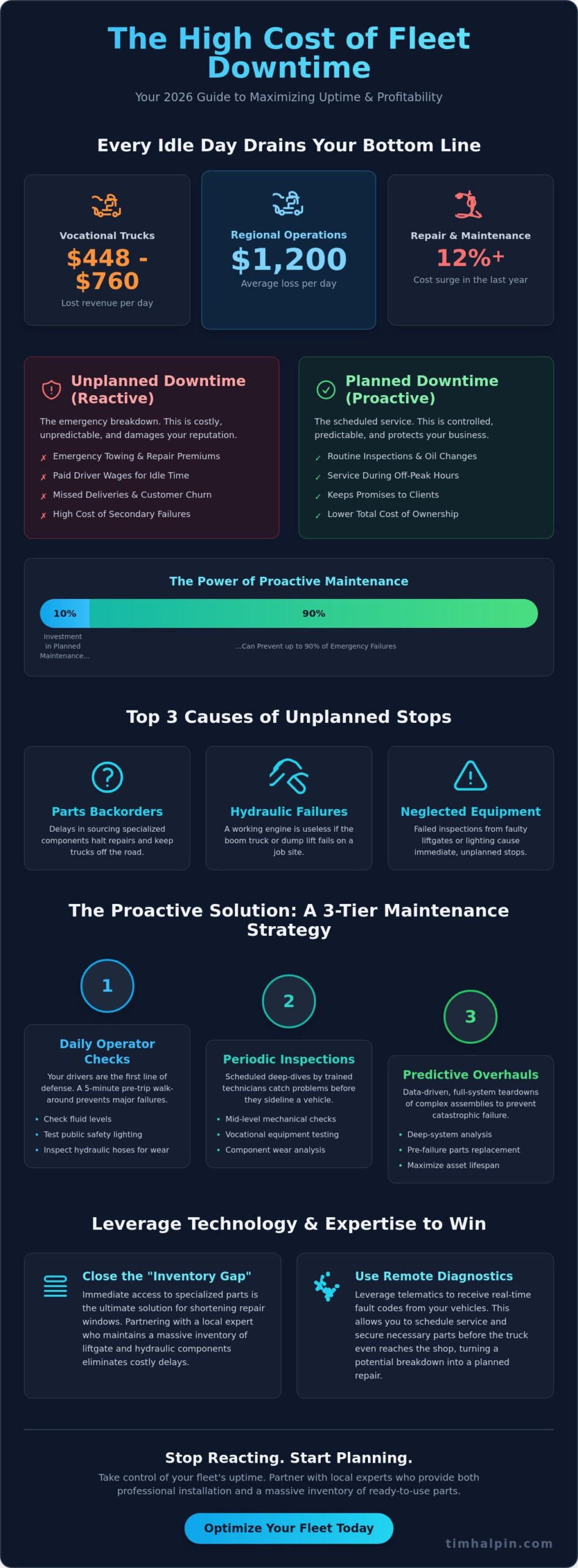
Did you know that every single day one of your vocational trucks sits idle, it’s draining between $448 and $760 directly from your bottom line? For regional operations, that loss often hits $1,200 per day. It’s a heavy burden to carry, especially when you’re already facing a 12% surge in repair costs over the last year. We understand the stress of watching revenue slip away while waiting for specialized parts or paying high premiums for emergency fixes. You want a fleet that’s as reliable as a handshake, and you need your equipment back on the road where it belongs.
The biggest hurdle we see for fleets in 2026 isn’t the complexity of the repair itself; it’s the wait. This “Inventory Gap” is often the difference between a truck that’s back on the road by noon and one that’s collecting dust for a week. When you’re researching how to reduce commercial fleet downtime, you’ll find that having parts in stock—a strategy championed by equipment dealers such as United Lift LLC—is the single most effective way to shorten repair cycles. There’s a massive difference between a shop that promises to “order” a part and a partner who already has it on the shelf. Ordering implies a delay, a shipping risk, and a variable timeline that your business simply cannot afford.
This 2026 guide reveals exactly how to reduce commercial fleet downtime by shifting from reactive repairs to a disciplined, data-driven strategy. It’s about more than just keeping engines running; it’s about protecting your reputation in the community and lowering your total cost of ownership. We’ll walk through the proven methods for streamlining maintenance, from utilizing predictive AI to ensuring you have immediate access to critical liftgate and hydraulic components. You’ll discover how to turn unpredictable shop visits into a predictable schedule that keeps your business moving forward.
Key Takeaways
- Master the distinction between planned and unplanned downtime to gain better control over your daily operational costs.
- Learn how to reduce commercial fleet downtime by transitioning to a tiered maintenance strategy specifically designed for vocational equipment like liftgates and boom trucks.
- Discover the “Inventory Gap” and why having immediate access to specialized parts is the ultimate solution for shortening repair windows.
- Explore how leveraging remote diagnostics and real-time fault codes lets you schedule service and secure parts before your vehicle even hits the shop.
- Understand the strategic advantage of partnering with local experts who provide both professional installation and a massive inventory of ready-to-use parts.
Understanding the True Cost and Causes of Commercial Fleet Downtime
In the world of logistics, a truck that isn’t moving isn’t earning. We define fleet downtime as any period where a revenue-generating vehicle is unavailable for service. While it sounds simple, the reality in 2026 is heavy. With the average cost of unplanned downtime for a commercial vehicle sitting between $448 and $760 per day, every hour counts. Effective Fleet management requires a deep understanding of why vehicles stop moving and what those pauses actually cost your business. Identifying these triggers is the first step in learning how to reduce commercial fleet downtime and reclaiming your profit margins.
Today’s challenges often stem from three main areas. First, parts backorders for specialized components remain a persistent hurdle. Second, hydraulic failures in vocational equipment like boom trucks or dump trucks can sideline a vehicle even if the engine runs perfectly. Finally, neglected secondary equipment, such as liftgates or public safety lighting, often causes failed inspections that result in immediate, unplanned stops. Understanding these specific risks is essential for any manager looking at how to reduce commercial fleet downtime through better planning.
The Financial Impact of an Idle Truck
When a truck sits, the bills don’t stop. For regional fleets, these costs can climb to an average of $1,200 per day. You’re also battling a 12% surge in repair and maintenance costs seen over the last year. Direct costs are the most obvious; you’re looking at emergency towing fees and high-priority repair premiums that can double the price of a standard service. To help manage the financial strain of these sudden expenses, you can click here for secured vehicle loan options. However, the indirect costs are often more damaging. You’re still paying driver wages, and if you have to rent a replacement, those fees add up fast. The hardest hit is often your reputation. A missed delivery or a cancelled service call leads to customer churn that is expensive to reverse. We’ve seen that “cheap” repairs or quick fixes often lead to secondary downtime, which is twice as frustrating and twice as costly.
Planned vs. Unplanned Downtime: Finding the Balance
Not all downtime is created equal. Planned downtime includes your routine oil changes and preventative inspections. It’s controlled, predictable, and allows you to keep your promises to your neighbors and clients. Unplanned downtime is the emergency breakdown on the side of the highway. In our experience, investing in 10% more planned maintenance can often prevent up to 90% of those emergency failures. It requires a psychological shift. You have to stop thinking about “fixing what’s broken” and start focusing on “maintaining what’s working.” Uptime Optimization is the strategic scheduling of service during off-peak hours.
Implementing a Tiered Proactive Maintenance Strategy
Many fleet managers stop their maintenance planning at the engine. That’s a mistake. To truly master how to reduce commercial fleet downtime, you must look at the equipment doing the actual work. A dump truck with a perfect engine is still useless if the hydraulic lift fails on a job site. We recommend a tiered strategy that treats your liftgates, booms, and service bodies with the same respect as the transmission. This proactive approach ensures your specialized equipment remains a reliable asset rather than a liability.
Forbes provides Everything You Need To Know about the fundamentals of vehicle oversight, but vocational fleets need more than the basics. Our three-tier system breaks maintenance into manageable phases. Tier 1 covers routine daily checks. Tier 2 involves mid-level mechanical inspections every few months. Tier 3 focuses on deep-system overhauls, where we tear down complex assemblies to prevent catastrophic failure before it happens.
Tier 1: Daily and Weekly Operator Checks
Your drivers are your first line of defense. A simple five-minute “Walk-Around” checklist can catch a small drip before it becomes a total system blowout. Operators should focus on fluid levels, the integrity of the lighting, and any visible signs of wear on hydraulic hoses. Catching a minor leak in truck hydraulics Miami heat can save you thousands in emergency repair premiums later. It’s much easier to top off a reservoir than to replace a seized pump because a driver ignored a puddle in the yard. We find that consistent daily checks are the most effective way to keep your team safe and your trucks moving.
Tier 2 & 3: Professional Mechanical Inspections
While drivers catch the obvious, professional technicians find the hidden threats. Deep-dive inspections should be scheduled based on hours of operation rather than just mileage. This is especially critical for specialized tow truck parts Florida operators rely on, such as winches, subframes, and pivot pins. During these sessions, we perform hydraulic pressure testing and electrical load-bearing analysis. With 2026 safety standards requiring more robust public safety lighting and complex electrical systems, these checks are non-negotiable. We often find that a quick professional installation of updated lighting or a new service body component during a Tier 2 visit prevents a week of downtime later. It’s about keeping your equipment in peak condition so you can focus on serving our community.
The Critical Role of Parts Availability in Reducing Repair Time
The biggest hurdle we see for fleets in 2026 isn’t the complexity of the repair itself; it’s the wait. This “Inventory Gap” is often the difference between a truck that’s back on the road by noon and one that’s collecting dust for a week. When you’re researching how to reduce commercial fleet downtime, you’ll find that having parts in stock is the single most effective way to shorten repair cycles. There’s a massive difference between a shop that promises to “order” a part and a partner who already has it on the shelf. Ordering implies a delay, a shipping risk, and a variable timeline that your business simply cannot afford.
We always advise our neighbors to keep a small stash of common wear items in-house. Items like hydraulic hoses, toggle switches, and relays are inexpensive to stock but invaluable when they fail at the start of a shift. This proactive approach mirrors the Best Practices for Reducing Truck Downtime, which highlights that immediate component availability is a core pillar of any successful maintenance program. By bridging the gap between needing a part and having it in hand, you protect your revenue and your reputation for reliability.
Sourcing Specialized Liftgate and Towing Components
Generic parts might look like a bargain on a spreadsheet, but they often lead to “re-work” downtime. If a part doesn’t fit perfectly or fails prematurely, you’re paying for the same repair twice while your vehicle sits idle again. For vocational fleets, having immediate access to Waltco liftgate parts Miami and other major brands like Maxon or Palfinger is critical. When a repair facility maintains a massive OEM inventory, it can reduce repair cycles from weeks down to mere days. It’s about having the right tool for the job the first time.
The 2026 Supply Chain: Navigating OEM vs. Aftermarket
In 2026, supply chain unpredictability still lingers, particularly for components affected by shifting international tariffs. We generally recommend OEM for critical safety components, public safety lighting, and high-stress hydraulic systems. While aftermarket options can suffice for non-essential accessories like toolboxes, the risks of “gray market” parts in a commercial environment are high. These components often lack the accountability and warranty support your business needs. The most expensive part in the world is the one you have to wait two weeks for while your truck sits idle.
Leveraging Telematics and Remote Diagnostics for Better Scheduling
Technology isn’t just for tracking where your drivers are; it’s for predicting the future of your equipment. In 2026, the real value of telematics lies in ECU monitoring. By receiving real-time fault codes, you can see a problem developing while the truck is still out on a job. This foresight is a cornerstone of how to reduce commercial fleet downtime. It allows us to “pre-order” specific parts before the vehicle even pulls into the service bay. If your system flags a worn hydraulic sensor or an engine misfire, we can have that component ready and waiting. This eliminates the “wait-and-see” approach that keeps so many vocational trucks sidelined for days.
We also suggest moving away from strictly mileage-based maintenance. For a bucket truck or a tow truck, engine hours and hydraulic cycles tell a much more accurate story of actual wear. Monitoring driver behavior, such as harsh braking or excessive idling, helps us predict when brake pads or DPF systems will need professional attention. It’s about being proactive rather than reactive. By using data to schedule service based on actual usage, you ensure every shop visit is necessary and effective.
Transforming Fault Codes into Actionable Repair Orders
Not every light on the dashboard is a crisis. Modern telematics systems now categorize alerts by severity levels. A “Yellow” alert might mean you have a 48-hour window to schedule a check, while a “Red” alert requires an immediate stop to prevent engine damage. By sharing this data directly with your local repair partner, you create a seamless workflow that moves faster than any manual process. Remote diagnostics can even resolve software glitches or sensor resets without a physical shop visit, saving you hours of transit and labor time.
Optimizing Routes to Minimize Vehicle Strain
Your routing data does more than just save on fuel costs. It helps you avoid high-stress environments, such as steep grades or heavy stop-and-go traffic, which accelerate hydraulic and brake wear. Reducing idle time is equally vital. Excessive idling is a silent killer for modern engines and exhaust systems, leading to frequent and expensive soot buildup. When you combine smart routing with professional commercial truck upfitting Miami fleets benefit from equipment that is balanced and placed for maximum operational efficiency. If you need help translating your fleet data into a concrete maintenance plan, reach out to our team today to keep your trucks moving.
Partnering with Local Experts to Streamline Fleet Repairs
Software can alert you to a problem, but it cannot turn a wrench. When you’re looking for how to reduce commercial fleet downtime, the most sophisticated data in the world is only as good as the technician standing next to the truck. A local partner in South Florida provides an immediate response that national software companies simply can’t match. We believe in the power of a “One-Stop Shop” where you can find both a massive inventory of parts and the expert hands to install them. This proximity turns a potential week of waiting into a professional, same-day solution.
Think of a local partner’s inventory as your fleet’s own extended warehouse. You don’t need to tie up your capital in thousands of dollars of spare liftgate motors or hydraulic pumps when we keep them ready for you. This relationship is built on family-owned accountability. You aren’t just a number in a database; you’re a neighbor whose business supports our local economy. This personal guarantee of service is what truly keeps a fleet operational over the long haul. It’s about having a steady, knowledgeable guide you can trust when things go wrong.
Why South Florida Fleets Need Local Expertise
Miami presents unique challenges that standard maintenance guides often overlook. Our intense heat, relentless humidity, and salt-laden air are brutal on hydraulic systems and electrical connections. Tim Halpin has served this community since 1987, and we’ve seen firsthand how our environment accelerates corrosion. A local expert understands your specific routes through the Everglades or along the coast and knows exactly which components will fail first. This regional insight allows us to customize your maintenance plan to survive the South Florida climate, ensuring your equipment stays in peak condition.
Building a Long-Term Uptime Partnership
The most successful fleets move from transactional repairs to a collaborative health strategy. Instead of calling us only when a truck is smoking, our partners work with us to audit their current downtime bottlenecks. We offer priority scheduling for our regular fleet partners, ensuring that your preventative maintenance happens when it’s most convenient for your schedule. This level of coordination is a vital part of how to reduce commercial fleet downtime and maximize your revenue. We invite you to sit down with us for a consultation. Let’s look at your data, inspect your equipment, and build a plan that keeps your vocational trucks on the road where they belong.
Secure Your Fleet’s Future on the Road
Mastering how to reduce commercial fleet downtime is about more than just maintenance; it’s about protecting your bottom line and your peace of mind. By shifting to a tiered strategy and using telematics to predict needs, you replace the chaos of emergency repairs with the calm of a predictable schedule. The right partnership ensures that specialized parts are always within reach, keeping your vocational equipment ready for the next job.
Since 1987, our family-owned team has served as a steady guide for South Florida operations. We provide specialized expertise in hydraulics, towing equipment, and public safety lighting, all supported by one of the largest liftgate parts inventories in the United States. We’re proud of our local heritage and committed to the long-term success of your business. We’ve seen every market fluctuation, and we’re here to ensure your trucks stay on the road.
Let’s work together to keep your fleet moving and your community thriving.
Frequently Asked Questions
What is the most common cause of unplanned fleet downtime?
Neglected routine maintenance is the primary driver of unplanned downtime. When small issues like a worn hydraulic hose are ignored, they escalate into catastrophic failures that halt operations. In 2026, industry data shows that reactive repairs cost three to five times more than scheduled maintenance. By prioritizing regular inspections, you catch these faults early and avoid the high premiums associated with emergency towing and last-minute labor.
How much does the average commercial truck downtime cost per day?
The average cost of unplanned downtime for a commercial vehicle is between $448 and $760 per day. If you operate a regional fleet, those losses can quickly climb to $1,200 for every day a truck is out of service. These figures include lost revenue from missed deliveries, rental fees, and driver wages. Understanding these costs is essential when calculating your total cost of ownership and planning your annual maintenance budget.
Can telematics really prevent mechanical breakdowns?
Telematics systems prevent breakdowns by identifying early warning signs through real-time ECU monitoring. These devices capture fault codes as they occur, allowing you to address a sensor issue or engine misfire before it leads to a roadside failure. This technology is a vital tool for those learning how to reduce commercial fleet downtime. It allows for “pre-ordering” parts so your vehicle spends less time waiting in the service bay.
How often should I inspect my truck’s liftgate and hydraulic systems?
Drivers should perform basic visual inspections of liftgates and hydraulic systems every day before departure. For professional mechanical assessments, we recommend scheduling service based on operational hours or cycles rather than just mileage. Vocational equipment like bucket trucks and tow trucks often work hardest while stationary. Regular pressure testing of hydraulic systems ensures that seals and pumps don’t fail during critical job site operations.
What are the benefits of using OEM parts for fleet repairs?
OEM parts provide a guaranteed fit and long-term accountability that aftermarket or “gray market” components lack. Using genuine parts from brands like Waltco, Maxon, or Palfinger ensures that your equipment operates according to original safety specifications. This reduces the risk of “re-work” downtime, where a generic part fails prematurely. High-quality components protect your investment and maintain the reliability of your service bodies and specialized liftgates.
How do I choose a reliable truck repair partner in Miami?
Choosing a partner in Miami requires looking for a business with a deep local inventory and a history of community service. You want a team that understands how salt air and humidity affect hydraulic systems and public safety lighting. A family-owned shop that has operated since 1987 offers a level of personal accountability that national chains can’t match. Ensure they are a “one-stop shop” capable of handling both parts and expert installation.
Is preventative maintenance worth the cost for small fleets?
Preventative maintenance is absolutely worth the investment for small fleets because it provides much-needed cost predictability. A single emergency repair can cost five times more than a scheduled visit, which can devastate a small business’s cash flow. Implementing a tiered strategy is a proven way for how to reduce commercial fleet downtime. It allows smaller operators to manage their budgets while ensuring their few revenue-generating vehicles stay on the road.
What should be included in a daily driver vehicle inspection report (DVIR)?
A daily Driver Vehicle Inspection Report should include a thorough check of brakes, lighting, fluid levels, and hydraulic integrity. It’s not just about safety; it’s about compliance. As of 2026, FMCSA fines for willful falsification of these reports can reach $19,000 per violation. Drivers should pay close attention to the “work end” of the vehicle, ensuring that liftgates and specialized bodies are secure and functioning correctly before starting their route.
