
A truck’s slow lift or unfamiliar hydraulic noise is a symptom, not a diagnosis. When equipment is down, guessing at the cause can complicate the repair decision. A hydraulic system diagnostic service miami fleet buyers can rely on starts with the reported symptoms, the affected equipment, and how the system is behaving.
Diagnostics help identify where a concern may be occurring and inform what service could be appropriate next. They’re distinct from repairs, which address an identified issue, and preventative maintenance, which is planned equipment care. Sharing specific observations can help make the assessment more focused.
This guide explains what hydraulic diagnostics can clarify, what details to gather before arranging service, and how to evaluate diagnostic and repair capabilities for commercial truck equipment. Tim Halpin Equipment Corp provides hydraulic system diagnostics, repairs, cylinder rebuilds, and preventative maintenance. Our family-owned business has served the industry since 1987. A few clear details about the equipment and its symptoms can help start a useful conversation about the next step.
Key Takeaways
- Unusual operation or uncertainty about a fault can be a reason to seek hydraulic diagnostics before deciding what repair is needed.
- A hydraulic system diagnostic service miami fleet buyers consider should suit the equipment and concern, with related repair capabilities to support the next step.
- Make an appointment more productive by noting the vehicle and equipment type, the affected function, and when the issue occurs.
- Tim Halpin Equipment Corp diagnoses hydraulic, liftgate, tow truck, electrical, and winch systems, and provides related hydraulic repair, cylinder rebuilding, and preventative maintenance.
When should a commercial truck operator seek hydraulic system diagnostics in Miami?
A liftgate moves unevenly. A tow truck’s equipment makes an unfamiliar noise. A dump body behaves differently than it did on the last shift. These changes raise a practical question for fleet managers: is a component failing, or is the concern coming from elsewhere in the system? A symptom alone doesn’t identify its source, so guessing at a repair may leave the underlying issue unclear.
Hydraulic system diagnostics assess how hydraulic equipment is behaving to help clarify where a concern may be coming from and what to consider next. Diagnostics inform a repair decision; they are not the repair itself. A repair addresses an identified issue, a rebuild restores a component, and preventative maintenance is planned care rather than an assessment prompted by a current concern. For operators considering a hydraulic system diagnostic service miami fleets can use, this distinction helps define the purpose of the visit.
Hydraulic systems use fluid to transmit power. Understanding the principles of hydraulic systems can help explain why equipment behavior matters, but a symptom is not a diagnosis. Changes in speed, sound, or movement are useful observations; they don’t prove which part is responsible. The equipment and affected function need to be considered together.
Which commercial truck equipment may need hydraulic diagnostics?
Hydraulic system diagnostics are relevant to commercial equipment that relies on hydraulic operation, including liftgates, tow trucks, and dump bodies. The equipment type and the function showing a change help describe the concern. Tim Halpin Equipment Corp provides diagnostics for hydraulic systems. For more context on commercial applications, the Miami truck hydraulics guide discusses hydraulic equipment used by South Florida fleets.
Different equipment performs different jobs, so describe a concern in the context of the affected function. A liftgate’s movement, for example, is not the same operating task as a tow truck’s equipment or a dump body. Naming the equipment helps keep the assessment focused.
What should operators notice before requesting an assessment?
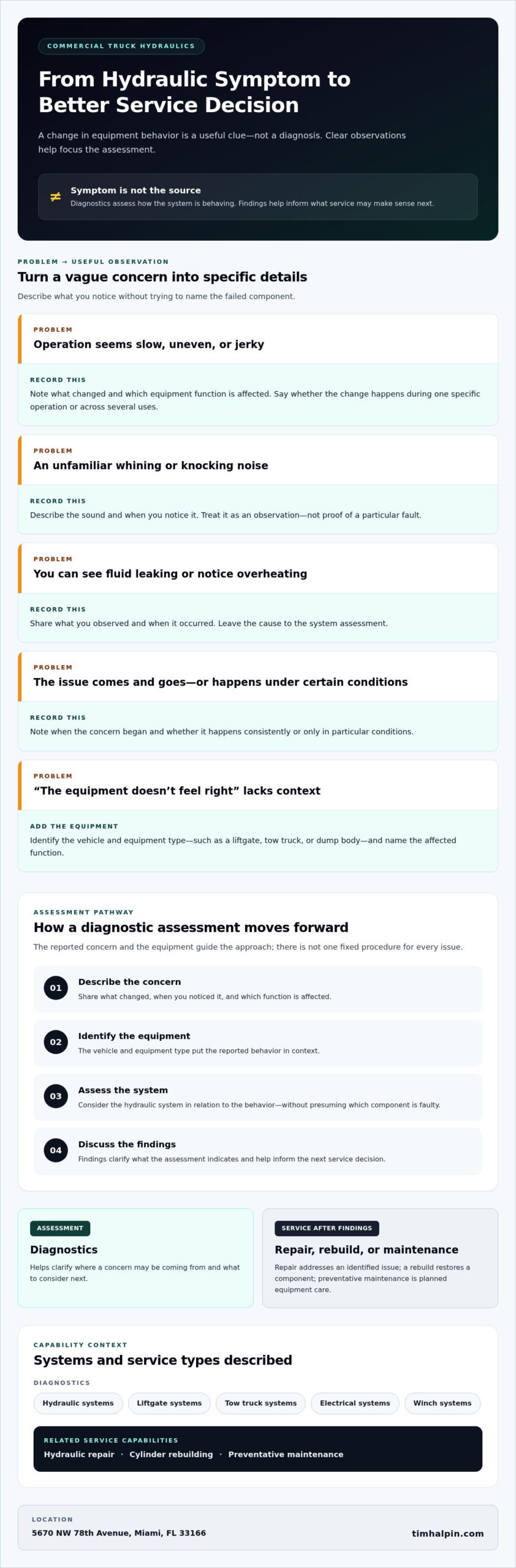
Record what you observe without trying to identify the failed component. Note whether operation seems slow, uneven, or jerky; whether there is an unusual whining or knocking noise; and whether you can see fluid leaking or notice overheating. These signs describe a change, not its cause. Avoid treating one symptom as proof of a particular fault.
Also note when the concern began, whether it happens consistently or only under particular conditions, and which equipment function is affected. For example, record whether the change happens during one specific operation or across several uses. These details give the technician a clearer starting point and help distinguish a specific equipment concern from a general impression that something feels different.
What happens during commercial truck hydraulic system diagnostics?
A diagnostic assessment gives the operator and technician a structured way to move from a reported concern toward an informed service decision. The process starts with what the equipment is doing, not an assumption about which part has failed. The equipment and affected function help shape the assessment, since a liftgate, tow truck, or dump body may present different concerns.
A general sequence looks like this:
- Describe the concern. Share what changed, when you noticed it, and which function is affected. Clear observations provide a practical starting point.
- Identify the equipment. The vehicle and equipment type place the concern in context. The same description can mean something different on different equipment.
- Assess the system. The technician considers the hydraulic system in relation to the reported behavior, rather than presuming a particular component is faulty.
- Discuss the findings. Findings help explain what the assessment indicates and what service direction may make sense next.
This is a general framework, not a promise of one fixed procedure. The reported concern and equipment guide the diagnostic approach. For fleet managers arranging a hydraulic system diagnostic service miami operators can use, understanding this distinction helps set expectations: the assessment aims to clarify the issue, while the next service decision depends on the findings.
How can a technician narrow down a hydraulic concern?
A system-level assessment considers how the hydraulic system relates to the equipment’s reported behavior, rather than treating a symptom as a component diagnosis. Pumps and cylinders are examples of components within hydraulic equipment, but their presence alone doesn’t make either one the source of a concern. Assessment is needed before identifying a failed component. This keeps the conversation grounded in the equipment and its actual condition.
Operators can help by describing the concern consistently and sharing relevant context, rather than arriving with a fixed repair diagnosis. A precise description is useful; a guess about the cause can narrow the conversation too soon.
How do findings inform repair decisions?
Findings connect the assessment to a sensible next step. Depending on what the assessment indicates, hydraulic repair, cylinder rebuilding, or preventative maintenance may be relevant. These are different services, and an assessment does not guarantee that a particular repair will be appropriate or resolve every concern.
Tim Halpin Equipment Corp provides hydraulic repairs, cylinder rebuilds, and preventative maintenance. Connecting diagnostic findings with these service options helps clarify what to consider next without confusing assessment with repair. For a fleet seeking a local point of reference, Tim Halpin’s hydraulic services bring diagnostics and related equipment care into one commercial truck equipment business.
How to evaluate a hydraulic diagnostic service in Miami before choosing
Start with the equipment and the work it performs, rather than broad claims about service. A fleet’s needs may involve a liftgate, tow truck, or another hydraulic system. The relevant service fit connects diagnostics to the equipment concern and offers related repair capabilities. Diagnostics can guide a decision, but they can’t promise a particular repair outcome or establish in advance that a specific component is responsible.
Use these criteria to understand how service scope aligns with commercial truck equipment:
Equipment served: Match the assessment to the equipment in your fleet. Tim Halpin Equipment Corp provides diagnostics for hydraulic systems, liftgates, and tow trucks.
Diagnostics offered: Consider whether the diagnostic scope reflects the reported system concern. Listed categories also include electrical components, power take-off and pump clutch, and winch systems.
Related repairs: Look for a connection between findings and relevant next-step work. Tim Halpin’s related services include hydraulic repairs, cylinder rebuilds, and preventative maintenance.
Parts support: Parts capability can be relevant if a repair is indicated. The company maintains one of the country’s largest replacement-parts inventories for tow trucks, liftgates, box trucks, and service vehicles. That does not mean a specific part is available for every job.
This framework helps fleet buyers distinguish a service that understands the equipment category from one described only in general terms. It also keeps expectations grounded: an assessment informs a repair decision; it does not guarantee a repair result, a particular part, or reduced downtime. For buyers comparing a hydraulic system diagnostic service miami option, relevance to the truck’s actual equipment is the practical measure.
Does the service cover your equipment and related systems?
Consider the full equipment context. A liftgate concern may sit alongside other truck-system needs, while a tow truck’s hydraulic equipment serves a different function. Tim Halpin provides diagnostics for hydraulic systems, liftgates, tow trucks, electrical components, power take-off and pump clutch, and winch systems. Readers focused on liftgate service can explore the Waltco liftgate parts and repair guide for related equipment information.
Can diagnostics connect with relevant repair and parts capabilities?
Reviewing related service areas helps clarify what may follow the assessment. Hydraulic repair, cylinder rebuilding, and preventative maintenance are separate options that findings may help inform, depending on the concern. Tim Halpin Equipment Corp combines these services with commercial truck equipment parts support. That connection gives fleet buyers a clearer path from understanding a concern to considering an appropriate next service, without promising a predetermined outcome.
How to prepare for a hydraulic diagnostic service appointment
A few clear notes can make it easier to explain an equipment concern and give the assessment a useful starting point. Focus on what the truck or equipment is doing, not on diagnosing the cause yourself. For fleet operators arranging a hydraulic system diagnostic service miami appointment, a short written record can keep details consistent when more than one person has observed the issue.
What information should fleet operators gather?
Before arranging service, collect the details that help identify the equipment and describe the concern. Keep the notes concise and factual:
- Vehicle and equipment type: Note the truck type and the equipment involved, such as a liftgate, tow truck, or dump body.
- Affected function: Describe what operation has changed and what you expected the equipment to do.
- Observable symptoms: Record what you noticed, such as unusual noise, uneven movement, or visible fluid. Describe the observation without naming a component as the cause.
- Timing and pattern: Note when the concern began and whether it happens every time, intermittently, or under a particular circumstance, if known.
- Service history: Share relevant maintenance or repair history when available, including prior work related to the equipment or system.
Separate what you observed from what you suspect. For instance, “the function moves unevenly during operation” is more useful than stating that a particular part has failed. If different operators noticed different details, gather their observations instead of forcing them into one explanation. A clear account frames the concern without pre-judging the assessment.
Keep safety in mind while documenting the issue. Don’t put yourself in an unsafe position to inspect equipment or try to reproduce a problem. Share what you can observe safely, and leave the technical assessment to the service process.
What should operators understand after an assessment?
Diagnostic findings explain what the assessment indicates and help inform appropriate next steps for the equipment. They are not automatically a repair plan, and they don’t mean a repair has been completed. A separate discussion can establish whether further work is relevant, such as hydraulic repair, cylinder rebuilding, or preventative maintenance.
For a useful follow-up conversation, ask for the findings to be explained in relation to the reported concern and affected function. This helps fleet decision-makers distinguish what was observed, what the assessment suggests, and what service may be considered next. Findings inform the decision; they don’t promise a particular outcome.
With your equipment details and observations ready, you can contact Tim Halpin Equipment about hydraulic diagnostics and repair and describe the concern in practical terms.
Hydraulic system diagnostic service in Miami from Tim Halpin Equipment
Commercial truck equipment problems can involve more than one system, so describe the affected vehicle, equipment, and function when arranging an assessment. Tim Halpin Equipment Corp provides diagnostics for hydraulic systems, liftgates, tow trucks, electrical components, power take-off and pump clutch, and winch systems. Truck body inspections are also part of the company’s diagnostic capabilities.
Diagnostics help clarify a concern and inform what service may be appropriate next. They don’t guarantee that a particular component is responsible or that a specific repair will resolve the issue. For fleet operators, having diagnostic and related repair capabilities within one commercial truck equipment business makes it easier to discuss findings in the context of the equipment involved.
Which listed services are relevant to commercial truck operators?
Liftgate, tow truck, and hydraulic equipment needs align with Tim Halpin Equipment Corp’s diagnostic categories and related repair work. A concern with a truck body or another system may call for a different diagnostic category, such as electrical or winch systems. Tow truck operators can use the Florida tow truck parts guide for information related to parts and fleet maintenance.
For hydraulic concerns, related work includes hydraulic repairs, cylinder rebuilds, and preventative maintenance. Findings can help inform whether one of these services is relevant, while the assessment remains distinct from the repair itself. This distinction matters when planning the next step: an operator can share the concern, understand what the assessment indicates, and consider service needs based on the equipment and findings.
Tim Halpin Equipment Corp is family-owned and operated, with the tagline “Quality Since 1987.” Its experience and range of commercial truck equipment diagnostics and repairs provide a local point of reference for fleet buyers seeking help with a specific equipment concern.
How can Miami-area operators take the next step?
Before reaching out, note the vehicle and equipment type, the function affected, what you observed, and when the concern occurs. Relevant maintenance or repair history can also help frame the conversation. Keeping the description factual gives the service discussion a clear starting point without requiring you to identify the fault yourself.
Tim Halpin Equipment Corp is located at 5670 NW 78th Avenue, Miami, FL 33166. The business serves commercial truck operators across Miami, Doral, Fort Lauderdale, KeyWest, Medley, Hialeah, Kendall, and South Florida. Business hours are Monday to Friday, 8:00 am to 5:00 pm. Call 305-591-3164 to discuss the equipment concern and hydraulic diagnostics and related service. Share the details you’ve gathered and the function that needs attention to help identify an appropriate next step.
Turn equipment observations into a clearer next step
A recurring equipment concern can reveal a gap in how observations move between drivers, fleet managers, and maintenance staff. A shared record of what happened, which function was affected, and whether the issue returned gives your team a consistent basis for future service decisions. Keep observations separate from assumptions about the cause. This habit can make handoffs clearer and help your team build a useful service history over time. In addition to vehicle maintenance, keeping commercial drivers medically certified through the Miami CDL/DOT Physical Exam Center helps fleet operators maintain overall regulatory compliance and operational readiness.
A hydraulic system diagnostic service miami fleet buyers consider should fit the equipment concern and support an informed discussion about what comes next. You don’t need to arrive with a repair diagnosis. Start with the behavior you’ve noticed and the operational context your team has recorded.
Ready to discuss a commercial truck equipment concern? Talk with Tim Halpin Equipment about hydraulic diagnostics. Share the equipment type, affected function, and symptoms to get the conversation started.
Frequently Asked Questions
How much does hydraulic system diagnostic service cost in Miami?
For a hydraulic system diagnostic service Miami fleets are arranging, the equipment and reported concern shape the pricing discussion. Tim Halpin Equipment offers services at reasonable prices, but that is not a quote for a particular job. To frame the conversation, identify the vehicle and equipment, explain the affected function, and mention any related work already completed. These details clarify the diagnostic need without relying on a generic industry estimate.
How long does hydraulic system diagnosis take?
There isn’t one duration that applies to every commercial truck or hydraulic concern. The equipment and reported issue affect what needs assessment, so don’t assume a turnaround time in advance. Share the equipment type and symptoms when arranging service, and discuss timing for the specific situation. If the vehicle is part of a fleet rotation, mentioning its planned use can help your team consider scheduling without relying on an unsupported time estimate.
What should I do if hydraulic fluid is leaking?
Treat a visible leak as a concern to document, not as proof of a specific failure. Note where it appears, when you first noticed it, and what equipment function was being used. If continuing to operate the equipment seems unsafe, don’t use it. Avoid guessing at the source based on the leak alone. Sharing your observations when requesting an assessment gives the technician useful context without turning a symptom into a diagnosis.
How often should commercial truck hydraulic equipment receive preventative maintenance?
There isn’t a universal maintenance interval for every truck and hydraulic system. Follow the applicable equipment guidance and consider how the vehicle is used, along with its service history. Keeping a maintenance log with completed work and dates can help your team track its equipment care. Tim Halpin Equipment provides preventative maintenance, which can be discussed as planned service, separate from assessing a new operating concern.
What does PTO mean in commercial truck equipment?
PTO stands for power take-off. In commercial equipment, it refers to a system associated with powering equipment from a vehicle. The term describes a system, not a diagnosis: hearing “PTO” doesn’t establish that a particular component has failed. Tim Halpin Equipment provides diagnostics for power take-off and pump clutch systems. If your concern involves PTO, describe the equipment and what operation has changed so the issue can be assessed in context.
Is every hydraulic problem caused by a pump?
No. A hydraulic symptom alone doesn’t establish that a pump is responsible. For example, slower-than-usual movement tells you what changed, but not which component or system is involved. Describe the affected function and the conditions in which you notice the change, rather than requesting a repair based on a guess. An assessment can help inform the next service decision for commercial truck equipment used by Miami and South Florida fleets.
