

Did you know that reactive maintenance can cost your fleet an average of $5,000 to $15,000 more per year than a planned maintenance program? It’s a staggering figure that many fleet managers face when they rely on luck rather than a schedule. You likely know the sinking feeling of a liftgate failing during a mid-day delivery or a tow truck cylinder leaking right when a client needs you most. We understand that these moments are more than just a nuisance; they’re a direct hit to your revenue and your reputation for reliability. Prioritizing preventative maintenance for truck hydraulics is the simplest way to regain control over your fleet’s performance.
By following a strategic hydraulic maintenance program, you can eliminate the stress of sudden failures and ensure your equipment passes every inspection. This guide covers everything you need to know to keep your liftgates and tow trucks running smoothly in 2026. We’ll walk through the essential steps to extend the lifespan of your gear, manage the unique challenges of South Florida’s heat and salt air, and use modern data to stay ahead of mechanical wear before it becomes an emergency.
Key Takeaways
- Transition from reactive repairs to a proactive system that protects your bottom line and keeps your fleet on the road.
- Discover how to implement a consistent program of preventative maintenance for truck hydraulics to ensure your liftgates and tow trucks remain reliable under pressure.
- Understand the specific impact of South Florida’s climate and how to shield your hydraulic components from extreme heat and coastal corrosion.
- Establish a practical maintenance rhythm that balances quick daily inspections with detailed monthly checks of fluid clarity and filter health.
- Learn the value of a local partnership for expert repairs and immediate access to parts for major brands like Waltco, Maxon, and Tommy Gate.
Beyond the Lifting Power: Why Hydraulic Preventative Maintenance is Non-Negotiable
Think of your fleet’s hydraulic systems as the hard-working muscle behind every delivery and recovery. Whether you’re operating a heavy-duty wrecker or a delivery truck with a Waltco liftgate, these systems provide the immense force needed to move thousands of pounds with precision. Understanding how hydraulic systems work is the first step in realizing why they require such meticulous care. Preventative maintenance for truck hydraulics isn’t just about checking boxes on a clipboard. It’s a proactive system of inspection and service designed to catch microscopic issues before they turn into major mechanical failures.
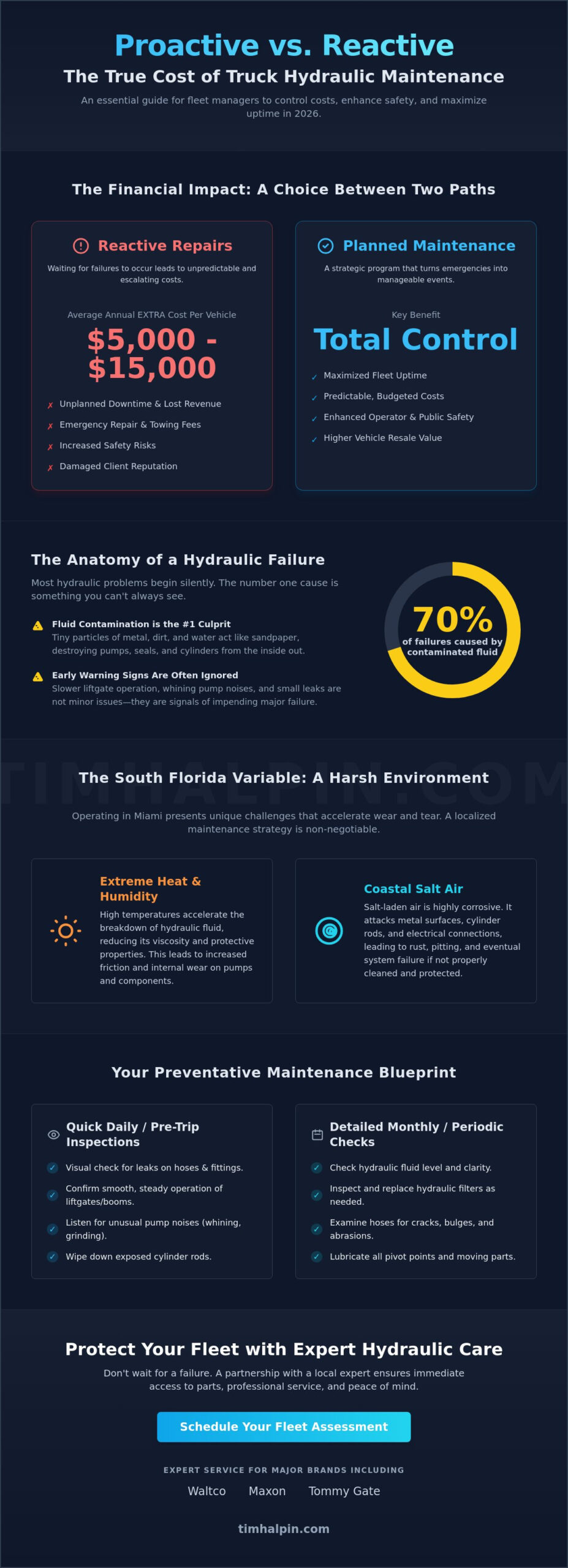
Relying on reactive repairs is a gamble that rarely pays off for a professional fleet. When a pump fails or a hose bursts during a job, you aren’t just paying for the repair. You’re paying for emergency towing, lost driver hours, and the potential loss of a client’s trust. Industry research shows that reactive maintenance can cost between $5,000 and $15,000 more per year than a structured maintenance program. By scheduling fluid changes and inspections, you turn an unpredictable emergency into a manageable, planned event.
Safety remains the most critical reason to stay ahead of repairs. A hydraulic failure during a heavy lift or a vehicle recovery isn’t just expensive; it’s dangerous. Ensuring your boom trucks and liftgates are in peak condition protects your operators and the public. A well-maintained system provides the steady, predictable power required for safe operations on busy South Florida roads. It gives you the confidence that your equipment will perform exactly as expected every time the operator engages the controls.
The Anatomy of a Hydraulic System Failure
Most hydraulic problems start quietly. You might notice a slight whining sound from the pump or a liftgate that moves just a bit slower than it did last month. These are early warning signs of cavitation or internal wear. Small leaks are often ignored, but they lead to massive pressure loss and allow air into the lines. Industry experts note that nearly 70% of hydraulic failures are caused by fluid contamination. Tiny particles of metal or dirt act like sandpaper, scoring cylinder walls and destroying seals from the inside out.
Economic Benefits for South Florida Fleets
Operating in Miami and the surrounding areas presents unique challenges that make periodic investments even more vital. Heat and humidity accelerate fluid breakdown, making routine service essential for a low total cost of ownership. Beyond daily route efficiency, a documented service history significantly boosts the resale value of your commercial vehicles. Buyers want to see that the equipment has been cared for by experts who understand the local environment. Keeping your fleet in top shape ensures you get the most out of your equipment for its entire lifespan.
The Core Components of a High-Performance Hydraulic Maintenance Program
A successful program for preventative maintenance for truck hydraulics begins with a deep respect for the fluid itself. It’s easy to view hydraulic oil as a simple lubricant, but it’s actually a precision-engineered medium of power transfer. When this fluid is clean and at the correct viscosity, your equipment operates with a silent, smooth efficiency. However, when contaminants enter the picture, they act as an abrasive slurry that can destroy expensive pumps and valves from the inside out. Maintaining this “lifeblood” is the most effective way to protect your investment in liftgates and towing equipment.
Filtration systems serve as the primary defense for your hydraulic components. These filters are designed to trap microscopic particles before they can reach the delicate surfaces of cylinder walls or the internal gears of a pump. It’s a common mistake to wait until a filter is visibly clogged to replace it. By then, the bypass valve may have already opened, allowing unfiltered oil to circulate through the system. Consistent filter changes are a small price to pay compared to the cost of replacing a failed hydraulic pump. If you’re noticing a drop in system speed or unusual noise, professional hydraulic repair services can help identify if a compromised filter is the root cause.
Seals and hoses represent the front lines of leak prevention. In a high-pressure environment, even a tiny nick in a hose or a hardened seal can lead to a catastrophic loss of pressure. This is especially true for liftgates from brands like Waltco, Maxon, or Tommy Gate, where the cylinders are often exposed to the elements. Inspecting these components isn’t just about looking for puddles. It’s about feeling for “weeping” at the fittings and looking for the subtle signs of wear that precede a blowout.
Fluid Quality and Viscosity Selection
Choosing the right hydraulic oil is vital for heavy-duty lifting. In our demanding environment, you need a fluid that maintains its thickness even as temperatures rise. If you check your reservoir and find the oil has a dark, tea-like color or a distinct “burnt” odor, it’s a clear sign of oxidation. This chemical breakdown means the oil can no longer protect your parts. You should also keep reservoir levels topped off to prevent cavitation, which occurs when air bubbles implode inside the pump, causing significant internal damage.
Hose and Fitting Integrity
Daily inspections should focus on identifying “weeping” fittings where a small amount of oil gathers at the connection point. For exterior-mounted systems on tow trucks and bucket trucks, check for hose abrasions and UV damage that can make the outer jacket brittle. High-pressure fittings require specific torque settings because improper tension can lead to metal fatigue or seal deformation, eventually causing a high-velocity leak under load. Catching these issues early prevents the environmental mess and safety hazards of a major fluid spill.
The South Florida Variable: How Heat and Salt Air Impact Hydraulic Longevity
Running a fleet in South Florida means dealing with conditions that would make a Northern fleet manager cringe. Our year-round sunshine and coastal breeze are great for the lifestyle, but they’re brutal on machinery. Preventative maintenance for truck hydraulics takes on a whole new meaning when you’re fighting 95-degree days and salt-laden air from the Atlantic. If you don’t account for these variables, your equipment’s lifespan will be cut short by the very environment it works in every day. We’ve seen how quickly the Miami climate can turn a minor oversight into a major repair bill.
Heat is the primary silent killer for hydraulics in our region. High ambient temperatures cause hydraulic fluid to lose its viscosity, leading to rapid oxidation. When fluid oxidizes, it can’t protect internal components, and you’ll notice your pumps working harder just to keep up. Humidity is equally dangerous. It’s common to find water contamination in reservoirs due to condensation during our humid nights. This moisture leads to internal corrosion and reduces the lubricating properties of your oil, often turning it into a milky, ineffective mess that ruins valves and seals.
To combat these local threats, we often recommend the use of specialized coatings or protective boots for liftgate components. These simple additions act as a barrier against the elements, keeping salt and moisture away from sensitive rods and seals. It’s about creating a layer of defense that allows your equipment to thrive despite the tropical conditions.
Managing Operating Temperatures
Overheating is the most common reason for premature seal failure in Florida. Most hydraulic systems are designed to operate optimally between 100 and 120 degrees Fahrenheit. When the temperature climbs higher, seals become brittle and lose their ability to contain pressure. Keeping your oil coolers clean and ensuring adequate airflow around the reservoir is essential. If the system can’t breathe, it can’t shed heat, and that’s when you’ll see a sharp drop in pump efficiency and lifting power. Regular checks of your cooling components are a vital part of preventative maintenance for truck hydraulics.
Combating Coastal Corrosion
Salt air is relentless, especially for fleets operating near the Port of Miami or along the coast. It attacks chrome-plated hydraulic rods, causing pitting that eventually destroys the seals as the rod retracts into the cylinder. Regular lubrication of pivot points and hinges is non-negotiable here. Partnering with a team that understands expert truck hydraulics in Miami ensures your maintenance program includes the specific corrosion-resistant strategies needed for our unique climate. We make sure your equipment stays protected from the beach to the warehouse.
Building Your Hydraulic Maintenance Schedule: From Pre-Trip to Annual Service
Consistency is the foundation of any reliable fleet. While it’s tempting to focus solely on engine oil and tire pressure, establishing a routine for preventative maintenance for truck hydraulics is what keeps your specialized equipment operational. A well-structured schedule transforms maintenance from a series of emergency reactions into a predictable, manageable rhythm. It ensures that your liftgates, booms, and wreckers are ready for the high-demand cycles common on South Florida routes. By breaking your service needs into daily, monthly, and annual tasks, you create a safety net that catches small issues before they escalate into expensive downtime.
Documentation plays a vital role in this process. Keeping a detailed maintenance log allows you to track component wear over time and identify if a specific vehicle is becoming a “problem child” in your fleet. These records are also essential for compliance with Federal Motor Carrier Safety Administration regulations, specifically 49 CFR Part 396, which mandates systematic inspection and maintenance. When you have a clear history of every fluid change and seal replacement, you’re not just maintaining a truck; you’re protecting your business’s reputation and resale value.
Daily and Weekly Inspection Checklist
The daily pre-trip walkaround is five minutes that can save you five hours of roadside trouble. Instruct your operators to look for fresh puddles under the vehicle or oil film gathering on liftgate platforms. They should listen for any unusual “whining” or “chattering” sounds when the system is under load, as these often signal air in the lines or pump cavitation. It’s also important to test control response to see if a boom or liftgate is drifting. If the equipment doesn’t hold its position, it’s time to schedule hydraulic repair services to address potential valve or seal internal leakage.
Quarterly and Annual Service Requirements
As the months go by, your inspections must move beyond the visual. Every quarter, check your filter indicators and replace elements regardless of their appearance to ensure maximum flow. We recommend performing a case drain flow test on your hydraulic pumps annually to measure internal wear and efficiency. This is also the time for a comprehensive fluid replacement and professional lab analysis of the old oil. Sampling helps you understand the health of your system by identifying the specific types of metal shavings or contaminants present, allowing for a surgical approach to repairs. Replacing filters and fluid on a strict schedule is the best way to ensure your preventative maintenance for truck hydraulics remains effective year after year.
Professional Hydraulic Care: Partnering with Tim Halpin Equipment Corp in Miami
Selecting a partner for your fleet’s care is about more than just finding a mechanic. It’s about finding a neighbor who understands the weight of your daily operations and the importance of a handshake. At Tim Halpin Equipment Corp, we’ve spent over 35 years refining our approach to preventative maintenance for truck hydraulics right here in South Florida. We know that every hour your truck sits in a service bay is an hour of lost revenue for your business. Our team isn’t just a group of technicians; we’re specialists who take personal pride in keeping Miami’s commerce moving safely and efficiently.
One of the biggest hurdles in equipment repair is the frustrating wait for backordered parts. We solve this by maintaining a massive inventory of components for the industry’s most trusted brands. Whether you need specific valves, seals, or cylinders, we provide immediate access to parts for Waltco, Maxon, and Tommy Gate systems. This readiness allows us to turn a potential week-long delay into a quick, professional service visit. We understand that for municipal wreckers and commercial delivery fleets, availability is the true measure of a partnership. Our family-owned business, Tim Halpin Equipment Corp, is built on this foundation of accountability and local reliability.
OEM Parts and Expert Installation
Using genuine components is vital for maintaining the integrity and safety of your hydraulic systems. OEM parts are engineered to meet exact pressure and flow specifications, ensuring your manufacturer warranty remains intact and your performance stays consistent. If you’re looking for Waltco liftgate parts in Miami, our facility serves as your local hub for both supply and expert installation. Professional upfitting and repair require a level of precision that only comes with decades of hands-on experience with heavy-duty towing and lifting equipment.
Your South Florida Maintenance Partner
We don’t believe in one-size-fits-all solutions for local businesses. Instead, we work with you to customize maintenance programs that address your fleet’s specific requirements and the tropical environmental challenges we’ve previously discussed. Our reputation in the community is our most valuable asset, and we treat every vehicle as if it were part of our own fleet. We invite you to visit our Miami facility for a comprehensive system health check and to see the Tim Halpin legacy in action. Let’s work together to ensure your preventative maintenance for truck hydraulics keeps your business moving forward for years to come.
Secure Your Fleet’s Reliability for the Road Ahead
Managing a fleet in 2026 requires more than just keeping up with the daily grind; it’s about making smart investments in longevity. We’ve explored how a dedicated program for preventative maintenance for truck hydraulics can transform your operations from a cycle of emergency repairs into a predictable model of efficiency. By focusing on fluid quality and staying ahead of South Florida’s relentless heat and salt air, you ensure your equipment stays on the job rather than on the sidelines.
At Tim Halpin Equipment Corp, we’ve been a proud part of the Miami community since 1987. As a family-owned business, we value the trust you place in us to keep your business moving. We maintain one of the largest liftgate parts inventories in the country and serve as an authorized dealer for industry leaders like Waltco, Maxon, and Miller Industries. Our goal is to provide the steady, expert guidance you need to reduce stress and maximize your revenue.
Don’t wait for a system failure to take action. Schedule your professional hydraulic maintenance at our Miami facility today! We look forward to being your partner in building a more reliable and profitable fleet.
Frequently Asked Questions
How often should I change the hydraulic fluid in my truck?
You should typically change your hydraulic fluid every 1,000 hours of operation or at least once a year. In our humid Miami climate, it’s often safer to stick to the annual schedule regardless of hours to prevent moisture buildup. This routine is a cornerstone of preventative maintenance for truck hydraulics. Regular changes ensure that additives remain effective and that your system stays free of the sludge that ruins pumps.
What are the signs that my hydraulic pump is starting to fail?
Unusual noises like high-pitched whining or metallic knocking are the most common indicators of a pump beginning to fail. You might also notice the system running much hotter than normal or the liftgate moving with jerky, erratic motions. These symptoms often point to cavitation or internal wear. Catching these signs early prevents a total system seizure that could leave your vehicle stranded mid-delivery.
Can I mix different types of hydraulic fluid in an emergency?
It is best to avoid mixing different types of hydraulic fluid because incompatible additive packages can cause chemical reactions. These reactions often lead to foaming, reduced lubrication, or even the hardening of your system’s seals. If you must add fluid in an absolute emergency, ensure it meets the same ISO viscosity grade. Always flush the system and refill with a single, consistent fluid as soon as possible.
Why is my liftgate moving slower than usual in hot weather?
Extreme heat causes hydraulic fluid to thin out, which reduces its ability to transmit power efficiently through the pump. When the oil loses its viscosity in the South Florida sun, internal leakage increases within the valves and cylinders. This results in the sluggish performance you’re seeing. Keeping your oil coolers clean and using a high-viscosity index fluid can help maintain consistent liftgate speeds during our hottest months.
How do I identify a hydraulic leak if I don’t see a puddle?
You can often find hidden leaks by looking for areas where road grime and dust have heavily accumulated on hoses or fittings. Hydraulic oil is naturally tacky, so it attracts dirt long before a puddle forms on the ground. Check the cylinder rods for a thin film of oil and monitor your reservoir levels weekly. A consistent drop in fluid level always indicates a leak that needs professional attention.
Is it necessary to replace hydraulic hoses even if they don’t look worn?
Yes, hoses should be replaced every few years because they deteriorate internally due to heat and pressure cycles. While the outer jacket might look fine, the inner liner can crack and send rubber particles into your valves. Most manufacturers suggest a five-year replacement cycle for high-pressure hoses. Proactive replacement is much cheaper than cleaning a contaminated system after a hose finally bursts under a heavy load.
What is the benefit of synthetic hydraulic fluid for South Florida trucks?
Synthetic fluid provides superior thermal stability, which is vital for preventative maintenance for truck hydraulics operating in tropical climates. It doesn’t break down as quickly as conventional oil when temperatures spike, helping your pumps run cooler and last longer. While the initial cost is higher, the extended drain intervals and improved component protection offer a much better value for local fleet managers over the long term.
How can I prevent salt-air corrosion on my hydraulic cylinders?
Applying a high-quality corrosion inhibitor and using protective rod boots are the most effective ways to shield cylinders from salt air. You should also make it a habit to wash the undercarriage and liftgate assembly regularly to remove salt deposits. Keeping pivot points well-greased creates a physical barrier that moisture can’t easily penetrate. These simple steps are essential for any truck working near the coast or the Port of Miami.
