
The best upfit decision isn’t made by comparing equipment lists alone. The most useful questions to ask a commercial upfitter clarify what your work demands, which equipment fits the vehicle, what installation involves, and how the project will be managed. Clear answers help define the scope before work begins.
It’s reasonable to want confidence that the finished vehicle will suit the job, not just look right on paper. A focused conversation brings practical details into view early, including how equipment choices support daily tasks and what needs to be settled before installation.
This guide covers questions about your work requirements, equipment and vehicle fit, installation planning, project communication, and support after the work is complete. Use them to explain your priorities, compare answers, and move forward with a clearer picture of the project.
Key Takeaways
- Describe the work the vehicle needs to handle so equipment choices start with practical job requirements.
- Discuss vehicle fit and installation details to clarify the project scope before work begins.
- Ask how the upfit plan and project communication will be organized, so expectations are clear along the way.
- Consider how ongoing vehicle needs may affect your equipment and repair priorities.
- Tim Halpin Equipment offers truck, liftgate, trailer, and hydraulic repair when repair needs are part of the picture.
Questions to ask a commercial upfitter
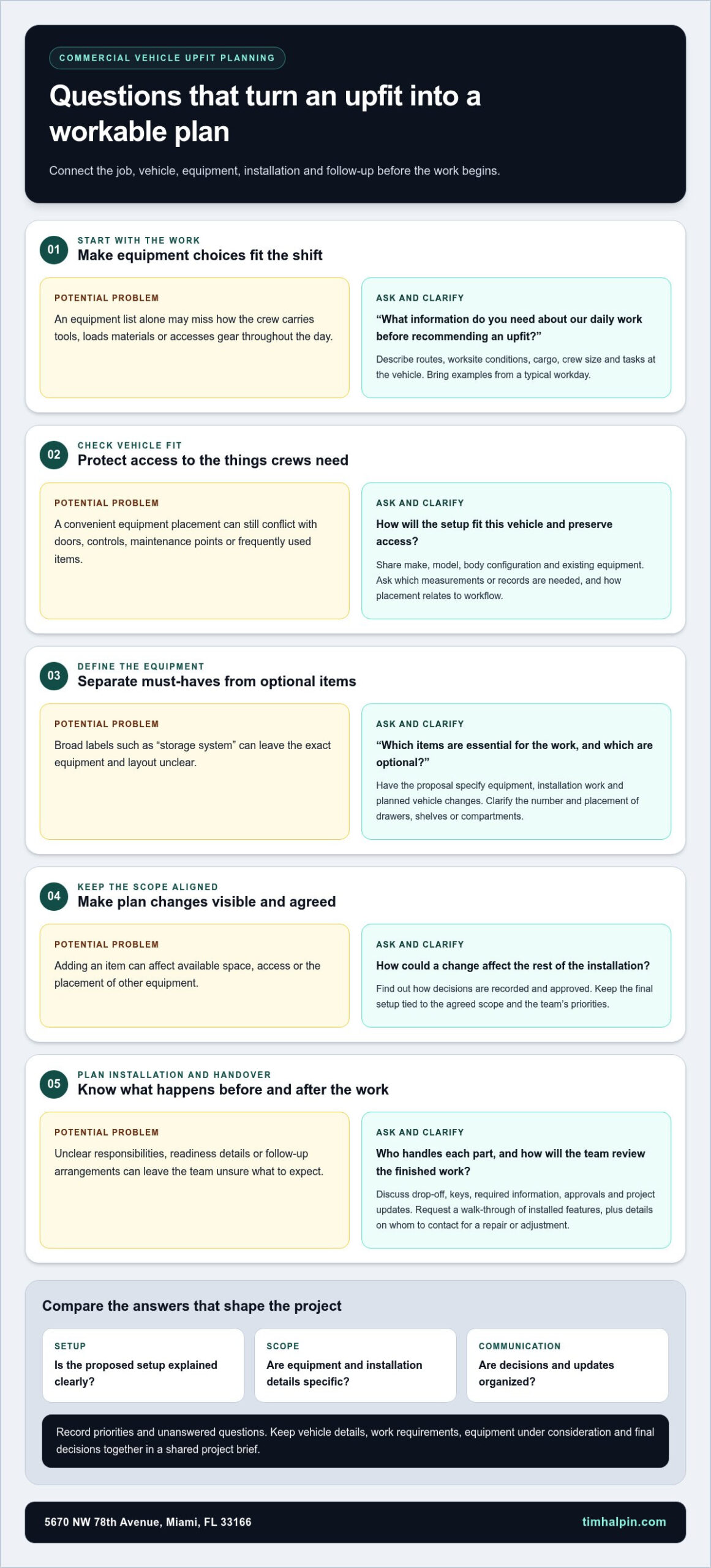
Start by describing the work the vehicle must do during a typical shift. The questions to ask a commercial upfitter should connect each equipment choice to a real task, such as carrying tools, loading freight, or responding to roadside calls. Bring examples from a normal workday, including what employees carry and where they need access.
Start with the job and the vehicle
Ask, “What information do you need about our daily work before recommending an upfit?” Explain the route, worksite conditions, cargo, crew size, and tasks performed at the vehicle. A service crew retrieving tools throughout the day has different access needs from a crew that loads materials once and drives between locations.
Then ask how the proposed setup will fit the vehicle’s make, model, body configuration, and existing equipment. Share the vehicle details and identify anything already installed, such as shelving or a liftgate. Ask which measurements or vehicle records are needed to plan the layout, and how the installer will preserve access to doors, controls, and maintenance points.
A toolbox placed for convenient access should still leave the crew room to open required doors and reach frequently used items. Ask the upfitter to explain its placement in relation to your workflow. A clear explanation can reveal practical conflicts before the layout is finalized.
Clarify equipment choices and project scope
Ask, “Which items are essential for the work, and which are optional?” Separating must-haves from possible later additions keeps the discussion focused. For a utility crew, that might mean prioritizing secure tool storage and clear access to frequently used equipment before considering less essential accessories.
Next, ask what the proposed scope includes. Have the upfitter describe the equipment, installation work, and any planned vehicle changes in plain language. If a proposal uses broad terms such as “storage system,” ask what that means for your vehicle, including the number and placement of drawers, shelves, or compartments.
Ask how a change to the plan could affect the rest of the installation. Adding a compartment can alter access, available space, or the placement of another item. Find out how decisions are recorded and approved so your team can keep the final setup aligned with the agreed scope.
Understand the installation plan
Ask who will handle each part of the installation and what must be ready before work starts. Discuss vehicle drop-off, keys, equipment, and any information the installer needs from your team. If the vehicle is part of a fleet, identify who can approve changes and who should receive project updates.
Ask how your team will review the completed work. The handover should leave the driver knowing how to use the installed equipment and where to raise concerns. Request a walk-through of relevant features, such as opening storage compartments or operating installed equipment.
Finish by asking what support is available if a repair or adjustment is needed. Clarify whom to contact, what details will help describe an issue, and whether to keep vehicle or installation records. Noting which compartment or piece of equipment needs attention makes follow-up more specific.
Before choosing, compare how clearly each upfitter explains the proposed setup, installation scope, and communication process. Record your priorities, note unanswered questions, and make sure the final plan reflects the work your team actually performs.
Tim Halpin Equipment: Truck Repair
Tim Halpin Equipment Corp. provides truck repair for work vehicles that need attention before returning to daily duties. If an inspection or routine use reveals a mechanical issue, repair can help you plan the vehicle’s next steps with a clearer understanding of its condition.
For equipment-related concerns, Tim Halpin Equipment Corp. also handles liftgate, trailer, and hydraulic repair. If a liftgate or hydraulic system isn’t operating as expected, describe the symptoms and how the vehicle is used. Specific details help focus the repair discussion on the affected equipment and its role in your operation.
Keep notes about what you observed, when it occurs, and which equipment is involved. Contact Tim Halpin Equipment Corp. to discuss your repair needs.
Turn Your Project Notes Into a Clear Next Step
Before moving ahead, turn your priorities into a short project brief for your team. Record the vehicle details, the work it needs to support, the equipment you’re considering, and the questions that still affect your decision. This gives everyone a shared reference, especially when drivers, managers, and maintenance staff have different day-to-day concerns.
Keep the brief alongside the final project decisions. If your needs change later, it can help explain what changed and why. The questions to ask a commercial upfitter are most useful when they lead to a plan your team understands and can revisit as the vehicle’s role evolves.
For repair needs connected with your work vehicles or equipment, Tim Halpin Equipment Corp. can be part of your next step. Contact Tim Halpin Equipment Corp. to discuss what your operation needs. A clear conversation can help you decide how to move forward with confidence.
