
A sluggish lift, a leak, or an unusual noise can have more than one possible cause. When hydraulic symptoms are unclear, it can be difficult to tell whether the issue is in the hydraulic system or another part of the equipment, and downtime can disrupt fleet work.
If you’re searching for servicio de diagnóstico de sistemas hidráulicos en miami, Tim Halpin Equipment Corp provides diagnostics for commercial truck equipment, including hydraulic systems. The team also diagnoses related equipment and components, such as liftgates, electrical components, power take-off and pump clutch systems, and winch systems. Tim Halpin Equipment Corp is family-owned and has served the industry since 1987, at 5670 NW 78th Avenue, Miami, FL 33166.
This guide explains what hydraulic diagnostics can help assess, what equipment details and symptom notes to prepare before a service visit, and how diagnostics relate to repair and maintenance. Whether your fleet operates in Miami, Doral, Fort Lauderdale, Key West, Medley, Hialeah, Kendall, or elsewhere in South Florida, clear information about the equipment’s behavior can help start a focused service conversation.
Key Takeaways
- Hydraulic symptoms can interrupt commercial vehicle work; diagnostics help assess the issue before repair decisions are made.
- Tim Halpin Equipment diagnoses hydraulic systems, liftgates, tow trucks, electrical components, power take-off and pump clutch systems, and winch systems.
- Diagnostics, repairs, and preventative maintenance serve different purposes when addressing equipment concerns.
- Before a service visit, note the equipment type, the symptoms, and when the issue occurs.
- Learn how diagnostics connect with repair, installation, and replacement-parts support.
When Miami commercial trucks need hydraulic system diagnostics
A hydraulic symptom can interrupt a commercial truck’s work before its source is clear. A liftgate that moves unevenly, a dump body that responds differently than usual, or a winch that doesn’t operate as expected may need assessment. The symptom matters, but it doesn’t identify which component or system is responsible.
Hydraulic system diagnostics assess an equipment concern to help identify and evaluate the issue before repair decisions are made. For fleet operators, that distinction is useful: noticing a change is the first step, while a diagnostic assessment helps guide what to address next. Tim Halpin Equipment provides hydraulic system diagnostics in Miami for commercial vehicle equipment.
What symptoms should prompt a diagnostic assessment?
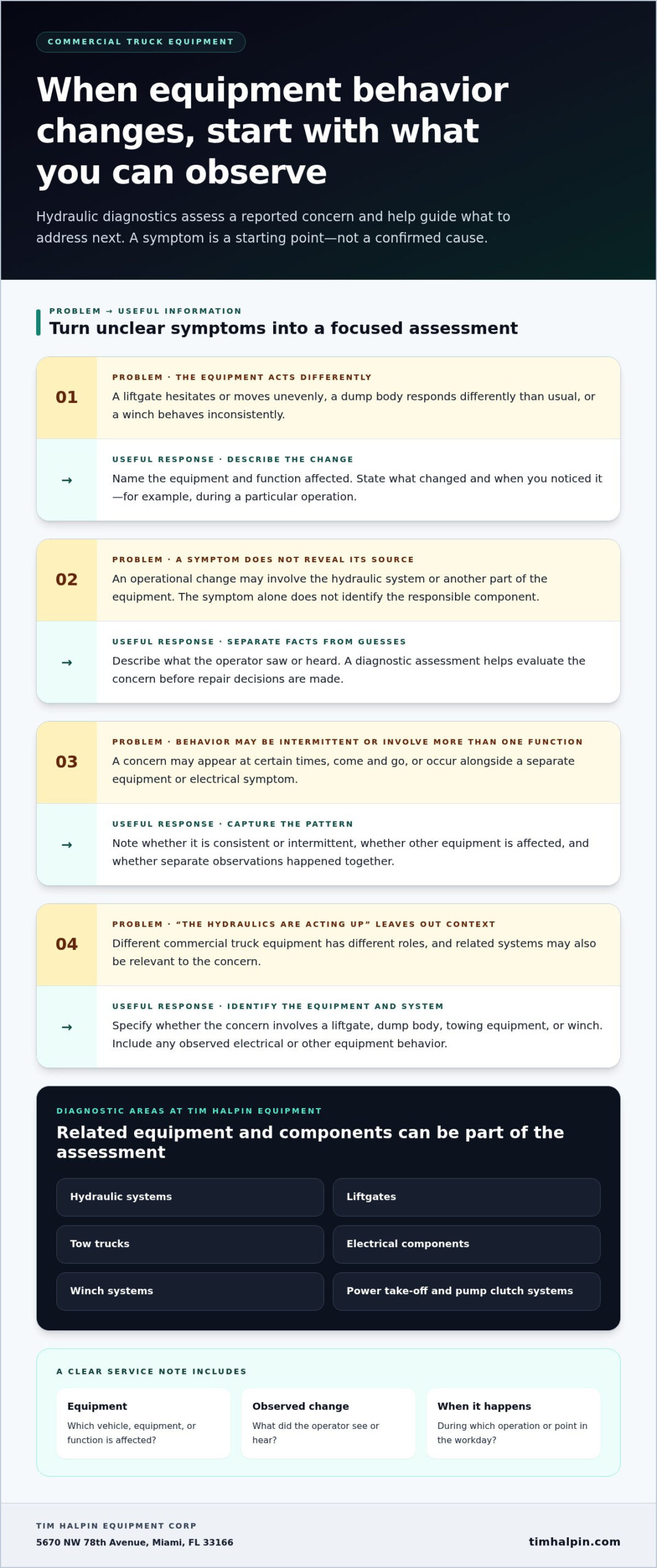
Pay attention to changes from the equipment’s usual operation. A liftgate may hesitate or move unevenly; a dump body may respond differently than expected; towing equipment or a winch may behave inconsistently. These observations don’t establish a cause. Record which equipment is affected, what changed, and when you notice it, such as during a particular operation or at different points in the workday.
Other useful details include whether the symptom is consistent or intermittent and whether more than one piece of equipment is affected. Keep notes factual: describe what the operator saw or heard rather than guessing at a failed part. This gives the service team a clear starting point for assessing the concern and separates observed behavior from assumptions about its source.
Which commercial vehicle equipment can involve hydraulics?
Hydraulic concerns can arise across different types of commercial truck equipment. Examples include liftgates, dump bodies, towing equipment, and winch systems. Each has a different role in daily fleet work, so noting the specific equipment and operation affected is more helpful than reporting only that “the hydraulics are acting up.”
A symptom alone doesn’t identify its root cause. Equipment behavior can point to a concern worth investigating, but an assessment is needed before deciding what repair may be appropriate. For a foundational overview of how a hydraulic system works, see Wikipedia’s explanation of its components and operating principles. Operators can also refer to the existing guide to expert truck hydraulics in Miami for more context on truck-specific equipment.
Make the next service conversation more productive by noting whether the issue involves a liftgate, dump body, towing equipment, or winch. Describe the change in operation and when it occurs. Those observations help frame the diagnostic assessment without treating a visible symptom as a confirmed diagnosis.
What hydraulic diagnostics at Tim Halpin Equipment can cover
A diagnostic assessment helps frame an equipment concern before repair work is considered. At Tim Halpin Equipment, diagnostics and repairs are related services with different purposes: diagnostics assess the reported issue, while repairs address work that may be needed afterward. This distinction helps fleet operators describe what’s happening without assuming the cause or deciding in advance which part needs attention.
Diagnostic areas include:
- Hydraulic systems
- Liftgates
- Tow trucks
- Electrical components
- Winch systems
- Power take-off and pump clutch systems
Tim Halpin Equipment provides diagnostics for hydraulic systems, liftgates, tow trucks, electrical components, winch systems, and power take-off and pump clutch systems.
Hydraulic and equipment diagnostics for commercial trucks
Hydraulic concerns can relate to the equipment that supports a truck’s daily work, including liftgates, towing equipment, and dump bodies. The equipment type helps frame the assessment: a concern reported on a liftgate calls for a different service conversation than one involving towing equipment. Describing the vehicle and equipment involved gives the diagnostic process useful context without presuming a specific fault.
That wider view matters because commercial trucks can have several connected systems and working components. Hydraulic repair is one part of Tim Halpin Equipment’s commercial vehicle support, alongside assessment of related equipment. For general fluid-power background, the National Fluid Power Association (NFPA) offers industry resources. Operators can also explore Tim Halpin Equipment’s hydraulic services as they consider the next step for their equipment.
When more than one system may be involved
Not every concern that appears during equipment operation points to hydraulics alone. Electrical components and power take-off and pump clutch systems are also diagnostic categories at Tim Halpin Equipment, as are tow truck and winch systems. Describe all the behaviors noticed, even if one seems to suggest a particular cause. Reporting the complete picture helps keep the assessment focused on the equipment and symptoms involved.
For example, if an operator reports a change during a specific task and also notices a separate electrical symptom, both details are useful. State what the equipment did, which system or function was affected, and whether the observations occurred together. You can share a suspected cause as a suspicion, but keep it distinct from observed facts. That is a practical starting point for a servicio de diagnóstico de sistemas hidráulicos en miami: clear details about the truck equipment and the concern being assessed.
Hydraulic diagnostics, repairs, and maintenance: how they differ
These terms describe different purposes, even though they can relate to the same equipment concern. Diagnostics focus on understanding and assessing a reported issue. Repair work addresses a problem through services such as hydraulic repairs or cylinder rebuilds. Preventative maintenance is planned attention to equipment intended to help manage wear and upkeep, rather than an assessment of a specific symptom.
Diagnostics: Identify and assess a reported equipment issue.
Repairs: Address equipment concerns through work such as hydraulic repairs or cylinder rebuilds.
Preventative maintenance: Planned upkeep intended to monitor equipment condition and address maintenance needs.
Keeping the categories distinct helps fleet operators describe what they need without assuming an assessment automatically leads to a particular repair. For fleets seeking hydraulic diagnostics in Miami, diagnostics are the assessment stage; the findings inform consideration of an appropriate next service step.
What diagnostics answer before repair work begins
Diagnostics are intended to clarify the reported equipment problem: what function is affected, how the concern presents itself, and what needs to be assessed. They’re separate from repair work. An operator can share observations and equipment details, then use the assessment to understand the concern more clearly. The assessment provides a more informed basis for discussing possible service needs.
That distinction is reflected in training materials as well. The Australian government’s training.gov.au outlines competencies for workers who diagnose and repair hydraulic systems, treating fault identification and repair as related but distinct capabilities. For a fleet, the practical point is straightforward: assessment helps frame the issue, while repair work is a separate service consideration.
How repairs and preventative maintenance fit afterward
If an assessment identifies a repair need, hydraulic repairs or a cylinder rebuild may be relevant service options. The specific work depends on the equipment concern and what the assessment indicates. Findings help inform the next service conversation.
Preventative maintenance has a different role. Rather than responding only to a reported fault, it concerns planned upkeep and attention to equipment condition. Keeping records of observed changes and previous service can help operators discuss maintenance needs alongside an active repair concern. It’s also useful to separate a current symptom from routine upkeep, so both can be considered without conflating them.
Tim Halpin Equipment provides hydraulic repairs and cylinder rebuilds for commercial vehicle equipment. Understanding whether the immediate need is assessment, repair, or planned upkeep gives fleet teams a clearer way to discuss equipment concerns and decide on a practical next step.
How to prepare for hydraulic diagnostics in Miami
A clear description of the equipment concern gives the diagnostic conversation a useful starting point. You don’t need to identify the technical cause. Focus on what the vehicle or equipment is doing, what has changed, and when you noticed it. For fleet operators arranging a servicio de diagnóstico de sistemas hidráulicos en miami, a few straightforward notes can keep the discussion grounded in observable facts.
Before speaking with the service team, organize the details in this order:
- Identify the equipment. Note the commercial vehicle type and the equipment involved, such as a liftgate, dump body, towing equipment, or winch.
- Name the affected function. Describe which part or operation seems different, using plain language rather than a suspected diagnosis.
- Describe the symptom. Record what you observed, such as a change in movement or response, without guessing which component caused it.
- Note when it happens. Include the task or operating situation where the symptom appears, and whether you’ve noticed it once or on multiple occasions.
Information to have ready about the vehicle or equipment
Keep your notes specific enough to distinguish the affected equipment from other fleet assets. For example, identify whether the concern involves a truck’s liftgate or towing equipment, then explain what changed during operation. If you don’t know the technical name for a component, describe where it is and what it does. Accurate observations are more useful than a confident-sounding guess.
If more than one function or piece of equipment is involved, include each observation separately. You can note when details are uncertain; the goal is to report what the operator noticed, not to diagnose the fault in advance.
Plan a local service conversation
Tim Halpin Equipment is located at 5670 NW 78th Avenue, Miami, FL 33166. The business is open Monday to Friday, 8:00 am to 5:00 pm, and can be reached at 305-591-3164. Having your equipment notes ready makes it easier to explain the concern during a call or when planning a visit.
Keep the conversation focused on the vehicle or equipment, the affected function, the observed change, and when it occurs. Share relevant context, but separate firsthand observations from assumptions about the cause. That sets a clear starting point for discussing diagnostic needs and possible next steps.
Once you’ve gathered those details, discuss your hydraulic diagnostic needs with Tim Halpin Equipment. A concise account of what the equipment is doing can help begin a practical service conversation for your Miami-area fleet.
Hydraulic system diagnostics in Miami with Tim Halpin Equipment
Commercial vehicle equipment rarely works in isolation. A hydraulic concern affecting a liftgate, towing setup, or winch may call for an assessment that considers the equipment and its role on the truck. Tim Halpin Equipment is a family-owned commercial vehicle service business operating since 1987, with diagnostics, repairs, installations, and replacement parts supporting fleet equipment needs in Miami and South Florida.
A broad service scope for commercial vehicle equipment
Diagnostic service covers hydraulic systems, liftgates, tow trucks, and winch systems, along with electrical components and power take-off and pump clutch systems. This range helps operators describe the equipment involved without needing to settle on a suspected cause before an assessment. For liftgate concerns, the affected function and how it behaves can help focus the service conversation; operators can also consult the existing guide to Waltco liftgate parts in Miami for related parts information.
Diagnostics and repair work are connected, but they have different purposes. An assessment evaluates the reported concern; repair services address work that may be needed. Tim Halpin Equipment provides hydraulic repairs and cylinder rebuilds, as well as installation services for commercial vehicle equipment. The business also maintains one of the country’s largest inventories of replacement parts for tow trucks, liftgates, box trucks, and service vehicles.
This range of support can be useful for fleets managing different kinds of truck equipment. A liftgate, towing system, or hydraulic component may need attention as part of a broader commercial vehicle service need. With diagnostics, repairs, installations, and replacement parts, operators can discuss the equipment concern and consider an appropriate next service step.
Contact Tim Halpin Equipment in Miami
Tim Halpin Equipment is located at 5670 NW 78th Avenue, Miami, FL 33166. The team can be reached at 305-591-3164, Monday to Friday, 8:00 am to 5:00 pm. When you call, share the equipment type and a clear description of what you’ve observed to start a focused conversation about diagnostic needs.
If your fleet operates in Miami, Doral, Fort Lauderdale, Key West, Medley, Hialeah, Kendall, or elsewhere in South Florida and has a hydraulic concern, contact the service team to discuss the equipment and symptoms. A straightforward conversation is a useful next step toward understanding what assessment or repair service may be appropriate for your commercial vehicle.
Make your next equipment decision with clarity
A change in equipment behavior can leave fleet teams weighing several possible next steps. Keep the operator’s observations together with the equipment details, then use that information to guide a focused service conversation. You don’t need to arrive with a technical diagnosis. Clear facts about what the equipment is doing can help frame the discussion.
For fleets considering a servicio de diagnóstico de sistemas hidráulicos en miami, the next step can be a conversation about the affected vehicle equipment and the symptoms you’ve recorded. Tim Halpin Equipment brings diagnostics together with commercial vehicle support, so the discussion can center on your equipment concern and the service it may call for.
Talk with Tim Halpin Equipment about hydraulic diagnostics and share what your operators have observed. Start a focused conversation about the next step for your fleet.
Frequently Asked Questions
What does hydraulic system diagnostics include for a commercial truck?
The servicio de diagnóstico de sistemas hidráulicos en miami can assess hydraulic systems, liftgates, tow trucks, electrical components, power take-off and pump clutch systems, and winch systems. The relevant area depends on the equipment concern you report. For example, a truck operator can describe a change in a liftgate’s operation without deciding whether the cause is hydraulic or electrical. The assessment helps clarify the reported issue and inform a next service step.
Can hydraulic diagnostics identify whether a truck problem is electrical or hydraulic?
Tim Halpin Equipment provides diagnostics for both hydraulic systems and electrical components, so either may be part of an assessment. Describe the equipment function affected and any other changes the operator noticed, particularly if symptoms occur together. That context helps frame the assessment, but symptoms alone don’t establish a diagnosis. The equipment needs to be assessed to determine the source of a specific problem.
How long does hydraulic system diagnostics take?
The time required depends on the equipment and the concern being assessed, so there isn’t a fixed duration to rely on. A liftgate concern and a winch-system concern may involve different equipment details. Make the service conversation more useful by noting what’s affected, what changed, and when it happens. Tim Halpin Equipment’s business hours are Monday to Friday, 8:00 am to 5:00 pm.
What information should I provide about a hydraulic problem?
Share the commercial vehicle or equipment type, the component or function involved, and what changed during operation. For instance, explain whether a liftgate behaves differently while raising or lowering, if that’s what the operator observed. Include when the symptom occurs and whether it has happened more than once, if known. Keep firsthand observations separate from guesses about the cause, so the service team receives useful context rather than an assumed diagnosis.
Does Tim Halpin Equipment repair hydraulic systems after diagnostics?
Yes. Tim Halpin Equipment provides hydraulic repairs and cylinder rebuilds, and also offers preventative maintenance. These services address different needs: diagnostics assess a reported concern, while repairs and maintenance address service requirements. For example, a fleet may discuss a cylinder rebuild if the assessment indicates related repair work is needed. The specific service depends on the equipment concern.
Where can I find hydraulic diagnostics in Miami?
Tim Halpin Equipment is located at 5670 NW 78th Avenue, Miami, FL 33166. Call 305-591-3164 during business hours, Monday to Friday, 8:00 am to 5:00 pm. Before calling, have the vehicle type and a short description of the issue at hand. That gives the team a practical starting point for discussing the commercial equipment and diagnostic concern.
Does Tim Halpin Equipment diagnose liftgate hydraulic issues?
Yes. Tim Halpin Equipment provides diagnostics for liftgates and hydraulic systems, along with liftgate repairs and preventative maintenance. A change in liftgate operation doesn’t, by itself, reveal the cause, so describe the affected function and what the operator noticed. If the concern also involves a Waltco liftgate, the Miami guide to Waltco liftgate parts may provide related parts context alongside the diagnostic discussion.
