

The brighter-looking option isn’t always the better fit for your vehicle. With soundoff signal nforce vs mpower, start by identifying where each light will be mounted and what kind of visibility that position needs.
It’s easy to assume the two SoundOff Signal families are interchangeable, especially when product names don’t make their installation roles obvious. They aren’t simply two versions of the same solution. nFORCE uses reflective optics designed to support visibility from different angles, while mPower uses silicone optics suited to a more focused beam. The right choice depends on the vehicle, mounting location, warning needs, and the rest of the lighting and electrical setup.
This guide compares the typical role of each family and practical factors to consider, from vehicle layout to electrical integration. It also explains when a combined configuration may make sense for a fleet that needs both forward-facing reach and broader perimeter coverage. Tim Halpin Equipment Corp sells SoundOff Signal public-safety lighting and provides commercial upfitting in Miami and South Florida, bringing product selection and professional installation into the same vehicle plan.
Key Takeaways
- Choose lighting by its intended position and role on the vehicle, not by product name alone.
- The soundoff signal nforce vs mpower comparison helps you weigh broad visibility against a more focused lighting role.
- Assess vehicle layout, operating environment, and required lighting positions before settling on a configuration.
- Plan mounting surfaces, electrical capacity, and controls together so the lighting works as part of the complete vehicle setup.
- For fleets, standardize lighting roles where vehicle layouts allow, and coordinate different formats when positions have different needs.
SoundOff Signal nFORCE vs. mPower: Why the Product Roles Matter
Which product fits the intended lighting position and the vehicle’s role? That’s the useful starting point for comparing SoundOff Signal nFORCE and mPower. They’re distinct product families, and the right fit depends on where light is needed, how the vehicle operates, and what the complete warning-light layout must accomplish.
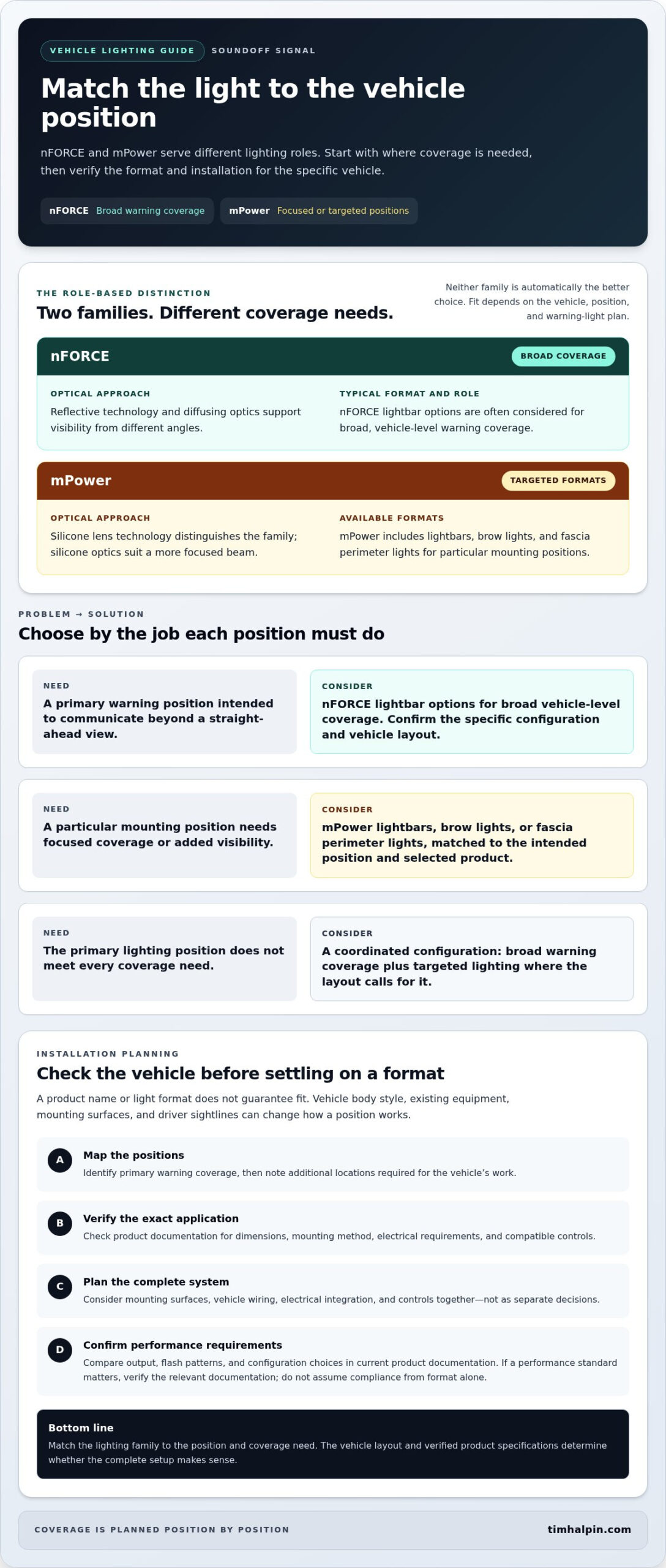
In brief: nFORCE is typically suited to broad, vehicle-level warning coverage, while mPower offers formats for focused or targeted mounting positions. This is a role-based distinction, not a rule that one family is always better. SoundOff Signal’s current product range includes nFORCE lightbar options and mPower lightbars, brow lights, and fascia perimeter lights. Exact formats and capabilities depend on the selected configuration.
Lighting placement shapes how a warning system communicates with surrounding traffic. For an overview of the purpose and placement of emergency vehicle lighting, consider how different positions can address different visibility needs. This helps frame the soundoff signal nforce vs mpower decision as part of a vehicle-wide plan, rather than simply a choice between product names.
What does nFORCE typically do in a vehicle lighting setup?
nFORCE is often considered for broad warning coverage, including lightbar applications. SoundOff Signal describes its optical design as using reflective technology and diffusing optics to support visibility from different angles. That can make it a candidate for a primary warning-light position when the goal is to communicate across more than a straight-ahead view, such as around intersections. The appropriate role still depends on the specific nFORCE configuration and vehicle layout.
Where does mPower fit compared with nFORCE?
mPower spans several formats, including lightbars, brow lights, and fascia perimeter lights. Its silicone lens technology distinguishes the family, while its range of formats gives planners options for particular mounting positions. A targeted mPower light may complement a broader warning layout by adding coverage where the primary lighting position doesn’t meet the full plan. The exact role depends on the selected product, mounting location, and vehicle.
Think of the families as potential parts of a coordinated system, not automatic substitutes. A vehicle may call for one primary lighting format or a combination of positions to address different visibility needs. Matching the configuration to the vehicle also means considering mounting surfaces and electrical integration as part of the overall upfit.
How nFORCE and mPower Differ in Format, Placement, and Use
A product name or light format won’t tell you by itself whether a setup suits your vehicle. For soundoff signal nforce vs mpower, compare the intended lighting position first, then assess the specific product configuration and installation requirements. SoundOff Signal’s current product descriptions include nFORCE lightbar options and mPower lightbars, brow lights, and fascia perimeter lights.
| Family and format | Typical role | Potential mounting position | Planning considerations |
|---|---|---|---|
| nFORCE lightbar options | Broad vehicle-level warning coverage | Lightbar position, depending on the selected model and vehicle | Review vehicle roof layout, sightlines, mounting method, and electrical requirements. |
| mPower lightbars, brow lights, and fascia perimeter lights | Lightbar coverage or targeted lighting at particular positions | Position depends on the format and its approved application | Match the format to available mounting surfaces, intended coverage, and system integration needs. |
These are typical product roles, not a guaranteed fit for every vehicle. Body style, existing equipment, and the driver’s sightlines can affect whether a position works as planned. For example, evaluate a fascia format against the specific fascia area and product configuration rather than assuming it fits any grille or front-end location.
Compare the lighting position before comparing specifications
Map the vehicle’s lighting needs by position. First identify the primary warning coverage, then note any additional locations needed for the vehicle’s work. Review the available product documentation for the exact mounting application. A cab, roof, or perimeter position may have different space and sightline constraints, so base the plan on the vehicle layout rather than a generic placement formula.
Which technical details should buyers compare?
For each exact configuration, compare manufacturer-listed dimensions, mounting method, electrical requirements, and compatible controls. Check output, flash patterns, and configuration choices in current product documentation instead of inferring them from the family name. If a particular performance standard matters to the fleet, consult the applicable SAE International standards and verify the relevant product documentation. Don’t assume compliance based on format alone.
Takeaway: Product format can suggest where a light may fit, but the vehicle layout and verified specifications determine whether the complete setup makes sense. Tim Halpin Equipment Corp provides commercial vehicle upfitting support to coordinate SoundOff Signal lighting with vehicle wiring and installation.
Which Is Better for Your Fleet: nFORCE, mPower, or a Combined Setup?
There’s no universal winner in the soundoff signal nforce vs mpower decision. The right configuration depends on the vehicle’s work, operating environment, required lighting positions, and the product’s documented fit. A fleet can balance consistency with different vehicle layouts: standardize lighting roles where practical, then account for differences in body style and mounting space.
Start with four questions:
- Vehicle type: What mounting surfaces and sightlines does its body layout allow?
- Operating environment: Where does the vehicle work, and what warning coverage does that work call for?
- Lighting positions: Is the goal a primary lightbar role, targeted perimeter coverage, or coordinated positions?
- Fleet consistency: Which choices can be standardized without overlooking meaningful differences between vehicles?
For fire apparatus planning, the FAMA Buyer’s Guide for Warning Lights offers context on lighting zones, apparatus size, and power management. Its focus is fire apparatus, so apply it within that context. For broader visibility planning across vehicle types, see our public safety lighting guide.
When might nFORCE be the more suitable starting point?
nFORCE lightbar options may be a sensible starting point when the plan calls for a prominent, coordinated warning-lighting presence at the vehicle level. Its reflective technology and diffusing optics are designed to support visibility from different angles, which may suit applications where warning coverage around the vehicle is a priority. That doesn’t make every nFORCE configuration right for every roof or body. Confirm vehicle fit against the selected model’s current specifications.
When might mPower or a combined setup make sense?
mPower’s current formats include lightbars, brow lights, and fascia perimeter lights. These give fleet planners options for particular positions, while the exact role depends on the configuration and intended mounting application. If one lighting position addresses the vehicle’s needs, a single product role may be enough. If the plan calls for distinct positions or coverage, coordinating formats may make more sense than asking one light to do every job.
For a mixed fleet, avoid selecting solely by vehicle category. Compare each vehicle’s layout and duty, then standardize where installation needs align. A combined setup is a planning option, not an automatic upgrade. Match it to documented product capabilities, mounting fit, and the complete electrical plan.
Plan an nFORCE or mPower Installation Around the Vehicle
A lighting choice only works as intended when it fits the vehicle around it. Before settling on an nFORCE or mPower configuration, plan mounting locations, electrical needs, and controls as one upfit. Exact wiring and installation requirements vary with the selected product and vehicle, so use current manufacturer documentation for the configuration being installed.
A vehicle-wide lighting plan works best when mounting positions and electrical integration are planned together. Use this sequence to organize the decision:
- Assess the vehicle. Record its make, model, body style, existing equipment, and service role. Note features that could affect mounting or access.
- Map the lighting needs. Identify the warning coverage required for the vehicle’s operation, then mark potential mounting locations. Consider surfaces, sightlines, and how the vehicle’s body may affect placement.
- Match formats to positions. Compare the intended role of each position with available nFORCE or mPower formats. Treat the product family as a starting point, then use the exact product documentation to establish fit.
- Review electrical and control requirements. Use manufacturer information to plan electrical capacity, wiring, and control-system needs. Account for existing equipment so the lighting is considered as part of the complete vehicle system.
- Review the installation. Check that the selected equipment fits its mounting surfaces, is securely installed, and operates as intended. Functional checks should reflect the selected configuration and the vehicle’s use.
What should be assessed before choosing a configuration?
Start with the vehicle, not a preferred product name. The cab, body, or existing equipment layout can limit mounting choices or change sightlines. Mapping those conditions before choosing a configuration keeps product selection grounded in the actual upfit. Manufacturer documentation should guide final mounting, wiring, and control decisions.
How does professional upfitting support a cleaner installation?
Commercial vehicle upfitting brings lighting, equipment mounting, and custom electrical wiring into the same plan. That coordination accounts for both physical fit and electrical integration, rather than treating each light as a standalone addition. Tim Halpin Equipment Corp provides commercial upfitting and installation in Miami and South Florida. Learn more about commercial truck upfitting in Miami, or plan your vehicle lighting installation with Tim Halpin Equipment Corp.
Choose and Install SoundOff Signal Lighting with Tim Halpin Equipment
The practical choice in the soundoff signal nforce vs mpower comparison comes down to three steps: define the lighting role, compare current product configurations, and plan how each light fits the vehicle. nFORCE and mPower serve distinct roles, so the right decision depends on intended positions and documented fit, not a universal winner.
Tim Halpin Equipment Corp sells SoundOff Signal public-safety lighting and supports commercial vehicle upfitting, including custom electrical wiring and equipment installation. That connection matters because lighting selection is part of the vehicle’s larger equipment and electrical plan. Considering those pieces together brings product choice and installation planning into alignment.
How to move from product comparison to a vehicle plan
Before finalizing a configuration, gather the details that shape the installation:
- Vehicle make, model, body style, and intended service role
- Existing equipment and relevant mounting surfaces
- Preferred lighting positions and the visibility needs they serve
- Electrical and control considerations for the planned setup
Use those details to compare exact product formats and requirements in current SoundOff Signal documentation. This keeps the decision grounded in the vehicle and selected configuration, rather than assumptions based on a product-family name. A coordinated plan also clarifies mounting and wiring needs before installation.
What South Florida fleet buyers can expect from local support
Based in Miami, the family-owned business has served customers since 1987, supporting South Florida and export markets. Its commercial upfitting work brings equipment installation and custom wiring into the wider vehicle setup. The aim is a considered fit between the lighting configuration, vehicle layout, and electrical integration.
As you compare options, keep the decision focused: identify each lighting position, match it to a product configuration using current documentation, and plan the installation around the complete vehicle. If you’re weighing SoundOff Signal lighting for a fleet vehicle, share its intended use, existing equipment, and preferred mounting locations with Tim Halpin Equipment to discuss a practical lighting and upfitting plan.
Build a Lighting Plan That Fits Your Fleet
The right choice in the soundoff signal nforce vs mpower comparison starts with the vehicle’s lighting role and mounting positions, not a universal winner. nFORCE and mPower offer distinct formats, and a single product family or coordinated setup may suit different fleet needs. Check current product documentation, then plan mounting, wiring, and controls around the vehicle as a whole.
Tim Halpin Equipment sells SoundOff Signal public-safety lighting and provides commercial upfitting that includes custom electrical wiring and equipment installation. Our family-owned Miami business has served customers since 1987, connecting product decisions with the practical details of a vehicle installation.
Ready to put the comparison into a vehicle-specific plan? Discuss your SoundOff Signal lighting and upfitting needs with Tim Halpin Equipment. Plan a configuration around your fleet’s work and integrate it with the rest of the vehicle setup.
Frequently Asked Questions
Is SoundOff Signal nFORCE better than mPower?
Neither product is universally better. In the soundoff signal nforce vs mpower decision, choose based on the intended lighting position, vehicle layout, and documented product configuration. A light suited to one position may not serve another equally well, and some vehicles benefit from coordinated products. Compare the exact mounting method, electrical requirements, and stated use in current manufacturer materials. This makes the decision specific to your vehicle instead of a broad ranking of family names.
What is the difference between SoundOff Signal nFORCE and mPower?
The useful difference is their product formats and typical installation roles, not a single performance ranking. nFORCE and mPower are distinct SoundOff Signal product families, and formats and capabilities vary by configuration. Review current product documentation to compare the selected light’s intended application, mounting requirements, and electrical needs. That gives you a meaningful comparison for your vehicle without assuming every product in either family shares identical specifications or serves the same position.
Can nFORCE and mPower be used on the same vehicle?
They may be used on the same vehicle if the vehicle’s lighting plan and the exact product configurations support that arrangement. Treat the decision as a coordinated layout, not simply a matter of combining product names. Check intended mounting positions, compatibility, controls, and wiring requirements for each selected light against manufacturer documentation. A vehicle-wide plan helps clarify whether different products serve distinct needs or one lighting role addresses the requirement.
Which SoundOff Signal lights are right for a police or emergency vehicle?
The right lights depend on the vehicle’s role, body style, visibility needs, and planned mounting positions. Start by mapping where warning coverage is needed, then compare current nFORCE and mPower configurations using their documented applications and specifications. A complete layout may include more than one lighting position or product format. Professional upfitting can coordinate physical mounting and electrical integration with the rest of the vehicle’s equipment.
Does choosing nFORCE or mPower change installation requirements?
Installation requirements can vary with the selected product, mounting location, vehicle construction, and electrical needs. Existing vehicle equipment may also affect the plan. Use current manufacturer instructions for the exact configuration, then consider mounting and wiring as parts of the complete upfit rather than treating each light as a standalone addition. This connects product selection with fit, electrical integration, and the vehicle’s intended operation.
How do I compare nFORCE and mPower specifications?
Compare specific products rather than relying on family names alone. Review each unit’s documented dimensions, mounting method, electrical requirements, compatible controls, and intended use. Check current manufacturer information for output, flash patterns, or standards that matter to your application, since details can vary by configuration. A side-by-side comparison is useful when each entry identifies the exact product and uses accurate, current specifications.
Where can I get SoundOff Signal lighting installed in South Florida?
Tim Halpin Equipment Corp serves Miami and South Florida with SoundOff Signal public-safety lighting and commercial vehicle upfitting. Installation planning can account for the vehicle’s layout, lighting positions, and custom electrical wiring as part of the wider setup. The family-owned business has served customers since 1987. Share details about the vehicle, its intended use, and existing equipment to plan a practical lighting and upfitting configuration.
