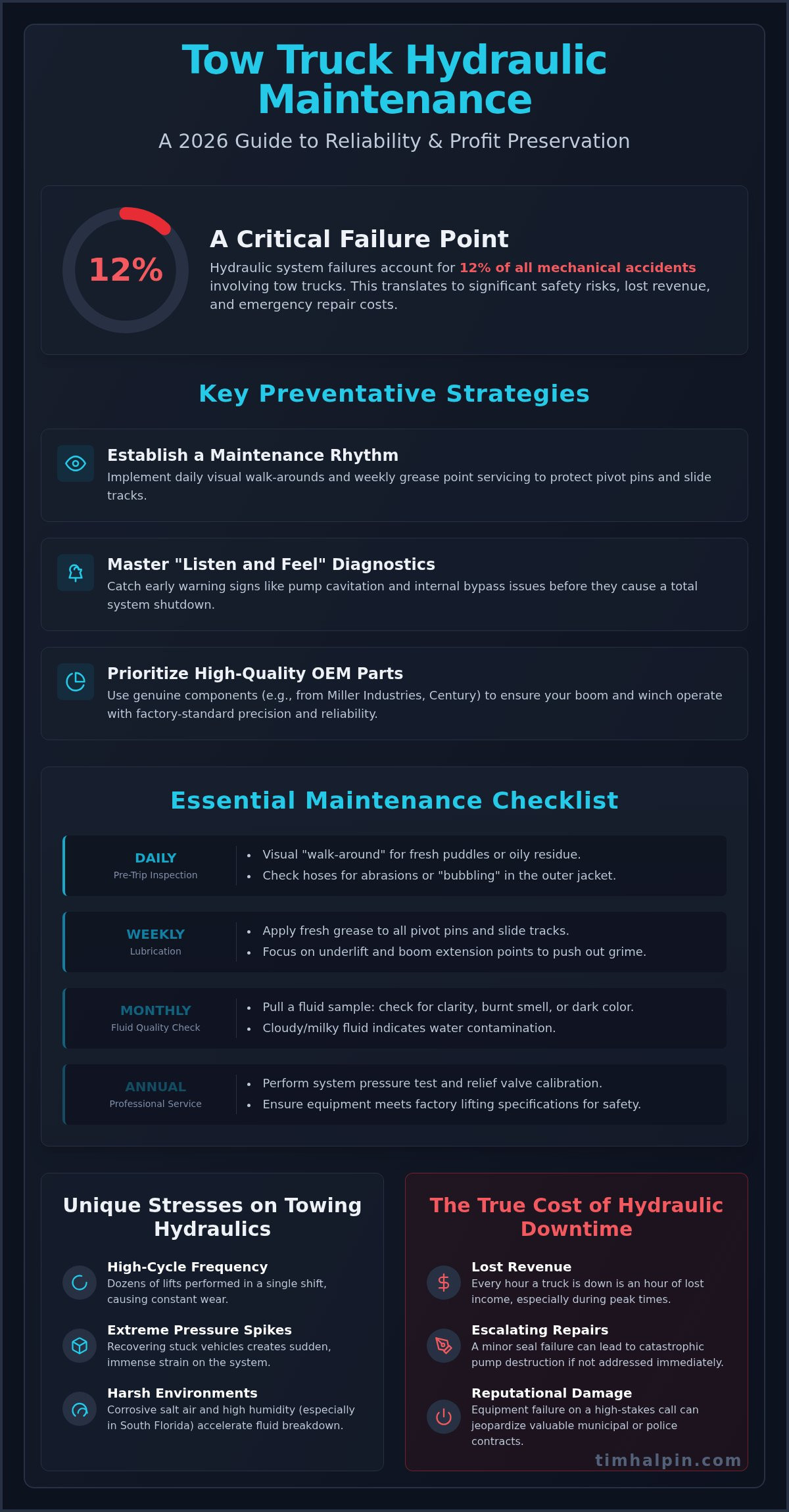
Did you know that hydraulic system failures account for 12% of all mechanical accidents involving tow trucks? It is a sobering figure that translates to more than just safety risks; it represents thousands in lost revenue and emergency repair bills. We understand the sinking feeling of a blown seal during a peak-hour call or the frustration of seeing fluid leak onto a customer’s pristine driveway. Consistent tow truck hydraulic maintenance is not just a chore on a checklist. It is a vital profit-preservation strategy that keeps your fleet reliable and your reputation intact.
You already know that your equipment is the lifeblood of your business, and keeping it in top shape is a constant priority. This 2026 guide is designed to help you master the preventative strategies that prevent sudden failures and extend the life of your gear. We will walk through a clear maintenance schedule, teach you how to spot the early warning signs of pump or seal failure, and show you how partnering with a knowledgeable South Florida expert for OEM parts can minimize your downtime. Let’s ensure your trucks stay on the road where they belong.
Key Takeaways
- Establish a rhythm of daily visual walk-arounds and weekly grease point servicing to protect the pivot pins and slide tracks that keep your equipment moving.
- Master the “Listen and Feel” diagnostic technique to catch pump cavitation and internal bypass issues before they lead to a total system shutdown.
- Prioritize tow truck hydraulic maintenance by using high-quality OEM components from Miller Industries and Century to ensure your boom and winch operate with factory-standard precision.
- Learn to troubleshoot slow cycle times and winch motor pressure issues to maintain the efficiency and safety of your recovery operations.
- Connect with a reliable South Florida partner who understands the local climate and maintains the deep inventory of parts needed to get your trucks back in service quickly.
The Critical Role of Hydraulics in Modern Towing Operations
Think of your wrecker’s hydraulic system as its circulatory system. Just as your own heart pumps blood to keep your body moving, the hydraulic pump sends pressurized fluid through a network of hoses and valves to power the boom, the winch, and the underlift. Without this constant, controlled flow, even the most powerful truck becomes little more than a heavy piece of driveway decor. Whether you are operating flatbeds, integrated wreckers, or heavy-duty rotators, the various types of tow trucks in your fleet all share one common dependency: fluid power. In 2026, as trucks become more sophisticated, the precision required for tow truck hydraulic maintenance has only increased.
The physics behind this is remarkable. A relatively small hydraulic pump converts mechanical energy into fluid power, creating immense line pressure. This pressure is what allows a single operator to lift a multi-ton tractor-trailer or pull a submerged vehicle from a canal. When the system is healthy, this power is smooth and predictable. However, when the fluid is contaminated or the pressure is inconsistent, you lose that fine-tuned control. Modern 2026 standards for fleet efficiency focus heavily on minimizing heat and maximizing flow, ensuring that every ounce of pressure is used effectively to reduce fuel consumption and wear on the engine.
System health is also a major factor in operator safety and liability. A sudden drop in pressure while a vehicle is suspended isn’t just a mechanical failure; it’s a potential catastrophe. Maintaining these systems properly is the best way to protect your drivers and your business from the legal and financial fallout of an on-site accident.
Why Towing Hydraulics Face Unique Stress
Towing equipment faces a much tougher life than standard construction machinery. Your trucks deal with high-cycle frequency, often performing dozens of lifts in a single shift. You also face extreme pressure spikes when trying to recover a vehicle “stuck” in mud or pinned against a barrier. Here in South Florida, we have the added challenge of corrosive salt air and intense humidity. These local factors can accelerate the breakdown of hydraulic fluid and cause premature pitting on chrome cylinder rods if you aren’t vigilant.
The True Cost of Hydraulic Downtime
When a truck is down, the meter isn’t just stopped; it’s running in reverse. You have to account for the lost revenue per hour, which can be devastating during a busy weekend. Beyond the immediate loss, a simple failed seal can quickly lead to pump destruction if air enters the system, turning a minor fix into a major overhaul. There is also the reputational impact to consider. If your equipment fails during a high-stakes police or municipal call, it can jeopardize the long-term contracts that keep your business steady. We’ve seen it happen many times since 1987, and it is almost always preventable with the right care.
Essential Tow Truck Hydraulic Maintenance Checklist for 2026
Reliability isn’t something that happens by accident; it’s built through the small, disciplined actions your drivers take every day. A robust tow truck hydraulic maintenance program transforms your fleet from a collection of machines into a dependable service that neighbors can trust. By following a structured timeline, you can catch minor issues before they escalate into expensive, multi-day repairs. We recommend organizing your maintenance into four distinct phases: daily, weekly, monthly, and annual checks.
- Daily Pre-Trip Inspections: Drivers should perform a visual “walk-around” to look for fresh puddles under the chassis or oily residues on the boom. Pay close attention to hoses for any signs of new abrasions or “bubbling” in the outer jacket.
- Weekly Grease Point Service: All pivot pins and slide tracks require fresh grease to push out road grime and salt. This is especially vital for the underlift and boom extension points that see the most movement.
- Monthly Fluid Quality Checks: Pull a sample of the hydraulic oil to check for clarity. If the fluid looks cloudy or milky, water has likely entered the system; if it smells burnt or looks dark, it’s time for a change.
- Annual Professional Testing: Once a year, have a technician perform a system pressure test and relief valve calibration. This ensures your equipment still meets factory lifting specifications without overstressing the pump.
Managing Hydraulic Fluid and Filtration
Selecting the right fluid is critical in South Florida, where our year-round high temperatures can thin out standard oils. You’ll want a fluid with a higher viscosity index to ensure the pump remains lubricated even during a grueling July afternoon recovery. Fluid oxidation is the chemical breakdown of hydraulic oil caused by prolonged exposure to high heat and oxygen, which creates sludge and varnish that eventually destroy pump components. To prevent this, follow the “Golden Rule” of filtration: change your filters on a set schedule rather than waiting for a bypass light to illuminate. By the time that light turns on, contaminated fluid has already begun circulating through your valves.
Inspecting Hoses, Fittings, and Cylinders
Keep a sharp eye out for “weeping” seals, which appear as thin films of oil around cylinder rods. These are early warnings of impending “gusher” failures that could happen under heavy load. Check your hoses for any kinking or rubbing, especially in high-flex areas where the boom rotates or extends. Vibration is a constant in towing, so it is a good idea to periodically verify that high-pressure fittings meet their proper torque specifications to prevent them from loosening. If you notice a fitting that won’t stay tight, it might be time to consult an expert in hydraulic repair services to ensure the threads haven’t been compromised.
Troubleshooting Common Hydraulic Failures in Wreckers and Carriers
Even the most diligent schedule can’t prevent every mechanical surprise. When a truck is on a call, the operator becomes the first line of defense. We teach our clients the “Listen and Feel” method to catch issues before they require a heavy-duty tow of their own. Hydraulic systems are usually quiet, steady workers. When they start talking to you through new vibrations or strange sounds, it is time to pay attention. Effective tow truck hydraulic maintenance involves recognizing these signals early to prevent a minor valve sticking from turning into a total pump meltdown.
If you notice slow cycle times, the fix isn’t always a new pump. You have to determine if the issue is the pump, the control valve, or an internal bypass within a cylinder. A pump usually fails gradually, whereas a sudden loss of speed often points toward a relief valve that has stuck open or a seal that has blown internally. Spongy controls are another common headache. This “springy” feeling in the levers almost always means air is trapped in the lines. It’s often a sign of a small leak on the suction side of the pump that is pulling air in without letting oil out.
There are certain “Red Alert” symptoms that mean you should stop the truck immediately. These include:
- Metal shavings found in the return filter or reservoir.
- Hydraulic fluid that looks like a vanilla milkshake, indicating heavy water contamination.
- A rapid, uncontrollable rise in fluid temperature.
- Visible foaming in the sight glass of the hydraulic tank.
Recognizing Unusual Noises and Vibration
You need to know the difference between a normal operational whine and the high-pitched “scream” of a dying pump. That scream is often cavitation, which happens when the pump is starved of oil. It will literally eat itself from the inside out in minutes. Rhythmic chattering during cylinder extension usually points toward air in the lines or low fluid. If you feel a heavy vibration only when the PTO is engaged, the problem might be mechanical alignment rather than a hydraulic failure.
Managing System Overheating
Heat is the silent killer of hydraulic reliability. Once your oil temperature climbs above 180°F (82°C), it begins to destroy your seals and lose the thickness needed to lubricate the pump. In our South Florida climate, your oil cooler has to work overtime. Check for airflow obstructions like mud or road debris packed into the cooler fins. If the cooler is clear but the system still runs hot, your relief valve might be set too low, causing the oil to constantly dump over the relief and generate friction heat.
Specialized Maintenance for Winches, Booms, and Slide-Out Decks
General inspections cover the basics, but the most reliable fleets understand that different components demand specialized care. A heavy-duty wrecker winch faces different hydraulic pressures than the slide-out deck of a car carrier. Effective tow truck hydraulic maintenance requires you to look beyond the pump and reservoir to the specific actuators that do the heavy lifting. When these specialized parts fail, the recovery becomes dangerous and your liability increases. We’ve seen how specific wear patterns in South Florida’s heat can sideline a truck if these details are overlooked.
Maintaining Hydraulic Winch Integrity
Your winch is your primary tool for recovery, and its hydraulic motor is a precision instrument. You should regularly check the case drain line for any restrictions. If this line becomes blocked, internal pressure will spike and blow the motor’s shaft seal, which often leaks oil directly onto your winch cable. Beyond the motor, verify the brake holding capacity during every monthly check. If the winch “creeps” under load, the internal brake or the counterbalance valve likely needs professional attention. Keep the drum and free-spool engagement mechanisms well-lubricated to ensure they don’t bind during a high-stakes recovery.
Caring for Multi-Stage Lift Cylinders
Booms and underlifts often use multi-stage cylinders that are particularly sensitive to grit and salt air. It’s a good habit to wipe down the chrome rods with a clean cloth to prevent road debris from scoring the internal seals as the cylinders retract. You should also inspect the wear pads on sliding boom sections. If these pads wear down, the boom will chatter and create side-loading on the cylinders, which leads to premature seal failure and expensive rod damage. For more complex issues like internal bypass or rod straightening, we recommend seeking expert truck hydraulics in Miami to ensure the work meets original manufacturer standards.
Dual-cylinder lift systems, common on larger wreckers and some carriers, must remain perfectly synchronized to prevent frame damage. If one cylinder moves faster than the other, it can twist the subframe or the boom itself. This is often caused by air trapped in one side of the system or a failing flow divider valve. If your equipment feels unbalanced or one side is lagging, don’t wait for it to bind up or snap a pin. You can find the right hydraulic repair services to help you recalibrate your system and keep your lifts level and safe for every job.
Professional Hydraulic Support and OEM Parts in South Florida
Maintaining a fleet is a heavy responsibility that requires more than just a good eye for leaks. When you follow a disciplined schedule for tow truck hydraulic maintenance, you eventually reach a point where components need replacing to ensure continued safety. Choosing OEM parts from Miller Industries, Century, or Vulcan isn’t just about brand loyalty; it is about precision engineering. These parts are designed to handle the specific pressure spikes and heavy-duty load requirements of your equipment. Using generic alternatives can lead to mismatched tolerances that compromise the integrity of your boom or winch during a critical lift.
We believe in a diagnostic-first approach rather than firing a “parts cannon” at a problem and hoping for a fix. Our team uses professional testing equipment to find the root cause of pressure drops or slow cycle times. This level of precision is a cornerstone of effective tow truck hydraulic maintenance, ensuring that every repair is permanent and your equipment remains reliable. Whether it is a simple seal replacement or a complex pump overhaul, the goal is to get your truck back to work with total confidence.
The Tim Halpin Advantage: Local Expertise Since 1987
Being a family-owned business means we value our reputation in the Miami community as much as you value yours. Since 1987, we’ve acted as a steady, knowledgeable guide for fleet owners, helping them navigate the complexities of hydraulic repair and equipment upfitting. We take pride in our legacy in South Florida truck equipment, offering a level of sincerity and partnership that is hard to find elsewhere. We understand the local challenges, from the corrosive salt air to the high demands of municipal contracts, and we treat every truck like it belongs to a neighbor.
Sourcing Tow Truck Parts in Miami
Unplanned downtime is the enemy of your profitability. To combat this, we maintain one of the largest liftgate and towing parts inventories in the United States. Our massive selection of tow truck parts in Florida ensures that local Miami fleets don’t have to wait weeks for a shipment to arrive. We also support international export needs, providing the same high-quality OEM components to operators across the Caribbean and beyond. Our inventory includes:
- Miller Industries, Century, and Vulcan towing equipment parts.
- A wide range of liftgate parts from Waltco, Maxon, and Tommy Gate.
- Specialized hydraulic pumps, motors, and seal kits.
- Public safety lighting from Whelen Engineering and Federal Signal.
When your equipment needs more than just a routine check, you need a partner who provides both the parts and the technical expertise to install them correctly. Contact Tim Halpin Equipment Corp today for expert hydraulic service and see the difference that nearly four decades of local experience makes for your fleet’s reliability.
Securing the Future of Your Towing Fleet
Your equipment is more than just iron and oil; it is the foundation of your business and a promise of help to our South Florida community. Mastering tow truck hydraulic maintenance ensures that when the call comes in, your booms extend smoothly and your winches hold firm. By combining daily vigilance with professional pressure testing, you protect your drivers and your bottom line from the high cost of unplanned downtime. Remember that catching a weeping seal today prevents a catastrophic pump failure tomorrow.
As an authorized Miller Industries and Century dealer serving South Florida since 1987, we take pride in being your steady, knowledgeable guide. We maintain one of the largest towing parts inventories in the United States to ensure you never have to wait on backordered components. Our family-owned approach focuses on long-term advocacy rather than quick transactions. Let us help you maintain the high standards your reputation deserves. Keep Your Fleet Moving with Tim Halpin’s Expert Hydraulic Service. We look forward to seeing you on the road, operating with total confidence and reliability.
Frequently Asked Questions
How often should I change the hydraulic fluid in my tow truck?
Most manufacturers recommend a complete fluid change every 1,000 hours of operation or at least once per year. In our humid South Florida climate, you might need to shorten this interval to every 500 hours if your trucks face heavy duty cycles. Regular fluid changes are the backbone of effective tow truck hydraulic maintenance because they remove the microscopic metal particles and moisture that naturally accumulate over time.
What is the best hydraulic oil for tow trucks operating in Miami’s heat?
You should generally use an ISO 46 or ISO 68 weight hydraulic oil with a high viscosity index for operations in high-heat environments. These grades are thicker than standard ISO 32 oils and won’t thin out as quickly when the thermometer hits 90 degrees. Always check your specific Miller or Century manual to ensure the fluid meets their anti-wear additive requirements for warranty protection.
Why is my tow truck boom moving slower than usual?
Slow boom movement is typically caused by a hydraulic pump that is losing its efficiency or a relief valve that has stuck partially open. If the speed only drops after the truck has been working for a while, your oil may be overheating and losing its ability to hold pressure. You should also check for a clogged suction filter, which starves the pump of the fluid it needs to move at full speed.
Can I mix different brands of hydraulic fluid in my wrecker?
You can mix different brands if they share the exact same base oil and additive package, but we don’t recommend it as a long-term practice. Mixing different viscosities or chemical bases can cause the fluid to foam or lead to the dropout of vital anti-wear additives. For the best results in your tow truck hydraulic maintenance routine, stick to one high-quality brand to keep the system chemistry stable.
What causes hydraulic hoses to burst on a car carrier?
Most hose failures on car carriers are the result of external abrasion or the natural aging of the rubber jacket. Because these hoses often move through tight tracks and over pulleys, they can rub against the metal frame until the reinforcement wire is exposed. Heat and UV exposure also make the rubber brittle over time, which eventually leads to a sudden burst when the system hits peak pressure.
Is it safe to operate a tow truck with a small hydraulic leak?
No, it isn’t safe to ignore any leak because a small “weep” can turn into a catastrophic failure without warning. A leaking seal allows air and contaminants to enter the system, which can destroy your pump or cause the boom to drop unexpectedly under a heavy load. Beyond the mechanical risks, hydraulic fluid is an environmental hazard that can lead to expensive cleanup costs if it spills on a customer’s property.
How do I know if my hydraulic pump is failing or just has air in the system?
A failing pump usually produces a steady, high-pitched scream known as cavitation, while air in the system causes “spongy” controls and jerky cylinder movement. If you see white foam or bubbles in the hydraulic reservoir, you likely have an air leak on the suction side of the pump. If the system remains quiet but simply lacks the power to lift its rated capacity, the pump’s internal gears or vanes are probably worn out.
Do you stock OEM Miller Industries towing parts in Miami?
Yes, we maintain one of the largest inventories of genuine Miller Industries, Century, and Vulcan parts in the United States right here in Miami. We have been an authorized dealer since 1987, which means we stock the exact seal kits, valves, and motors required to keep your equipment running to factory specifications. Our team can help you identify the right part number quickly to ensure your downtime is kept to an absolute minimum.
