

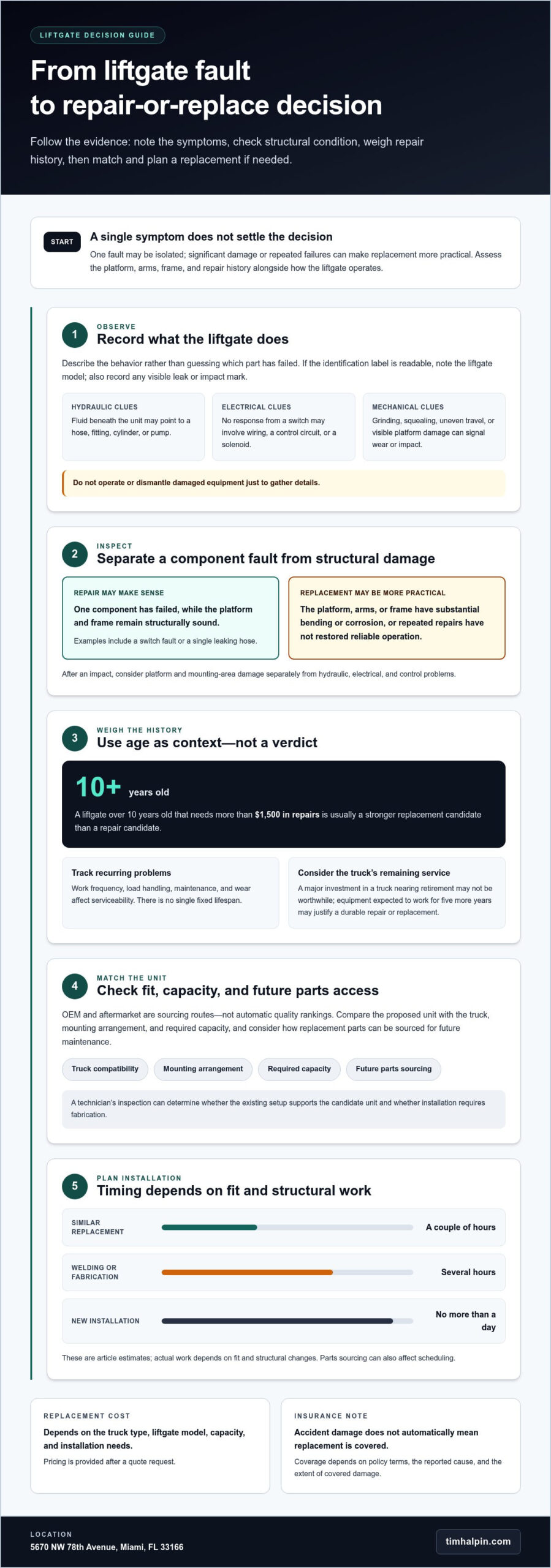
A liftgate that still moves can still be due for replacement. Knowing when to replace a liftgate means looking beyond a single symptom: significant bending or corrosion in the platform, arms, or frame, or repeated failures, can make replacement more practical than another repair. Replacement cost depends on the truck type, liftgate model, capacity, and installation needs, and is given after a quote request.
It’s understandable to wonder whether a fault calls for a repair or full replacement, especially when liftgate trouble disrupts deliveries. The symptoms offer clues, but structural condition and repair history matter too.
This guide explains what affects replacement cost, when repair may make sense, and how to recognize operating faults and impact damage. You’ll also learn what details to note before arranging service, so the next step reflects the problem your truck is actually showing.
Key Takeaways
- Replacement pricing depends on the specific case and is provided after a quote request; truck type, liftgate model, capacity, and installation needs all affect the cost.
- A repair may be suitable when the fault is isolated and the platform and frame remain structurally sound; recurring problems or major structural damage can point toward replacement.
- Leaks, slow or uneven movement, unusual noises, and unresponsive controls can help identify a fault. Note what the liftgate does without trying to diagnose the cause.
- After an impact, assess platform and mounting-area damage separately from hydraulic, electrical, and control problems.
- Tim Halpin Equipment offers truck and liftgate repair, along with trailer and hydraulic repair, for commercial equipment concerns.
How much does it cost to replace a liftgate?
Replacement cost depends on the truck, liftgate model, capacity, and installation needs. The decision also depends on whether the problem is limited to one component or involves the platform, arms, or frame. A failed solenoid, for example, calls for a different repair path than a bent mounting structure.
There isn’t one replacement schedule for every truck. Inspection requirements vary according to the rules that apply to the truck and where it operates, while replacement decisions hinge on condition and function.
Car insurance coverage isn’t automatic just because an accident damaged a liftgate. The truck’s policy terms, reported cause, and extent of covered damage determine whether replacement is payable.
Liftgates combine hydraulic, electrical, and mechanical parts, so one symptom can have several possible causes. Note what happens when you use the control and describe that behavior during inspection rather than guessing which component has failed.
- Hydraulic signs: Fluid beneath the unit can point to a leaking hose, fitting, cylinder, or pump.
- Electrical signs: No response from the switch can involve wiring, a control circuit, or a solenoid.
- Mechanical signs: Grinding, squealing, uneven travel, or visible platform damage may indicate wear or impact.
Seal condition matters because hydraulic seals typically fail every 3-5 years, depending on usage. A worn seal can allow fluid to escape, reducing the system’s ability to move or hold the platform reliably. Leaks should be assessed alongside fluid condition: contamination can interfere with hydraulic operation and may affect more than the seal itself. Record where fluid appears and whether the liftgate’s movement has changed.
Electrical symptoms call for a different line of diagnosis. Clicking after you activate the switch may indicate a motor or motor-start solenoid problem. If the motor runs but the platform doesn’t move, a voltage issue may be involved. Slow or jerky movement more commonly points to a failing hydraulic cylinder or power unit than an electrical fault. If the liftgate ignores its remote or switch, the issue may involve the control circuit, wiring, or solenoid.
These clues explain why replacing the whole unit isn’t always the first answer. A leak at one fitting or a faulty switch may be an isolated issue, while recurring failures or structural damage can change the repair calculation. When deciding when to replace a liftgate, consider whether the component fault can be corrected while the supporting frame and platform remain sound.
Before arranging an assessment, note the liftgate model if its identification label is readable, describe the symptom, and record any visible leak or impact mark. Don’t operate or dismantle damaged equipment just to gather details. A clear description of the truck liftgate’s behavior helps focus the inspection on hydraulic, electrical, or mechanical causes.
Repair versus complete liftgate replacement
Choose between repair and replacement by weighing the failed component against the liftgate’s structural condition and repair history. A sound platform and frame can make a focused repair practical; extensive damage or recurring faults can point toward replacement.
A liftgate is generally worth repairing when one component has failed and the platform and frame remain structurally sound. A switch fault or a single leaking hose, for example, may be limited to that part of the system. Replacement becomes more practical when the platform, arms, or frame show substantial bending or corrosion, or repeated repairs haven’t restored reliable operation.
Age matters alongside condition, but it shouldn’t decide the outcome alone. A liftgate over 10 years old that needs more than $1,500 in repairs is usually a stronger replacement candidate than a repair candidate. Also consider how long the truck will remain in service: a major investment in a truck nearing retirement may not be worthwhile, while equipment expected to work for five more years may justify a durable repair or replacement. For commercial operations running Japanese transport vehicles or delivery trucks, consulting a dedicated service facility like Speedy Roo Motorsports & Repair ensures the underlying vehicle’s mechanical health warrants continuing to invest in auxiliary equipment.
Liftgates have no single fixed lifespan. Work frequency, load handling, maintenance, and wear and tear all affect how long a unit remains serviceable. Track repair history and recurring symptoms instead of using age alone to decide when to replace it.
OEM and Aftermarket Replacement Options
When reviewing liftgate repair services, focus on the diagnosis and scope of work, not a promised minute-by-minute turnaround. Ask for an estimate that separates the identified fault, proposed repair or replacement, and any fabrication. Don’t approve work based only on a broad claim that the entire liftgate must go. The assessment should explain why a component repair won’t solve the problem.
Replacement Process and Timing
Replacement generally starts by identifying the liftgate and checking the truck’s mounting area, then matching a suitable unit and planning installation. A similar replacement can take a couple of hours; welding or other fabrication can take several hours. A new liftgate installation should take no more than a day. The actual work depends on fit and structural changes.
Parts sourcing can affect scheduling. A less common model or a unit requiring fabrication may take longer to arrange than a compatible replacement already available. Give technicians the liftgate identification details and describe its repair history to help narrow the options before installation planning.
For an equipment-specific assessment, review the repair options alongside the liftgate’s condition and service history.
Pre-service checks and failure diagnosis
A useful pre-service record helps technicians diagnose the liftgate without guesswork. Note the truck or trailer, the symptoms, and when they occur, such as during loading or with the platform empty. Include any recent impact, unusual sound, visible fluid, or change in movement. A clear sequence helps distinguish an intermittent fault from a problem that occurs every time.
Before service, make a visual check rather than dismantling the unit. Look for damaged wiring, loose-looking connections, fluid around hydraulic lines, worn cylinder seals, or a platform that appears out of alignment. Don’t operate or take apart equipment just to capture photos. A readable identification label can help distinguish the liftgate model from the truck or trailer it’s mounted on.
Routine checks provide context for a new fault. Fleet managers should conduct weekly visual inspections for damage and wear and check hydraulic fluid levels monthly. At scheduled maintenance intervals, record fluid levels and system pressure. These notes create a useful baseline: a new leak or a platform that no longer sits evenly is easier to spot against previous inspection records.
- During a visual inspection: Note platform condition, visible damage, hydraulic fluid, and wiring connections.
- During operation: Record whether movement is slow, uneven, noisy, or absent, and whether the fault changes under load.
- For identification: Capture the liftgate label details if readable, without operating or dismantling equipment for a photo.
Some electrical checks help narrow the diagnostic path. With the truck running, the control box should receive 12-14 volts. A technician can use that reading alongside control response and wiring condition to investigate an electrical fault. A liftgate that works intermittently may require attention to its connections or controls, rather than an immediate decision to replace the whole unit.
Hydraulic and mechanical symptoms need their own inspection. Technicians can often identify a failed cylinder, motor, or solenoid within one hour of inspecting the unit. The assessment connects symptoms with components and helps distinguish an isolated repair from broader deterioration. Describe what the liftgate does; technicians can diagnose it from the observed behavior and inspection findings.
Professional servicing also puts the decision in the context of the truck’s remaining service life. A repair may make sense when the vehicle has useful working life ahead and the fault is limited. If the truck is nearing retirement, compare the repair scope with its planned time in service before committing to extensive work. Both the liftgate’s condition and the truck’s role in the fleet matter.
Distinguishing operational faults from body damage
A liftgate can have an operating fault, impact damage, or both. Separate what the controls and platform do from what the truck’s structure looks like. For example, a platform that won’t rise points to a functional issue, while a visibly bent rear sill signals damage around the mounting area.
Operating failures usually show up during use. A liftgate may move slowly, stop unevenly, or fail to respond when you activate a switch. Hydraulic fluid beneath the unit suggests a leak in the hydraulic system, while clicking after you activate the control can point to a motor or solenoid problem. These symptoms help describe the fault, but don’t establish that the body is sound.
Body damage appears as visible changes to the platform or surrounding structure. After a collision, check the platform, arms, mounting area, rear sill, and nearby body panels for bending or displacement. Keep platform damage separate from truck body damage in your notes. A dented panel and a liftgate that won’t operate may relate to the same impact, but they remain separate concerns for assessment.
- Control or electrical symptom: Record whether switches respond, whether the motor makes a clicking sound, and whether operation changes between attempts.
- Hydraulic symptom: Note visible fluid and where it appears, without dismantling hoses, cylinders, or the pump.
- Impact symptom: Describe visible bends, cracks, or shifts around the platform and mounting area separately.
Compare the liftgate’s movement with its visible alignment. If the platform appears level but won’t respond to the switch, the evidence points first to an operating fault. If the platform or arms look bent after impact, there is structural damage, even if the controls still work. A functioning motor doesn’t rule out a compromised mounting area.
Make the record specific. Note the date of impact if known, which part was struck, what the liftgate did afterward, and whether hydraulic fluid appeared. Photos can document visible damage, but don’t operate or dismantle equipment just to take them. Describe what you observed rather than diagnosing the cause yourself.
Structural damage requiring welding or fabrication generally calls for body-shop equipment rather than roadside mobile repair. A pump, wiring, or control fault is a different concern from a bent frame or damaged rear sill. Keeping these findings separate helps direct the assessment toward the right work and clarify whether the liftgate, truck body, or both need attention.
After impact, don’t assume a new operating failure proves the entire liftgate needs replacement. First distinguish control, hydraulic, and mechanical symptoms from visible platform or body damage. Inspection findings can show whether a component repair will address the fault or structural damage changes the scope of work.
Impact damage to the platform and mounting area
An impact can affect the liftgate platform, its mounting area, and the truck body in different ways. Inspect and document each area separately. A dented platform, bent support arm, or damaged rear sill may need different work, even when one collision caused all three problems.
Start with a visual comparison of the platform and surrounding structure. Look for bending, cracks, shifted mounting points, or gaps that weren’t there before the impact. Record which side was struck and where the visible damage ends. Don’t operate or dismantle the liftgate just to gather details, especially if the platform or attachments appear distorted.
Separate physical damage from operating symptoms in your notes. For example, a platform that sits crooked is a visible concern; a control that fails to respond is an operating symptom. Both can follow the same impact, but one doesn’t prove the cause of the other. Describe the movement before the collision and what changed afterward.
- Platform: Note bends, cracks, or an uneven resting position.
- Mounting area: Record visible shifts, damage, or separation where the liftgate meets the truck.
- Surrounding body: Identify rear sill or body-panel damage independently from platform damage.
- Operation: Describe any change in movement, without treating it as proof of structural condition.
Structural damage requiring welding or fabrication generally calls for body-shop equipment rather than roadside mobile repair. This distinction matters when planning the work: a hydraulic, electrical, or control fault is separate from rebuilding damaged structure. A liftgate may still operate after impact, but movement alone doesn’t establish that the platform or mounting area is undamaged.
Manufacturers’ parts and installation information can help identify the liftgate model and intended mounting arrangement. Use a readable identification label to distinguish the unit from the truck it’s fitted to. Then share the model, impact location, and visible changes with the technician. Those details help clarify whether the assessment should focus on the liftgate, the surrounding body, or both.
Keep truck downtime in view while arranging an inspection. A platform that won’t sit evenly can affect loading, while body damage may require a different repair process from a failed component. Don’t assume a replacement liftgate alone will correct a damaged mounting area. The supporting structure and fit need attention alongside the unit.
If an impact has changed the platform or its mounting points, arrange a liftgate damage assessment to help define the repair scope. Separate findings for body damage and liftgate operation make the next decision clearer, whether the work involves structural repair, component service, or replacement.
Tim Halpin Equipment: Truck Repair
Tim Halpin Equipment Corp provides truck repair, liftgate repair, trailer repair, and hydraulic repair for commercial equipment issues. Turn to the team when a liftgate has recurring faults, visible hydraulic problems, or impact damage that needs assessment alongside the truck or trailer.
Share the symptoms you’ve observed, such as uneven movement, a fluid leak, or a platform that appears bent. These details help focus the assessment on whether the concern involves the liftgate, its hydraulic system, or surrounding equipment. A repair assessment can clarify the work needed without assuming every fault calls for complete replacement.
For help with a commercial truck or liftgate repair concern, contact Tim Halpin Equipment Corp.
Make the Next Liftgate Decision With Confidence
Use your inspection findings to plan beyond the immediate fault. A clear record of symptoms, prior work, and the truck’s role helps frame a practical decision for its next stretch of service. It also gives the repair discussion a useful starting point: what must work reliably, what damage needs attention, and whether the liftgate remains suited to daily demands.
Knowing when to replace a liftgate is part of keeping equipment suited to the work it needs to do. Tim Halpin Equipment Corp provides truck, liftgate, and trailer repair for commercial equipment concerns. Share the observed issue and relevant repair history to begin a focused conversation about the next step.
Contact Tim Halpin Equipment Corp to discuss your truck or liftgate repair needs. A considered decision can help you move forward with greater clarity.
Frequently Asked Questions
Can I operate my truck with a broken liftgate?
Do I need to know whether the fault is electrical or hydraulic?
No. Describe what you observe rather than trying to identify the failed system. For example, note whether the switch responds, whether you hear clicking, or whether the platform moves unevenly. Include when the symptom occurs, such as during loading or with an empty platform. Those details help technicians investigate without you testing or dismantling electrical or hydraulic components.
What Causes Hydraulic Liftgate Failures?
Hydraulic liftgate failures can result from leaking or ruptured lines, worn seals, fluid contamination, or problems with a cylinder or pump. A leak may reduce the fluid available for operation, while contaminated fluid can interfere with the hydraulic system. Note where fluid appears and whether platform movement has changed. Avoid handling damaged hoses or opening the system; an inspection can establish whether the problem is isolated or affects multiple parts.
What are the signs a vehicle liftgate needs replacement rather than repair?
Replacement becomes more likely when structural damage affects the platform, arms, or frame, or repeated repairs fail to resolve the problem. A single failed switch or other isolated component doesn’t necessarily mean the full unit needs replacing. Consider whether the liftgate remains structurally sound, whether the fault returns, and how long the truck is expected to remain in service. Together, these details guide the repair-versus-replacement decision.
What causes liftgate failure or structural damage?
Operating failures can arise from hydraulic, electrical, or mechanical component problems. Structural damage may follow an impact to the platform, arms, mounting area, or nearby truck body. Describe the load, impact, or recent change in operation when reporting a problem.
Can a damaged liftgate be repaired, or should it be replaced?
Yes, some damaged liftgates can be repaired, especially when the fault is limited to a component and the supporting structure remains sound. Replacement is more practical when the platform, arms, or frame are substantially bent or corroded, or faults keep returning. For example, a faulty switch differs from a bent support arm requiring structural work. An inspection can establish the scope before choosing a repair or replacement plan.
How much does liftgate replacement cost in the United States?
There isn’t one fixed replacement price for every commercial truck. Cost depends on the truck, liftgate model and capacity, and installation work required. A replacement involving structural changes differs from a direct fit. For a truck working around Miami, provide the liftgate identification details and describe any damage or previous repairs when requesting a quote. That information helps define the work being priced.
Is it safe to drive with a damaged or malfunctioning liftgate?
Whether you can drive depends on the liftgate’s condition and whether it remains securely mounted and stowed. Don’t drive with a platform, arm, or attachment that appears loose, displaced, or at risk of moving. A gate that simply won’t respond presents a different concern from one with visible structural damage. Stop using the liftgate, document what you see, and have the truck and equipment assessed before resuming normal operation.
