

Did you know that transportation incidents accounted for 71.7% of fatalities within the transportation and warehousing sector in 2023, according to Voxel AI? While safety technology is improving, the risk remains high for those working with heavy loading equipment on Florida’s busy roads every day. We understand the pressure of the job and the fear that a platform might drop or a load might shift unexpectedly. Learning how to operate a tommy gate liftgate safely is about more than just checking a box; it’s about ensuring you and your crew get home safely at the end of every shift.
This guide is designed to be your steady hand, offering the professional expertise you need to protect your team and your equipment. We’ll walk you through the essential safety protocols and step-by-step operation techniques that ensure your liftgate runs reliably and accident-free. You’ll learn how to master load positioning, understand weight limits, and spot a mechanical failure before it happens. By the end of this 2026 operator guide, you’ll have the knowledge to operate your Tommy Gate alone with complete confidence, keeping your business moving smoothly through every job site.
Key Takeaways
- Learn why a simple 60-second visual inspection for hydraulic leaks is your most effective defense against unexpected equipment failure.
- Master how to operate a tommy gate liftgate safely by following the precise unlocking and lowering sequences for both G2 and Original Series models.
- Understand the science of load distribution to prevent cargo shifts and protect your liftgate from damage caused by improper weight positioning.
- Discover how to navigate unique South Florida hazards, such as maintaining traction on slippery platforms during a sudden Miami rainstorm.
- Identify critical emergency power cut locations and protocols to keep you in control if your liftgate becomes stuck mid-route.
The Pre-Operation Safety Inspection: What to Check Before Every Shift
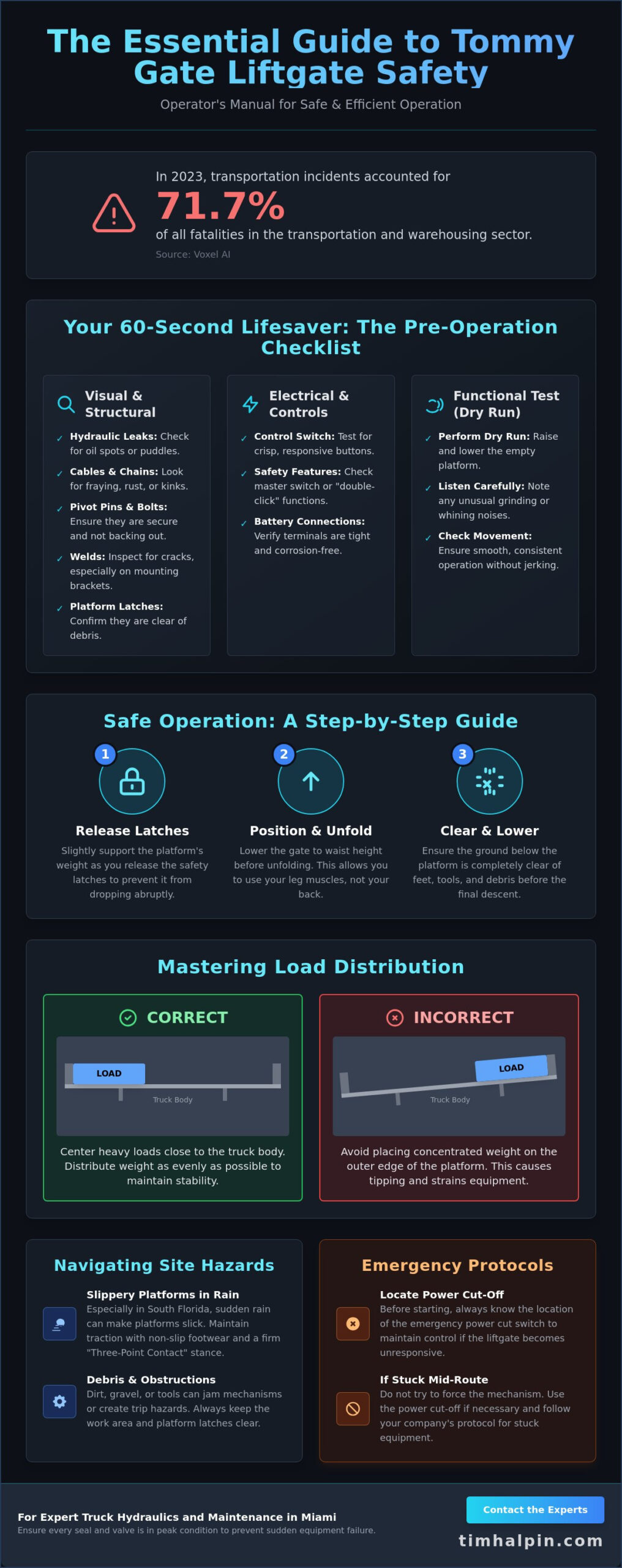
Most accidents happen because of something missed before the truck even leaves the yard. A simple 60-second visual check is your best defense against workplace injury. It’s a small investment of time that pays off in peace of mind for you and your crew. When you’re learning how to operate a tommy gate liftgate safely, this daily habit is the foundation of your success. Skipping it might save a minute, but it risks hours of downtime or a serious medical bill.
Before you begin, it helps to understand what a liftgate is and how its specific mechanical components, like parallel arms or columns, work together to manage heavy loads. Start by looking for hydraulic leaks. Check for wet spots or dark puddles around the cylinders and hoses. If you see oil, don’t use the gate. Next, run your eyes over the liftgate cables or chains. You’re looking for fraying, rust, or kinking. These components are the muscles of the system. If they’re weak, the platform could drop without warning.
Test the control switch before loading any cargo. The buttons should feel crisp and responsive. If they stick or feel “mushy,” you might lose control of the platform’s movement at a critical moment. A responsive switch ensures you can stop the gate instantly if a load shifts.
Checking the Structural Integrity
Take a moment to verify that all pivot pins and bolts are secure. They shouldn’t be backing out or showing shiny, unpainted threads. Look closely at the welds, especially around the mounting brackets that attach the gate to your truck. Cracks here are a major red flag that requires immediate attention. Finally, ensure the platform latches are clear of debris. Dirt, gravel, or road salt can prevent them from locking properly. This is a recipe for disaster when you’re hitting highway speeds.
Hydraulic and Electrical Health
Perform a “dry run” by raising and lowering the platform without any cargo. Listen for unusual grinding or whining noises. These sounds often signal that the pump is struggling or the system is low on fluid. Check your battery connections too. A liftgate requires full power to operate at its rated capacity, and loose terminals can cause intermittent failure. Consistent expert truck hydraulics miami maintenance prevents sudden platform drops by ensuring every seal and valve is in peak condition. A healthy system is a quiet system.
Step-by-Step Guide: Operating Your Tommy Gate G2 and Original Series
Once you’ve completed your visual inspection, it’s time to move into the actual operation. Whether you’re working with the classic Original Series or the modern G2, following a precise sequence is the only way to ensure a smooth day on the road. Understanding how to operate a tommy gate liftgate safely involves mastering the rhythm of these mechanical steps. It’s about more than just pressing buttons; it’s about maintaining total control over the equipment at every stage.
Operating the Control Box
Modern Tommy Gates often feature a “double-click” activation or a master switch. These safety features are designed to prevent the gate from moving if something bumps the controller in the cab or on the side of the body. If you’re using a remote pendant, always keep the cord clear of the moving platform. We recommend maintaining a “Three-Point Contact” rule while standing at the rear. Keeping your feet firmly planted and one hand on a stable part of the truck body prevents slips, especially when the South Florida humidity makes surfaces slick. This stability is your first line of defense against a fall.
Opening and Closing Procedures
Opening the gate requires a steady hand and a clear workspace. Follow these steps for a safe start:
- Step 1: Release the safety latches while slightly supporting the platform weight. This prevents the gate from dropping abruptly when the tension is released.
- Step 2: Lower the gate to a comfortable waist height before unfolding the extension. This height allows you to use your leg muscles rather than your back to handle the fold-out mechanism.
- Step 3: Clear the area. Always ensure the ground under the platform is free of feet, tools, or debris before the final descent.
Following these OSHA liftgate safety protocols helps prevent the type of crushing accidents that occur when operators lose focus during the descent. When you’re ready to stow the gate, ensure the platform is fully vertical and the latches are completely engaged. A gate that isn’t locked can bounce during transit, which puts immense stress on the hydraulic cylinders. If your latches feel stiff or fail to click into place, it might be time to look into high-quality Tommy Gate liftgate parts to restore your equipment to factory safety standards. Never drive away until you’ve verified that the gate is secure and the power is off.
Mastering Load Distribution and Weight Capacity for Maximum Safety
Understanding the physics of your equipment is the secret to knowing how to operate a tommy gate liftgate safely. Many operators see a 1,500 lb rating on the mainframe and assume any load under that number is fair game. That’s a dangerous misconception. The “Center of Gravity” is the most critical factor in your lift’s performance. If you place a 1,000 lb load at the very edge of the platform, the leverage effect can exert more force on the hydraulics than a 1,500 lb load placed correctly against the truck. This is why load positioning is the difference between a successful delivery and a broken gate.
Improper placement leads to “Tip Loading,” which is the leading cause of catastrophic cable failure and bent platform frames. Always keep the heaviest part of your cargo as close to the truck body as possible. If you’re moving a pallet of heavy tile or engine parts, slide it right up against the mainframe before you hit the “Up” switch. Once the cargo is in place, secure it immediately. Use heavy-duty straps or wheel chocks to prevent any shifting during the lift. Even a small roll of a few inches can change the weight distribution and cause the gate to jerk or tilt unexpectedly.
Calculating Your Net Capacity
Your liftgate’s capacity isn’t just about the boxes you’re moving. You must calculate the “Net Capacity” by subtracting the weight of your pallet jack and the pallet itself from the total rating. A standard electric pallet jack can weigh several hundred pounds. If your Tommy Gate capacity plate, usually found on the mainframe, says 1,500 lbs, and your jack weighs 300 lbs, you only have 1,200 lbs of cargo room left. Watch for warning signs like a straining motor or unusually slow lifting speeds. These are the sounds of a hydraulic system being pushed to its limit, and they shouldn’t be ignored.
Cargo Stability Protocols
Safety doesn’t stop once the load is off the ground. Never move the truck while a load is sitting on the platform, even if you’re just repositioning in a parking lot. If your model features “Cart Stops” or “Retention Ramps,” use them every single time. These small metal barriers are designed to catch wheels before they roll off the edge. Most importantly, never “ride” the liftgate with the cargo. It might seem convenient, but your body weight adds to the load and puts you in a “crush zone” if a component fails. Stay on the ground, maintain your three-point contact, and let the machinery do the heavy lifting.
Navigating Site Hazards: Safety in the South Florida Environment
South Florida’s unique climate and urban layout present specific challenges for fleet operators. Knowing how to operate a tommy gate liftgate safely means more than just following the manual; it requires adjusting to the local environment. Miami’s afternoon thunderstorms can turn a standard steel platform into a slick hazard in seconds. The combination of high humidity and salt air from the coast also accelerates corrosion on safety latches and pivot points, which can lead to mechanical failure if ignored. Our local expertise shows that these regional factors demand a higher level of situational awareness.
Surface and Grade Safety
Operating on uneven pavement is a common hazard that many operators overlook. A slight tilt in the road can cause a load to shift toward the edge of the platform before you’ve even started the lift. Always look for “soft ground” like damp grass or loose gravel. These surfaces can cause the truck to lean as the weight transfers to the rear during the descent. For curb-side deliveries in tight metropolitan areas, position your truck to minimize the gap between the platform and the sidewalk. Keep the engine running during operation to ensure the battery maintains consistent voltage, preventing the gate from stalling mid-lift.
Visibility is your best friend when working on busy South Florida roads. Use safety cones to create a buffer zone around your workspace. We also recommend utilizing high-visibility public safety lighting miami to alert distracted drivers of your presence during roadside stops. This extra layer of protection keeps you safe while you focus on the cargo, ensuring you’re seen long before a vehicle gets close to your tailgate.
Environmental Maintenance for Safety
Maintenance is a daily safety requirement in our region. Clean the platform frequently to remove sand, salt, and oil that reduce foot traction. Lubricate your pivot points more often than the manufacturer suggests to combat our high-humidity climate. If your current setup feels inadequate for the weather, consult commercial truck upfitting miami experts about applying specialized anti-slip coatings. These professional upgrades provide a grit-heavy surface that maintains grip even during a tropical downpour. It’s a simple step that prevents slips and keeps your crew on their feet.
If you’ve noticed your safety latches sticking or your platform surface becoming dangerously smooth, don’t wait for an accident to happen. Reach out for professional liftgate repair to keep your equipment in top shape and your team protected.
Emergency Protocols and the Safety-Maintenance Connection
Even the most seasoned driver can face an unexpected mechanical glitch mid-route. Part of knowing how to operate a tommy gate liftgate safely is being prepared for the moment things don’t go as planned. If your platform gets stuck in the “Down” position, your first priority is securing the area and alerting traffic. Don’t try to force the gate back up with a floor jack or by hand. Forcing a stuck gate often leads to expensive structural damage, such as bent lift arms or blown seals, which could have been avoided with a more patient approach. Instead, locate your “Kill Switch” or main fuse. This is usually found near the battery box or inside the truck cab. Cutting the power prevents the motor from burning out if a switch has failed in the “On” position.
The link between scheduled service and operator safety is undeniable. Most emergency failures are the result of small issues that were ignored during previous shifts. When you maintain your equipment, you’re not just protecting an investment; you’re protecting the person standing at the back of the truck. A gate that is serviced regularly is a gate that responds predictably when you need it most.
Emergency Troubleshooting
If the motor stops suddenly during a lift, it might be a “Thermal Trip.” This happens when the motor overheats from heavy use or high ambient temperatures. Give the system 15 minutes to cool down before trying again. If the gate remains unresponsive, you’ll need to follow the manual override procedures specific to your Tommy Gate model to stow the platform for transit. When the manual override isn’t enough to get you back on the road, it’s time to call for professional liftgate repair. Trying to DIY a hydraulic failure on the side of a busy road is a major safety risk that we never recommend.
The Tim Halpin Safety Standard
At Tim Halpin Equipment Corp, we’ve seen how a well-maintained gate protects a local business. Our family-owned shop has prioritized fleet safety since 1987, and we take that responsibility seriously. While daily checks are vital, annual safety inspections are where we catch the hidden issues. We look at hydraulic pressure, internal seal wear, and electrical integrity; things a driver simply can’t see during a pre-shift walk-around. This proactive approach is the ultimate way to ensure you know how to operate a tommy gate liftgate safely for years to come. Trust the experts at Tim Halpin Equipment Corp for your Tommy Gate parts and service. We’re here to keep your crew safe and your trucks moving through every district of South Florida.
Protecting Your Crew and Your Equipment
Operating heavy machinery in South Florida’s demanding climate requires a combination of technical skill and situational awareness. We’ve explored why a quick visual check is your best defense against failure and how proper load positioning prevents catastrophic structural damage. Mastering how to operate a tommy gate liftgate safely isn’t just about following steps; it’s about building a culture of safety that ensures every delivery is made without incident. Whether you’re navigating a Miami rainstorm or handling a heavy pallet, your focus on these protocols keeps your business moving forward.
When your equipment needs more than a daily check, our team is ready to help. Since 1987, we’ve served South Florida fleets with expert hydraulic and mechanical repair services. We take pride in housing one of the largest liftgate parts inventories in the US, ensuring your downtime is as short as possible. We value the relationships we’ve built within our local community and treat every truck as if it were our own.
Get Expert Tommy Gate Service at Tim Halpin Equipment Corp
Stay safe out there and remember that a little preparation today prevents a lot of trouble tomorrow.
Frequently Asked Questions
How much weight can a Tommy Gate liftgate actually handle?
A Tommy Gate liftgate handles the specific weight listed on its identification plate, which usually ranges from 1,000 to 3,000 pounds depending on the series. You must always account for the weight of your pallet jack and pallets when calculating your total load. Exceeding this limit or placing the weight too far from the truck body compromises the system’s integrity. Learning how to operate a tommy gate liftgate safely requires knowing these limits before you start your shift.
Can I ride on the Tommy Gate platform while it is moving?
You should never ride on the platform while it is in motion. Tommy Gate equipment is designed strictly for material handling and is not intended for use as a personnel or wheelchair lift. Standing on the moving platform adds unnecessary weight and places you in a high-risk area if a hydraulic line or cable fails. Stay on the ground, maintain three-point contact, and operate the controls from a safe distance to stay protected.
What should I do if my Tommy Gate liftgate is moving slowly or jerking?
If your liftgate moves slowly or jerks, stop using it immediately and check for hydraulic leaks or low fluid levels. These symptoms often point to air trapped in the hydraulic lines or a pump that is struggling to maintain pressure. Continuing to use a malfunctioning gate can lead to a sudden platform drop or total motor failure. It is always better to call for a professional inspection than to risk a cargo accident on the road.
Is it safe to operate the liftgate while the truck engine is turned off?
We recommend keeping the truck engine running during operation to ensure the liftgate receives consistent voltage. While the battery can power the gate for a short time, the high draw of a heavy load can drain it rapidly. Low voltage often results in a sluggish motor or a gate that stalls halfway through its cycle. Keeping the engine on protects your electrical system and ensures a smooth, reliable lift every time.
How often should a Tommy Gate liftgate be inspected for safety?
You should perform a visual safety check before every single shift and schedule a professional mechanical inspection annually. Daily checks focus on obvious issues like hydraulic puddles or frayed cables that could cause immediate danger. A professional annual service goes deeper, checking internal seals and electrical connections that a driver might miss. This dual approach is the best way to ensure your equipment remains reliable and safe for your entire crew.
What is the most common cause of Tommy Gate liftgate failure?
Improper load distribution and neglected maintenance are the most common causes of liftgate failure. Many operators accidentally “tip load” the gate by placing heavy cargo at the very edge of the platform. This creates a leverage effect that can snap cables or bend the mainframe. Understanding how to operate a tommy gate liftgate safely means always keeping the heaviest part of your load tucked close to the truck body to maintain balance.
Can I use a Tommy Gate liftgate in heavy rain or wind?
Yes, you can operate the gate in rain or wind, but you must be extremely cautious of slippery platform surfaces. Miami’s sudden storms can make steel platforms dangerously slick, increasing the risk of cargo shifting or operator slips. Ensure you are wearing high-traction footwear and that all cargo is securely strapped before moving the gate. If the wind is strong enough to move the cargo on the platform, wait for conditions to improve before continuing.
Where can I find replacement Tommy Gate parts in Miami?
You can find a comprehensive selection of replacement Tommy Gate parts at Tim Halpin Equipment Corp in Miami. We maintain one of the largest inventories in the region to help you avoid long wait times for essential components. Whether you need new safety latches, hydraulic hoses, or control switches, our team provides the high-quality parts and expert advice you need to keep your fleet running safely and efficiently throughout South Florida.
